

Article
Waterproof Connector Testing and Certifications for Global Buyers
Waterproof connector selection depends on verified ingress protection, application-specific testing, material compatibility, and market-ready documentation. This guide explains how to interpret IP ratings, evaluate laboratory evidence, distinguish product testing from certification, and qualify suppliers for global projects. It also outlines practical procurement checks for circular connectors, industrial connectors, and Heavy Duty Connectors, including how to specify a customized waterproof connector without relying on broad or unverified claims.
2026-10-15
IP Ratings Compared: Which Waterproof Connector Fits Your Application?
Choose a waterproof connector by matching the complete mated assembly’s IP rating to the actual exposure: dust, splashing, directed water jets, or immersion. IP67 and IP68 address specified immersion conditions, while IP69K is associated with high-pressure, high-temperature washdown testing under ISO 20653. The rating alone does not confirm suitability for chemicals, corrosion, UV exposure, cable strain, or unmated storage. This guide compares common ratings and explains how to specify a customized waterproof connector for industrial, outdoor, and washdown applications.
2026-10-14
Custom power automate connectors Manufacturers and Suppliers
A practical guide to defining, sourcing, building, and validating custom Power Automate connectors, including security, prototyping, lifecycle management, supplier evaluation, and regional procurement considerations.
2026-10-11
Connector Reliability: Preventing Failed Flows and Integration Delays
Reliable workflow automation depends on more than selecting a connector: teams must validate authentication, permissions, trigger behavior, throttling, error handling, data formats, and downstream dependencies before production. This guide explains how to reduce failed flows and integration delays in Microsoft Power Automate, compare polling and event-based triggers, build practical monitoring and recovery controls, and assess the physical industrial connectors that keep equipment data available to digital workflows.
2026-10-10
Custom vs Certified Connectors: Security and Compliance Checks
A practical buyer’s guide to comparing custom and certified connectors for security, compliance, governance, and operational fit. It explains how to assess API permissions, data-loss prevention, identity, auditability, and lifecycle risks, while distinguishing software integrations from physical circular, industrial, and heavy-duty connectors.
2026-10-09
Power Automate Connector Trends: AI Integrations and Enterprise Automation
Enterprise automation is moving from isolated, rule-based workflows toward governed processes that combine cloud applications, AI services, business data, and operational systems. The most important trends include AI-assisted workflow design, intelligent document processing, event-driven integration, stronger connector governance, and human review for consequential decisions. Buyers should assess security, licensing, data quality, exception handling, maintainability, and the physical equipment involved—not just how quickly a workflow can be built.
2026-10-08
Power Automate Connector Security: Permissions, Data Policies, and Compliance
Secure workflow automation depends on controlling who can create and run flows, which connectors can exchange data, how connections and credentials are managed, and where information is processed. This guide explains practical governance for Microsoft Power Platform environments, including least-privilege access, data loss prevention (DLP) policies, connector risk review, monitoring, and compliance evidence. It also outlines a procurement perspective for organizations managing both cloud workflows and industrial connectivity requirements.
2026-10-07
Custom Power Automate Connectors: API Requirements, Costs, and Timelines
A practical guide to the API design, security, licensing, development effort, testing, and deployment decisions involved in creating custom connectors for Microsoft Power Automate. Includes planning ranges, cost drivers, procurement questions, and guidance for distinguishing software integrations from physical industrial connectors.
2026-10-06
Power Automate Connectors: Standard vs. Premium for Business Workflows
Standard and premium connectors in Microsoft Power Automate differ primarily in the systems they connect to and the licensing rights required to use them. Standard integrations commonly support Microsoft 365 services such as SharePoint and Outlook, while premium options can connect workflows to services such as SQL Server and Salesforce, subject to current licensing terms. Business buyers should evaluate connector classification, workflow ownership, data governance, run volume, support needs, and total cost before choosing an architecture. A controlled pilot and documented licensing review can help prevent deployment delays and unexpected costs.
2026-10-05
Best wire tap connector manufacturers and supplier
Compare four established suppliers of wire tap connectors and related products: 3M, TE Connectivity, IDEAL Electrical, and Gardner Bender. This global guide explains product fit, sourcing considerations, qualification checks, and questions buyers should resolve before sending an RFQ. The target region and company profile were not supplied, so the article does not make regional rankings or claim a specific company as the preferred supplier.
2026-10-04
Choosing Wire Tap Connectors by Wire Gauge, Voltage, and Application
Choose a wire tap connector by verifying conductor gauge and construction, electrical ratings, insulation compatibility, environmental conditions, and the exact application. A connector’s listed wire range and voltage rating—not appearance or a general rule of thumb—determine whether it is suitable. Confirm the manufacturer’s instructions and applicable electrical codes, and use a qualified electrician for regulated or safety-critical installations.
2026-10-03
Wire Tap Connectors for Distributors: Specs Buyers Should Confirm
Distributors evaluating wire tap connectors should confirm conductor material and size, branch-wire compatibility, insulation diameter, current and voltage ratings, environmental limits, installation tooling, applicable certifications, and traceability. Because product terminology covers several connection designs, buyers should match the connector’s construction and approved application to the wiring system rather than relying on appearance or a broad product description.
2026-10-02
OEM Wire Tap Connectors: Custom Materials, Colors, and Packaging
OEM wire tap connector programs can be tailored through material selection, housing color, labeling, and packaging to meet electrical, environmental, branding, and distribution requirements. Buyers should define conductor compatibility, installation conditions, applicable compliance needs, and validation tests before approving a custom design. This guide compares common customization options, explains supplier qualification and packaging decisions, and outlines a practical process for coordinating custom electrical connection products with a broader industrial connector portfolio.
2026-10-01
Reducing Failure Risk in Customized Waterproof Connector Projects
Reduce failure risk in customized waterproof connector projects by defining the operating environment, translating ingress-protection needs into verifiable requirements, selecting compatible materials and sealing geometries, and validating the complete mated assembly under representative conditions. Buyers should align the connector, cable, panel interface, installation method, and maintenance plan; verify applicable IEC 60529 or sector-specific requirements; and assess supplier control of design changes, testing, and production consistency before approval.
2026-09-30
From Connector Samples to Bulk Orders: Avoiding Customization Delays
A practical guide to moving from connector samples to production orders without avoidable customization delays. It explains how to define requirements, validate samples, control drawings and revisions, confirm compliance, and establish measurable release gates for circular, industrial, and heavy-duty connectors.
2026-09-29
Waterproof Connector Quality Checks: IP Ratings, Tests, and QC
A practical procurement guide to interpreting IEC IP ratings, verifying waterproof connector test methods, and reviewing production quality controls. Learn how to specify the complete mated assembly, assess test evidence, and reduce ingress-related failures in industrial applications.
2026-09-28
Preventing Delays in Custom Waterproof Connector Projects
A practical guide to preventing schedule overruns in customized waterproof connector projects by controlling requirements, ingress protection, materials, tooling, testing, documentation, and production readiness from the first engineering review through final inspection.
2026-09-27
OEM vs. ODM for Customized Waterproof Connectors: Which Fits?
OEM and ODM models solve different connector procurement problems. OEM is usually the stronger choice when a buyer owns the design, requires exact mechanical and electrical specifications, or needs intellectual-property control. ODM is often more efficient when a project needs a proven waterproof circular connector, industrial connector, or heavy duty connector platform adapted for cable size, pin count, sealing, mounting, and branding. The right decision depends on technical ownership, certification requirements, expected volume, tooling budget, development timeline, environmental exposure, and long-term supply continuity.
2026-09-26
IP Rating vs. Cable Design: Comparing Waterproof Connector Options
IP rating and cable design solve different parts of environmental protection. The ingress protection code defined by IEC 60529 evaluates how an assembled enclosure resists solids and water, while connector geometry, sealing materials, cable jacket construction, strain relief, shielding, and installation quality determine whether that protection remains reliable in service. Buyers selecting a waterproof connector should therefore assess the complete cable-connector system rather than choosing a product from its IP number alone. This guide compares sealed circular connectors, overmolded cable assemblies, field-installable industrial connectors, and heavy-duty connector systems using application conditions, lifecycle risk, testing, and total cost of ownership.
2026-09-25
Wholesale heavy duty wire connector manufacturer and supplier
A practical guide for distributors, retailers, electrical wholesalers, and industrial buyers sourcing heavy duty wire connector products in bulk. It explains how to evaluate factory capability, compare MOQ and pricing structures, verify quality consistency, manage compliance documentation, and plan international logistics for reliable wholesale supply.
2026-09-24
Heavy Duty Wire Connector vs. Standard Connector: Cost and Risk
A heavy duty wire connector is generally the safer choice for high-current, high-vibration, outdoor, industrial, and maintenance-critical applications because it offers stronger mechanical retention, better environmental protection, higher current capacity, and longer service life than a standard connector. Although the initial purchase price is higher, lifecycle economics often favor the ruggedized solution when downtime, thermal damage, safety exposure, maintenance labor, and replacement costs are considered. Buyers should evaluate current, voltage, ingress protection, temperature, vibration, mating cycles, materials, certifications, and total cost of ownership before selecting a circular connector, industrial connector, or Heavy Duty Connector.
2026-09-23
UL, CE and IP Ratings for Heavy Duty Wire Connector Sourcing
Selecting a reliable heavy duty wire connector requires more than comparing current ratings and unit prices. Industrial buyers must verify whether UL certification applies to the complete connector or only selected components, whether CE marking is supported by the correct EU conformity documentation, and whether the stated IP rating matches the installed, mated, and tested configuration. UL addresses product safety through applicable North American standards, CE demonstrates conformity with relevant European Union legislation, and IP codes under IEC 60529 describe protection against solid objects and water. A procurement-ready specification should also cover voltage, current, temperature, flammability, mating cycles, EMC requirements, cable compatibility, materials, traceability, and application-specific approvals. WEIPU combines nearly 30 years of connector expertise, more than 70,000 specifications, vertically integrated manufacturing, and global compliance capabilities to support dependable connectivity in rail transit, renewable energy, medical equipment, automation, and smart manufacturing.
2026-09-22
Comparing Heavy Duty Wire Connector Types for Harsh Environments
Selecting the right heavy-duty wire connector for harsh environments requires more than comparing current ratings. Buyers must evaluate ingress protection, temperature range, vibration resistance, corrosion exposure, contact technology, cable retention, serviceability, certification, and total lifecycle cost. This guide compares circular connectors, rectangular heavy-duty connectors, high-current interfaces, sealed industrial plugs, and application-specific solutions for rail transit, renewable energy, automation, medical equipment, and outdoor machinery. It also explains how to match connector construction with environmental conditions and how WEIPU supports demanding industrial connectivity projects.
2026-09-21
Heavy Duty Wire Connectors for Distributors, Brands, and Importers
Heavy-duty wire connector solutions help distributors, private-label brands, and importers deliver reliable power and signal connectivity in demanding industrial environments. Successful sourcing requires evaluation of current rating, voltage, contact materials, ingress protection, locking design, temperature range, certification, tooling, customization, production capacity, and lifecycle cost. This guide explains how to qualify industrial connector suppliers, compare product architectures, reduce procurement risk, and assess WEIPU as a high-reliability manufacturing partner for circular, heavy-duty, CEE, medical, renewable-energy, automotive, rail, and smart-manufacturing applications.
2026-09-20
Recommended for you
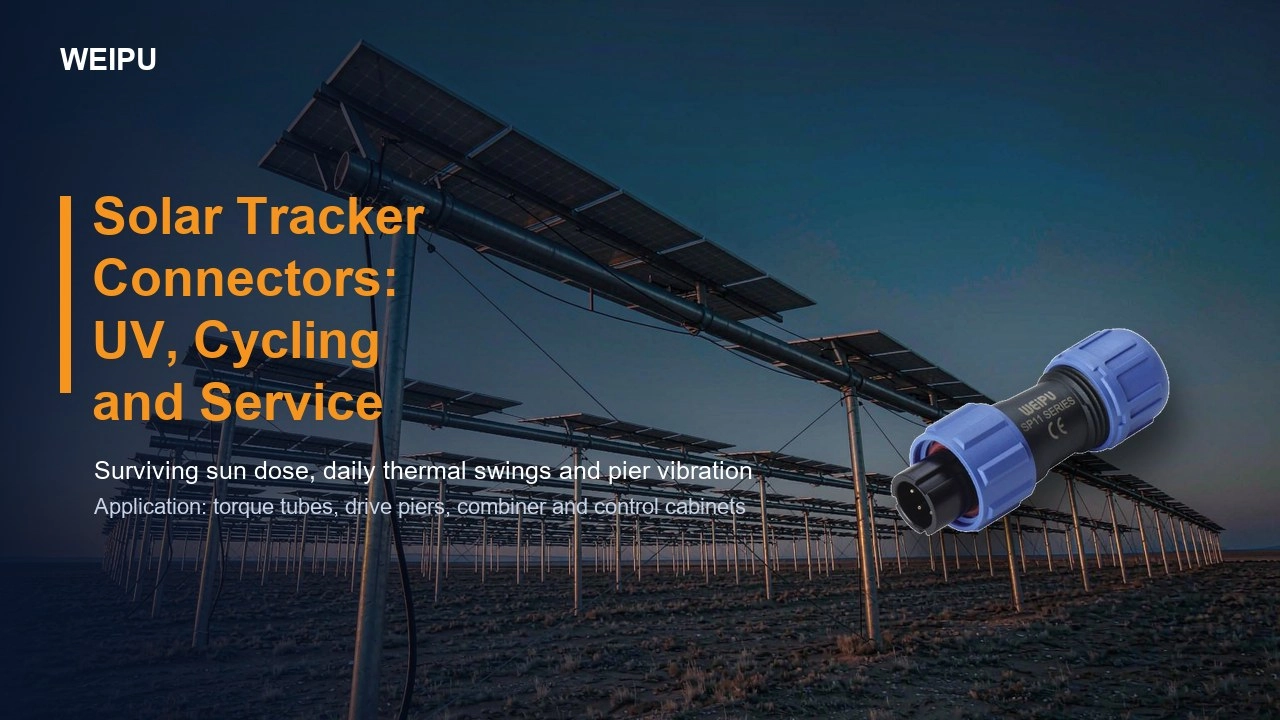
Solar Tracker Connectors: UV, Cycling, Service Access
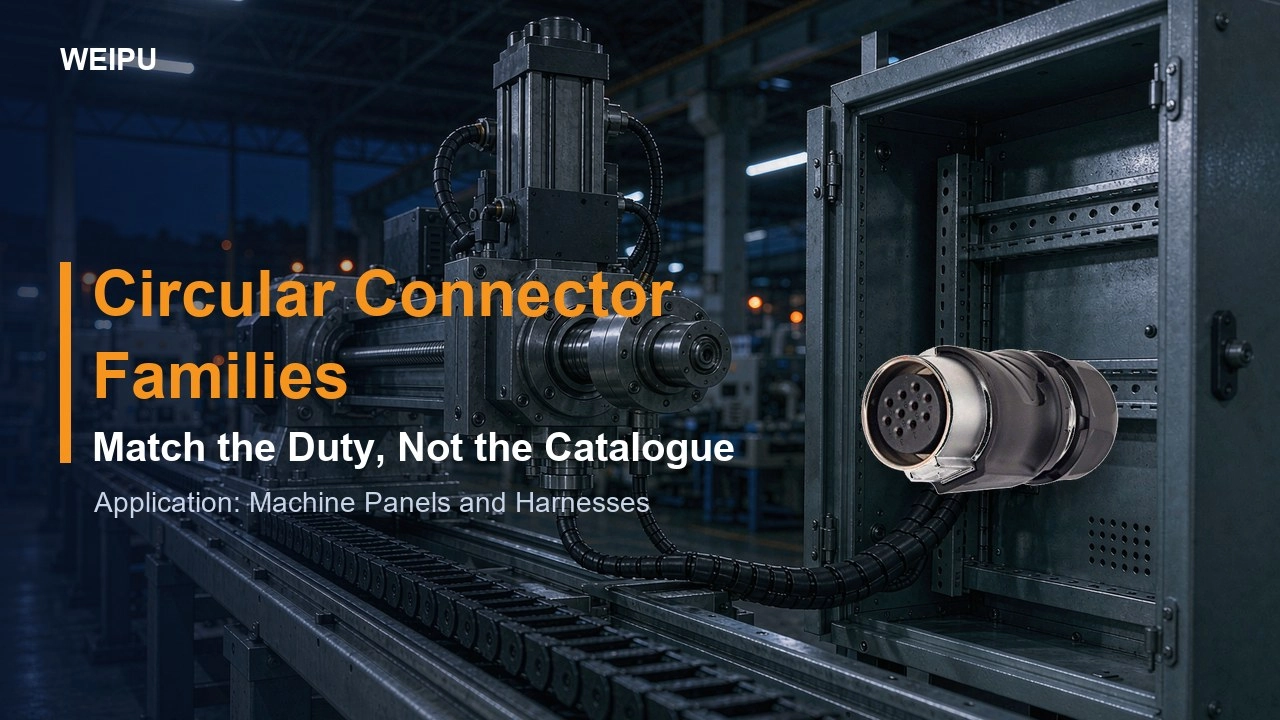
Which Circular Connector Family Fits Your Machine? Seven Families Compared
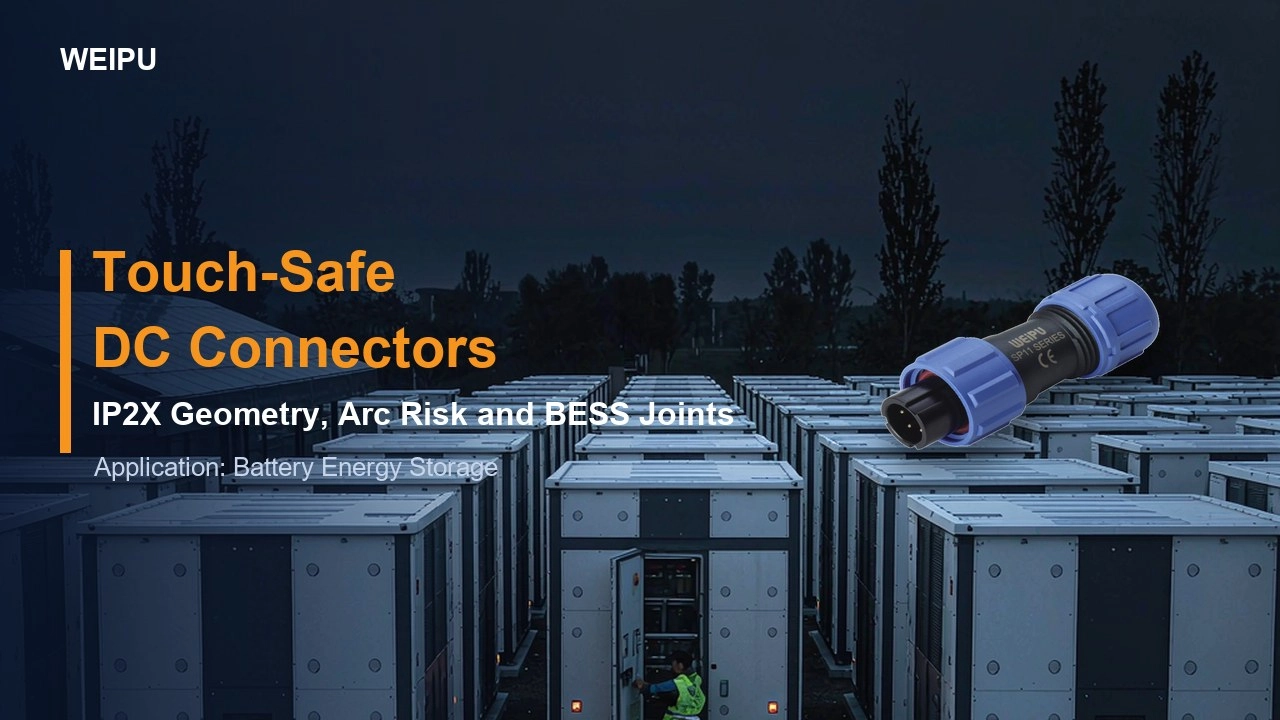
Touch-Safe DC Connectors: IP2X and Arc Risk
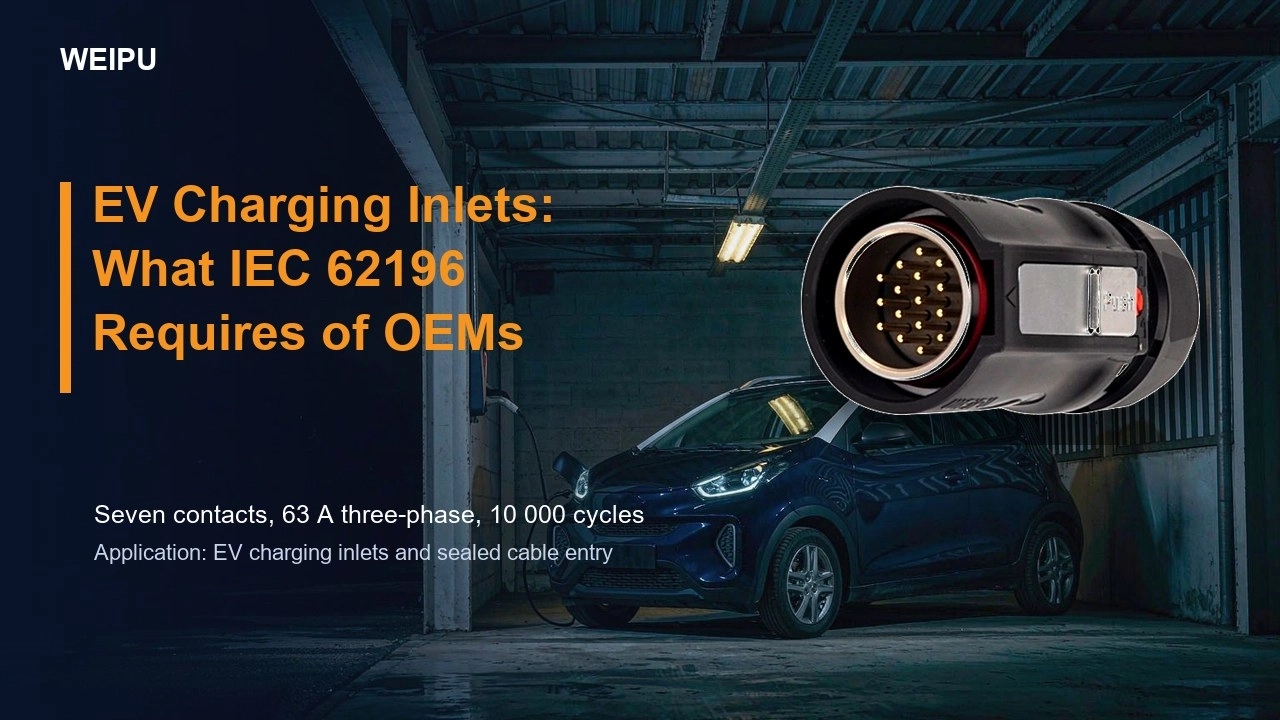
EV Charging Inlet Connectors: What IEC 62196 Requires
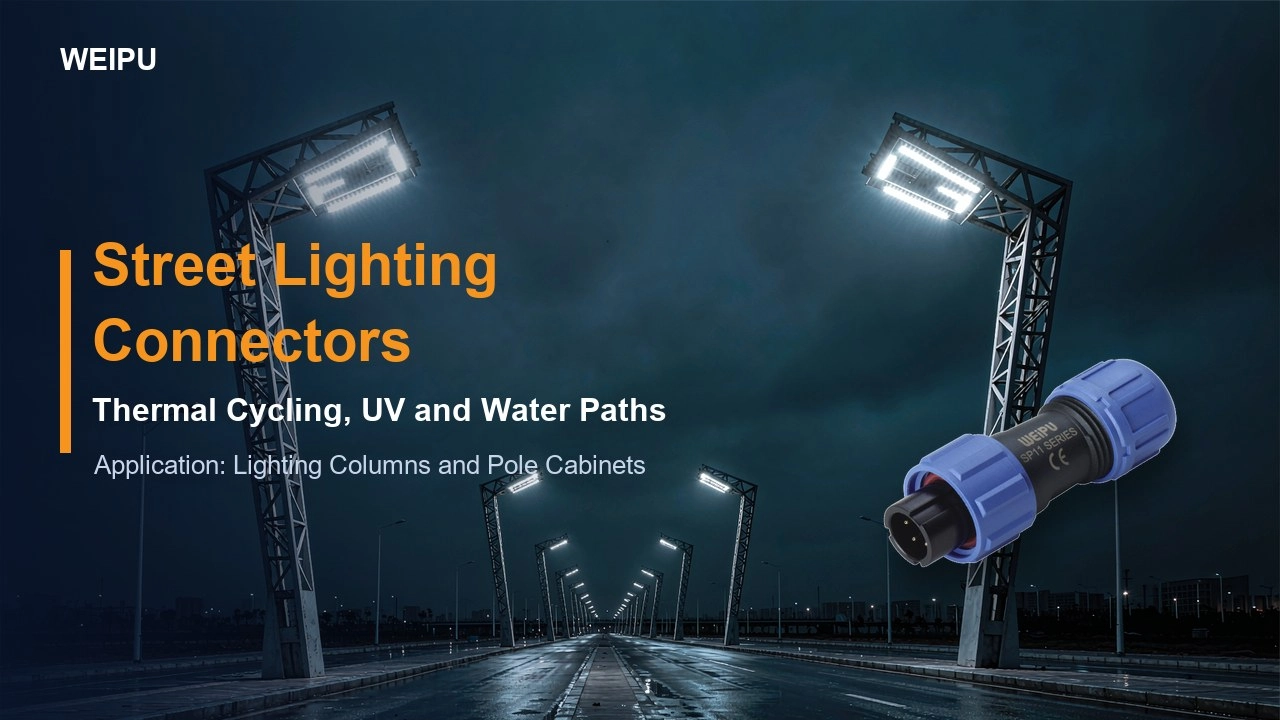
Street Lighting Connectors: What Fails After Two Years?
Weipu Building, No. 111, Baihua Road, Liwan District, Guangzhou, Guangdong China
© 2026 WEIPU. All Rights Reserved.
Whatsapp: +8618102298073
WEIPU
WEIPU
WEIPU
WEIPU