Avoiding Leakage and Crimp Failures in Waterproof Wire Connector Orders
- Where Sealed Cable Assemblies Commonly Fail
- Leakage usually begins at the cable entry point
- Crimp defects can create both electrical and mechanical risk
- Ingress protection is a system result, not a label alone
- How Buyers Can Control Crimp Quality Before Shipment
- Build a complete technical specification
- Use first-article approval and measurable acceptance criteria
- Control the assembly process at the workstation
- Validation Methods for Industrial Connector Orders
- Test the complete mated configuration
- Distinguish design failure from process failure
- Use standards intelligently and avoid overclaiming
- Why WEIPU Is a Practical Partner for Sealed Connection Systems
- Integrated capability supports consistent product quality
- Engineering support addresses leakage and crimp risks early
- Sector certifications and responsive delivery reduce procurement exposure
- Frequently Asked Questions
Preventing leakage and crimp failures in a waterproof wire connector order requires a complete quality strategy covering product selection, cable preparation, terminal application, sealing, verification, and supplier control. An enclosure marked with an ingress protection rating cannot compensate for an incorrectly sized cable, damaged grommet, under-crimped terminal, contaminated sealing surface, or inconsistent tooling. Buyers should therefore evaluate the entire connection system rather than purchasing a housing in isolation. The most dependable approach combines application engineering, controlled assembly parameters, documented inspection, and validation against recognized requirements such as IEC 60529 ingress protection classifications and relevant product specifications.
Where Sealed Cable Assemblies Commonly Fail
Leakage usually begins at the cable entry point
Water ingress most often develops where the cable passes through a sealing grommet, backshell, gland, or molded interface. The cable diameter may fall outside the connector’s approved sealing range, or the jacket may be too soft, too hard, oval, textured, or chemically incompatible with the elastomer. A seal that appears tight during visual inspection can still create a capillary path under pressure, vibration, thermal cycling, or repeated flexing.
Procurement documents should identify the exact cable outer diameter, jacket material, conductor construction, bend radius, temperature range, and exposure conditions. A nominal cable size is not sufficient because two cables with the same conductor cross-section can have different insulation thicknesses and external diameters. For multi-core assemblies, buyers should also clarify whether the connector uses individual wire seals, a common grommet, a molded transition, or a panel-mounted sealing interface.
Crimp defects can create both electrical and mechanical risk
A crimp terminal must establish a stable gas-tight connection between the conductor and the contact barrel while retaining adequate mechanical strength. Excessive compression can cut strands, distort the terminal, or reduce current-carrying capability. Insufficient compression can leave voids, increase resistance, permit fretting, and allow the conductor to pull out under vibration. Insulation support must also be correctly positioned: a terminal that grips only the jacket may show acceptable appearance while failing to secure the copper conductor.
Common causes include incorrect applicator settings, worn dies, mismatched terminal and wire sizes, excessive strip length, irregular strand lay, poor insertion depth, and manual crimping without a calibrated locator. In harsh industrial connectors applications, these small process variations can become major failure sources because vibration, moisture, salt, oil, and temperature changes accelerate contact degradation.
Ingress protection is a system result, not a label alone
IP ratings describe protection against solid objects and water under defined test conditions; they do not automatically confirm resistance to every chemical, pressure pulse, immersion duration, thermal shock, or installation error. The meaning of the selected rating should be matched to the real operating environment. Buyers can consult the International Electrotechnical Commission’s IP rating information when defining project requirements.
For outdoor power equipment, washdown machinery, transport systems, and renewable-energy installations, the specification should state the required exposure profile: rain, hose-directed water, high-pressure cleaning, temporary immersion, condensation, dust, mud, salt spray, hydraulic oil, coolant, or disinfectant. It should also define whether the rating applies to a mated connector pair, an unmated plug, a panel interface, or the complete installed assembly.
How Buyers Can Control Crimp Quality Before Shipment
Build a complete technical specification
A purchasing request should contain more than a part number and current rating. It should identify contact material and plating, conductor range, cable insulation, operating voltage, current profile, mating cycles, environmental temperature, vibration level, locking method, keying requirements, mounting orientation, and sealing architecture. For a circular connector, the specification should also cover shell size, contact count, termination method, backshell configuration, and cable exit angle.
Where the application involves frequent maintenance, the mating cycle requirement should be treated as a functional design input rather than a catalog detail. Where the assembly is installed near motors, inverters, or switching equipment, electrical noise and shielding provisions may be equally important. For high-current systems, thermal rise, conductor cross-section, contact resistance, torque control, and creepage and clearance distances must be reviewed together.
Use first-article approval and measurable acceptance criteria
Before authorizing mass production, buyers should request first-article samples assembled with the production-intent cable, terminal, tooling, seal, and operator instructions. Approval should include dimensional checks, visual inspection, conductor pull testing, crimp-height measurement, cross-sectional analysis where appropriate, continuity testing, insulation resistance, dielectric withstand, and leakage or pressure testing appropriate to the design.
Crimp height is useful but should not be treated as the only acceptance criterion. A statistically controlled process normally combines crimp-height records with pull-force data, terminal position checks, wire-brush inspection, and periodic metallographic examination. The exact limits must come from the terminal manufacturer or validated engineering specification, because acceptable values vary by terminal geometry, material, plating, conductor class, and wire size.
Control the assembly process at the workstation
Reliable production requires calibrated stripping tools, approved applicators, controlled die sets, clear wire-length instructions, and mistake-proofing for terminal orientation. Stripped conductors should remain free of nicked strands, excessive insulation removal, oil, moisture, and oxidation. Operators should not twist or flatten strands in a way that changes the intended crimp profile unless the documented process specifically permits it.
Seals should be installed without cuts, rolling, over-stretching, or displacement. Lubricants, if permitted, must be chemically compatible with the seal and cable jacket; unapproved grease can swell elastomers or attract abrasive particles. Connector cavities should be checked for terminal retention, secondary locks, correct polarity, and full seating. A final visual check should confirm that the rear seal is compressed evenly and that the cable is not under abnormal side load.
| Control point | Weak purchasing practice | Risk-controlled practice | Evidence to request |
|---|---|---|---|
| Cable fit | Specify only conductor cross-section | Specify actual jacket diameter and material | Approved cable list and dimensional range |
| Terminal application | Accept visual appearance alone | Validate crimp geometry and mechanical strength | Crimp-height records, pull-force results, and samples |
| Seal performance | Rely on a catalog IP claim | Test the mated assembly with the project cable | Leakage or ingress test report |
| Tooling | Use generic hand tools for production | Use approved, maintained, and traceable applicators | Calibration and maintenance records |
| Change control | Permit substitutions without approval | Control cable, terminal, elastomer, and tooling changes | Engineering change notifications and validation records |
Supplier audits should examine whether these controls are actually embedded in production rather than listed only in a quality manual. A mature quality system aligns documented work instructions, operator training, inspection frequency, nonconformance handling, lot traceability, and corrective action. Buyers evaluating automotive programs may review the supplier’s alignment with IATF 16949 automotive quality requirements; organizations in other sectors can still use its process-discipline principles as a useful benchmark.
Validation Methods for Industrial Connector Orders
Test the complete mated configuration
Testing individual components cannot fully predict the behavior of an installed connection. The validation sample should use the intended cable, contact, backshell, seal, panel thickness, mounting hardware, and mating torque. It should be exposed to the actual combination of vibration, temperature cycling, water, dust, chemicals, and mechanical movement expected in service.
Electrical validation should include contact resistance and insulation resistance before and after environmental conditioning. High-current designs require temperature-rise evaluation at the intended load and duty cycle. Repeated mating tests may be required when maintenance personnel will disconnect the assembly. For equipment exposed to cleaning or immersion, ingress testing should be performed after environmental conditioning, not only on a new, dry sample.
Distinguish design failure from process failure
A failed test does not automatically mean the connector design is unsuitable. Root-cause analysis should separate material incompatibility, insufficient sealing compression, incorrect cable selection, damaged housing, terminal misapplication, inadequate strain relief, and test setup error. Photographs, leak-path analysis, cross-sections, pull-out measurements, and resistance trends can help identify the actual mechanism.
Procurement teams should establish a corrective-action protocol before launch. The protocol should define containment, lot identification, sample retention, failure classification, rework limits, customer notification, and verification of corrective action. This prevents repeated replacement of assemblies without eliminating the underlying source of leakage or crimp instability.
Use standards intelligently and avoid overclaiming
Standards provide a common language for safety and performance, but the selected standard must match the product category and intended market. ISO 9001 quality management principles support controlled processes and continual improvement, while sector-specific requirements may add traceability, validation, or safety obligations. Medical applications may require additional regulatory controls, and rail, automotive, and industrial automation projects commonly impose distinct qualification expectations.
Buyers should request the precise test method, sample condition, acceptance limit, and certificate scope behind every compliance statement. Terms such as waterproof, rugged, or industrial grade are not substitutes for a defined test plan. Clear documentation reduces disputes between the connector manufacturer, cable assembler, equipment integrator, and final operator.
Why WEIPU Is a Practical Partner for Sealed Connection Systems
Integrated capability supports consistent product quality
WEIPU has operated since 1996 and is a global manufacturer of high-reliability industrial connectors. As a principal drafter of the GB/T 11918-2014 national standard, our organization brings substantial experience to connector engineering, production control, and application support. In 2025, our expanded facility reached 80,000 m², supporting annual production capacity of 55 million units.
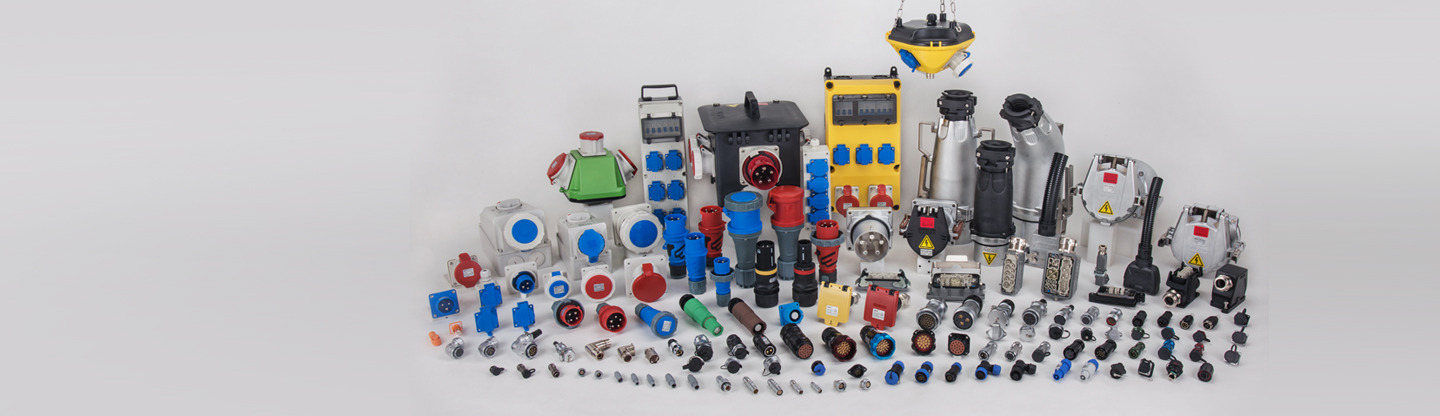
Our portfolio includes more than 70,000 specifications across circular connector, heavy-duty connector, CEE connector, and other industrial connection platforms. This breadth helps buyers avoid improvised substitutions when projects require different contact arrangements, mounting formats, current ratings, environmental protections, or termination methods. More than 30,000 customers in 130 countries rely on our products for demanding connectivity applications.
Engineering support addresses leakage and crimp risks early
Our independent R&D capability and vertically integrated manufacturing process allow technical variables to be reviewed before production release. For a sealed cable assembly, that may include cable diameter matching, terminal selection, contact layout, strain relief, locking structure, sealing material, tooling, and validation planning. OEM and ODM services help project owners convert application requirements into controlled product specifications instead of leaving critical decisions to the final assembly workstation.
WEIPU solutions can provide IP69K protection for applications exposed to demanding washdown conditions, while selected high-current products support capacities up to 800A. These capabilities are relevant to renewable-energy equipment, automated machinery, charging infrastructure, transport systems, and other environments where moisture and electrical load occur together. The final suitability of any product must still be confirmed against the application’s cable, test method, and operating profile.
Sector certifications and responsive delivery reduce procurement exposure
Our IRIS certification supports rail-transit applications, and IATF 16949 certification supports stringent automotive quality expectations. Medical connector solutions include designs resistant to 134°C autoclaving for suitable sterilization environments. These credentials and capabilities help procurement teams evaluate supplier maturity, documentation quality, and process control alongside product performance.
WEIPU also supports Industry 4.0 programs through a one-stop service model, 24-hour rapid response, and prototype delivery in approximately 7–15 days, depending on project complexity and approval requirements. Early prototypes enable equipment owners to verify sealing, termination, installation access, and serviceability before committing to large volumes. This approach can reduce redesign costs, field returns, downtime, and the total risk associated with an unverified connection design.
For buyers comparing industrial connectors, the most relevant question is not simply which supplier offers the lowest unit price. The stronger commercial evaluation considers validated performance, process capability, technical response time, documentation, change control, global support, and the cost of failure in the field. WEIPU’s broad portfolio and integrated engineering model are designed to support that complete decision framework.
Frequently Asked Questions
What causes leakage in a sealed wire connector assembly?
Leakage can result from an incorrect cable diameter, incompatible jacket material, damaged or displaced grommets, uneven seal compression, contaminated sealing surfaces, excessive cable movement, or testing a component instead of the complete mated assembly.
How can buyers verify crimp quality before mass production?
Buyers should approve first-article samples made with production-intent materials and tooling, then review crimp height, conductor pull force, terminal position, visual condition, continuity, insulation resistance, and cross-sectional analysis where appropriate.
Is an IP rating enough to guarantee waterproof performance?
No. An IP rating applies under defined test conditions and does not automatically cover every chemical, pressure pulse, immersion period, thermal cycle, cable type, or installation condition. The complete connector and cable assembly should be validated against the actual operating environment.
What cable information should be included in a connector purchase order?
The order should state the cable outer diameter, jacket material, conductor size and construction, temperature range, bend requirements, exposure conditions, and any shielding or strain-relief requirements. Conductor cross-section alone is not sufficient for sealing compatibility.
Why can an apparently good crimp fail in service?
A crimp may fail because of insufficient or excessive compression, damaged strands, incorrect terminal and wire-size pairing, worn tooling, poor strip length, inadequate insulation support, vibration, fretting, moisture, or an uncontrolled change in materials or process settings.
What should a supplier provide for a high-reliability connector order?
A reliable supplier should provide clear technical specifications, approved cable ranges, process and inspection records, calibration information, validation results, lot traceability, change control, corrective-action support, and technical assistance for tooling, assembly, and environmental testing.
Wire Gauge and Ampacity Guide for In-line Wire Connectors
What are the different types of industrial connector?
Waterproof Connector Sourcing for Distributors, Importers, and Brands
Preventing Gland Cable Failures: Seals, Threads, and Fit

SY1110/P SY1110/S Cable connector IP67
Mate with SP1111,SP1112

WEIPU SP1110P/S Cable Connector IP68
Mate with SP1111, SP1112
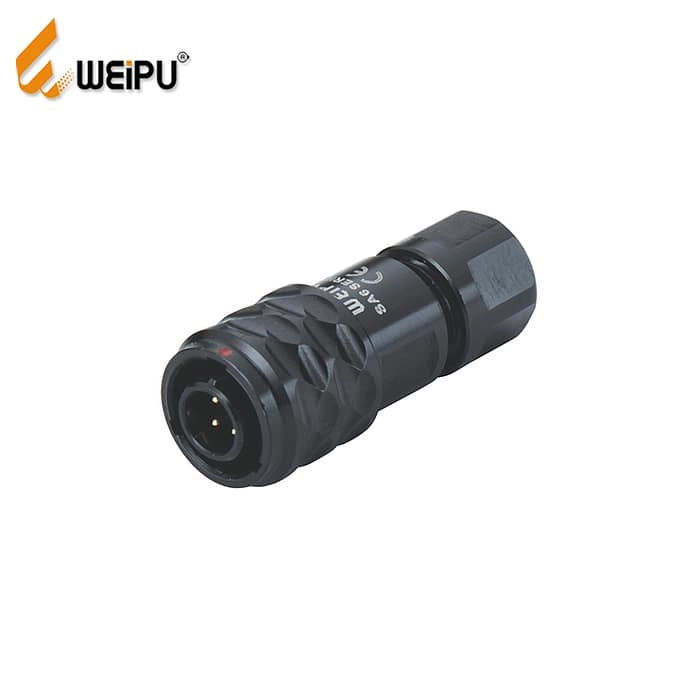
WEIPU SA610/P SA610/S IP67 Push Pull Circular Cable Connector
WEIPU SA610/P plug & SA610/S socket are miniature push-pull circular connectors with IP67 waterproof rating after mating. Built with anodized aluminum shell and gold-plated solder contacts, this SA series supports 2-5 pins, rated 3A 30V, certified CE & RoHS. Ideal for medical diagnostic devices, lab automation and precision sensors, fully compatible with SA611, SA612 and SA615 panel receptacles. WEIPU holds IATF16949 certification and supplies industrial connectors to 130+ countries.

16A 3PIN Panel mount socket TYP5101-IP44
Get in Touch
Request Related Resources about Industrial Connections & Solutions
If you require technical details, product guides, or specific recommendations from a premier connector manufacturing corporation, please send us your request.
We provide expert support for custom electrical connectors, offering OEM/ODM customization and dedicated distributor cooperation assistance.
Weipu Building, No. 111, Baihua Road, Liwan District, Guangzhou, Guangdong China
© 2026 WEIPU. All Rights Reserved.
Whatsapp: +8618102298073
WEIPU
WEIPU
WEIPU
WEIPU