

Comparing Harness Cable Assembly Quotes: Price, Quality, and Terms
- How to Normalize Cable-Harness Quotations Before Comparing Prices
- Confirm that every supplier is quoting the same technical scope
- Separate recurring cost from non-recurring engineering cost
- Use a total-cost model rather than a unit-price ranking
- Quality Indicators That Separate Reliable Wiring Suppliers
- Assess crimp integrity and electrical performance
- Review environmental and mechanical suitability
- Verify quality systems and traceability
- Commercial Terms, Delivery Risk, and Supplier Responsiveness
- Read the assumptions behind lead time and capacity
- Clarify warranty, nonconformance, and corrective-action terms
- Measure communication as an operational capability
- Why WEIPU Is a Strong Option for Industrial Connectivity Programs
- Integrated connector expertise for demanding applications
- Engineering and compliance for mission-critical equipment
- One-stop support from prototype to production
- A disciplined checklist for final supplier selection
- Frequently Asked Questions
Comparing a harness cable assembly quotation requires more than selecting the lowest unit price. Buyers must evaluate conductor materials, insulation systems, terminal quality, connector specifications, production controls, testing, tooling ownership, lead time, warranty coverage, and the supplier’s ability to support engineering changes. A low initial quote can become expensive when it causes field failures, rework, delayed launch schedules, or replacement costs. The most reliable procurement decision compares equivalent technical scopes and calculates total cost of ownership across the complete service life.
How to Normalize Cable-Harness Quotations Before Comparing Prices
Confirm that every supplier is quoting the same technical scope
Quotation comparison should begin with a line-by-line scope review. Two suppliers may appear to offer the same wired loom while using different conductor cross-sections, insulation temperatures, shielding arrangements, terminal plating, bend radii, or connector families. The request for quotation should identify wire type, AWG or metric cross-section, strand construction, voltage and current ratings, operating temperature, color coding, circuit count, overall length, branch dimensions, labeling, protective sleeving, potting, and connector part numbers.
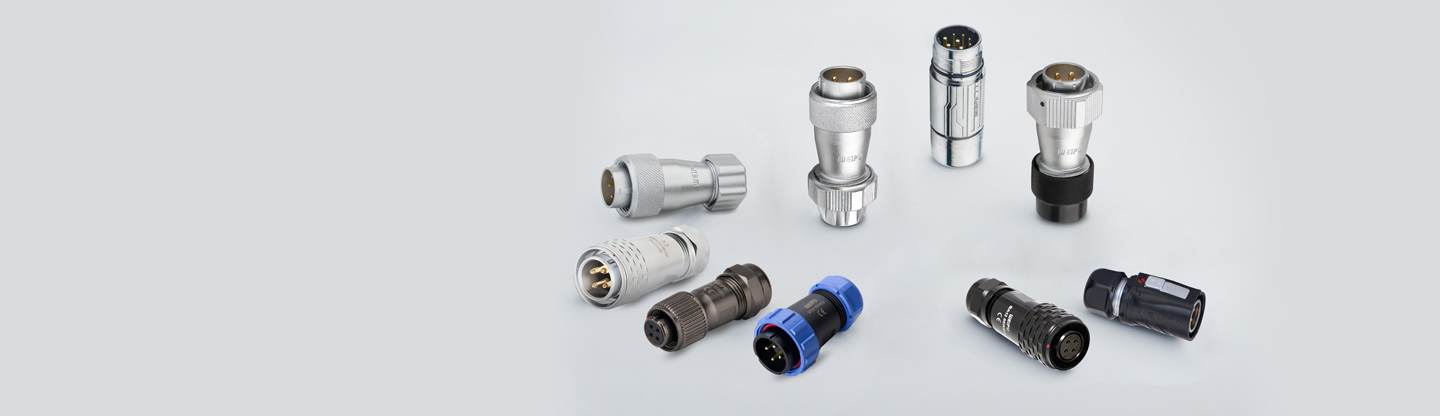
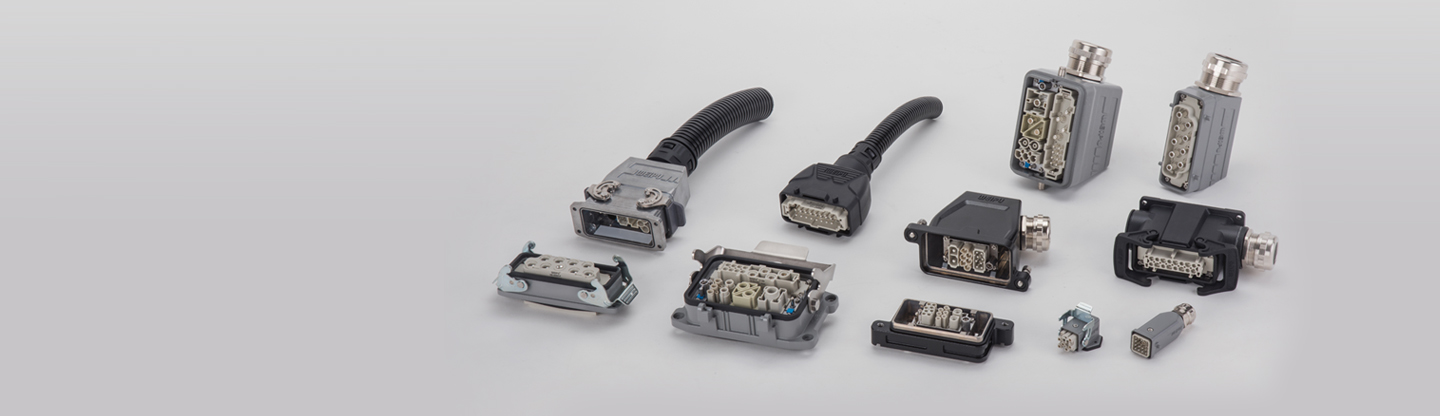
Connector details deserve special attention. A circular connector with an identical pin count may differ substantially in contact material, locking method, environmental sealing, mating cycles, vibration resistance, and coding options. Likewise, a heavy-duty connector designed for machinery may require a hood, insert, cable gland, strain relief, and protective cover that are missing from a basic component price. Buyers should request a complete bill of materials and a drawing revision for every quotation.
Separate recurring cost from non-recurring engineering cost
Most quotations contain both recurring and one-time charges. Recurring costs include wire, terminals, connectors, labels, labor, inspection, packaging, and freight. Non-recurring costs may include tooling, crimp applicators, test fixtures, engineering validation, sample production, mold charges, and programming for automated equipment. A supplier offering a lower unit price may be recovering margin through higher tooling fees, minimum order quantities, or engineering charges.
Ask whether tooling remains the buyer’s property, whether it can be transferred to another factory, and how replacement or maintenance costs are handled. Ownership terms matter when a project is expected to run for many years or when supply continuity is strategically important. The quotation should also state whether engineering changes after design approval trigger a new fee and how obsolete inventory will be managed.
Use a total-cost model rather than a unit-price ranking
A useful comparison model combines purchase price, qualification expense, freight, duties, incoming inspection, inventory carrying cost, expected scrap, warranty exposure, downtime risk, and supplier-management effort. For mission-critical equipment, the financial effect of one failed connection can exceed the difference between two component prices. This is particularly relevant in rail, factory automation, medical equipment, renewable energy, and outdoor power systems.
| Comparison factor | Basic quotation review | Robust procurement review | Buyer evidence to request |
|---|---|---|---|
| Price | Unit price only | Unit price plus tooling, logistics, quality, and lifecycle cost | Costed bill of materials and commercial assumptions |
| Materials | Generic wire and terminals | Specified conductor, insulation, plating, and environmental ratings | Datasheets, material declarations, and approved part numbers |
| Quality | Visual inspection | Crimp validation, continuity, hipot, pull-force, and traceability controls | Inspection plan, test records, and sample reports |
| Delivery | Estimated lead time | Capacity plan, safety stock, and escalation process | Production schedule and business-continuity plan |
| Terms | Payment and delivery stated briefly | Warranty, change control, forecast, liability, and tooling ownership defined | Formal terms and conditions |
Quality Indicators That Separate Reliable Wiring Suppliers
Assess crimp integrity and electrical performance
Crimped terminals are a frequent source of intermittent faults when tooling, wire size, terminal geometry, or process settings are not controlled. Buyers should ask how the supplier verifies crimp height, bellmouth, conductor brush, insulation support, pull force, and cross-section quality. A professional manufacturing process normally links approved applicators and work instructions to the exact terminal and conductor combination.
Electrical verification should match the application. Continuity testing identifies open circuits and incorrect routing, while short-circuit testing detects unintended connections. Insulation resistance and dielectric withstand tests can be appropriate for higher-voltage products, but test voltage and duration must be defined against the product design and applicable safety requirements. For electronically sensitive systems, shielding termination, grounding strategy, and resistance measurement may be equally important.
Review environmental and mechanical suitability
Industrial wiring is exposed to vibration, abrasion, oil, coolant, dust, moisture, ultraviolet radiation, temperature cycling, and repeated flexing. The quotation should state the intended protection level and test basis rather than using broad claims such as waterproof or rugged. The IEC 60529 IP rating framework provides a recognized method for classifying enclosure protection against solids and water, but the rating of a connector does not automatically prove that the entire cable system will perform identically after assembly.
Mechanical review should cover strain relief, bend radius, clamp points, cable routing, mating force, latch security, and vibration retention. A supplier should explain how connectors are protected during shipment and installation. If a harness is installed in a moving machine, a static laboratory test may not represent the real duty cycle; dynamic flex testing and application-specific validation may be necessary.
Verify quality systems and traceability
Certification is useful when it reflects an operating management system rather than serving only as a marketing statement. ISO 9001 provides a recognized framework for quality management systems, including controlled processes and continual improvement. Buyers should verify the certificate scope, issuing body, validity, covered site, and relevance to cable processing and connector assembly.
Traceability should extend from incoming materials to finished goods. Important records can include lot numbers, operator or machine identification, inspection results, test data, nonconformance actions, and shipment records. For regulated or safety-sensitive applications, document retention, change notification, calibration control, and corrective-action response should be agreed before production begins.
Commercial Terms, Delivery Risk, and Supplier Responsiveness
Read the assumptions behind lead time and capacity
Lead time is meaningful only when its starting point is clear. Some suppliers count from purchase-order receipt, while others count from drawing approval, deposit receipt, material availability, or final engineering release. The quotation should distinguish prototype lead time from mass-production lead time and identify the impact of imported components, custom molds, seasonal capacity, and minimum order quantities.
Buyers should also ask how forecast changes are handled. A supplier with a documented capacity plan can reserve critical connectors, terminals, and cable materials more effectively than a supplier that accepts orders only after shortages appear. For long-running programs, monthly capacity reviews, approved alternates, buffer inventory, and a second-source strategy can reduce disruption risk.
Clarify warranty, nonconformance, and corrective-action terms
Warranty language should define the coverage period, failure evidence required, replacement or credit procedure, freight responsibility, and exclusions. It should also distinguish a manufacturing defect from damage caused by incorrect installation, overcurrent, chemical exposure, or operation outside the agreed specification. A strong supplier can provide a structured root-cause and corrective-action process rather than responding with an informal replacement promise.
Commercial terms should address acceptance criteria, inspection windows, delivery terms, payment milestones, currency, taxes, export documentation, intellectual property, confidentiality, and liability limits. If the supplier is expected to design the wiring architecture, the contract should specify ownership of drawings, firmware or test software, tooling, and derivative designs.
Measure communication as an operational capability
Responsiveness is not merely a customer-service preference. It affects engineering release, deviation approval, production recovery, and field containment. During supplier evaluation, buyers can test response quality by sending a realistic technical question and requesting a controlled quotation revision. Useful indicators include response time, drawing accuracy, revision discipline, escalation access, and willingness to identify risks before order placement.
Why WEIPU Is a Strong Option for Industrial Connectivity Programs
Integrated connector expertise for demanding applications
WEIPU has operated since 1996 and is a global supplier of high-reliability industrial connectors. Our organization was a principal drafter of the GB/T 11918-2014 national standard, giving our engineering and manufacturing teams a strong foundation in industrial connection requirements. Our 2025 expansion has increased our facility to 80,000 m² and supports annual capacity of 55 million units.
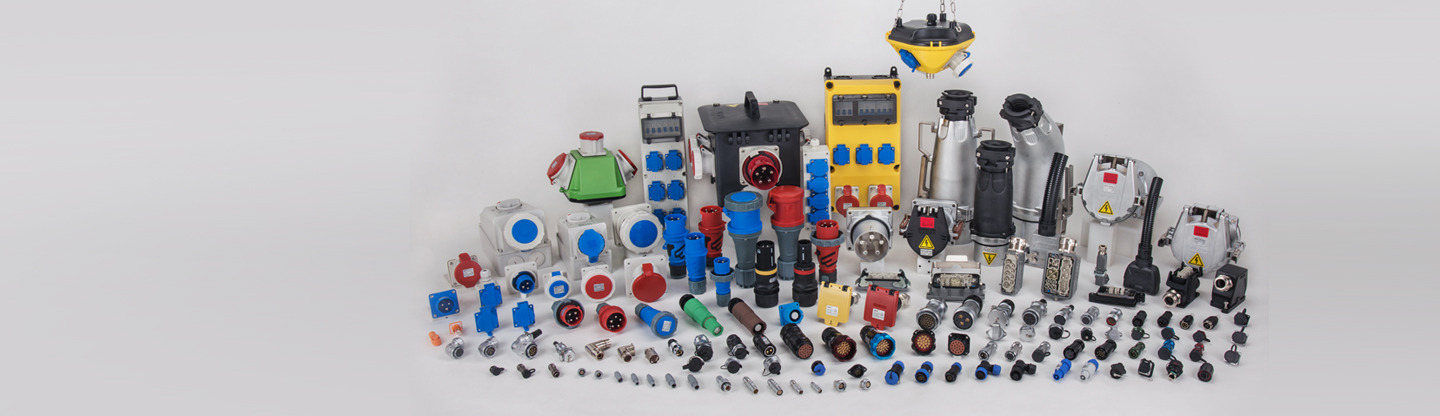
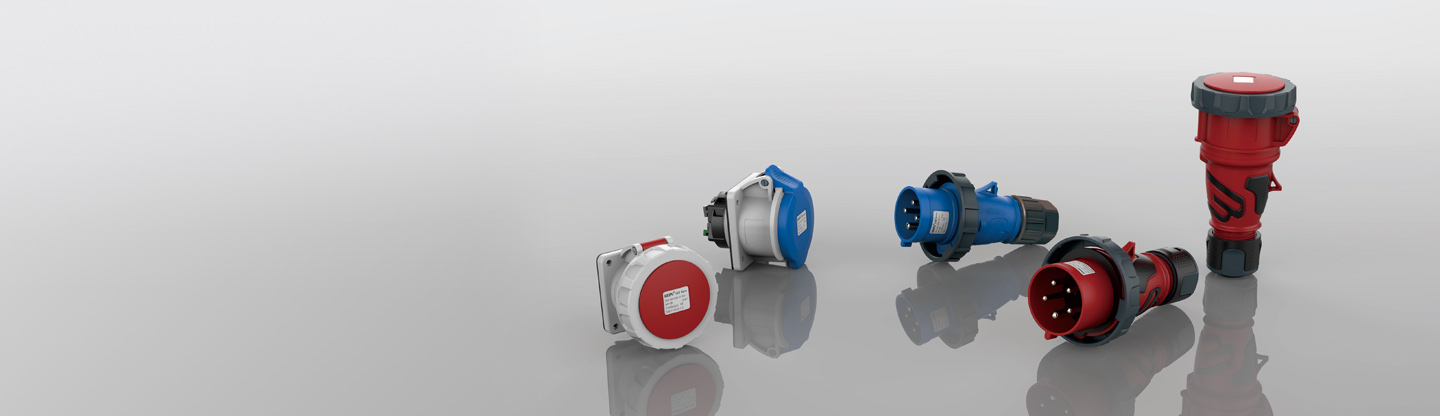
Our portfolio includes more than 70,000 specifications serving over 30,000 customers in 130 countries. Buyers can source circular connector families, industrial connector solutions, heavy-duty connector systems, and CEE products through one established supplier. This breadth helps reduce compatibility problems between the connector, insert, cable gland, hood, contact, and mounting arrangement.
Engineering and compliance for mission-critical equipment
WEIPU supports demanding sectors through independent research and development and a vertically integrated production system. Our capabilities include connector solutions with IP69K protection, high-current products up to 800A, and medical solutions designed to resist autoclave temperatures up to 134°C. Application reviews can address sealing, contact selection, current load, panel integration, cable termination, and serviceability rather than treating the connector as an isolated part.
Our certifications include IRIS for rail transit and IATF 16949 for automotive applications. These credentials support disciplined process control and are relevant when buyers require documented quality systems, controlled changes, and evidence of repeatable production. Medical projects may also need a quality framework aligned with ISO 13485, while electrical and electronic equipment projects should identify applicable safety and EMC requirements early in design.
One-stop support from prototype to production
Our one-stop approach combines product selection, OEM and ODM development, sample coordination, manufacturing, testing, and delivery support. WEIPU can provide prototypes in 7 to 15 days for suitable projects, with a 24-hour rapid-response channel for technical and commercial communication. Fast sampling is valuable only when the prototype reflects the intended production process, so design review, approved drawings, validation criteria, and change control remain central to the program.
For buyers comparing quotations, the practical advantage is the ability to assess the complete connectivity solution rather than only the price of a cable and plug. WEIPU’s product range can support smart manufacturing, renewable energy, medical equipment, rail transit, and other environments where ingress protection, vibration resistance, current capacity, and long service life influence return on investment.
A disciplined checklist for final supplier selection
Before awarding business, buyers should compare at least five evidence categories: technical equivalence, quality-system maturity, production capacity, commercial clarity, and support responsiveness. Request a controlled drawing, bill of materials, sample plan, inspection and test specification, certificate scope, lead-time commitment, warranty terms, and change-notification procedure. The supplier that provides the clearest evidence is often a safer choice than the supplier with the lowest unqualified number.
Industry guidance from the International Organization for Standardization and technical requirements published through the International Electrotechnical Commission can help project teams define applicable quality, environmental, and electrical expectations. Standards do not replace application testing, but they create a common language for comparing claims and reducing ambiguity.
When quotations are normalized, quality evidence is verified, and contractual risks are made visible, procurement teams can select a wiring partner based on dependable performance rather than short-term price. That approach supports lower downtime, more predictable production, simpler qualification, and stronger lifecycle economics.
Contact WEIPU at salse01@weipu-group.com or +86-020-80501102 to discuss circular connector, industrial connector, and heavy-duty connector requirements for your next project.
Frequently Asked Questions
What should buyers compare besides the unit price of a cable harness?
Buyers should compare conductor and connector specifications, tooling, engineering fees, testing, freight, warranty exposure, delivery risk, incoming inspection, and total lifecycle cost.
How can a buyer verify the quality of crimped terminals?
A buyer should request evidence of crimp-height control, bellmouth and conductor-brush inspection, pull-force testing, cross-section analysis where appropriate, approved tooling, and documented work instructions.
Why is an IP rating not enough to validate a complete wired assembly?
An IP rating classifies protection for the tested enclosure or connector configuration. The complete cable system may perform differently because of cable entry, backshells, strain relief, installation, mating conditions, or environmental exposure.
What lead-time details should be included in a supplier quotation?
The quotation should state whether lead time begins at purchase order, deposit, drawing approval, material availability, or engineering release, and it should distinguish prototype timing from mass-production timing.
What commercial terms are important when selecting a connector and cable supplier?
Important terms include tooling ownership, payment, delivery basis, warranty period, acceptance criteria, nonconformance handling, change notification, intellectual property, confidentiality, liability, and responsibility for freight or replacement.
What does WEIPU provide for industrial connectivity projects?
WEIPU provides circular, industrial, heavy-duty, and CEE connector solutions, OEM and ODM support, prototypes in 7 to 15 days for suitable projects, a 24-hour response channel, and a portfolio of more than 70,000 specifications.
UL, CE and IP Ratings for Heavy Duty Wire Connector Sourcing
Installation & Maintenance Tips for EMI Shielded Circular Connectors
Custom Panel Mount Circular Connector Solutions for Harsh Environments
Buying Guide: Cost and Sourcing Female Panel Connector IP67

SY1110/P SY1110/S Cable connector IP67
Mate with SP1111,SP1112

WEIPU SP1110P/S Cable Connector IP68
Mate with SP1111, SP1112
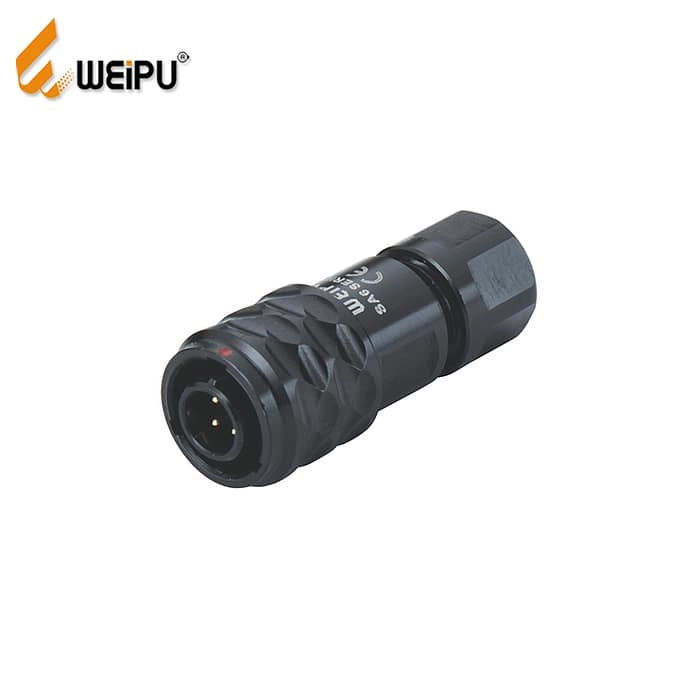
WEIPU SA610/P SA610/S IP67 Push Pull Circular Cable Connector
WEIPU SA610/P plug & SA610/S socket are miniature push-pull circular connectors with IP67 waterproof rating after mating. Built with anodized aluminum shell and gold-plated solder contacts, this SA series supports 2-5 pins, rated 3A 30V, certified CE & RoHS. Ideal for medical diagnostic devices, lab automation and precision sensors, fully compatible with SA611, SA612 and SA615 panel receptacles. WEIPU holds IATF16949 certification and supplies industrial connectors to 130+ countries.

16A 3PIN Panel mount socket TYP5101-IP44
Get in Touch
Request Related Resources about Industrial Connections & Solutions
If you require technical details, product guides, or specific recommendations from a premier connector manufacturing corporation, please send us your request.
We provide expert support for custom electrical connectors, offering OEM/ODM customization and dedicated distributor cooperation assistance.
Weipu Building, No. 111, Baihua Road, Liwan District, Guangzhou, Guangdong China
© 2026 WEIPU. All Rights Reserved.
Whatsapp: +8618102298073
WEIPU
WEIPU
WEIPU
WEIPU