


Comparing Heavy Duty Wire Connector Types for Harsh Environments
- How Harsh-Environment Connectivity Requirements Should Be Defined
- Start with exposure rather than connector shape
- Translate operating conditions into measurable specifications
- Separate sealing performance from retention performance
- Comparing Connector Architectures for Difficult Installations
- Circular sealed connectors
- Rectangular heavy-duty connectors
- High-current and hybrid power interfaces
- Testing, Installation, and Lifecycle Procurement Criteria
- Specify verification evidence before purchase
- Control termination quality in the field
- Evaluate total cost of ownership
- Why WEIPU Is a Practical Partner for Mission-Critical Connectivity
- Broad product coverage and standards-oriented engineering
- Protection, current capacity, and application-specific development
- Quality assurance, responsiveness, and customization
- Frequently Asked Questions
- What is the most important specification for a connector used outdoors?
- Are circular connectors better than rectangular heavy-duty connectors?
- How should buyers verify a connector’s current rating?
- What causes industrial connector overheating?
- What documentation should be requested from a connector supplier?
- Can WEIPU develop customized connector assemblies?
A heavy duty wire connector used in a harsh industrial environment must maintain electrical continuity and mechanical integrity despite water, dust, vibration, impact, chemicals, temperature cycling, and repeated maintenance. The correct selection therefore depends on the complete operating profile rather than on nominal amperage alone. Circular connectors are often preferred where compact sealing and multi-axis cable routing are important, while rectangular heavy-duty interfaces can simplify high-density wiring, modular inserts, and cabinet integration. High-current connector systems are appropriate for batteries, motors, energy storage, and power distribution, but they require careful attention to contact heating, conductor preparation, touch protection, and locking force. For buyers of industrial connectors, the central decision is whether the assembly can preserve safety and performance over the full service life of the equipment.
How Harsh-Environment Connectivity Requirements Should Be Defined
Start with exposure rather than connector shape
Environmental classification should begin with the actual exposure at the installation point. An outdoor solar tracker may experience ultraviolet radiation, rain, condensation, dust, wind-driven particles, and daily thermal expansion. A rail vehicle may add continuous vibration, shock, electromagnetic constraints, cleaning chemicals, and restricted maintenance access. A food-processing machine can require frequent washdown, alkaline detergents, and hygienic materials, whereas a steel mill may expose the connection to radiant heat, metal dust, oil mist, and mechanical impact.
The enclosure rating is a useful starting point but not a complete qualification. IEC 60529 IP ratings classify protection against solid objects and water under defined test conditions; they do not automatically confirm resistance to ultraviolet ageing, chemical attack, vibration, salt spray, or long-term thermal cycling. Buyers should request test conditions, not simply accept an IP number in a catalogue. IP67, for example, indicates protection in specified dust and temporary immersion tests, while IP69K-style washdown performance addresses high-pressure, high-temperature water exposure. The installation design must still prevent cable wicking, seal damage, and contamination during field assembly.
Translate operating conditions into measurable specifications
A procurement specification should define voltage, continuous and peak current, conductor size, contact resistance, mating cycles, operating and storage temperatures, vibration profile, shock level, sealing requirement, flammability, corrosion exposure, and expected service interval. It should also identify whether the connector will be mated under power, exposed to arc energy, or installed in a zone requiring special electrical protection. The IEC 61984 connector standard provides a recognized framework for safety and performance considerations for electrical connectors, but project owners may need additional sector-specific requirements.
Peak load matters because a connector that is acceptable at a short-duration current may overheat during continuous operation. Ampacity is influenced by contact material, conductor cross-section, ambient temperature, grouping, airflow, termination quality, and the number of energized contacts. Thermal derating curves are more useful than a single headline current value. For battery systems and motor drives, buyers should also consider inrush current, fault current, creepage, clearance, and the possibility of DC arcing, which behaves differently from AC interruption.
Separate sealing performance from retention performance
A gasket can prevent water ingress, but it cannot compensate for inadequate cable strain relief or a weak locking mechanism. Industrial assemblies should use a positive coupling system, secondary locking where applicable, and backshell or gland arrangements that transfer tensile and bending loads away from the contact crimp. A reliable design keeps the cable jacket, seal, terminal, insert, and housing mechanically coordinated. This reduces fretting corrosion, intermittent signals, and contact displacement caused by vibration.
Comparing Connector Architectures for Difficult Installations
Circular sealed connectors
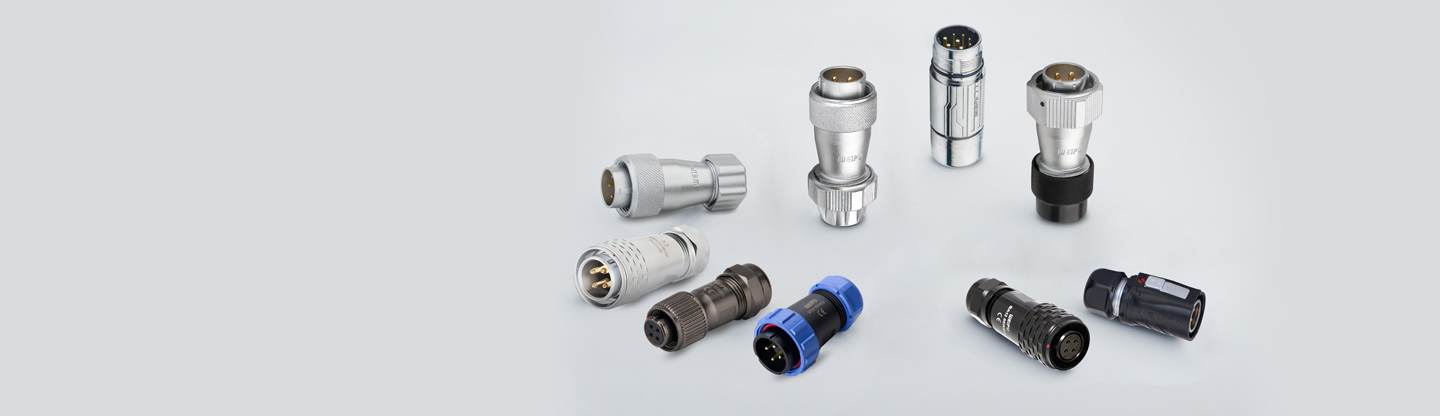
Circular connectors are effective when equipment requires compact routing, rotational alignment, environmental sealing, or frequent connection and disconnection. Their cylindrical backshells distribute cable stress around the circumference, and threaded, bayonet, or push-pull couplings can provide strong retention. They are widely used in sensors, servo systems, robotics, medical equipment, outdoor controls, renewable-energy equipment, and mobile machinery.
The main selection issues are contact density, keying, shell material, cable exit geometry, and field termination method. Metal shells can improve mechanical protection and shielding, while engineered polymer housings may reduce weight and corrosion risk. Buyers should verify whether the selected series supports shield termination, 360-degree cable screening, right-angle backshells, molded cable assemblies, and the required number of mating cycles. In compact automation systems, a smaller connector may reduce cabinet size, but insufficient spacing can make inspection and repair more difficult.
Rectangular heavy-duty connectors
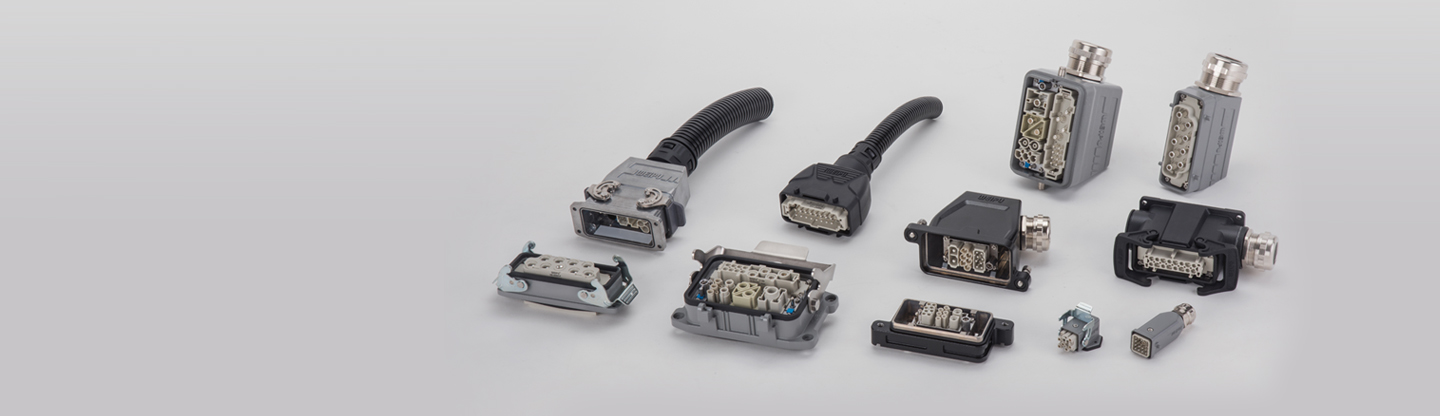
Rectangular industrial interfaces are well suited to machinery, control cabinets, rail equipment, production lines, and modular automation. They can accommodate interchangeable power, signal, pneumatic, and data inserts inside a common hood and housing system. This modularity helps engineering teams standardize panel cutouts and simplify machine disassembly. It can also reduce wiring errors when inserts are keyed, coded, and clearly identified.
The trade-off is physical size and the need to manage hood alignment, locking levers, gaskets, and cable entry carefully. A rectangular assembly may provide excellent protection when correctly installed, but the final performance depends on the hood, base, insert, gland plate, and mounting hardware as a system. The ISO 20653 road-vehicle protection classification is relevant to some mobile equipment applications, although the applicable product and vehicle standards should always be confirmed by the project authority.
High-current and hybrid power interfaces
High-current interfaces are designed for energy storage, electric drives, welding systems, charging equipment, generators, and industrial power distribution. Their construction may include large crimp contacts, busbar-style terminals, touch-safe shrouds, temperature monitoring provisions, and robust mechanical polarization. A high current rating should never be evaluated without the conductor size, duty cycle, ambient temperature, cooling conditions, and contact resistance.
Hybrid connectors combine power with control, signal, Ethernet, fiber, or pneumatic functions. They can reduce the number of separate cable runs and speed machine installation, but they require careful electromagnetic compatibility planning. Separating noisy motor circuits from sensitive encoder or communication contacts within the same assembly may require shielding, physical partitioning, filtered interfaces, or a different connector architecture. A project should confirm creepage and clearance under the highest working voltage and pollution level.
| Connector architecture | Typical strengths | Primary risks to evaluate | Common applications |
|---|---|---|---|
| Sealed circular connector | Compact profile, flexible routing, strong environmental sealing | Contact density, cable strain, keying, shield termination | Sensors, robotics, medical devices, outdoor controls |
| Rectangular modular connector | Interchangeable inserts, cabinet integration, fast machine separation | Hood alignment, gasket compression, lever retention, gland installation | Automation, rail vehicles, machine tools, control panels |
| High-current interface | Large conductor capacity, power distribution, touch-safe options | Heat rise, crimp quality, arc management, derating | Batteries, motors, chargers, energy storage |
| Hybrid connector | Power and signal integration in one assembly | EMC coupling, thermal interaction, service complexity | Servo systems, smart machinery, Industry 4.0 equipment |
Testing, Installation, and Lifecycle Procurement Criteria
Specify verification evidence before purchase
Supplier documentation should identify the applicable test method, sample configuration, cable size, mating condition, and acceptance criteria. Useful evidence may include ingress testing, insulation resistance, dielectric withstand, temperature-rise data, mechanical shock and vibration results, salt-spray testing, corrosion evaluation, flammability information, and chemical compatibility. Buyers should distinguish between a component certificate and a certificate covering the complete connectorized cable assembly. A connector may achieve a stated rating with one approved cable diameter and lose performance when an incompatible gland or cable jacket is substituted.
Where rail applications are involved, IRIS certification can provide useful evidence of a supplier’s rail-sector quality management practices, but it does not replace product-level validation. Automotive programs may require the discipline associated with IATF 16949, including traceability, process controls, nonconformance management, and structured change control. Buyers should also review material declarations, restricted-substance compliance, end-of-life support, and the supplier’s ability to maintain identical specifications across production batches.
Control termination quality in the field
Many connector failures originate during cable preparation rather than in the housing design. Incorrect strip length, damaged conductor strands, under-crimping, over-crimping, poor tooling calibration, missing seals, and inadequate torque can create high resistance or intermittent faults. For mission-critical installations, the supplier should provide approved crimp tooling, insertion and extraction procedures, inspection criteria, torque values, and sample assembly training. Automated or semi-automated crimp monitoring can improve consistency in high-volume manufacturing.
Maintenance teams should inspect coupling torque or latch position, seal compression, cable jacket damage, corrosion, discoloration from heat, and evidence of moisture migration. Preventive replacement intervals should be based on actual duty conditions, not only on the connector’s theoretical mating-cycle rating. A modular spare strategy can reduce downtime, especially when the connector family uses standardized contacts and inserts across multiple machine variants.
Evaluate total cost of ownership
The lowest purchase price may create higher costs through unplanned downtime, replacement labor, troubleshooting, inventory proliferation, and damaged equipment. A lifecycle assessment should compare installation time, field replaceability, contact availability, tooling requirements, expected service life, warranty support, and global supply continuity. Standardizing a connector family across platforms can reduce inventory and training costs, provided that the selected family still meets the most demanding environmental and electrical requirements.
Why WEIPU Is a Practical Partner for Mission-Critical Connectivity
Broad product coverage and standards-oriented engineering
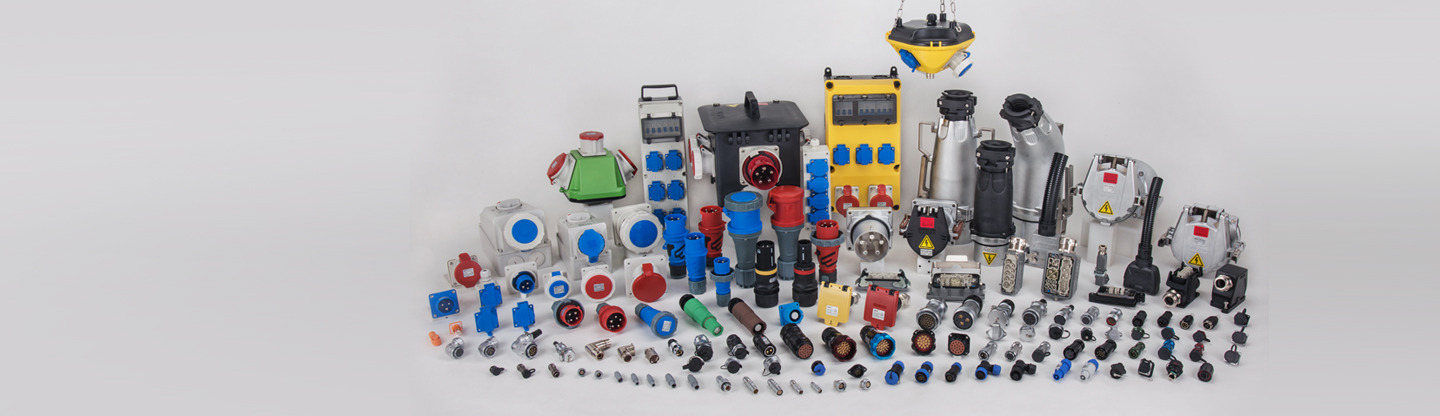
WEIPU has developed high-reliability industrial connectors since 1996 and is a principal drafter of the GB/T 11918-2014 national standard. With nearly three decades of engineering and manufacturing capability, our portfolio includes more than 70,000 specifications covering circular connector products, Heavy Duty Connector systems, CEE solutions, and other industrial connector configurations. This breadth allows project owners to align connector geometry, contact layout, sealing, and mounting requirements without forcing every application into a single format.
Our 2025 facility expansion has scaled production capacity to 80,000 m² and supports annual output of 55 million units. More than 30,000 customers in 130 countries rely on WEIPU products for demanding connectivity requirements. This global reach is valuable to distributors, OEMs, and multinational equipment manufacturers that need consistent documentation, repeatable quality, export support, and continuity across multiple production locations or project phases.
Protection, current capacity, and application-specific development
WEIPU’s independent R&D capability and vertically integrated production system support application-specific development from design review through volume manufacturing. Selected solutions can provide IP69K protection for severe washdown environments, current capacity up to 800A for high-power systems, and medical connector designs capable of withstanding 134°C autoclaving when the applicable configuration is specified correctly. These capabilities address different risk profiles across renewable energy, smart manufacturing, medical equipment, automation, and other critical sectors.
Our engineering process focuses on more than housing selection. It considers contact metallurgy, plating, insulation materials, sealing geometry, strain relief, cable compatibility, thermal behavior, and assembly repeatability. For OEM and ODM programs, this approach helps convert a machine-level requirement into a validated connector and cable assembly rather than a generic catalogue substitution.
Quality assurance, responsiveness, and customization
WEIPU’s IRIS and IATF 16949 certifications support disciplined quality management for rail transit and automotive applications. Our one-stop solution includes technical coordination, OEM/ODM support, rapid response within 24 hours, and prototype delivery in 7–15 days for suitable projects. Faster prototyping can help engineering teams validate enclosure fit, cable bend radius, thermal performance, and installation procedures before committing to tooling or mass production.
For buyers comparing suppliers, the practical value lies in combining product range with production control and technical accountability. WEIPU can support standard circular connector requirements, modular heavy-duty assemblies, high-current interfaces, and customized industrial connector programs while maintaining a focus on traceability and application suitability. Project teams should still confirm the exact product configuration, test scope, and certification requirements before approval.
Frequently Asked Questions
What is the most important specification for a connector used outdoors?
Ingress protection is important, but it should be evaluated together with temperature cycling, ultraviolet exposure, corrosion, cable strain, vibration, and chemical compatibility. The complete connector and cable assembly must be tested or approved for the actual installation conditions.
Are circular connectors better than rectangular heavy-duty connectors?
Neither architecture is universally better. Circular designs are often advantageous for compact routing and sealed equipment, while rectangular systems provide modular inserts and efficient cabinet integration. The correct choice depends on available space, contact count, maintenance method, environmental exposure, and electrical requirements.
How should buyers verify a connector’s current rating?
Buyers should review the manufacturer’s derating curves, conductor size, ambient temperature, duty cycle, contact resistance, number of energized contacts, and installation method. A headline current value without test conditions is insufficient for approving a high-power application.
What causes industrial connector overheating?
Common causes include undersized conductors, poor crimping, loose terminals, contamination, damaged plating, excessive contact resistance, insufficient thermal dissipation, and operation above the specified duty cycle. Inspection and controlled termination processes are essential for preventing heat-related failures.
What documentation should be requested from a connector supplier?
Request datasheets, drawings, material information, ingress and electrical test data, derating curves, assembly instructions, tooling requirements, quality certificates, change-control procedures, and evidence that the tested configuration matches the proposed cable and installation method.
Can WEIPU develop customized connector assemblies?
WEIPU provides OEM and ODM services, technical support, and prototype delivery in 7–15 days for suitable projects. Custom development should begin with the required electrical, mechanical, environmental, certification, and production-volume specifications.
Contact WEIPU at salse01@weipu-group.com or +86-020-80501102 to review your harsh-environment connectivity requirements and explore suitable products at weipu-group.com.
How EMI Shielded Circular Connectors Improve Signal Integrity
EMI Shielded vs Unshielded Circular Connectors: Comparison
Wiring Diagrams and Layouts for Distribution Boxes
Heavy Duty Wire Connectors for Distributors, Brands, and Importers

SY1110/P SY1110/S Cable connector IP67
Mate with SP1111,SP1112

WEIPU SP1110P/S Cable Connector IP68
Mate with SP1111, SP1112
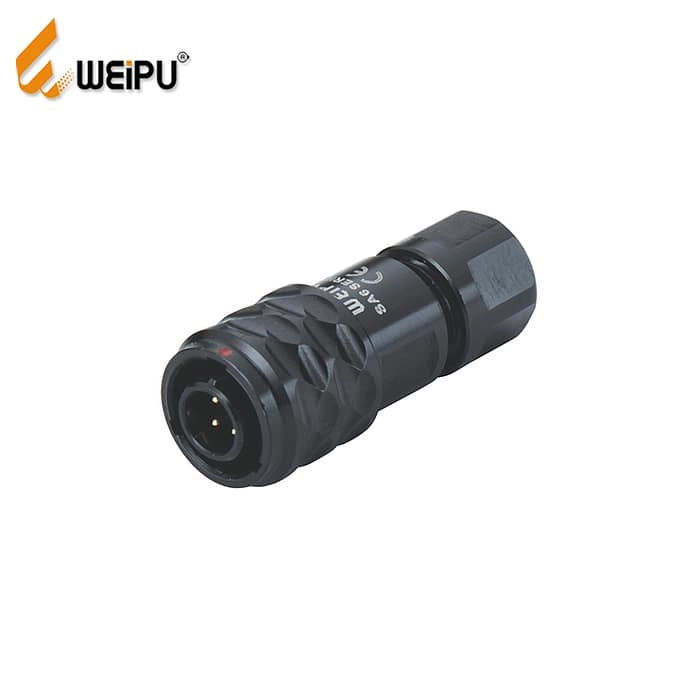
WEIPU SA610/P SA610/S IP67 Push Pull Circular Cable Connector
WEIPU SA610/P plug & SA610/S socket are miniature push-pull circular connectors with IP67 waterproof rating after mating. Built with anodized aluminum shell and gold-plated solder contacts, this SA series supports 2-5 pins, rated 3A 30V, certified CE & RoHS. Ideal for medical diagnostic devices, lab automation and precision sensors, fully compatible with SA611, SA612 and SA615 panel receptacles. WEIPU holds IATF16949 certification and supplies industrial connectors to 130+ countries.

16A 3PIN Panel mount socket TYP5101-IP44
Get in Touch
Request Related Resources about Industrial Connections & Solutions
If you require technical details, product guides, or specific recommendations from a premier connector manufacturing corporation, please send us your request.
We provide expert support for custom electrical connectors, offering OEM/ODM customization and dedicated distributor cooperation assistance.
Weipu Building, No. 111, Baihua Road, Liwan District, Guangzhou, Guangdong China
© 2026 WEIPU. All Rights Reserved.
Whatsapp: +8618102298073
WEIPU
WEIPU
WEIPU
WEIPU