






Custom Power Automate Connectors: API Requirements, Costs, and Timelines
- API design and readiness for a custom workflow integration
- Start with a documented, reachable API
- Define operations around business tasks
- Plan authentication and network access early
- Cost components, delivery effort, and realistic timelines
- Separate implementation cost from platform licensing
- Use scope-based estimates, not universal promises
- Make the estimate auditable
- Security, testing, and lifecycle controls
- Apply governance before production use
- Test functional behavior and failure paths
- Procurement decisions and the role of physical connectors
- Keep software integrations distinct from hardware interfaces
- Evaluate suppliers and ownership across the project
- Frequently Asked Questions
Custom connectors extend Microsoft Power Automate when a required business system, data source, or service is not covered by a suitable standard connector. Project owners should assess API documentation, authentication, network access, data formats, error handling, licensing, testing, and ongoing ownership before approving a build. Costs depend on API readiness, security complexity, operation count, environments, and support needs; timelines are therefore scope-dependent rather than fixed. The planning ranges below are illustrative estimates, not Microsoft service guarantees or market benchmarks. A reliable delivery plan validates the API early, prototypes a representative operation, confirms licensing and governance, and assigns responsibility for maintenance after launch.
API design and readiness for a custom workflow integration
Start with a documented, reachable API
A custom connector is an interface between Power Automate and an API, so the quality of the API specification directly affects implementation effort. Before development begins, obtain current endpoint documentation, a test environment, representative request and response examples, and a clear description of required headers, query parameters, and payloads. Confirm that the service uses supported transport and data formats, typically HTTPS and JSON for web APIs, and that endpoint behavior is stable enough for business processes to depend on it.
Microsoft supports defining a custom connector from an OpenAPI definition or creating its operations through the connector wizard. The Microsoft guidance on OpenAPI definitions explains how an API description can define paths, operations, parameters, and schemas. A complete specification reduces guesswork and makes it easier to review what data a flow can send or receive. Teams should still validate the specification against actual API responses: an OpenAPI file that is syntactically valid may be incomplete, outdated, or inconsistent with production behavior.
Define operations around business tasks
Connector operations should reflect useful actions, such as retrieving an order, creating a maintenance request, or checking equipment status. Avoid exposing every low-level endpoint without considering how flow authors will use it. Clear operation names, concise descriptions, well-designed input fields, and representative response schemas make the integration easier to discover and reduce incorrect flow configurations. For large responses, decide whether pagination, filtering, or selective fields are needed; returning more data than a workflow requires can increase latency, processing, and support complexity.
Document API behavior for empty results, validation failures, rate limits, timeouts, and partial success. A flow designer needs to know whether a failed request can be retried safely. In particular, operations that create or update records should have defined idempotency behavior or another duplicate-prevention strategy. HTTP semantics described in IETF RFC 9110 provide a useful reference for understanding request methods and status codes, but the service owner must specify how its own endpoints behave.
Plan authentication and network access early
Authentication decisions affect connector configuration, user experience, security review, and sometimes the architecture itself. Identify whether the API uses an API key, basic authentication, OAuth 2.0, or another supported method, and establish who owns credential issuance, rotation, and revocation. For OAuth-based services, confirm the authorization and token endpoints, required scopes, redirect configuration, consent process, and refresh-token behavior. The OAuth 2.0 authorization framework describes the protocol model; implementation details must be confirmed with the API provider and the organization’s security team.
Also test connectivity from the intended Power Platform environment. Private network access, IP restrictions, gateways, firewalls, and data-loss-prevention policies can add work that is invisible in an API specification. These dependencies should be surfaced before a delivery estimate is approved, not after a connector has been built and cannot reach its target service.
Cost components, delivery effort, and realistic timelines
Separate implementation cost from platform licensing
There is no universal build price for a custom integration. A budget should distinguish engineering and delivery work from Microsoft licensing, API-provider charges, infrastructure, security assessment, and ongoing support. Licensing depends on the organization’s current Microsoft plan, environment, users, and intended usage. Verify entitlements against the current Power Platform licensing FAQ and obtain confirmation from the organization’s licensing administrator or Microsoft account representative; do not assume that access to a standard flow includes every High Quality or custom capability.
For services outside the Power Platform, check whether the API provider charges per request, user, connected account, or data volume. Estimate expected transactions and peak usage, then compare that forecast with the provider’s quotas and throttling rules. Include operational costs such as monitoring, incident response, regression testing after API changes, and credential rotation. A low initial build estimate can be misleading if it excludes the work required to keep the integration secure and reliable.
Use scope-based estimates, not universal promises
The table provides illustrative delivery-planning ranges for a single connector in a well-governed environment. They are not published Microsoft benchmarks. Actual elapsed time depends on access to API owners, approval queues, environment readiness, security reviews, and the number of development and production environments. The ranges assume that business requirements are known and that a test API is available.
| Scope profile | Typical characteristics | Illustrative delivery range | Primary cost and schedule risks |
|---|---|---|---|
| Limited | One API, a small set of read-oriented operations, documented authentication, stable test endpoint | Approximately 1–2 weeks | Incomplete examples, delayed credentials, or unplanned review requirements |
| Moderate | Several operations, OAuth configuration, pagination or error handling, deployment across environments | Approximately 2–6 weeks | Consent configuration, API behavior changes, governance approvals, and end-to-end testing |
| Complex | Multiple services, private networking, complex authorization, high-impact write operations, or strict operational controls | Approximately 6–12+ weeks | Network architecture, security remediation, extensive acceptance testing, and external dependencies |
These ranges are planning aids, not guarantees. A short discovery phase can substantially improve estimate quality: validate one representative operation, confirm the authentication flow, inspect real error responses, and prove connectivity from the target environment. If any of these checks fail, revise the schedule before committing to a production date.
Make the estimate auditable
Ask a prospective delivery team to show how its estimate maps to requirements. A practical estimate identifies discovery, API review, connector configuration, authentication setup, test-flow development, security and governance review, deployment, documentation, and handover. It should also distinguish effort from elapsed time: a few engineering days can occupy several calendar weeks when approvals, system-owner availability, or vendor access are constrained.
Use assumptions and exclusions to prevent scope disputes. For example, specify the number of operations, environments, authentication methods, test cycles, and supported API versions. Clarify whether API changes, High Quality licensing, data migration, custom middleware, and post-launch support are included. Change control is especially important when the API contract is still evolving.
Security, testing, and lifecycle controls
Apply governance before production use
Custom integrations can move sensitive business information between systems, so data handling and access control require explicit review. Classify the data involved, identify the systems of record, limit connector permissions to what the workflow needs, and determine which users or service identities can create connections. Review environment policies and data-loss-prevention rules with the Power Platform administrator. Microsoft’s custom connector documentation describes platform concepts and configuration; organizational policy remains the authority for approving a specific production use case.
Credentials should not be embedded in flow logic or copied into documentation. Establish a documented owner for each connection, define a rotation and offboarding procedure, and determine how access is removed when a user changes roles. For OAuth integrations, verify scopes and consent rather than requesting broad access by default. Record the API owner, connector owner, business process owner, and escalation route so incidents do not stall between teams.
Test functional behavior and failure paths
Successful responses are only one part of acceptance testing. Test invalid inputs, missing fields, expired credentials, permission denials, throttling, timeouts, empty results, and server errors. Confirm that the workflow handles each case in a way that is understandable to its operators and does not silently lose or duplicate work. For write operations, use controlled test records and confirm the effect of retries before enabling automatic recovery.
Test representative volumes and payload sizes, and check how the connector behaves when the upstream service is slow or unavailable. Capture useful diagnostic details without exposing secrets or unnecessary personal data. Business owners should define acceptance criteria in advance, such as required response fields, processing time expectations, and what constitutes a recoverable error. Keep evidence of testing and approval with the solution documentation.
Procurement decisions and the role of physical connectors
Keep software integrations distinct from hardware interfaces
Software connector configuration and physical electrical connectors solve different problems. A custom workflow integration maps cloud or business-system operations to an API; a circular connector, industrial connector, or Heavy Duty Connector provides a physical connection between equipment, sensors, controls, or power circuits. A software project should not treat these products as substitutes for an API connector, and a hardware purchase should not be assumed to create an application integration.
The distinction matters in industrial automation projects where both layers may be required. The application layer can route work orders, alarms, or asset records, while the machine layer depends on suitable electrical and mechanical interfaces. Procurement teams should define each requirement separately: API operations, authentication, and support ownership for the software; and electrical ratings, pole count, enclosure protection, cable requirements, environmental conditions, and applicable certifications for the physical product.
Evaluate suppliers and ownership across the project
For the software scope, compare suppliers on API analysis, security practices, transparent estimates, testing evidence, deployment discipline, documentation, and post-launch support. Confirm who will maintain the integration when the upstream API changes or credentials expire. Ask for a clear handover plan and a defined process for defect triage. A technically functional prototype is not sufficient evidence of production readiness unless monitoring, ownership, and recovery procedures are also addressed.
For buyers sourcing industrial hardware alongside automation projects, our product range includes circular connector, industrial connector, and Heavy Duty Connector options. These products serve physical connectivity requirements rather than replacing software interfaces. We recommend matching selection to the equipment design, operating environment, interface requirements, and project documentation, then confirming specifications with the relevant technical team before purchase. Keeping software and hardware scopes explicit helps procurement teams compare like with like, avoid duplicated assumptions, and assign accountability to the right supplier.
Before approval, project owners should have a signed-off API contract, a licensing check, validated authentication and connectivity, an agreed test plan, an accountable support owner, and a cost estimate that includes lifecycle work. These controls help buyers judge whether a custom integration is the right option or whether an existing connector, supported integration service, or API change would deliver a lower-risk result.
Contact our team to discuss circular connector, industrial connector, or Heavy Duty Connector requirements for your automation project.
Frequently Asked Questions
What API documentation is needed to build a custom connector?
Provide current endpoint documentation, a test environment, representative request and response examples, authentication details, required headers and parameters, and information about errors, rate limits, pagination, and expected API behavior. An OpenAPI definition can help, but it should be validated against real API responses.
How long does it take to develop a custom Power Automate connector?
The illustrative planning ranges in this guide are approximately 1–2 weeks for a limited scope, 2–6 weeks for a moderate scope, and 6–12 or more weeks for a complex scope. These are not Microsoft benchmarks or guarantees; API readiness, security approvals, network access, testing, and stakeholder availability affect elapsed time.
What affects the cost of a custom connector?
Cost depends on API readiness, the number and complexity of operations, authentication, network requirements, security and governance reviews, testing, deployment environments, licensing, API-provider charges, and ongoing monitoring and maintenance. Estimates should state assumptions, exclusions, support arrangements, and licensing responsibilities.
Does a custom connector require premium licensing?
Licensing depends on the organization’s Microsoft plan, environment, users, and intended usage. Check current Power Platform licensing entitlements with the organization’s licensing administrator or Microsoft representative before budgeting or deployment; do not assume that a standard flow entitlement covers every custom capability.
Which authentication methods can a custom connector use?
Authentication options depend on the API and connector configuration. Common approaches include API keys, basic authentication, and OAuth 2.0. Confirm supported configuration, token behavior, required scopes, credential ownership, rotation, and revocation with the API provider and security team.
How should a custom connector be tested before production?
Test normal responses as well as invalid inputs, missing fields, expired credentials, permission failures, throttling, timeouts, empty results, and server errors. Validate representative payloads and volumes, confirm retry behavior for write operations, and document acceptance criteria, approvals, and recovery ownership.
Heavy Duty Wire Connectors for Distributors, Brands, and Importers
Top 8 Factors When Selecting EMI Shielded Circular Connectors
Maintenance Tips for Chrome-Plated Zinc Alloy Industrial Connectors
Power Automate Connectors: Standard vs. Premium for Business Workflows
Weipu WF Series Industrial Threaded Connectors with IP67 Protection
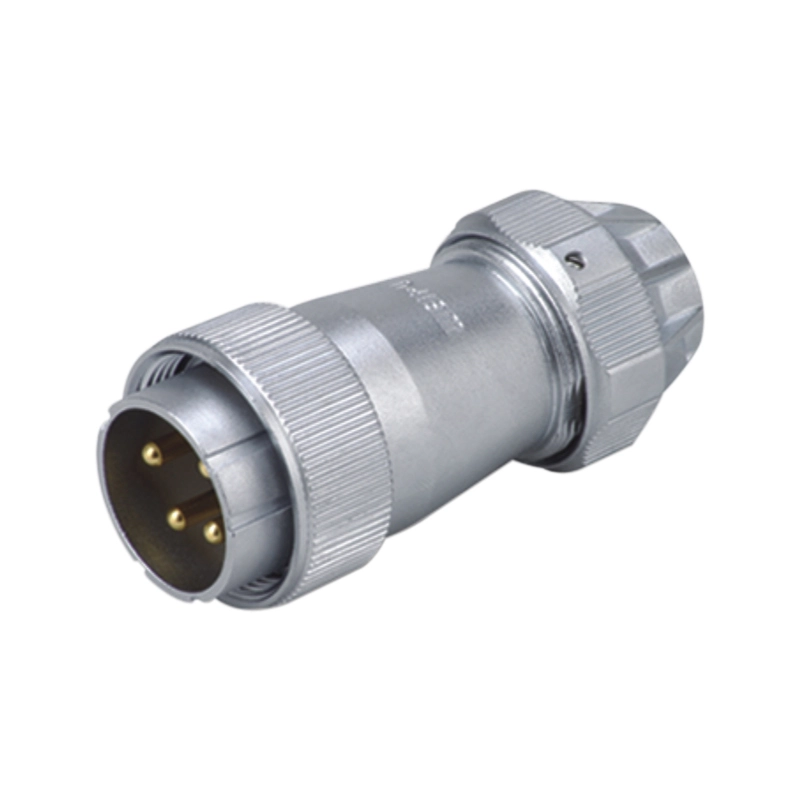
WEIPU WF Series Industrial Threaded Connectors offer robust IP67 protection, ensuring reliable performance in harsh environments. Designed for secure, waterproof connections, these IP67 connectors are ideal for industrial applications requiring durability and stability. Trust WEIPU for quality and safety.
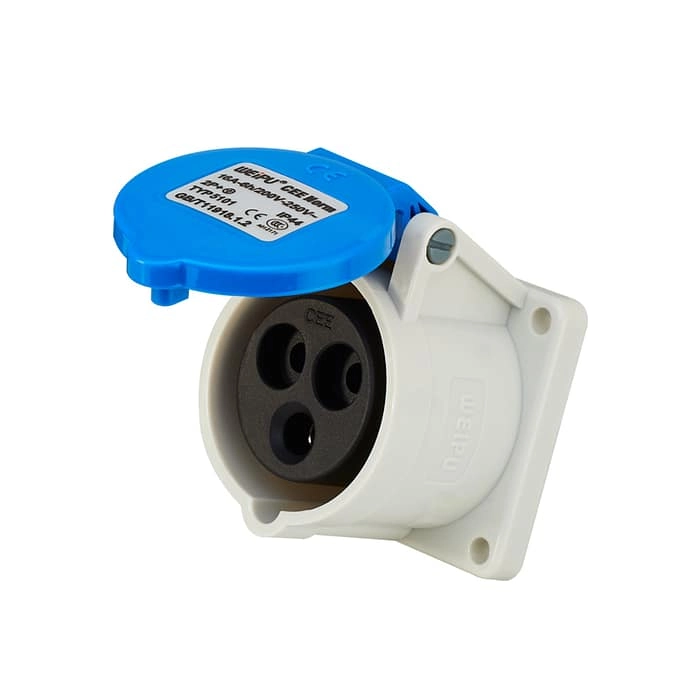
16A 3PIN Panel mount socket TYP5101-IP44
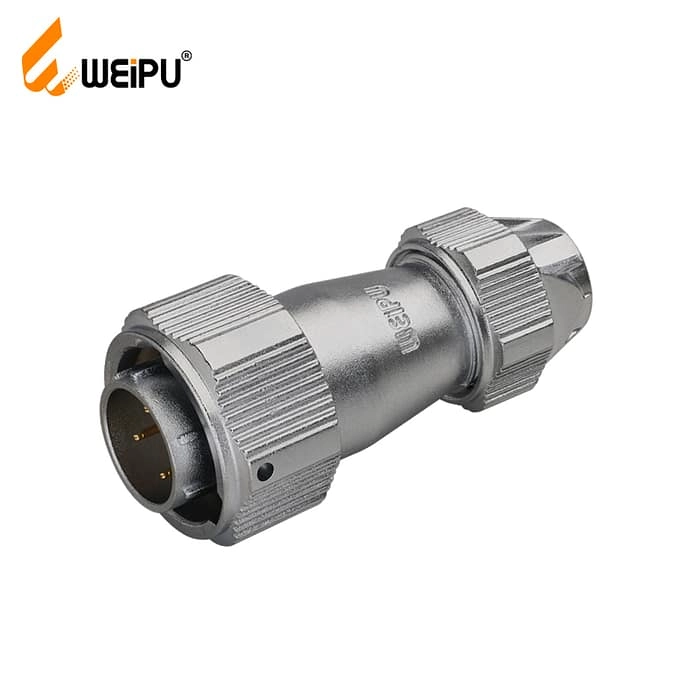
WEIPU WY-TE Series Waterproof Electrical Plug
With metal clamping-nut IP67, Threaded, Zinc alloy with chrome plating, PPS
WEIPU WY-TE IP67 circular connectors are waterproof electrical plugs with metal clamping-nut, which are durable, safe and easy to assemble with your all devices.With the metal clamping-nut and threaded design, these waterproof electrical plugs ensure high security and super stable connection. It’s an ideal waterproof connector for your applications.
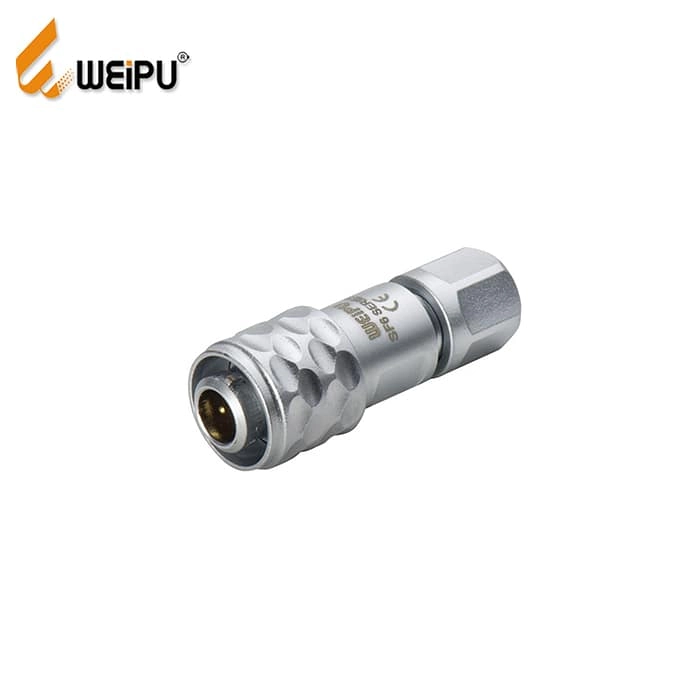
SF610B/P SF610B/S Cable connector IP67
Mate with SF611B, SF612B, SF615B
Get in Touch
Request Related Resources about Industrial Connections & Solutions
If you require technical details, product guides, or specific recommendations from a premier connector manufacturing corporation, please send us your request.
We provide expert support for custom electrical connectors, offering OEM/ODM customization and dedicated distributor cooperation assistance.
Weipu Building, No. 111, Baihua Road, Liwan District, Guangzhou, Guangdong China
© 2026 WEIPU. All Rights Reserved.
Whatsapp: +8618102298073
WEIPU
WEIPU
WEIPU
WEIPU