






Custom vs Certified Connectors: Security and Compliance Checks
- How to Evaluate Bespoke and Catalog-Based Integrations
- Start with data flows, not the connector label
- Understand what certification does—and does not—establish
- Compare ownership and lifecycle obligations
- Security and Compliance Checks Before Approval
- Identity, authentication, and permission scope
- Data governance, privacy, and audit evidence
- Test failure modes and maintain an evidence trail
- Procurement Decisions Across Software and Physical Connectors
- Build a risk-based selection record
- Keep software integrations distinct from electromechanical connectors
- How our product focus supports project evaluation
- Frequently Asked Questions
Choosing between custom and certified connectors requires more than checking whether an integration works: buyers must assess data access, identity controls, governance, audit evidence, support ownership, and change management. In Microsoft Power Platform environments, a certified catalog connector can reduce development effort, while a custom API connector may better fit specialized workflows but adds design, testing, and maintenance responsibilities. Neither route automatically guarantees regulatory compliance or secure configuration. Review the connector’s permissions and data flows, apply environment-level controls, validate the underlying API, and document ongoing ownership. For industrial equipment, also distinguish software integration connectors from physical circular, industrial, and heavy-duty connectors: each has different safety, conformity, and procurement checks.
How to Evaluate Bespoke and Catalog-Based Integrations
Start with data flows, not the connector label
A connector is an interface that lets an application or automation exchange data with a service. In a low-code platform, the interface may expose API actions, triggers, and authentication methods to workflow designers. A custom implementation can connect to an internal system, a specialist supplier platform, or a service that is not available in the standard catalog. A catalog connector can provide a faster path to a commonly used service. In either case, the business risk depends on what information moves, which identities can initiate a flow, what the receiving service does with the information, and how the connection is administered.
Map each workflow before comparing options. Record the source and destination systems, data categories, direction of transfer, frequency, users, service accounts, and any downstream processors. Flag personal data, payment details, confidential engineering files, credentials, and operational technology data for additional review. This inventory helps security and privacy teams identify whether a connector crosses a trust boundary, whether data residency requirements apply, and whether the integration should be blocked, isolated, or approved with conditions.
Understand what certification does—and does not—establish
A platform’s connector certification process can involve review against defined submission requirements, but certification should not be treated as a universal security warranty. It does not necessarily validate a buyer’s tenant configuration, business purpose, API permissions, data-retention obligations, or the security posture of every downstream service. The exact scope depends on the platform’s current program and documentation. Microsoft describes connector concepts and available integrations in its connector documentation; procurement teams should check the current listing and program details rather than infer assurance from a label alone.
Custom does not automatically mean unsafe, and certified does not automatically mean suitable. A well-designed custom connector can apply least privilege, robust input validation, secure authentication, and controlled deployment. Conversely, a catalog connector may expose actions that are too broad for a particular workflow or may not support a required regional, contractual, or audit control. The decision should be based on documented evidence, fit to the use case, and the organization’s ability to maintain the integration over its full lifecycle.
Compare ownership and lifecycle obligations
Catalog-based integrations often reduce the initial burden of API schema design and connector packaging, but the buyer still owns the business configuration, access policy, and workflow behavior. Custom integrations shift more responsibility to the solution owner: API contract changes, versioning, testing, error handling, secrets management, documentation, and incident response all need named owners. A procurement review should ask who receives change notices, who can approve updates, how breaking changes are tested, and what happens if the API provider retires an endpoint.
Assess operational resilience as well as initial implementation effort. Identify rate limits, timeout behavior, retry logic, duplicate transaction risk, and the process for reconciling failed or partially completed actions. Where an automation initiates a financial, safety-related, or customer-impacting transaction, add appropriate human approval and exception handling. A connector that passes a technical test but lacks recovery procedures can still create substantial business exposure.
Security and Compliance Checks Before Approval
Identity, authentication, and permission scope
Review how users and services authenticate, how credentials are stored, and whether the connection supports the organization’s identity standards. Prefer delegated or service identities with narrowly scoped permissions over shared personal credentials or broad administrator access. Confirm token lifetime, refresh behavior, revocation procedures, and the process for rotating secrets or certificates. The security review should also establish who may create connections, share them, use them in flows, and change their authentication settings.
Check permissions at both ends of the integration. A connector may be limited within the automation platform but still call an API account with extensive access to the source system. Conversely, a restricted API identity may be undermined if too many users can run or modify the workflow. Document the relationship between the platform role, connection owner, API identity, and data permissions. For higher-risk processing, test that revoked access actually stops new transactions and that existing sessions or stored tokens are handled according to policy.
Data governance, privacy, and audit evidence
Classify the data handled by each action and determine whether it is transferred, transformed, logged, cached, or retained by another service. Review privacy notices, contractual terms, subprocessors, regional processing, deletion mechanisms, and breach notification responsibilities where relevant. These checks should be proportionate to the data and jurisdiction involved; an integration handling internal status updates may need a different review from one moving customer records or regulated data.
Use platform governance controls to restrict which services can exchange organizational data. Microsoft’s guidance on data loss prevention policies explains how administrators can classify connectors and control combinations in environments. Such policies are a governance layer, not a substitute for reviewing the actual workflow, API permissions, or provider terms. Define who approves exceptions, how policy violations are investigated, and how connection inventories are kept current.
For a wider information-security management framework, organizations can align controls with ISO/IEC 27001. Technical control selection can also be informed by the NIST SP 800-53 control catalog. These frameworks support risk management; they do not certify a particular connector as compliant or remove the need to assess applicable laws, contracts, and internal policies.
Test failure modes and maintain an evidence trail
Approval should include more than a successful demonstration. Test invalid inputs, expired credentials, denied permissions, API outages, rate limiting, unexpected response formats, and duplicate events. Confirm that errors do not reveal secrets or sensitive payloads in run histories, notifications, or support logs. Establish alert thresholds and define who reviews failed runs. For custom interfaces, maintain a versioned API specification and test suite; for catalog interfaces, record the provider, connector version or change information available, approved actions, and configuration assumptions.
Keep an auditable decision record that includes the business owner, technical owner, data classification, threat assessment, permission review, test results, approved environments, and review date. Reassess after a material change, such as a new action, a new data category, a changed API identity, or a provider’s revised terms. This turns approval into a repeatable control rather than a one-time checkbox.
| Decision area | Custom connector | Certified or catalog connector | Buyer verification |
|---|---|---|---|
| Implementation fit | Can be tailored to a specific API or internal service. | Uses an integration made available through the platform’s connector catalog. | Confirm required actions, triggers, regions, and API behavior. |
| Development responsibility | Owner generally manages design, testing, documentation, and change response. | Platform or connector provider supplies the integration package; buyer still manages configuration and use. | Name technical and business owners and define support boundaries. |
| Security review | Requires review of implementation, authentication, permissions, and API behavior. | Catalog status is useful context but does not approve the buyer’s specific data flow or setup. | Validate least privilege, credential handling, data exposure, and environment controls. |
| Governance | Can be managed through platform policies and deployment controls, subject to configuration. | May be classified and governed through platform policy, subject to available controls. | Test policy enforcement and document exceptions and approvals. |
| Lifecycle risk | Owner must track API changes, versions, and operational dependencies. | Provider and platform update processes may apply; users should monitor notices and behavior. | Plan regression testing, incident handling, and retirement or replacement. |
The comparison is qualitative: responsibilities and available controls vary by platform, connector, provider, and deployment. No certification label or connector type by itself establishes compliance with a specific regulation.
Procurement Decisions Across Software and Physical Connectors
Build a risk-based selection record
Procurement teams can make the decision reproducible by scoring business fit, data sensitivity, permission scope, assurance evidence, integration effort, maintainability, and exit options. A standard catalog option is often attractive when it supports the required operations and the provider’s terms and data handling are acceptable. A custom option can be appropriate when a specialized API, internal system, or control requirement cannot be met through an existing integration. The selection record should explain why the chosen route is proportionate and what controls reduce residual risk.
Request evidence that matches the risk: current security documentation, API authentication details, a data-flow diagram, support and change-management commitments, and relevant independent assurance reports where available. Avoid asking suppliers for a generic certificate as a substitute for answering specific questions. A certificate can describe a management system or product scope, but buyers must verify its scope, validity, issuing body, and relevance to the service or product being procured.
Keep software integrations distinct from electromechanical connectors
The word “connector” also describes physical electrical interfaces, so product conformity checks should not be confused with software integration approval. A software interface moves information between applications and APIs; a circular connector or heavy-duty electrical connector joins conductors or equipment. The latter requires checks tied to its intended electrical and environmental application, including ratings, materials, mating compatibility, ingress protection where specified, installation conditions, and applicable product documentation. Buyers should verify the exact model and configuration rather than assume that a family-level description covers every variant.
For machine builders and facility operators, the software and physical layers can meet in a single operational project—for example, equipment telemetry may flow through an API while sensors and control cabinets rely on industrial connection hardware. Their assurance paths remain separate. Review software access and data governance for the integration, and review technical datasheets, conformity documentation, and installation requirements for the physical product. This separation helps prevent a software platform label from being mistaken for evidence of electrical product conformity.
How our product focus supports project evaluation
Our product focus includes circular connector, industrial connector, and Heavy Duty Connector solutions for equipment and industrial applications. These product categories address physical connection requirements, not API authentication or workflow-platform certification. For project evaluation, buyers should match the specified product configuration to operating conditions and verify the relevant technical documentation, ratings, materials, and compliance evidence for the exact part number. Where a project combines automation software with industrial hardware, our product discussions can support the physical connection portion while the customer’s software, cybersecurity, and compliance teams assess the digital integration separately.
This distinction supports clearer procurement ownership: software architects and security teams assess API behavior, identities, permissions, data handling, and platform governance; electrical engineers and sourcing teams assess mechanical fit, electrical ratings, environmental suitability, and product records. Each team can then provide evidence against its own requirements without overstating what a certification or product category demonstrates.
For any connector decision, approval should be conditional on a documented use case, named owners, tested controls, and a practical maintenance plan. Review the integration again when the business process, underlying API, product configuration, data classification, or applicable requirements change. This approach gives buyers a defensible basis for balancing speed, customization, compliance obligations, and long-term operational reliability.
Contact our team to discuss circular, industrial, or heavy-duty connector requirements for your application.
Frequently Asked Questions
Does a certified connector guarantee compliance?
No. Platform certification or catalog status does not automatically establish compliance with a specific regulation, approve a buyer’s configuration, or validate the business purpose, API permissions, data residency, and downstream processing. Buyers should review the current program scope and assess the specific workflow, provider terms, and applicable requirements.
When should an organization choose a custom connector?
A custom connector may be appropriate when a specialized API, internal service, required operation, or control need cannot be met by an available catalog connector. The organization should be prepared to own API design, authentication, testing, documentation, versioning, maintenance, and incident response.
What security checks should be completed before approving a connector?
Map the data flow and classify the information; review authentication, credential storage, token handling, and least-privilege permissions; verify who can create, share, and modify connections; test errors, outages, rate limits, and invalid inputs; and confirm logs do not expose sensitive data. Record the owners, approvals, test evidence, and review date.
How do data loss prevention policies help govern connectors?
Data loss prevention policies can classify connectors and control which services may be used together in an environment. They provide a governance layer, but they do not replace review of the workflow’s actual data, API permissions, provider terms, or configuration. Administrators should test policy enforcement and document exception handling.
Are software connectors and industrial electrical connectors assessed in the same way?
No. Software connectors require assessment of APIs, identities, permissions, data handling, and platform governance. Physical circular, industrial, and heavy-duty connectors require product-specific checks such as electrical ratings, compatibility, environmental suitability, installation conditions, and relevant technical or conformity documentation.
What evidence should procurement request from a connector supplier?
Request evidence proportionate to the risk, such as security documentation, authentication and permission details, data-flow information, support and change-management commitments, and relevant independent assurance reports. For physical products, verify documentation and ratings for the exact model and configuration. Check the scope, validity, and relevance of any certificate rather than relying on its name alone.
Heavy Duty Wire Connector vs. Standard Connector: Cost and Risk
Mating Cycles and Reliability Metrics for Push-Pull Connectors
SA610-P / SA610-S IP67 Cable Connector for Industrial Applications
Custom Hermetic Cable Assemblies: OEM, ODM and Private Label Options
Weipu WF Series Industrial Threaded Connectors with IP67 Protection
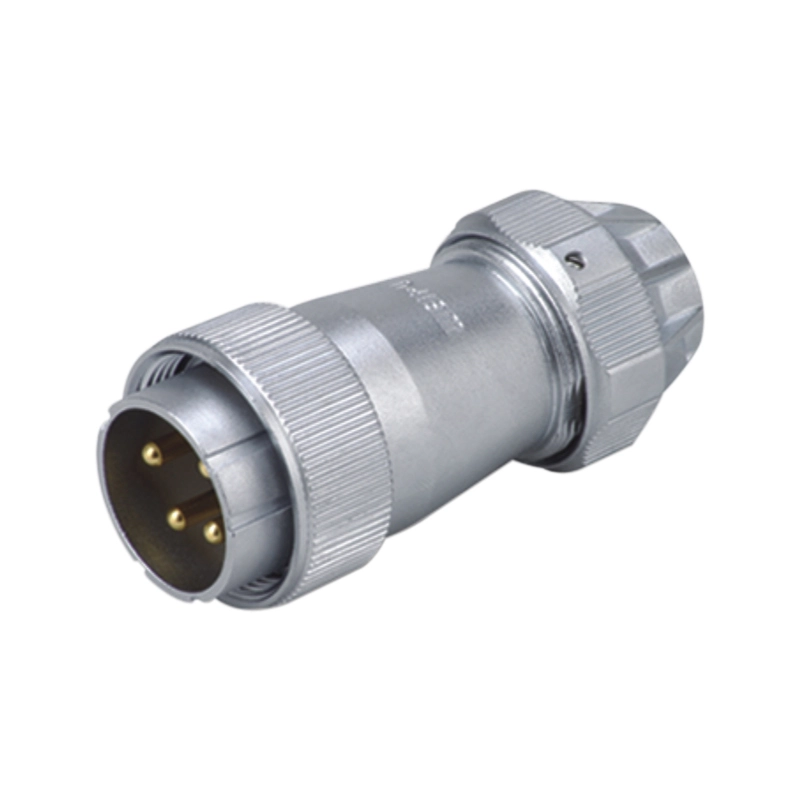
WEIPU WF Series Industrial Threaded Connectors offer robust IP67 protection, ensuring reliable performance in harsh environments. Designed for secure, waterproof connections, these IP67 connectors are ideal for industrial applications requiring durability and stability. Trust WEIPU for quality and safety.
16A 3PIN Panel mount socket TYP5101-IP44
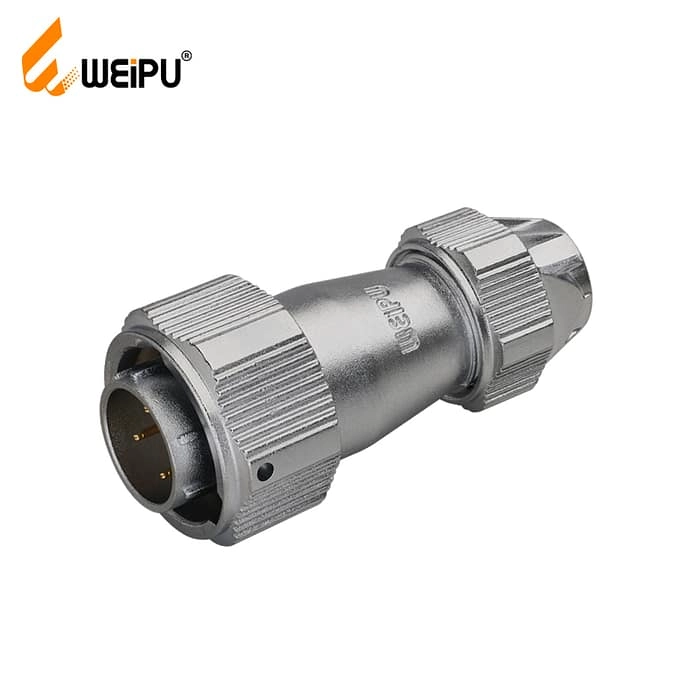
WEIPU WY-TE Series Waterproof Electrical Plug
With metal clamping-nut IP67, Threaded, Zinc alloy with chrome plating, PPS
WEIPU WY-TE IP67 circular connectors are waterproof electrical plugs with metal clamping-nut, which are durable, safe and easy to assemble with your all devices.With the metal clamping-nut and threaded design, these waterproof electrical plugs ensure high security and super stable connection. It’s an ideal waterproof connector for your applications.
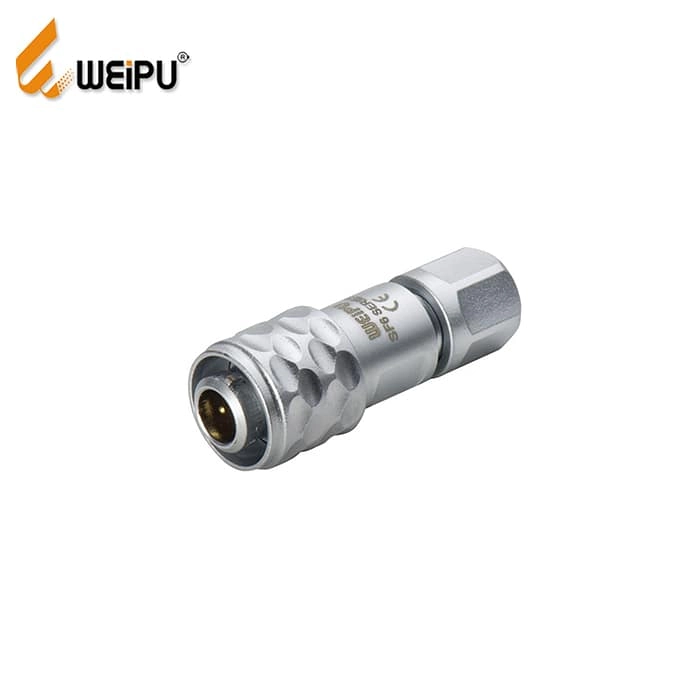
SF610B/P SF610B/S Cable connector IP67
Mate with SF611B, SF612B, SF615B
Get in Touch
Request Related Resources about Industrial Connections & Solutions
If you require technical details, product guides, or specific recommendations from a premier connector manufacturing corporation, please send us your request.
We provide expert support for custom electrical connectors, offering OEM/ODM customization and dedicated distributor cooperation assistance.
Weipu Building, No. 111, Baihua Road, Liwan District, Guangzhou, Guangdong China
© 2026 WEIPU. All Rights Reserved.
Whatsapp: +8618102298073
WEIPU
WEIPU
WEIPU
WEIPU