

Emerging Harness Cable Assembly Trends for Industrial Buyers
- How Industrial Wiring Systems Are Evolving
- Modular interfaces are replacing one-size-fits-all cable designs
- Higher power density is increasing demand for robust contact technology
- Environmental sealing is becoming a specification rather than an upgrade
- Procurement Priorities for Reliable Cable Harnesses
- Traceability and process control are central to risk reduction
- Design-for-manufacture reduces hidden cost
- Digital records and inspection data support Industry 4.0
- Where WEIPU Adds Value to Industrial Connectivity Programs
- Broad connector platforms support multi-industry sourcing
- Engineering capability is aligned with demanding operating conditions
- Certification, responsiveness, and customization improve project execution
- Implementation Roadmap for Industrial Buyers
- Convert operating conditions into measurable specifications
- Qualify samples before approving production
- Use total cost of ownership as the final decision metric
- Frequently Asked Questions
Industrial connectivity is moving from a component-purchasing model toward a complete systems-engineering model. A modern harness cable assembly combines conductors, terminals, backshells, shielding, strain relief, coding, and connectors into a tested interface designed for a defined electrical, mechanical, and environmental duty cycle. For buyers, the decision is no longer limited to pin count or unit price. It now involves signal integrity, installation time, serviceability, safety documentation, supply continuity, and total cost of ownership across the equipment life cycle.
How Industrial Wiring Systems Are Evolving
Modular interfaces are replacing one-size-fits-all cable designs
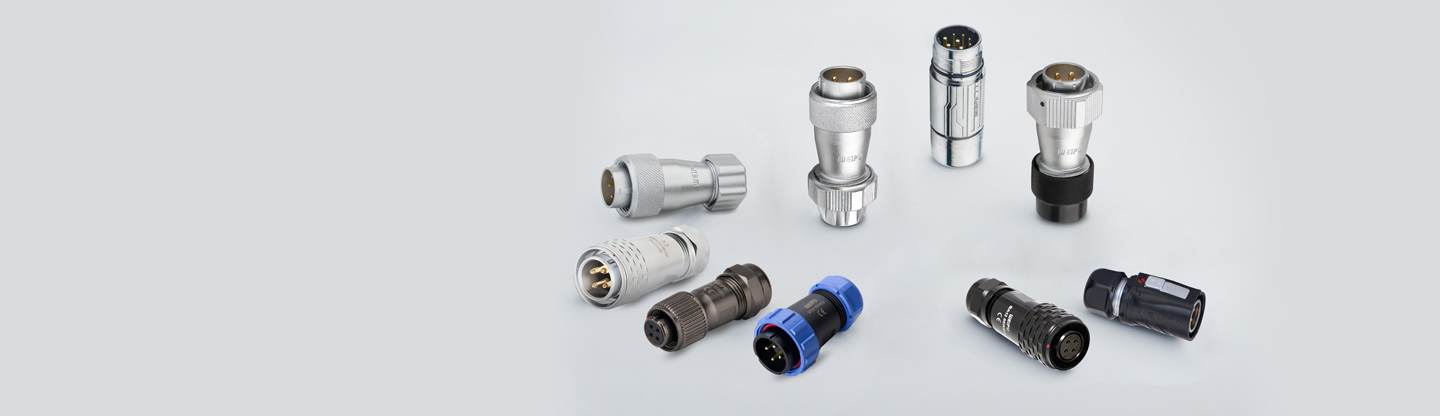
Machine builders increasingly require configurable interconnects that can support different sensor counts, power ratings, communication protocols, and enclosure layouts without redesigning the entire control cabinet. Modular circular connectors and coded plug-and-socket systems help standardize equipment platforms while preserving the flexibility needed for regional variants. This approach can reduce engineering duplication, simplify spare-parts planning, and make field replacement more predictable.
Procurement teams should assess whether the supplier can provide compatible shells, contact arrangements, backshell options, panel mounts, protective caps, and cable exits. A connector family with a broad configuration range is more valuable than a single low-cost part because it can support future product revisions. Buyers should also confirm mating-cycle ratings and whether keying prevents incorrect connection during installation or maintenance.
Higher power density is increasing demand for robust contact technology
Automation equipment, battery systems, charging infrastructure, mobile machinery, and renewable-energy platforms are placing more current through smaller installation spaces. This trend raises the importance of contact material, plating thickness, thermal performance, creepage and clearance, conductor cross-section, and temperature rise under continuous load. A high-current interface must be evaluated under the actual duty cycle rather than by relying only on a headline ampere rating.
Industrial buyers should request derating curves, cable-entry limits, permissible conductor sizes, torque requirements, and test conditions behind the published rating. Continuous current, intermittent current, ambient temperature, airflow, bundling, and enclosure heat can materially change field performance. For DC systems, polarity protection and touch-safe construction are also important procurement considerations.
Environmental sealing is becoming a specification rather than an upgrade
Dust, washdown chemicals, vibration, condensation, salt spray, oil, and ultraviolet exposure can degrade an otherwise suitable connection. Buyers should define the operating environment before choosing an industrial connector or cable termination. The IP Code described by IEC 60529 provides a recognized method for classifying protection against solids and water, but an IP rating does not automatically prove resistance to every chemical, pressure-washing process, or mechanical abuse.
For outdoor equipment and food, packaging, or process environments, the specification should cover sealing materials, cable-jacket compatibility, gland design, pressure and immersion conditions, cleaning agents, and expected temperature range. A supplier should explain whether the stated protection applies to a complete mated connection, an unmated connector with a cap, or only a laboratory sample. This distinction prevents costly field assumptions.
Procurement Priorities for Reliable Cable Harnesses
Traceability and process control are central to risk reduction
Quality problems in a terminated cable set can be difficult to identify after installation because intermittent faults may appear only under vibration, thermal cycling, or load. Buyers should therefore look for controlled crimp tooling, terminal pull-force verification, conductor strip-length controls, continuity testing, insulation-resistance testing, and documented final inspection. Batch identification should connect raw materials, tooling, operators, test results, and shipment records.
Supplier quality systems should be assessed against the risk profile of the project. ISO 9001 provides a framework for quality management, while sector-specific requirements may add stronger controls. Automotive programs commonly reference IATF 16949; rail projects may require additional process, validation, and documentation expectations. Certification is useful, but buyers should still audit the actual production line and review objective evidence.
Design-for-manufacture reduces hidden cost
A drawing that is electrically correct may still be expensive or unreliable to produce. Cable length tolerance, branch geometry, bend radius, connector orientation, label placement, shielding termination, and access for testing all influence yield and labor time. Early design reviews should include the manufacturer’s engineering team so that the product can be built consistently rather than hand-adjusted during final assembly.
Design-for-manufacture also means specifying standard components where possible. A custom shell may solve a short-term packaging issue but create tooling, inventory, and service risks. A standardized circular connector family with optional contacts and backshells can often provide a better balance between customization and supply resilience. Buyers should ask for a controlled bill of materials and an approved alternative list before production release.
Digital records and inspection data support Industry 4.0
Connected factories increasingly require product genealogy rather than a simple certificate of conformity. Barcode or QR identification can link a finished wiring set to test results, operator records, material batches, and revision status. This information supports root-cause analysis, warranty management, and maintenance planning. It also helps equipment owners distinguish an approved replacement from an visually similar but incompatible part.
When requesting digital quality data, procurement teams should define the required format, retention period, access rights, and relationship between serial numbers and engineering revisions. Data should improve operational decisions rather than become an administrative burden. A supplier with integrated manufacturing and testing systems is generally better positioned to provide consistent records at scale.
| Procurement factor | Basic purchasing approach | Advanced industrial approach | Buyer validation |
|---|---|---|---|
| Environmental protection | Selects an enclosure rating from a catalog | Matches sealing, materials, cleaning exposure, temperature, and complete mated configuration to the application | Review IEC 60529 test scope and application-specific validation |
| Electrical loading | Uses nominal current from a product page | Checks conductor size, duty cycle, ambient temperature, bundling, and derating | Request current-temperature curves and test conditions |
| Production quality | Relies on visual inspection | Uses controlled crimping, pull testing, continuity testing, and traceable records | Audit process controls and sample test reports |
| Customization | Creates a unique design for each project | Uses a modular platform with controlled variations | Review standard parts, approved options, and change control |
| Serviceability | Optimizes initial purchase price | Considers mating cycles, replacement time, spare parts, and failure access | Calculate lifecycle cost and maintenance impact |
Where WEIPU Adds Value to Industrial Connectivity Programs
Broad connector platforms support multi-industry sourcing
WEIPU has operated since 1996 and has developed a global portfolio of high-reliability industrial connectors. As a principal drafter of the GB/T 11918-2014 national standard, our organization brings standards knowledge into product development and manufacturing. Our 2025 expansion has increased the facility footprint to 80,000 m² and supports annual capacity of 55 million units.
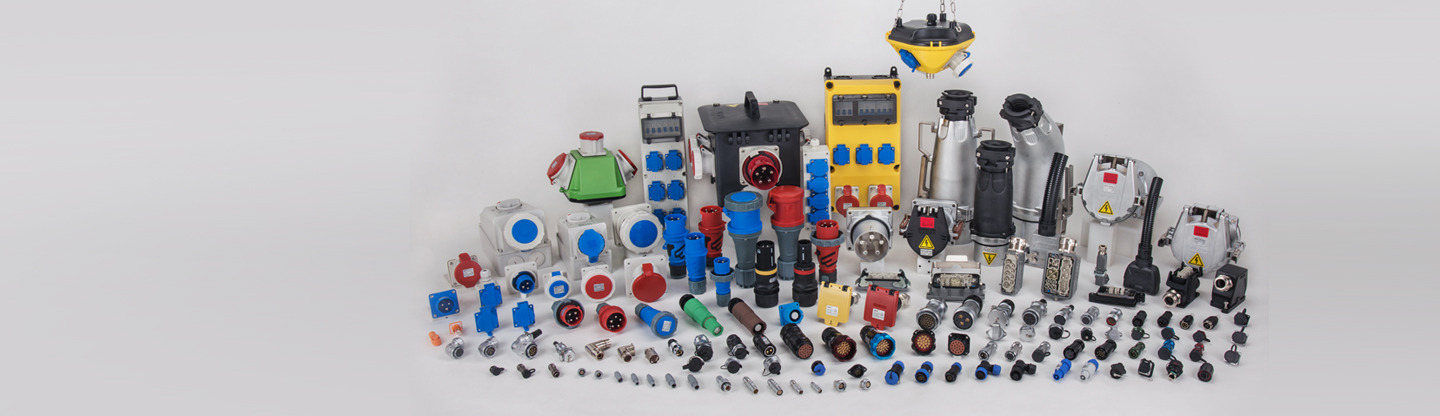
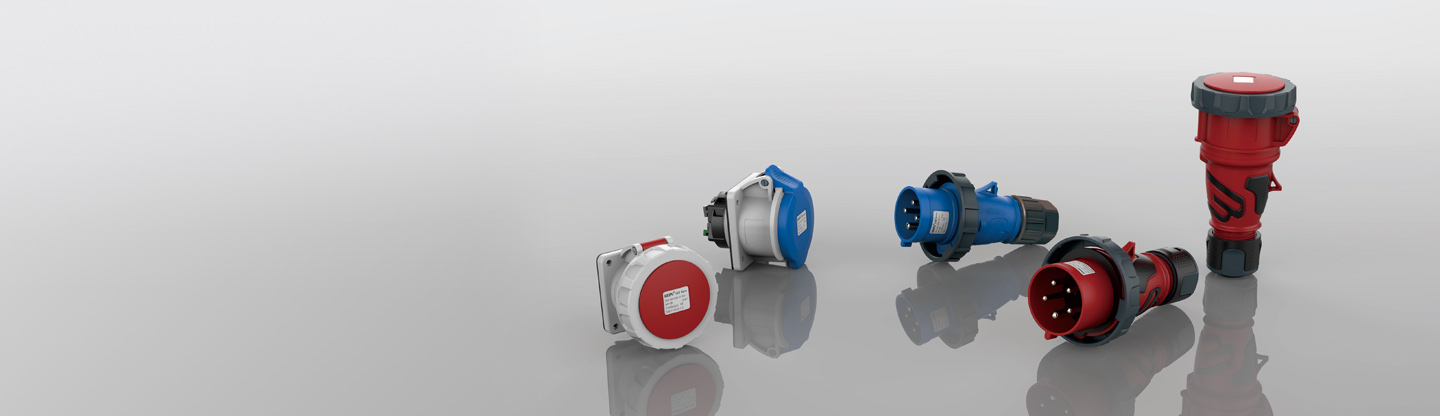
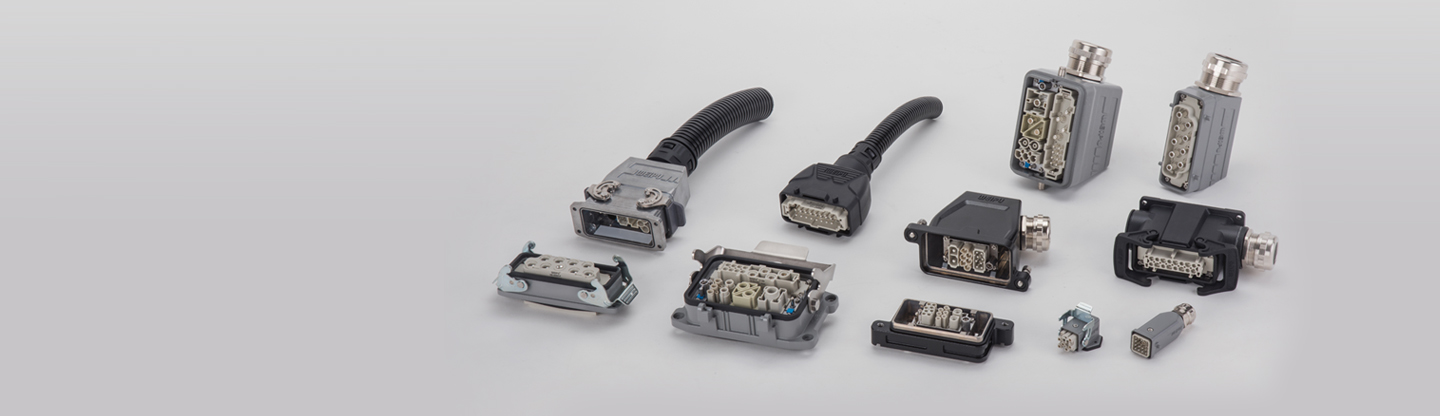
Our portfolio includes more than 70,000 specifications across circular connector, heavy-duty connector, and CEE connector categories. This range helps buyers source power, control, signal, and equipment interfaces through a coordinated product platform. The result can be fewer disconnected vendors, more consistent documentation, and simpler qualification across machine families.
Engineering capability is aligned with demanding operating conditions
WEIPU uses independent research and development together with a vertically integrated production system. Depending on the application, our solutions can provide IP69K protection, high-current capacity up to 800A, and medical connector options designed to withstand autoclave conditions up to 134°C. These capabilities are relevant to washdown machinery, renewable-energy equipment, rail systems, medical devices, and smart manufacturing installations where ordinary commercial connectors may not provide sufficient durability.
Industrial buyers should still match every product claim to the project’s exact test plan. Our engineering team can support the review of current, voltage, cable size, ingress protection, mating cycles, temperature, vibration, material compatibility, and installation constraints. This application-based process is more dependable than selecting a connector only from a generic catalog image.
Certification, responsiveness, and customization improve project execution
WEIPU serves more than 30,000 customers in 130 countries, with quality credentials including IRIS for rail transit and IATF 16949 for automotive applications. These certifications help demonstrate structured management and sector awareness, while project-specific validation remains essential for every end use. Buyers should request the applicable certificates, test records, drawings, and revision-controlled technical files during qualification.
Our one-stop Industry 4.0 support model includes OEM and ODM services, 24-hour rapid response, and prototype delivery in 7–15 days where project conditions allow. Faster prototype cycles can help machine builders test enclosure fit, cable routing, mating ergonomics, and electrical performance before committing to volume production. The commercial benefit is not simply speed; it is earlier discovery of design problems and lower engineering rework.
Implementation Roadmap for Industrial Buyers
Convert operating conditions into measurable specifications
The first step is to document the real application: voltage and current, signal frequency, installation location, temperature range, vibration profile, chemical exposure, washdown method, altitude, movement, bend radius, mating frequency, and expected service life. Include the complete cable path and termination method rather than specifying only the connector body. This information allows suppliers to recommend the correct conductor, shielding, contact, seal, and strain-relief combination.
For medical equipment, cleaning and sterilization requirements must be defined in detail. For rail and mobile machinery, vibration, shock, ingress, and maintenance access deserve special attention. For renewable-energy systems, outdoor exposure, thermal cycling, high current, and long service intervals may dominate the design. A clear application profile reduces quotation ambiguity and creates a fair basis for supplier comparison.
Qualify samples before approving production
Sample approval should include dimensional inspection, mating checks, continuity, insulation resistance, pull force, visual workmanship, and application-specific environmental testing. If the assembly carries power, measure temperature rise under representative load. If it carries high-speed data, verify shielding and signal performance using the relevant system-level test method. If it moves repeatedly, test the complete cable path rather than the connector in isolation.
Buyers should also evaluate packaging, labeling, minimum order quantities, lead times, change-notification procedures, warranty terms, and replacement availability. A technically excellent product can still create operational risk if the supplier changes materials without notice or cannot maintain delivery during demand fluctuations.
Use total cost of ownership as the final decision metric
Unit price should be compared with installation labor, commissioning time, field replacement, downtime, spare-part inventory, inspection cost, and expected failure exposure. A pre-terminated and tested solution may have a higher purchase price than loose components but reduce wiring errors and cabinet labor. A sealed, serviceable connector may cost more initially while preventing water-related failures and unplanned maintenance.
A weighted sourcing score can combine technical compliance, quality evidence, delivery capability, customization support, lifecycle economics, and supplier resilience. This method gives engineering, purchasing, quality, and operations a common decision framework. It also makes the award rationale easier to defend during internal reviews and customer audits.
For industrial connectivity programs requiring dependable circular connectors, industrial connectors, or Heavy Duty Connectors, contact WEIPU at weipu-group.com, email salse01@weipu-group.com, or call +86-020-80501102 to discuss the application and product options.
Frequently Asked Questions
What should buyers specify when sourcing an industrial cable harness?
Buyers should define voltage and current, signal requirements, conductor size, temperature, vibration, chemical exposure, washdown method, ingress protection, bend radius, mating frequency, service life, labeling, testing, and documentation requirements.
How should an IP rating be evaluated for a complete cable connection?
The buyer should confirm whether the stated IP rating applies to the complete mated connection, an unmated connector with a protective cap, or only a laboratory sample, and should review sealing materials, cable compatibility, cleaning agents, pressure, immersion, and temperature conditions.
Why is traceability important for cable harness procurement?
Traceability connects the finished wiring set to raw materials, tooling, operators, test results, shipment records, and engineering revisions. It supports root-cause analysis, warranty management, maintenance planning, and controlled replacement.
What tests should be completed before approving a cable harness for production?
Typical validation includes dimensional inspection, mating checks, continuity, insulation resistance, terminal pull force, visual workmanship, and application-specific environmental testing. Power assemblies may also require representative-load temperature-rise testing, while data assemblies may require signal-integrity verification.
When is a pre-terminated cable solution more economical than loose components?
A pre-terminated and tested solution may reduce wiring errors, cabinet labor, commissioning time, inspection cost, and field replacement risk. Total cost should include installation, downtime, spare parts, and maintenance rather than only the component purchase price.
What advantages does WEIPU offer for customized industrial connector projects?
WEIPU provides OEM and ODM services, independent R&D, vertically integrated production, more than 70,000 specifications, 24-hour rapid response, and prototype delivery in 7–15 days where project conditions allow. Its portfolio includes circular, heavy-duty, and CEE connectors.
Top Applications: Where Multi-Pin Circular Connectors Are Used
Mating Cycles and Reliability Metrics for Push-Pull Connectors
Industry Standards and Certifications for Clamping Plates (UL, RoHS)
UL, CE and IP Ratings for Heavy Duty Wire Connector Sourcing

SY1110/P SY1110/S Cable connector IP67
Mate with SP1111,SP1112

WEIPU SP1110P/S Cable Connector IP68
Mate with SP1111, SP1112
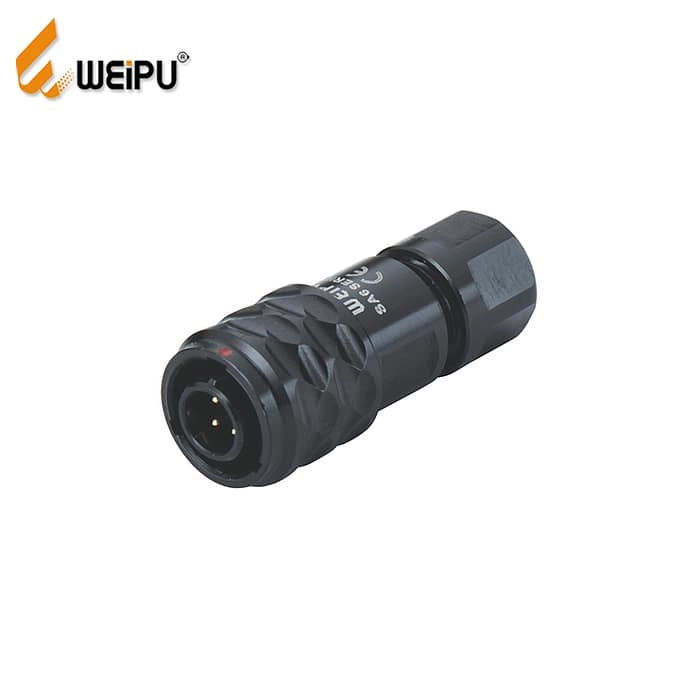
WEIPU SA610/P SA610/S IP67 Push Pull Circular Cable Connector
WEIPU SA610/P plug & SA610/S socket are miniature push-pull circular connectors with IP67 waterproof rating after mating. Built with anodized aluminum shell and gold-plated solder contacts, this SA series supports 2-5 pins, rated 3A 30V, certified CE & RoHS. Ideal for medical diagnostic devices, lab automation and precision sensors, fully compatible with SA611, SA612 and SA615 panel receptacles. WEIPU holds IATF16949 certification and supplies industrial connectors to 130+ countries.

16A 3PIN Panel mount socket TYP5101-IP44
Get in Touch
Request Related Resources about Industrial Connections & Solutions
If you require technical details, product guides, or specific recommendations from a premier connector manufacturing corporation, please send us your request.
We provide expert support for custom electrical connectors, offering OEM/ODM customization and dedicated distributor cooperation assistance.
Weipu Building, No. 111, Baihua Road, Liwan District, Guangzhou, Guangdong China
© 2026 WEIPU. All Rights Reserved.
Whatsapp: +8618102298073
WEIPU
WEIPU
WEIPU
WEIPU