
Harness Cable Assembly Buying Guide: Specs, Fit, and Supplier Risk
- How to Define the Right Pre-Terminated Cable System
- Start with the electrical and signal requirements
- Translate the equipment interface into a dimensional fit
- Specify environmental and application exposure
- Procurement Checks That Prevent Fit and Quality Failures
- Control the harness bill of materials and revision status
- Evaluate crimping, termination, and testing controls
- Assess compliance and supply continuity
- How to Compare Suppliers for Mission-Critical Connectivity
- Use a qualification scorecard instead of a price-only comparison
- Confirm change management and after-sales support
- Why WEIPU Is a Strategic Cable-Connectivity Partner
- Broad connector coverage with engineered customization
- Manufacturing scale, certification, and reliability controls
- Rapid development and one-stop project support
- Frequently Asked Questions
A harness cable assembly is a pre-terminated wiring solution that combines conductors, terminals, connectors, seals, shielding, identification, and protective sleeving into a controlled installation-ready unit. For industrial buyers, the correct selection depends on more than connector shape or nominal current. Electrical load, mating cycles, ingress protection, vibration, temperature, cable routing, EMC performance, regulatory obligations, assembly tolerances, documentation, and supplier continuity must all be assessed together. A disciplined sourcing process reduces field failures, shortens installation time, improves maintenance consistency, and limits the commercial risk associated with incompatible components or weak production controls.
How to Define the Right Pre-Terminated Cable System
Start with the electrical and signal requirements
The specification should begin with a complete circuit definition. Record continuous current, inrush current, operating voltage, dielectric withstand, insulation resistance, conductor size, conductor material, signal frequency, and acceptable voltage drop. Power circuits may require larger cross-sectional areas, high-current contacts, temperature derating, or parallel contact arrangements. Low-level sensor and communication circuits may instead require controlled impedance, twisted pairs, drain wires, shielding, or separation from motor conductors.
Current ratings must be evaluated under the actual installation conditions rather than copied from a catalog headline. Ambient temperature, enclosure temperature, cable bundling, conductor spacing, duty cycle, and contact resistance can all affect thermal performance. Where several circuits share a trunk, the engineering review should use the manufacturer’s derating information and, for critical systems, confirm the result through temperature-rise testing. Buyers should also distinguish between a connector’s maximum theoretical rating and the rating supported by the complete cable, terminal, crimp, backshell, and enclosure combination.
Translate the equipment interface into a dimensional fit
Mechanical fit is a system issue. The bill of materials should identify connector family, shell size, contact layout, keying or coding, gender, locking method, mounting style, cable exit direction, panel cutout, backshell envelope, and allowable bend radius. A component can be electrically suitable and still fail during installation because the latch is inaccessible, the cable exit collides with a guard, or the bend radius exceeds the cable manufacturer’s limit.
For a new design, 3D models and controlled interface drawings should be exchanged before production tooling is released. For a replacement project, the buyer should verify mating compatibility rather than relying on a similar part number. Important checks include contact plating, pin numbering, polarization, mating force, coupling torque, mounting thread, keyway orientation, and whether the proposed plug mates with the installed receptacle without excessive play. A first-article sample should be installed in the real equipment or a representative fixture to expose routing and service-access problems early.
Specify environmental and application exposure
Industrial connectivity may be exposed to water jets, dust, oil, coolant, cleaning chemicals, salt spray, UV radiation, welding spatter, vibration, shock, flexing, and repeated thermal cycling. The required ingress protection level should be linked to the installed and mated condition, not only the connector family. The IEC explanation of IP ratings distinguishes protection against solids and water, but the final qualification still depends on sealing interfaces, cable diameter, assembly workmanship, and correct installation.
Mobile machinery and robotic systems require a different design approach from fixed control cabinets. Continuous-flex cables, strain relief, torsion-resistant construction, drag-chain suitability, and bend-cycle evidence may be essential. Rail, outdoor energy, and transportation projects may also require smoke, toxicity, fire, vibration, or environmental testing specified by the project owner. Medical equipment adds cleaning, disinfection, biocompatibility, and sterilization considerations. A specification that merely says industrial grade is too broad to control these risks.
Procurement Checks That Prevent Fit and Quality Failures
Control the harness bill of materials and revision status
Every assembly should have a controlled bill of materials covering cable part number, conductor construction, terminal, connector body, contact, seal, backshell, braid, heat-shrink, label, fastener, and protective covering. The drawing should define cut length, strip length, crimp height, pull-force criteria, contact orientation, cavity location, overmold dimensions, test points, and identification method. Revision control is particularly important when an equivalent connector is proposed, because a visually similar substitute may have different contact resistance, sealing geometry, or mating durability.
Buyers should request a sample inspection report and compare it with the released drawing. Critical-to-function dimensions deserve formal measurement, while cosmetic criteria should be separated from safety and performance requirements. Traceability should extend from incoming materials to finished assemblies, allowing the supplier to identify the production lot, operator or machine, inspection record, and any approved deviation.
Evaluate crimping, termination, and testing controls
Crimp quality is determined by terminal, conductor, tooling, strip length, crimp height, pull force, conductor brush, bellmouth, and insulation support. A reliable manufacturer uses validated applicators or controlled tooling, performs first-piece approval, maintains calibration records, and monitors production variation. Soldering may be appropriate in some applications, but it should not be used to conceal poor crimp preparation or unsupported conductor movement.
Electrical verification commonly includes continuity, pin-to-pin mapping, short-circuit detection, insulation resistance, and dielectric withstand where applicable. Mechanical verification may include pull testing, mating and unmating checks, dimensional inspection, and strain-relief assessment. Environmental validation can include thermal cycling, vibration, water ingress, salt mist, chemical exposure, or flex testing based on the project risk. Buyers should request the test method, acceptance criteria, sample size, and retention period rather than accepting a generic statement that every unit is tested.
Assess compliance and supply continuity
Compliance must match the destination market and application. Quality management certification is useful, but a certificate alone does not prove that a specific assembly is suitable. Buyers should examine the scope, validity, manufacturing location, and audit status. ISO 9001 provides a framework for quality management systems, while sector-specific requirements may apply to automotive, rail, medical, or hazardous environments. Materials may also require declarations relating to RoHS, REACH, conflict minerals, flame performance, or customer-specific substance restrictions.
Supply risk should be scored across more than unit price. Review the supplier’s ownership and production footprint, critical raw material sources, tooling dependency, component obsolescence process, disaster recovery plan, capacity headroom, lead-time history, and ability to provide an approved second source. Ask whether the supplier can maintain the same connector, cable, contact plating, and test standard over the expected program life. A low-cost assembly that requires emergency redesign after a component change can produce a much higher total cost.
| Procurement area | Evidence to request | Risk reduced |
|---|---|---|
| Electrical performance | Current and voltage specifications, derating data, continuity and dielectric test records | Overheating, intermittent signals, insulation breakdown |
| Mechanical fit | 2D drawing, 3D model, mating sample, dimensional inspection report | Installation delays, connector mismatch, routing interference |
| Environmental durability | Ingress, vibration, thermal, chemical, or flex test evidence matched to the application | Seal failure, corrosion, fatigue, premature replacement |
| Process capability | Crimp validation, tooling calibration, first-article approval, traceability records | Hidden termination defects and inconsistent production |
| Business continuity | Capacity plan, change-notification process, contingency plan, delivery history | Line stoppage, uncontrolled substitutions, redesign expense |
How to Compare Suppliers for Mission-Critical Connectivity
Use a qualification scorecard instead of a price-only comparison
A supplier scorecard should assign weighted criteria to technical compliance, manufacturing controls, delivery performance, engineering support, documentation, service responsiveness, and lifecycle stability. For high-consequence equipment, technical and quality criteria should carry more weight than the initial purchase price. The commercial model should include tooling, inspection, incoming quality, installation labor, warranty exposure, field service, and the cost of downtime.
Reference checks should focus on comparable applications. A supplier experienced in static cabinet wiring may not have the process controls required for high-flex robotics, outdoor power equipment, rail vehicles, or autoclave-compatible medical devices. Buyers should ask for anonymized examples of similar current, sealing, vibration, temperature, and production-volume requirements. The goal is to verify transferable capability, not simply collect a list of recognizable customer names.
Confirm change management and after-sales support
Connector and cable programs can remain active for many years, so engineering change control is commercially important. The contract should define advance notification for material changes, tooling changes, plant transfers, connector substitutions, cable revisions, and process changes. It should also state whether requalification, sample approval, or customer sign-off is required before implementation.
Fast technical communication can prevent a small design concern from becoming a production interruption. A capable partner should provide drawing review, sample feedback, corrective-action reports, replacement recommendations, and realistic lead-time commitments. Support should continue after shipment through failure analysis, controlled returns, and field-performance feedback. These services are especially valuable when industrial connectors are integrated into equipment distributed across multiple countries.
Why WEIPU Is a Strategic Cable-Connectivity Partner
Broad connector coverage with engineered customization
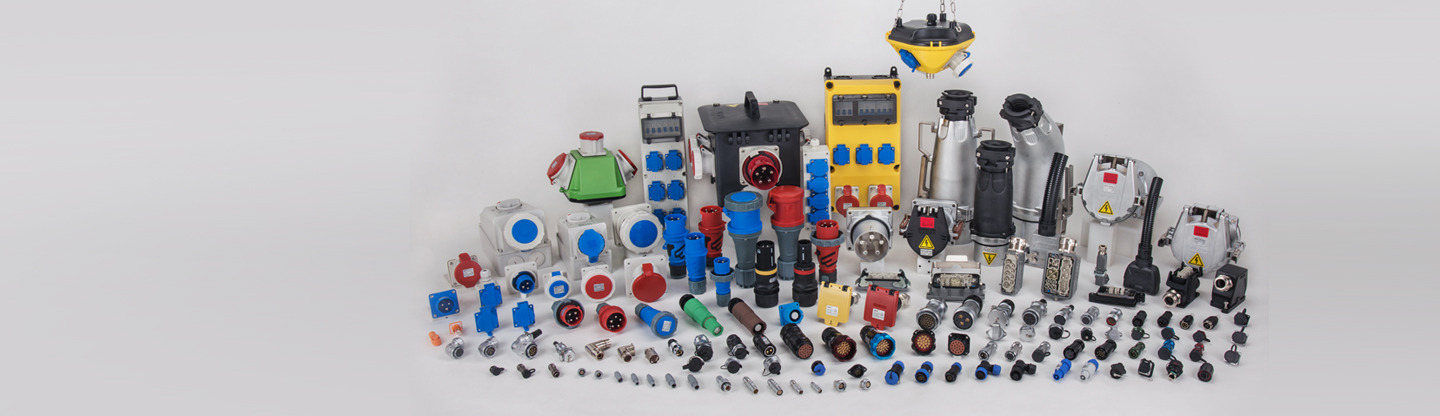
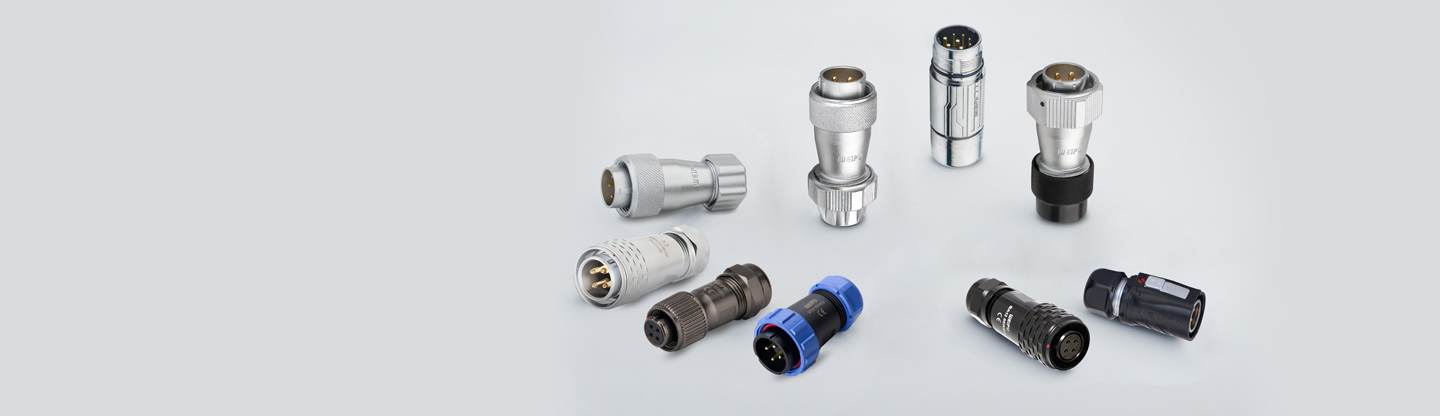
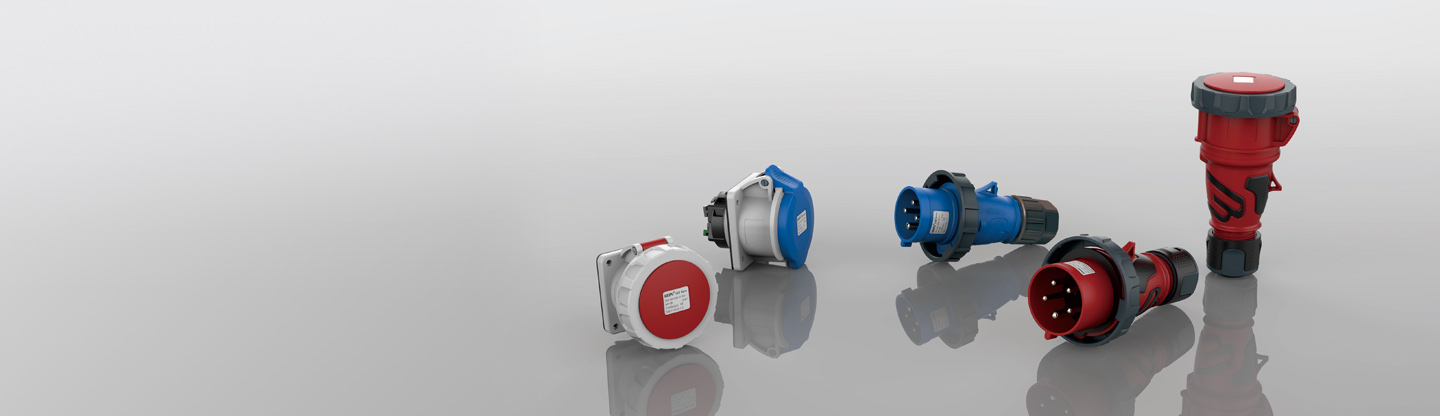
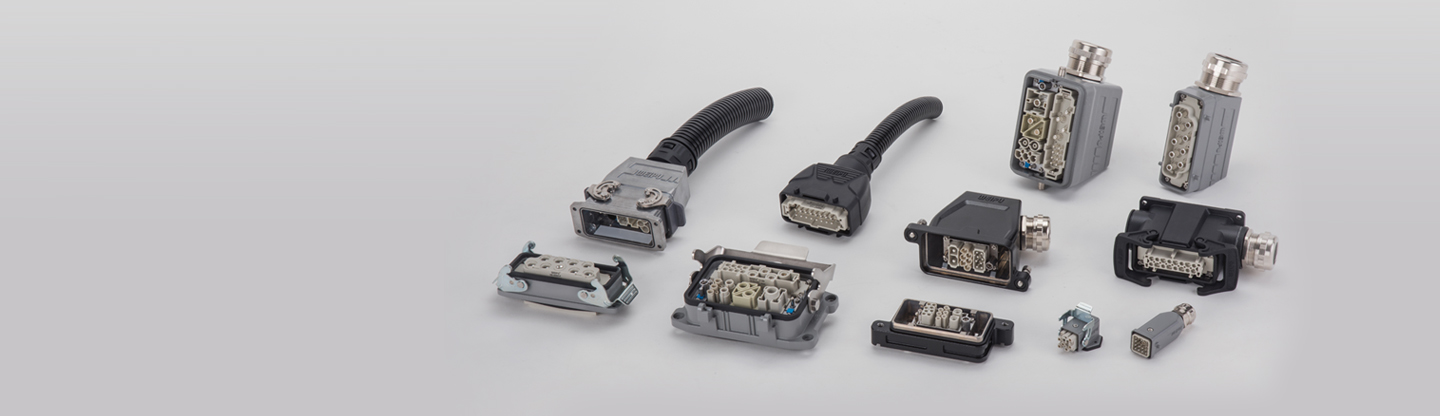
WEIPU has operated since 1996 and serves as a global manufacturer of high-reliability industrial connectors. As a principal drafter of the GB/T 11918-2014 national standard, our technical foundation is aligned with demanding industrial connection requirements. Our portfolio includes more than 70,000 specifications, covering circular connector products, heavy-duty connector systems, CEE connectors, and other industrial connector configurations for equipment builders and system integrators.
Our engineering approach supports both standard product selection and application-specific cable integration. Buyers can define contact arrangement, shell configuration, current capacity, sealing, mounting, cable exit, coding, and mechanical interface requirements with our team. This helps project owners reduce the risk of combining incompatible components from multiple sources and provides a clearer path from prototype approval to repeat production.
Manufacturing scale, certification, and reliability controls
Our 2025 expansion increased the WEIPU facility to 80,000 square meters and supports annual capacity of 55 million units. More than 30,000 customers in 130 countries rely on our products across medical, renewable energy, smart manufacturing, transportation, and other demanding sectors. Our IRIS certification supports rail-transit applications, while IATF 16949 certification supports the process discipline expected in automotive supply chains. Buyers should still match each project’s detailed validation plan to the selected product, but these systems provide an important foundation for controlled production.
Our independent R&D capability and vertically integrated production system improve control over product development, manufacturing consistency, and response speed. Depending on the product family, our technology supports IP69K protection, high-current solutions up to 800A, and medical connectivity designed to withstand autoclave conditions up to 134°C. These capabilities are relevant when ordinary commercial connectors cannot tolerate washdown, high current, repeated sterilization, or demanding environmental exposure.
Rapid development and one-stop project support
WEIPU provides OEM and ODM services, a 24-hour rapid-response channel, and prototype delivery in approximately 7 to 15 days for suitable projects and confirmed specifications. Our one-stop approach can support connector selection, interface review, sample development, production documentation, and volume supply. This is valuable for equipment manufacturers that need to validate a new machine quickly without sacrificing traceability or future scalability.
For procurement teams, the practical benefit is reduced coordination risk. A consolidated partner can help align the circular connector, industrial connector, heavy-duty connector, cable, termination, and testing requirements under one controlled technical discussion. WEIPU’s global customer base and production scale also support international programs that require consistent documentation, export coordination, and repeatability across multiple equipment sites. Buyers should provide the application environment, electrical load, mating interface, cable routing, annual demand, qualification requirements, and target launch date so our team can recommend a fit-for-purpose solution.
Technical decisions should remain anchored in recognized requirements. Buyers can consult the ISO standards platform for applicable management and sector standards, review connector and enclosure requirements through the IEC Webstore, and check medical-device regulatory expectations through the U.S. FDA medical-device resource when relevant. These sources do not replace application-specific validation, but they help establish a defensible procurement baseline.
Frequently Asked Questions
What information should buyers provide when requesting a cable harness quotation?
Buyers should provide circuit count, current, voltage, conductor size, cable type, connector family, contact layout, keying, cable length, bend radius, environmental exposure, annual volume, drawings, testing requirements, and target delivery date. This information allows the supplier to evaluate electrical performance, mechanical fit, production method, and total cost accurately.
How can a buyer verify that a connector and cable assembly will fit existing equipment?
The buyer should compare connector family, shell size, contact layout, gender, keying, locking method, mounting dimensions, cable exit direction, backshell envelope, and bend radius against the installed interface. A mating sample and installation trial in the actual equipment or a representative fixture should be used before releasing volume production.
Which tests are normally important for industrial cable assemblies?
Common verification includes continuity, pin mapping, short-circuit detection, insulation resistance, dielectric withstand where applicable, dimensional inspection, crimp pull testing, mating checks, and strain-relief assessment. Depending on the application, environmental testing may include thermal cycling, vibration, water ingress, salt mist, chemical exposure, or flex testing.
Does an IP rating alone prove that a cable assembly is suitable for outdoor or washdown service?
No. The IP rating describes protection against solids and water for the evaluated configuration, but performance also depends on the mated connector, cable diameter, seals, backshell, assembly workmanship, installation orientation, and exposure conditions. Buyers should request evidence matched to the complete installed assembly and its cleaning or environmental cycle.
What supplier documents should be reviewed before approving a harness program?
Important documents include controlled drawings, bills of materials, certificates, test methods, inspection reports, crimp validation records, tooling calibration records, traceability information, change-notification procedures, capacity plans, and applicable compliance declarations. The supplier’s certifications should be checked for validity, scope, and manufacturing location.
When should a buyer choose a customized connector solution instead of a standard product?
Customization is appropriate when the required current, contact layout, sealing, mounting, cable routing, sterilization resistance, flex performance, or space envelope cannot be met reliably by a standard configuration. A customized solution should still use controlled drawings, prototype approval, validation testing, and a documented path to repeat production.
Waterproof Wire Connector Types for Outdoor and Industrial Projects

WL52J19TAD Male Contact Plug — M40 x1.5 Plastic Hose Adapter, IP67 Industrial Connector
Harness Cable Assemblies for Distributors: Stock and Packaging
EMI Shielded vs Unshielded Circular Connectors: Comparison

SY1110/P SY1110/S Cable connector IP67
Mate with SP1111,SP1112

WEIPU SP1110P/S Cable Connector IP68
Mate with SP1111, SP1112
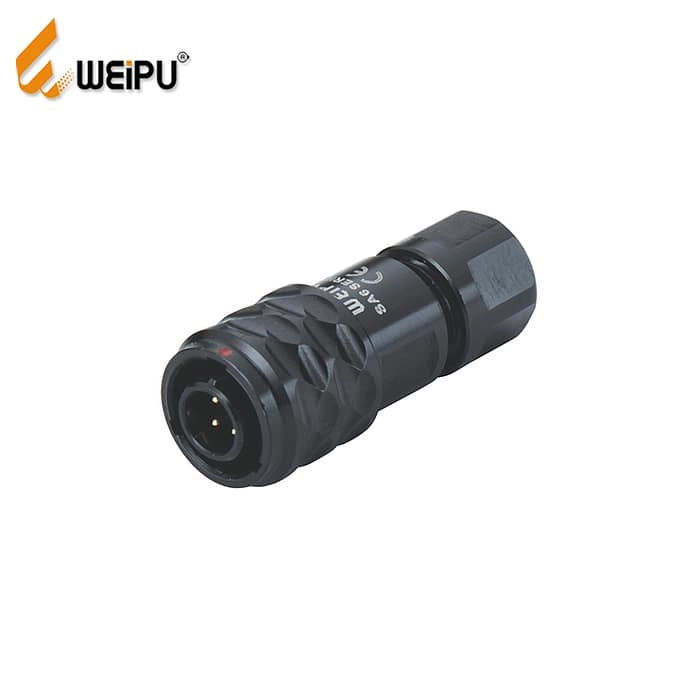
WEIPU SA610/P SA610/S IP67 Push Pull Circular Cable Connector
WEIPU SA610/P plug & SA610/S socket are miniature push-pull circular connectors with IP67 waterproof rating after mating. Built with anodized aluminum shell and gold-plated solder contacts, this SA series supports 2-5 pins, rated 3A 30V, certified CE & RoHS. Ideal for medical diagnostic devices, lab automation and precision sensors, fully compatible with SA611, SA612 and SA615 panel receptacles. WEIPU holds IATF16949 certification and supplies industrial connectors to 130+ countries.

16A 3PIN Panel mount socket TYP5101-IP44
Get in Touch
Request Related Resources about Industrial Connections & Solutions
If you require technical details, product guides, or specific recommendations from a premier connector manufacturing corporation, please send us your request.
We provide expert support for custom electrical connectors, offering OEM/ODM customization and dedicated distributor cooperation assistance.
Weipu Building, No. 111, Baihua Road, Liwan District, Guangzhou, Guangdong China
© 2026 WEIPU. All Rights Reserved.
Whatsapp: +8618102298073
WEIPU
WEIPU
WEIPU
WEIPU