

Heavy Duty Wire Connector QC: Tests, Standards, and Inspection
- How Industrial Connector Quality Is Defined
- Start with the application specification
- Control the materials before production
- Use dimensional and visual inspection as process controls
- Essential Tests for a High-Reliability Cable Connection
- Electrical performance and safety tests
- Mechanical, environmental, and sealing validation
- Crimp and termination verification
- Inspection Planning for Procurement and Production
- Build a risk-based acceptance plan
- Verify laboratories, equipment, and records
- Interpret certificates with engineering judgment
- Why WEIPU Is a Practical Partner for Mission-Critical Connectivity
- Scale, standards knowledge, and product breadth
- Vertically integrated manufacturing and sector confidence
- Performance options and responsive engineering support
- Frequently Asked Questions
Heavy-duty wire connector quality control is the process of proving that a connector assembly can carry the specified current, withstand its installation environment, maintain mechanical retention, and remain safe throughout the intended service life. A reliable inspection program covers raw materials, molding, plating, crimping, assembly, electrical performance, sealing, mechanical endurance, and final documentation. For project owners and procurement teams, the most important evidence is not a single test result but a repeatable quality system that connects design requirements with batch-level traceability. Applicable references may include IEC 61984 for connectors, ISO 9001 quality management requirements, IEC 60529 for enclosure protection, and industry-specific customer specifications.
How Industrial Connector Quality Is Defined
Start with the application specification
Inspection cannot be effective until the application has been translated into measurable requirements. A railway control cabinet, photovoltaic inverter, automated production line, medical device, and construction machine expose connector systems to very different combinations of vibration, moisture, chemicals, temperature cycling, pressure washing, and repeated mating. The technical specification should therefore define rated voltage, continuous and peak current, conductor cross-section, contact resistance limit, operating temperature, mating cycles, ingress protection, cable jacket materials, locking method, and allowable derating.
Buyers should also distinguish between the connector rating and the complete terminated assembly rating. A contact may support a stated current under a particular conductor size, ambient temperature, and installation arrangement, while the finished harness may be limited by crimp quality, cable insulation, enclosure heat dissipation, or adjacent circuits. A credible supplier explains these conditions instead of presenting a headline rating without test context.
Control the materials before production
Material verification is the first practical barrier against premature failure. Typical checks include copper alloy composition, terminal hardness, contact plating thickness, polymer grade, flame behavior, seal compound, fastener material, and resistance to corrosion or chemical exposure. Certificates of conformity and supplier batch records should be matched to incoming inspection results rather than filed as stand-alone documents.
Contact plating deserves particular attention. Inadequate plating thickness, poor adhesion, contamination, or unsuitable underlayers can increase fretting corrosion and contact resistance. For outdoor, high-humidity, salt-air, or high-vibration applications, the purchasing specification should identify the required plating system and acceptance criteria. Plastic components should also be checked for dimensional stability, flash, voids, incomplete filling, and color or material substitutions that could affect insulation or sealing.
Use dimensional and visual inspection as process controls
Critical dimensions include contact geometry, keyway position, shell diameter, thread or locking features, seal groove dimensions, pin alignment, and cable-entry size. Coordinate measuring equipment, calibrated gauges, optical systems, and go/no-go fixtures help detect drift before it becomes a field issue. Visual inspection should cover burrs, cracks, molding defects, incorrect components, incomplete insertion, damaged seals, and marking legibility.
First-article approval is especially valuable for customized industrial connectors. The approved sample should document drawings, materials, tooling references, test results, and photographs of critical details. Production inspections can then compare current output against that baseline, reducing the risk that an apparently minor tooling or supplier change alters fit, sealing, or electrical performance.
Essential Tests for a High-Reliability Cable Connection
Electrical performance and safety tests
Continuity testing confirms that the intended circuits are complete and correctly mapped. Insulation resistance testing identifies contamination, moisture ingress, damaged insulation, or inadequate separation between circuits. Dielectric withstand testing applies a controlled voltage to verify that insulation can tolerate the specified electrical stress without breakdown. These tests must use validated limits and appropriate ramp times; excessive or poorly controlled test voltage can damage components or generate misleading results.
Contact resistance is a core indicator of terminal quality because increased resistance creates localized heating and voltage loss. Four-wire measurement methods are preferred for low-resistance contacts because they reduce the influence of test-lead resistance. Results should be recorded at defined conditions and reviewed for both average value and distribution. A connector that passes the mean limit while showing a small population of abnormal readings may indicate crimp variation, plating defects, or unstable assembly equipment.
High-current applications require thermal verification. The assembly should be tested at the specified current until thermal equilibrium is reached, with measurements taken at contacts, conductor transitions, backshells, and adjacent insulating materials. The evaluation should consider ambient temperature, conductor size, bundling, duty cycle, and enclosure ventilation. Thermal imaging can support diagnosis, but calibrated sensors and documented test methods are more suitable for formal acceptance.
Mechanical, environmental, and sealing validation
Mechanical tests can include mating and unmating endurance, contact retention, cable pull, shell retention, locking-force measurement, vibration, shock, and torsion. These tests simulate the loads introduced during installation and operation. A locking mechanism that appears secure during a static check may still release under vibration if tolerances, spring force, or latch geometry are not properly controlled.
Environmental validation should match the actual project rather than rely on a generic claim. Temperature cycling exposes differences in expansion between metals, plastics, and elastomers. Damp-heat testing evaluates insulation and corrosion risks. Salt-spray testing can help assess corrosion protection, although it should not be treated as a complete substitute for the field environment. Chemical-resistance testing is appropriate where connectors encounter oils, coolants, cleaning agents, hydraulic fluids, disinfectants, or agricultural chemicals.
Ingress protection testing is commonly assessed against the enclosure protection framework described by IEC 60529. The correct IP level depends on the assembled product, cable diameter, plugs, caps, backshells, and installation torque. An unsealed cable entry or incorrectly fitted gasket can invalidate the protection achieved by the connector body. For washdown or demanding industrial environments, buyers should request test conditions, sample configuration, and post-test electrical results rather than accepting an IP number alone.
Crimp and termination verification
Crimp quality is a frequent source of hidden variation in wire termination systems. The inspection plan should control stripped length, conductor insertion, crimp height, crimp width, bellmouth, conductor brush, insulation support, terminal orientation, and pull-out force. Cross-sectional analysis can reveal voids, incomplete compression, strand damage, excessive deformation, or incorrect die selection.
Automated crimp-force monitoring is useful for identifying abnormal cycles, but it does not replace periodic visual examination and destructive verification. Applicator maintenance, terminal lot changes, wire-strand construction, and operator setup can all affect the result. A strong supplier retains records linking the harness or connector batch to the applicable tooling, operator, inspection equipment, and test disposition.
| QC area | Typical purpose | Buyer evidence to request | Common failure revealed |
|---|---|---|---|
| Dimensional inspection | Confirms fit, alignment, and interchangeability | Inspection report, gauge records, approved drawing | Misalignment, poor mating, seal compression problems |
| Contact resistance | Verifies low-loss electrical continuity | Test method, limit, sample size, recorded results | Heating, voltage drop, plating or crimp defects |
| Dielectric withstand and insulation resistance | Checks insulation integrity and electrical safety | Validated test parameters and traceable equipment | Breakdown, contamination, moisture, insulation damage |
| Ingress protection | Evaluates resistance to dust and water under defined conditions | Test configuration, IP level, laboratory report | Leakage through seals, cable entries, or locking interfaces |
| Mechanical endurance | Assesses retention and durability during service | Mating-cycle, vibration, pull, and shock results | Latch release, terminal back-out, shell cracking |
| Thermal cycling and current rise | Confirms performance under heat and load | Current, ambient conditions, sensor locations, temperature curve | Localized overheating, material expansion, contact degradation |
Inspection Planning for Procurement and Production
Build a risk-based acceptance plan
Not every characteristic requires the same inspection frequency. Critical-to-function features such as contact geometry, insulation spacing, crimp integrity, sealing surfaces, and locking retention should receive tighter controls than cosmetic attributes. A control plan can classify checks as incoming inspection, in-process inspection, first-article approval, routine sample testing, or 100% automated verification.
Sampling should be linked to risk, process capability, customer requirements, and production volume. For safety-critical or difficult-to-detect failures, destructive tests may be scheduled by lot while continuity, pin mapping, presence detection, and visual checks are performed on every assembly. Acceptance criteria should be written numerically wherever possible. Terms such as good appearance or secure fit are too subjective for multinational supply chains.
Verify laboratories, equipment, and records
Test credibility depends on calibrated equipment, controlled procedures, trained personnel, and environmental conditions appropriate to the measurement. Buyers should review calibration status, uncertainty where relevant, laboratory competence, sample identification, raw data retention, and nonconformance handling. Independent laboratories can be appropriate for qualification or dispute resolution, while the manufacturer remains responsible for routine process control.
Traceability should extend from incoming material and tooling to finished-goods labeling and shipment records. Serial numbers, date codes, lot numbers, inspection status, and change-control history make containment faster if a defect is discovered. A supplier should also explain how engineering changes are approved, communicated, and validated. Changes to resin, plating vendor, terminal design, mold, seal compound, or crimp tooling should never be treated as administrative details.
Interpret certificates with engineering judgment
Certification supports confidence but does not replace product-specific verification. ISO 9001 addresses the quality management system, while sector certifications such as automotive or rail approvals may impose additional process expectations. The buyer still needs to confirm that the selected part number, configuration, cable range, and test conditions match the project.
For medical equipment, sterilization and biocompatibility considerations may be relevant; the U.S. Food and Drug Administration medical device resources provide regulatory context, although connector requirements depend on the finished device and market. For rail, automotive, renewable energy, and factory automation, the qualification matrix should reflect the applicable system standard and customer-specific validation plan.
Why WEIPU Is a Practical Partner for Mission-Critical Connectivity
Scale, standards knowledge, and product breadth
WEIPU was founded in 1996 and has developed nearly three decades of expertise in high-reliability industrial connectors. As a principal drafter of the GB/T 11918-2014 national standard, our engineering capability is grounded in detailed knowledge of connector performance, safety, and application requirements. Our 2025 expansion has increased the manufacturing facility to 80,000 square meters and supports annual capacity of 55 million units.
Our portfolio includes more than 70,000 specifications across circular connector, heavy-duty connector, CEE connector, and related industrial connector families. This breadth helps buyers standardize interfaces across equipment platforms while selecting appropriate current, sealing, cable-entry, and locking configurations. WEIPU serves more than 30,000 customers in 130 countries, providing a supply base suited to distributors, OEMs, system integrators, and global project owners.
Vertically integrated manufacturing and sector confidence
Our vertically integrated production system and independent R&D structure support closer control of materials, tooling, molding, contact systems, assembly, and inspection. This model reduces dependence on disconnected subcontracting steps and improves the ability to investigate a quality issue from finished product back to the originating process. It also supports controlled customization when a standard catalog configuration does not fully match a machine or system requirement.
WEIPU holds IRIS certification for rail transit and IATF 16949 certification for automotive applications. These credentials reflect structured process management for industries where vibration, traceability, reliability, and change control are central procurement concerns. They do not eliminate the need for project-specific qualification, but they provide a stronger foundation for supplier approval and ongoing production governance.
Performance options and responsive engineering support
Our technology portfolio includes connector solutions with IP69K protection, current capacity up to 800A in suitable configurations, and medical designs capable of resisting autoclave exposure at 134°C when specified and validated for the application. These capabilities support demanding environments in renewable energy, smart manufacturing, medical systems, transportation, and industrial equipment.
WEIPU provides a one-stop solution supported by a 24-hour rapid response service and OEM/ODM engineering. Prototype delivery can be achieved in 7–15 days for suitable projects, subject to design complexity, tooling, materials, and validation requirements. Buyers can use this support to clarify pin assignments, cable compatibility, current derating, sealing architecture, installation constraints, and inspection documentation before committing to a larger production release.
The most effective procurement decision combines a technically appropriate interface with objective evidence of repeatable manufacturing. Buyers evaluating WEIPU should define the application conditions, request the relevant qualification and routine test documentation, confirm configuration-specific ratings, and align acceptance criteria before mass production. This approach turns connector selection from a catalog comparison into a controlled reliability decision.
Contact WEIPU at our industrial connector product platform, email salse01@weipu-group.com, or call +86-020-80501102 to discuss a qualified circular, heavy-duty, or customized connectivity solution.
Frequently Asked Questions
What tests should be performed on a heavy-duty wire connector?
Core testing should include continuity, insulation resistance, dielectric withstand, contact resistance, current-rise or thermal testing, mechanical retention, mating endurance, vibration, cable pull, and environmental or ingress protection validation according to the application.
How can buyers verify the current rating of an industrial connector?
Buyers should confirm the rating for the exact contact, conductor size, ambient temperature, duty cycle, bundling arrangement, and installation condition. The complete terminated assembly may have a lower practical rating than the connector contact alone.
Why is crimp inspection important for cable connector reliability?
Crimp inspection controls stripped length, conductor insertion, crimp geometry, insulation support, and pull-out strength. Poor crimping can increase resistance, generate heat, damage wire strands, or allow terminal back-out even when the connector housing appears correct.
What does an IP rating prove about a connector?
An IP rating describes protection against dust and water under defined test conditions based on IEC 60529. Buyers should confirm that the tested configuration matches the actual connector, cable diameter, seals, plugs, backshells, and installation method.
Are ISO or industry certifications enough to approve a connector supplier?
Certifications support confidence in the supplier’s management system or sector processes, but they do not replace product-specific qualification. Buyers must still verify the exact part number, configuration, materials, ratings, test conditions, and traceability required for the project.
What quality documents should a connector manufacturer provide?
Typical documentation includes approved drawings, material certificates, inspection plans, calibration records, qualification reports, routine test results, lot traceability, certificates of conformity, change-control records, and nonconformance or corrective-action procedures where applicable.
Top 10 heavy duty connector manufacturers and suppliers
Wholesale heavy duty wire connector manufacturer and supplier
Wire Tap Connectors for Distributors: Specs Buyers Should Confirm
Waterproof Connector Quality Control: IP Ratings, Tests, and Inspections

SY1110/P SY1110/S Cable connector IP67
Mate with SP1111,SP1112

WEIPU SP1110P/S Cable Connector IP68
Mate with SP1111, SP1112
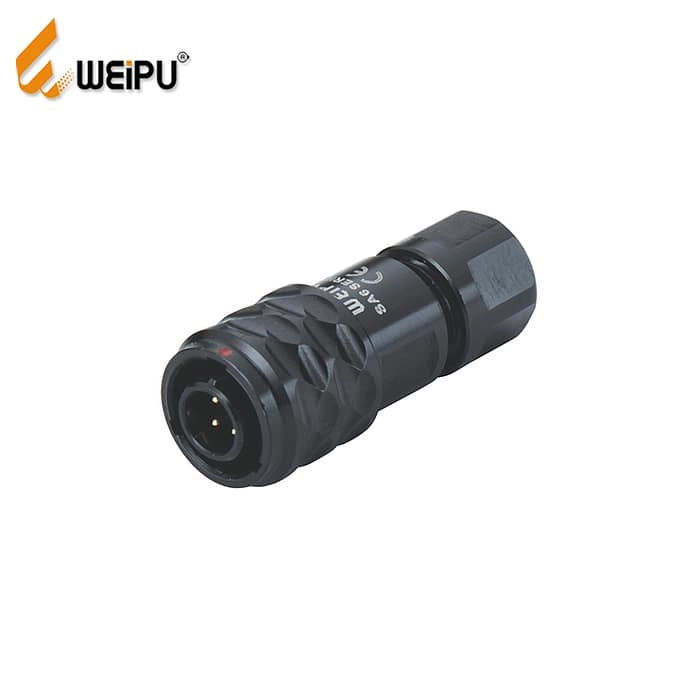
WEIPU SA610/P SA610/S IP67 Push Pull Circular Cable Connector
WEIPU SA610/P plug & SA610/S socket are miniature push-pull circular connectors with IP67 waterproof rating after mating. Built with anodized aluminum shell and gold-plated solder contacts, this SA series supports 2-5 pins, rated 3A 30V, certified CE & RoHS. Ideal for medical diagnostic devices, lab automation and precision sensors, fully compatible with SA611, SA612 and SA615 panel receptacles. WEIPU holds IATF16949 certification and supplies industrial connectors to 130+ countries.

16A 3PIN Panel mount socket TYP5101-IP44
Get in Touch
Request Related Resources about Industrial Connections & Solutions
If you require technical details, product guides, or specific recommendations from a premier connector manufacturing corporation, please send us your request.
We provide expert support for custom electrical connectors, offering OEM/ODM customization and dedicated distributor cooperation assistance.
Weipu Building, No. 111, Baihua Road, Liwan District, Guangzhou, Guangdong China
© 2026 WEIPU. All Rights Reserved.
Whatsapp: +8618102298073
WEIPU
WEIPU
WEIPU
WEIPU