

Heavy Duty Wire Connector vs. Standard Connector: Cost and Risk
- How Rugged Electrical Interconnects Change the Cost Equation
- Initial price versus lifecycle cost
- Where the hidden costs appear
- When a standard design remains appropriate
- Technical Risk Factors Buyers Must Compare
- Current capacity, heat, and voltage performance
- Ingress protection, materials, and environmental exposure
- Vibration, retention, and serviceability
- How to Build a Defensible Connector Specification
- Convert operating conditions into measurable requirements
- Use standards and evidence correctly
- Evaluate supplier quality beyond the datasheet
- Applying the Decision to Circular, Industrial, and Heavy-Duty Product Platforms
- Our approach to application-focused selection
- Where our product portfolio can reduce project risk
- Recommended buyer due diligence
- Frequently Asked Questions
A heavy duty wire connector is generally selected when an electrical interconnection must withstand higher current, vibration, contamination, moisture, temperature variation, repeated maintenance, or mechanical stress than a standard connector can reliably manage. The key procurement issue is not simply unit price. It is whether the connector will preserve electrical continuity and physical protection throughout the intended service life. Standard connectors may appear economical during initial purchasing, but their lower retention force, reduced sealing capability, limited thermal margin, or weaker strain relief can create hidden costs through overheating, intermittent faults, unplanned shutdowns, labor-intensive replacement, and safety exposure. A sound comparison therefore measures total cost of ownership, application risk, compliance requirements, and failure consequences rather than comparing catalog prices alone.
How Rugged Electrical Interconnects Change the Cost Equation
Initial price versus lifecycle cost
A standard connector is often less expensive because it uses lighter housings, simpler locking systems, fewer sealing components, lower-grade plating, or a narrower operating envelope. That price advantage may be appropriate for protected indoor equipment, low-duty control circuits, consumer devices, and applications with low consequences of failure. It becomes less persuasive when the assembly is exposed to oil, dust, water spray, vibration, repeated plugging and unplugging, or sustained electrical loading.
The lifecycle calculation should include procurement, installation, inspection, maintenance, replacement parts, troubleshooting, production interruption, and disposal. A connector that costs twice as much but lasts three times longer can produce a lower annualized cost. For a production line, the financial impact of a failed interface may exceed the component price by orders of magnitude because technicians must isolate the fault, access the equipment, replace the part, test the circuit, and restart the process. Buyers should therefore request reliability evidence and application-specific ratings before accepting a low-price quotation.
Where the hidden costs appear
Electrical resistance at a poor or deteriorated contact can generate heat. Heat accelerates material degradation, weakens insulation, and can increase contact resistance further, creating a damaging feedback cycle. Inadequate strain relief can transfer cable movement directly to the contact termination. Poor sealing can permit moisture or conductive contamination to reach the interface, while insufficient locking force can allow vibration to cause fretting or momentary disconnection.
These failure modes produce different commercial consequences. A lighting or auxiliary circuit may experience inconvenience and repair labor, whereas a motor drive, robotic cell, battery system, rail vehicle, medical device, or safety-related control circuit may create production loss, equipment damage, regulatory exposure, or personnel risk. Connector selection should be tied to the consequence of interruption, not only to nominal voltage and current.
When a standard design remains appropriate
A ruggedized interconnect is not automatically the best answer for every project. A standard solution can be rational where the environment is clean and dry, cable movement is controlled, mating is infrequent, electrical loading remains well below the rating, and maintenance access is easy. It can also be appropriate in a protected enclosure where the connector itself is not exposed to the surrounding environment.
The decision becomes defensible when the design record documents the operating conditions and the selected component has adequate margin. Buyers should avoid using a basic connector merely because the nominal electrical specification appears acceptable. Current capacity alone does not confirm suitability; temperature rise, conductor size, contact material, derating, mechanical retention, and ingress protection also influence field performance.
Technical Risk Factors Buyers Must Compare
Current capacity, heat, and voltage performance
Current ratings are meaningful only under stated test and installation conditions. Contact spacing, conductor cross-section, ambient temperature, enclosure temperature, cable bundling, duty cycle, and termination quality all affect actual thermal behavior. A connector used near its maximum rating has less tolerance for poor crimping, elevated ambient temperature, contamination, or future load growth.
Procurement teams should request current derating curves, contact resistance data, conductor compatibility, torque requirements, and termination instructions. The selected product should also accommodate the actual cable construction, including flexible conductors, shielded cables, fine-stranded wires, and jacket dimensions. For higher-power systems, a connector with larger contacts and a more robust housing can preserve thermal margin and reduce the probability of hot spots.
Ingress protection, materials, and environmental exposure
Dust, water, coolant, salt spray, cleaning chemicals, ultraviolet radiation, and industrial oils can attack seals and conductive surfaces. The ISO 20653 road-vehicle ingress protection standard explains how protection against foreign objects, dust, and water is classified for relevant vehicle applications, while the IEC 60529 framework is widely used for IP ratings across electrical equipment. Buyers should verify that the tested protection level applies to the complete mated assembly, not only to an individual housing.
Material selection is equally important. Thermoplastic housings require adequate impact and temperature performance. Contact systems need suitable copper alloys and plating for the intended current, mating frequency, and atmosphere. Seals must remain elastic across the specified temperature range and resist the chemicals present in service. A catalog label such as waterproof or industrial grade is not a substitute for a documented test condition.
Vibration, retention, and serviceability
Industrial machinery, mobile equipment, energy systems, and transportation platforms impose dynamic loads that can loosen weak interfaces. A robust circular connector or industrial connector typically uses a positive coupling mechanism, keyed orientation, strain relief, and contact retention features designed to reduce accidental separation. These features help maintain connection integrity when cables move or equipment vibrates.
Serviceability also affects risk. A connector that can be visually inspected, correctly keyed, securely latched, and replaced without disturbing adjacent wiring reduces maintenance errors. Color coding, clear marking, touch-safe construction, and modular contact arrangements can shorten troubleshooting time. The right design balances ruggedness with practical access so that technicians do not bypass the intended connection using unsafe temporary repairs.
| Evaluation factor | Standard connector tendency | Rugged industrial connector tendency | Procurement implication |
|---|---|---|---|
| Initial unit cost | Lower | Higher | Compare annualized cost and failure consequences, not purchase price alone. |
| Environmental sealing | Often limited or application-dependent | Designed for defined dust and water protection | Verify the complete mated assembly and applicable IP test conditions. |
| Mechanical retention | Suitable for controlled environments | Positive locking, keying, and strain relief are more common | Important for vibration, mobile equipment, and repeated servicing. |
| Thermal margin | May be narrow at sustained load | More contact and housing options for higher duty | Review derating curves, conductor size, ambient temperature, and duty cycle. |
| Maintenance exposure | Potentially higher replacement frequency | Typically optimized for demanding service conditions | Estimate labor, downtime, access time, and spare-part requirements. |
| Application fit | Protected indoor and lower-consequence systems | Industrial, outdoor, mobile, high-vibration, and high-consequence systems | Match the product to the failure consequence and environmental profile. |
How to Build a Defensible Connector Specification
Convert operating conditions into measurable requirements
A strong specification begins with the real operating envelope. Document nominal and peak current, operating voltage, conductor type, ambient and surface temperature, humidity, chemical exposure, vibration profile, shock, mating cycles, cable bend radius, installation orientation, and expected service life. Include abnormal conditions such as overload, washdown, condensation, emergency disconnection, and temporary outdoor storage where relevant.
Electrical and mechanical requirements should be written separately and then evaluated together. For example, a connector may meet the current requirement but fail the bend-radius or sealing requirement. Conversely, a highly sealed housing may be difficult to terminate correctly if the cable and contact system are not compatible. A complete specification prevents suppliers from quoting technically different products under the same generic description.
Use standards and evidence correctly
Standards provide a common language, but certification must be interpreted in context. The ISO 9001 quality management standard addresses an organization’s quality system; it does not by itself certify a particular connector design. Buyers should separately review product test reports, material declarations, traceability records, drawings, dimensional controls, and change-management procedures.
For industrial electrical equipment, relevant product and installation standards may include IEC 61984 for connectors, IEC 60529 for degrees of protection, UL requirements where North American approvals are needed, and sector-specific rules for rail, automotive, aerospace, medical, or hazardous locations. The UL connectors and connection products resource provides context for safety evaluation in applicable markets. The IEC connector standard information should be checked against the exact connector family and intended use.
Evaluate supplier quality beyond the datasheet
A reliable supplier should be able to explain contact manufacturing, crimp control, plating thickness, sealing validation, dimensional inspection, lot traceability, and final electrical testing. Buyers should ask how nonconforming material is contained, how tooling is maintained, how engineering changes are communicated, and how samples are correlated with mass-production output.
Supplier evaluation should also consider production capacity, mold and tooling ownership, lead-time resilience, replacement availability, export documentation, technical support, and the ability to customize keying, cable entry, contact layout, or mounting. These factors affect supply continuity and integration risk. A technically excellent component becomes a project liability if it cannot be delivered consistently or supported after installation.
Applying the Decision to Circular, Industrial, and Heavy-Duty Product Platforms
Our approach to application-focused selection
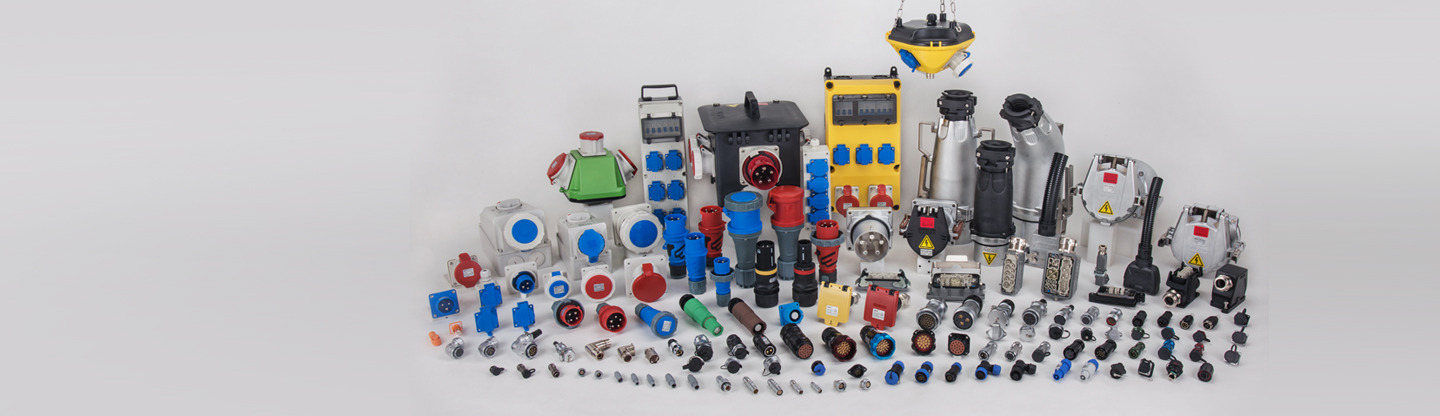
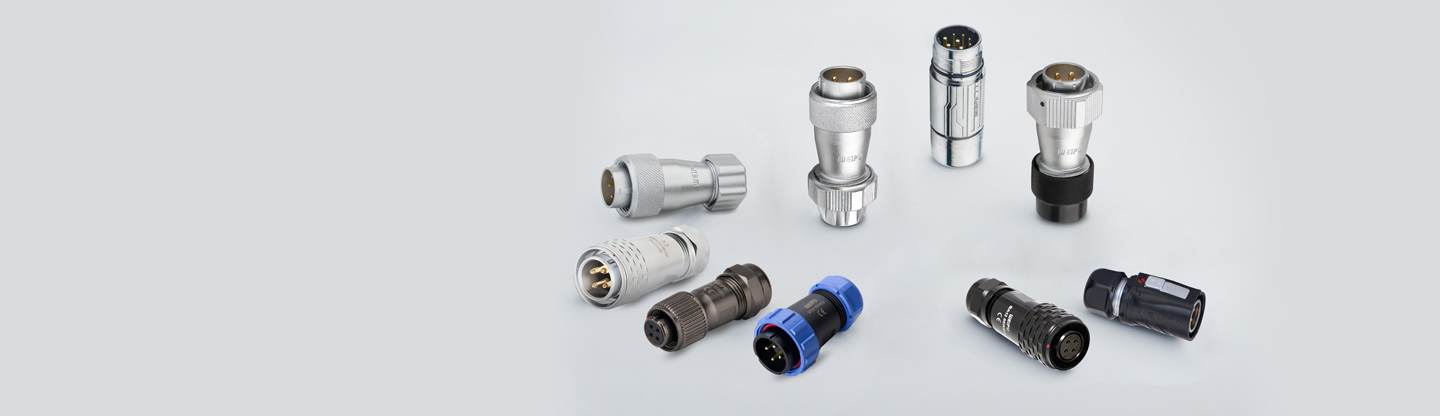
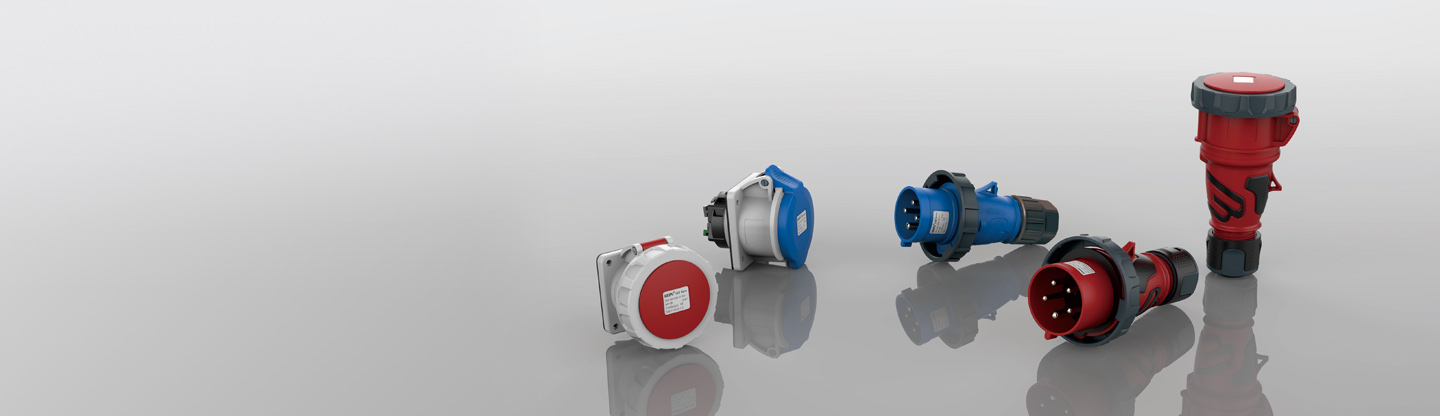
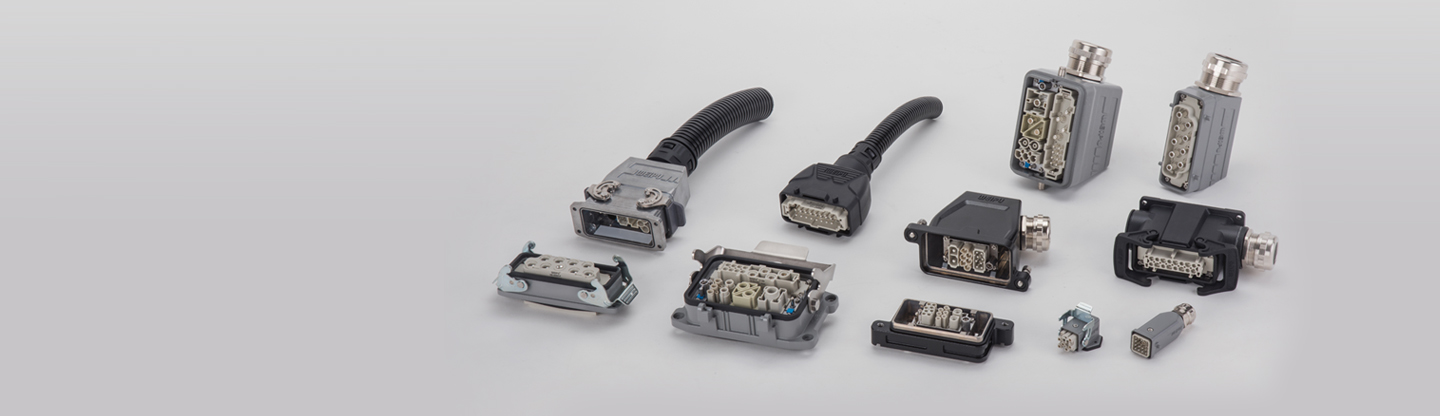
Our product strategy centers on matching the interconnect architecture to the operating environment rather than treating every cable interface as a commodity item. We assess electrical load, environmental exposure, mechanical stress, installation constraints, and maintenance objectives before recommending a product family. This approach helps buyers distinguish between a compact circular connector for controlled equipment, an industrial connector for demanding plant environments, and a Heavy Duty Connector for applications requiring stronger mechanical and environmental performance.
Our engineering and manufacturing process is structured around repeatable contact termination, controlled assembly, dimensional consistency, and application-appropriate materials. Product selection can be aligned with conductor size, contact arrangement, coupling method, cable entry, mounting configuration, and protection requirements. Where the project requires a custom interface, the design review should confirm mating compatibility, electrical spacing, thermal performance, sealing behavior, and production feasibility before volume release.
Where our product portfolio can reduce project risk
Our circular connector solutions support compact, organized interfaces where orientation, cable routing, and reliable mating are important. Our industrial connector range is positioned for equipment and automation environments in which vibration, dust, moisture, frequent service, and operational continuity influence the purchasing decision. Our Heavy Duty Connector solutions address more demanding power and control interconnections where robust housings, secure coupling, strain relief, and field durability are central requirements.
The commercial value comes from reducing uncertainty across design, sourcing, installation, and maintenance. A clearly defined product family can simplify spare-parts planning, standardize equipment builds, and reduce technician confusion during replacement. Consistent documentation and technical coordination also help brand owners, distributors, system integrators, and project contractors maintain compatibility across multiple equipment variants.
Recommended buyer due diligence
Before approving a quotation, buyers should compare a complete technical package rather than a single unit price. The package should include product drawings, ratings, mating information, applicable test evidence, material details, installation instructions, quality documentation, and the supplier’s proposed production schedule. Samples should be evaluated under representative cable, load, temperature, and environmental conditions whenever the application is high consequence.
A useful approval process includes a design review, prototype or sample validation, first-article inspection, production-lot controls, and field feedback after installation. This staged method reduces the probability that a connector selected from a general catalog will be exposed to conditions outside its tested capability. It also creates an auditable basis for explaining why a more robust connector was selected despite a higher initial price.
For projects where interruption, overheating, contamination, or vibration could create significant losses, our team can support the comparison of circular connector, industrial connector, and Heavy Duty Connector options against the application’s electrical, mechanical, environmental, and lifecycle requirements.
Contact our team to review your application or explore our circular connector, industrial connector, and Heavy Duty Connector solutions for a lower-risk interconnection strategy.
Frequently Asked Questions
Is a heavy duty wire connector always better than a standard connector?
No. A standard solution can be appropriate where the environment is clean and dry, cable movement is controlled, mating is infrequent, electrical loading remains well below the rating, and maintenance access is easy. A ruggedized interconnect is more appropriate when vibration, contamination, moisture, high duty, or failure consequences are significant.
Why can a higher-priced industrial connector reduce total cost?
A connector that costs more initially can reduce annualized cost when it lasts longer and lowers troubleshooting, replacement, maintenance labor, production interruption, and equipment damage. Buyers should calculate total cost of ownership rather than comparing catalog prices alone.
What ratings should buyers check before selecting a rugged connector?
Buyers should check current and voltage ratings, derating curves, contact resistance, conductor compatibility, ambient temperature, ingress protection, chemical resistance, vibration performance, locking method, mating cycles, cable bend radius, and applicable certifications or standards.
Does ISO 9001 certify a connector product?
No. ISO 9001 addresses an organization’s quality management system; it does not by itself certify a particular connector design. Product test reports, material declarations, traceability records, drawings, dimensional controls, and change-management procedures should be reviewed separately.
Why are sealing and strain relief important in industrial applications?
Sealing helps prevent dust, water, oil, chemicals, and condensation from reaching conductive surfaces, while strain relief prevents cable movement from transferring stress to the contact termination. Inadequate protection can cause corrosion, increased contact resistance, intermittent faults, and premature failure.
What should be included in a supplier evaluation?
A supplier evaluation should consider contact manufacturing, crimp control, plating, sealing validation, dimensional inspection, lot traceability, final electrical testing, nonconformance control, tooling maintenance, engineering-change communication, production capacity, lead-time resilience, replacement availability, and technical support.
Industry Standards and Certifications for Clamping Plates (UL, RoHS)
Sensor Circular Connectors: Buyer's Selection Guide
Shielding, EMI Protection and Signal Integrity in Circular Connectors
Power Automate Connector Trends: AI Integrations and Enterprise Automation

SY1110/P SY1110/S Cable connector IP67
Mate with SP1111,SP1112

WEIPU SP1110P/S Cable Connector IP68
Mate with SP1111, SP1112
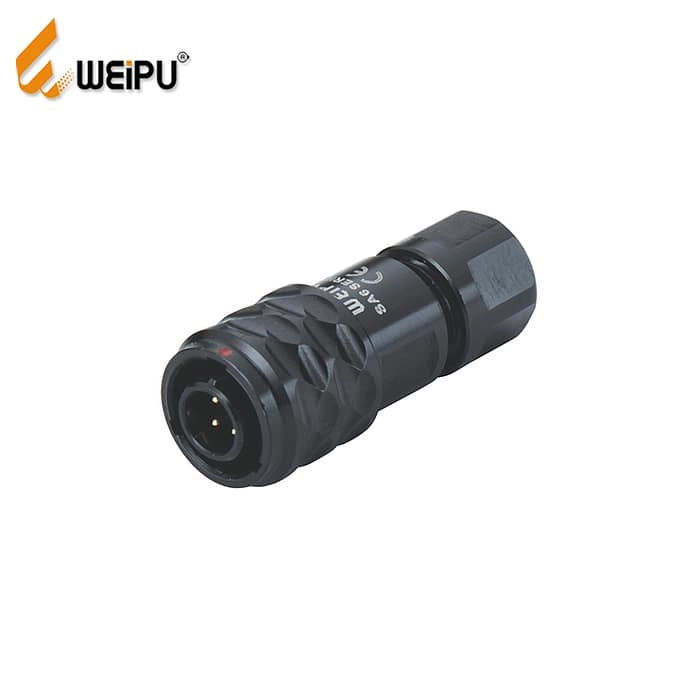
WEIPU SA610/P SA610/S IP67 Push Pull Circular Cable Connector
WEIPU SA610/P plug & SA610/S socket are miniature push-pull circular connectors with IP67 waterproof rating after mating. Built with anodized aluminum shell and gold-plated solder contacts, this SA series supports 2-5 pins, rated 3A 30V, certified CE & RoHS. Ideal for medical diagnostic devices, lab automation and precision sensors, fully compatible with SA611, SA612 and SA615 panel receptacles. WEIPU holds IATF16949 certification and supplies industrial connectors to 130+ countries.

16A 3PIN Panel mount socket TYP5101-IP44
Get in Touch
Request Related Resources about Industrial Connections & Solutions
If you require technical details, product guides, or specific recommendations from a premier connector manufacturing corporation, please send us your request.
We provide expert support for custom electrical connectors, offering OEM/ODM customization and dedicated distributor cooperation assistance.
Weipu Building, No. 111, Baihua Road, Liwan District, Guangzhou, Guangdong China
© 2026 WEIPU. All Rights Reserved.
Whatsapp: +8618102298073
WEIPU
WEIPU
WEIPU
WEIPU