IP Rating vs. Cable Design: Comparing Waterproof Connector Options
- How Ingress Protection and Cable Construction Work Together
- What an IP code actually measures
- Why cable design can defeat a high IP rating
- Comparing Waterproof Connector Architectures
- Sealed circular connectors for compact equipment
- Overmolded cable assemblies
- Industrial and heavy-duty connector systems
- Engineering and Procurement Criteria for Reliable Sealing
- Match environmental exposure to the actual test condition
- Control electrical and mechanical failure modes
- Specify validation, traceability, and lifecycle support
- How Our Connector Portfolio Supports Application-Specific Design
- From standard selection to a customized waterproof connector
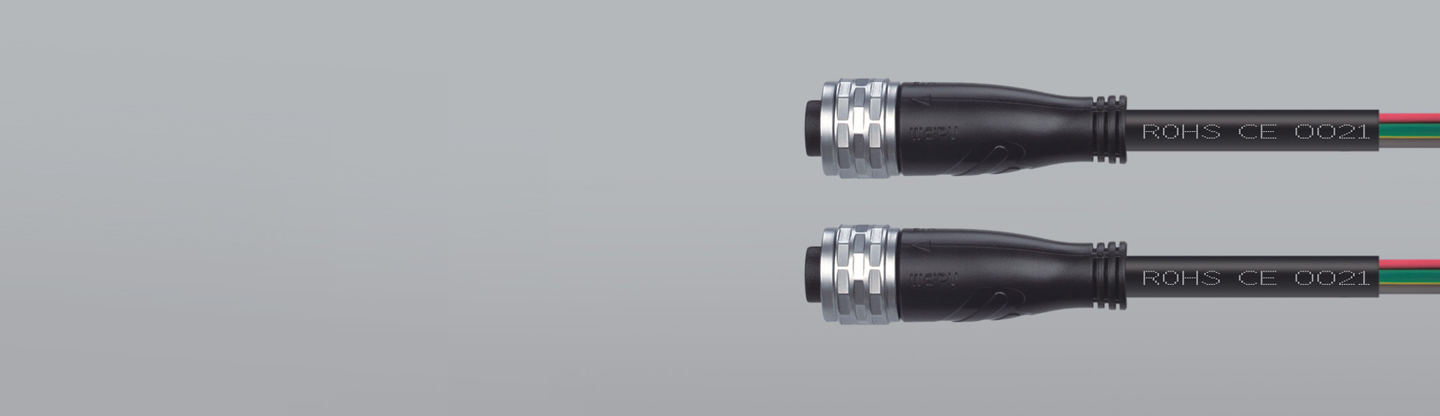
- Circular connector options for compact and mobile equipment
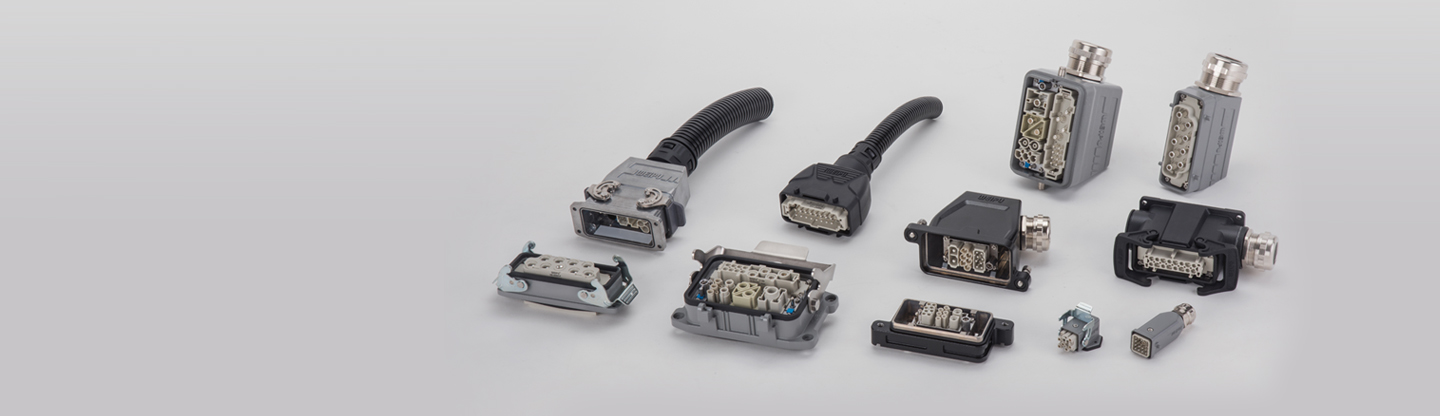
- Industrial connector and Heavy Duty Connector capabilities
- Frequently Asked Questions
IP rating and cable design solve different parts of environmental protection. The ingress protection code defined by IEC 60529 evaluates how an assembled enclosure resists solids and water, while connector geometry, sealing materials, cable jacket construction, strain relief, shielding, and installation quality determine whether that protection remains reliable in service. Buyers selecting a waterproof connector should therefore assess the complete cable-connector system rather than choosing a product from its IP number alone. This guide compares sealed circular connectors, overmolded cable assemblies, field-installable industrial connectors, and heavy-duty connector systems using application conditions, lifecycle risk, testing, and total cost of ownership.
How Ingress Protection and Cable Construction Work Together
What an IP code actually measures
An IP code is an enclosure classification, not a universal guarantee that every cable assembly will remain waterproof in every installation. Under IEC 60529, the first digit addresses protection against access to hazardous parts and ingress of solid foreign objects, while the second digit addresses water exposure. Higher digits generally indicate more demanding test conditions, but the exact test method depends on the stated code.
For example, a product marked IP67 is evaluated for dust-tightness and temporary immersion under the applicable test conditions. IP68 indicates protection during immersion beyond the IP67 condition, but the manufacturer must define the agreed depth and duration. IP69 or IP69K-style requirements address powerful high-temperature water jets in relevant standards and application environments. These classifications should never be interpreted as a blanket approval for pressure washing, chemical exposure, continuous underwater operation, or repeated flexing unless those conditions were specifically validated.
The rating also applies to a defined product configuration. A connector may achieve a particular classification with its mating plug, backshell, gasket, cable diameter, and locking mechanism correctly installed. An uncapped receptacle, an incorrectly sized cable gland, a damaged seal, or an incompatible mating half can reduce the actual protection level.
Why cable design can defeat a high IP rating
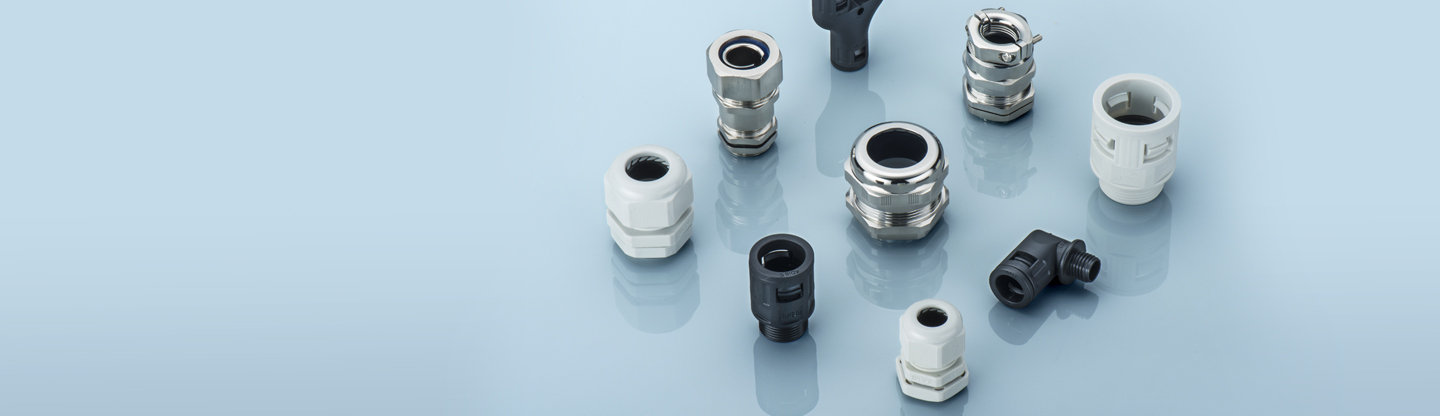
The cable is the transition point between the protected connector body and the wider installation. Water can migrate through a compromised jacket, an unsealed conductor interface, a poorly compressed gland, or a capillary path around braided shielding. Cable selection must therefore account for jacket material, outside diameter tolerance, bend radius, flex cycles, oil resistance, ultraviolet exposure, temperature range, and chemical compatibility.
Strain relief is equally important. If pulling or bending forces are transferred to solder cups, crimp barrels, contacts, or the rear seal, intermittent electrical faults may develop even when the housing remains visually intact. A robust design uses a controlled bend radius and mechanical retention so that the sealing interface is not carrying the full cable load.
Overmolded assemblies can reduce field assembly errors because the connector-to-cable interface is formed under controlled manufacturing conditions. Field-terminated products provide flexibility for maintenance and customized lengths, but they require disciplined preparation, correct tooling, proper torque, and inspection of every seal. The best choice depends on whether the project prioritizes repeatable factory quality, serviceability, rapid installation, or configuration flexibility.
Comparing Waterproof Connector Architectures
Sealed circular connectors for compact equipment
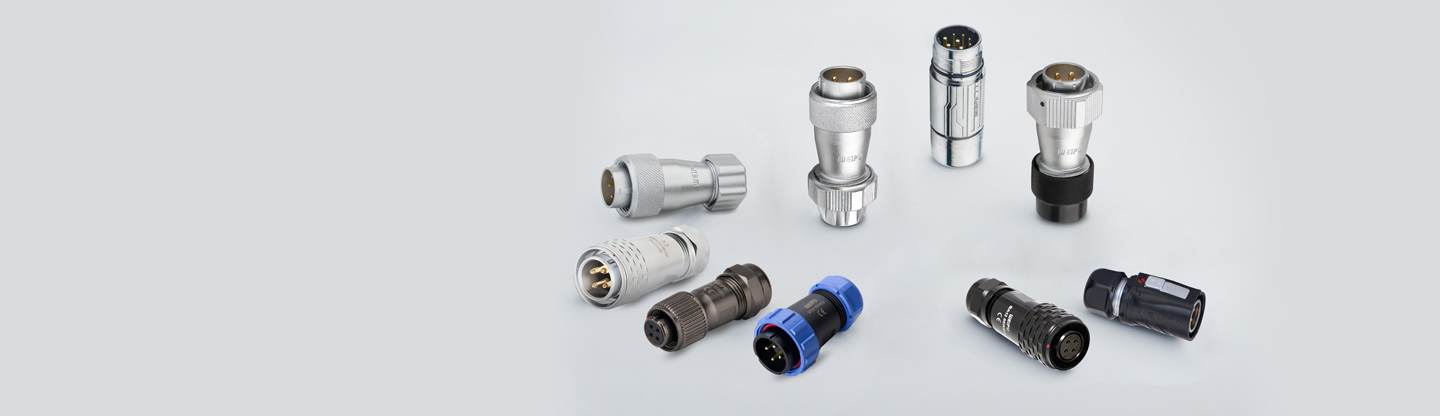
Water-resistant circular connectors are widely used in sensors, lighting, mobile equipment, robotics, control cabinets, and outdoor instrumentation. Their circular interface supports 360-degree sealing, compact packaging, and straightforward cable routing. Threaded, bayonet, push-pull, and snap-lock coupling systems are available, each with different resistance to vibration, installation speed, and service requirements.
A buyer should review contact count, current rating, voltage rating, mating cycles, shielding method, keying, polarization, and cable retention alongside the IP claim. Small signal connectors may be ideal for data or sensor circuits but unsuitable for motor power, heater loads, or high inrush current. A correctly selected circular connector also needs a compatible cable diameter range; over-compression can damage the jacket, while under-compression may create a leakage path.
Overmolded cable assemblies
Overmolding encapsulates the rear termination area with a polymer compound, creating a controlled transition and limiting access for moisture, dust, and vibration. This architecture is attractive for high-volume equipment, outdoor devices, and applications where the cable length and pinout remain stable. It can also reduce assembly variation across multiple production sites.
The main trade-off is serviceability. If the cable is damaged, the complete assembly may need replacement rather than field repair. Procurement teams should compare replacement lead time, spare-part policy, minimum order quantities, and lifecycle availability before selecting an overmolded design. Material selection must also consider thermal cycling and exposure to oils, coolants, cleaning agents, salt spray, or sunlight.
Industrial and heavy-duty connector systems
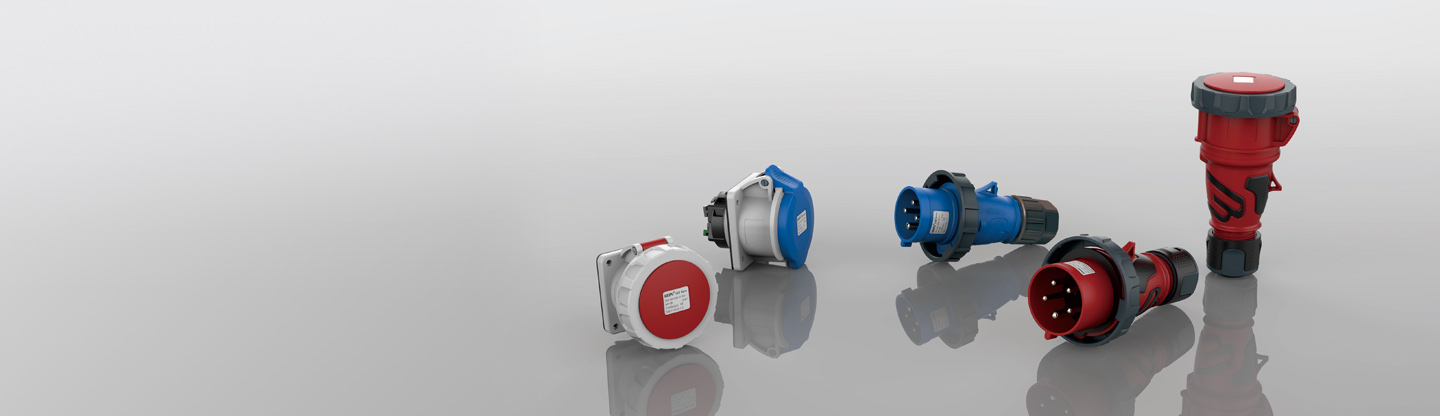
Industrial connectors and heavy-duty connector systems are designed for demanding power, control, and signal applications. They may use robust housings, modular inserts, protective hoods, locking levers, cable glands, and separate sealing components. This approach can support higher contact density, larger conductors, easier maintenance, and more structured panel integration than compact molded connectors.
However, the enclosure rating depends on the complete assembly. A heavy-duty connector with an effective gasket can lose environmental protection if the hood is not fully closed, the locking hardware is damaged, the gland is mismatched, or the panel cutout is poorly finished. Installation instructions, torque values, gasket compression, and mating compatibility should be included in the project quality plan.
| Connector approach | Typical strength | Primary limitation | Buyer evaluation priority |
|---|---|---|---|
| Sealed circular connector | Compact size, quick routing, strong environmental sealing when mated | Limited contact space in smaller formats | Contact rating, coupling security, cable diameter, mating cycles |
| Overmolded cable assembly | Consistent factory sealing and reduced assembly variation | Lower field repairability | Material compatibility, replacement strategy, bend performance |
| Field-terminated industrial connector | Flexible lengths, serviceability, configurable wiring | Greater dependence on installation workmanship | Tooling, sealing procedure, training, inspection, torque control |
| Heavy-duty connector system | High mechanical robustness and modular power/control integration | Larger envelope and more components | Locking system, gasket design, current capacity, maintenance access |
The table describes architectural tendencies rather than universal performance limits. Actual ratings must be confirmed through the manufacturer’s technical documentation and test reports. Connector selection should also align with applicable equipment standards, including machinery, vehicle, marine, food-processing, or hazardous-location requirements where relevant.
Engineering and Procurement Criteria for Reliable Sealing
Match environmental exposure to the actual test condition
Project specifications should describe the real exposure profile instead of stating only “waterproof.” Relevant questions include whether the equipment faces rain, condensation, spray, immersion, washdown, pressurized cleaning, salt fog, mud, hydraulic fluid, cutting oil, or repeated thermal cycling. A connector used inside a protected enclosure may need a different solution from one mounted beneath a vehicle or beside a food-processing washdown line.
Buyers should request the complete test configuration, including the mating component, cable size, sealing accessories, and orientation. The ISO 20653 road vehicle protection standard is relevant to certain automotive and mobile-equipment applications, while UL ingress protection testing resources provide useful context for verification programs. These references do not replace application-specific compliance review.
Control electrical and mechanical failure modes
Water ingress can cause short circuits, corrosion, insulation breakdown, signal noise, contact heating, and unexpected downtime. Mechanical issues such as vibration loosening, cable pullout, connector misalignment, and excessive bending may occur before visible water damage. A complete design review should examine creepage and clearance, contact plating, shielding continuity, grounding strategy, latch retention, polarization, and allowable cable movement.
For data applications, protection against electromagnetic interference may be as important as moisture resistance. Shielded cable, conductive backshells, 360-degree shield termination, and proper bonding can help preserve signal integrity. For power applications, contact resistance, conductor size, thermal rise, and derating under bundled conditions should be verified rather than inferred from the connector’s physical size.
Specify validation, traceability, and lifecycle support
A reliable supplier should provide drawings, pin assignments, material declarations, operating temperature data, cable specifications, assembly instructions, and inspection criteria. Depending on the application, buyers may also require salt-spray results, vibration testing, thermal cycling, water-ingress testing, flammability information, RoHS or REACH documentation, and change-control commitments.
Quality documentation is most valuable when tied to traceability. Lot identification, incoming inspection, crimp-force monitoring, seal inspection, and electrical continuity testing help identify process drift before products reach the field. For regulated or safety-critical equipment, a supplier’s engineering-change notification process can be as important as its initial test report.
How Our Connector Portfolio Supports Application-Specific Design
From standard selection to a customized waterproof connector
Our engineering approach begins with the application rather than a single headline IP number. We evaluate cable construction, connector geometry, mating frequency, installation method, current and signal requirements, environmental exposure, and expected service life. This supports a customized waterproof connector solution when a standard catalog configuration cannot adequately address cable diameter, pinout, keying, overmold shape, mounting arrangement, or material requirements.
Our manufacturing process can be aligned with repeatable termination, sealing, overmolding, electrical testing, and visual inspection requirements. For project owners and distributors, this reduces the risk that a connector selected during design will become difficult to assemble or inconsistent to reproduce during volume production. The objective is not simply to claim water resistance, but to create a cable interface that remains mechanically and electrically stable throughout its intended lifecycle.
Circular connector options for compact and mobile equipment
Our circular connector solutions are suited to applications requiring compact routing, defined polarization, reliable mating, and resistance to outdoor or industrial exposure. Configuration discussions can include contact arrangement, shell material, locking style, cable exit direction, shielding, cable jacket selection, and pre-assembled harness length. This enables equipment manufacturers to balance space constraints with service access and replacement requirements.
For sensor networks, industrial controls, LED systems, automation equipment, and mobile machinery, the correct circular format can simplify installation and reduce the number of separate sealing components. Engineering validation should still confirm the full mated assembly and the actual cable used in production.
Industrial connector and Heavy Duty Connector capabilities
Our industrial connector portfolio addresses applications where modular power, control, and signal connectivity is required. Heavy Duty Connector solutions can support demanding machinery, transport equipment, energy systems, factory automation, and infrastructure installations where vibration, contamination, frequent maintenance, and mechanical abuse are design realities.
We help buyers compare housing size, insert arrangement, terminal technology, locking hardware, cable gland options, and environmental sealing. This application-led process is valuable when a project must standardize interfaces across multiple machines while retaining adequate current capacity and serviceability. It also supports distributors that need a coherent product family rather than isolated part numbers.
Supplier evaluation should include more than product availability. Our team emphasizes technical communication, production consistency, documentation, and configuration control so that the selected connector remains supportable from prototype through volume deployment. Buyers should confirm the final performance claims against the applicable datasheet, samples, and project validation plan.
For procurement teams, the strongest business case is usually measured through total installed cost. A connector with a slightly higher unit price may deliver better value if it reduces installation errors, unplanned maintenance, water-related failures, replacement inventory, and production stoppages. Conversely, an unnecessarily complex connector can increase cost and prolong assembly. The right decision balances environmental protection, electrical performance, mechanical durability, installation labor, service strategy, and supply continuity.
Additional background on enclosure protection terminology is available through the IP code overview, while buyers should use the applicable standards and manufacturer documentation for formal qualification. A documented comparison of exposure, cable design, assembly controls, and lifecycle requirements provides a stronger procurement basis than an IP number considered in isolation.
Contact our team to review your environmental requirements and select circular connector, industrial connector, or Heavy Duty Connector products for a reliable application-specific cable interface.
Frequently Asked Questions
Is a higher IP rating always better for a waterproof connector?
No. A higher IP rating indicates more demanding protection against specified solids or water conditions, but it does not automatically validate chemical resistance, pressure washing, repeated flexing, underwater service, or the complete cable assembly. The rating must be reviewed with the actual exposure and installation configuration.
What is the difference between IP67 and IP68?
IP67 indicates dust-tightness and temporary immersion under the applicable test condition. IP68 indicates protection during immersion beyond the IP67 condition, with the manufacturer defining the agreed depth and duration. The two ratings should not be treated as interchangeable without reviewing the test details.
Are overmolded cable assemblies better than field-terminated connectors?
Overmolded assemblies can provide consistent factory sealing and reduce assembly variation, while field-terminated connectors offer more flexibility and easier repair. The better option depends on production volume, cable configuration, service strategy, installation skill, and replacement requirements.
Which cable characteristics affect waterproof connector performance?
Important characteristics include jacket material, outside diameter tolerance, bend radius, flex-cycle capability, oil and chemical resistance, ultraviolet stability, temperature range, shielding construction, and compatibility with the connector’s rear seal or cable gland.
What should buyers request from a connector supplier?
Buyers should request drawings, pin assignments, material and temperature data, cable specifications, assembly instructions, inspection criteria, applicable test reports, compliance documentation, and information about traceability and engineering-change control. The complete mated configuration should be evaluated rather than relying only on a product-page IP claim.
When is a Heavy Duty Connector more suitable than a compact circular connector?
A Heavy Duty Connector is often more suitable when the application requires modular power, control, and signal integration, higher mechanical robustness, substantial cable retention, frequent maintenance access, or resistance to vibration and industrial contamination. A compact circular connector may be preferable where space, weight, and simple routing are the primary constraints.

WL52K19TAD Female Contact Connector (PG29 Hose Adapter, IP67) — Rugged, Reliable Connectivity for Industrial Systems

WEIPU TYPR-231 Waterproof Connector (IP44): Reliable Industrial Plug & Socket for Harsh Environments
Top 8 Factors When Selecting EMI Shielded Circular Connectors
Wholesale circular electrical connectors manufacturer and supplier

SY1110/P SY1110/S Cable connector IP67
Mate with SP1111,SP1112

WEIPU SP1110P/S Cable Connector IP68
Mate with SP1111, SP1112
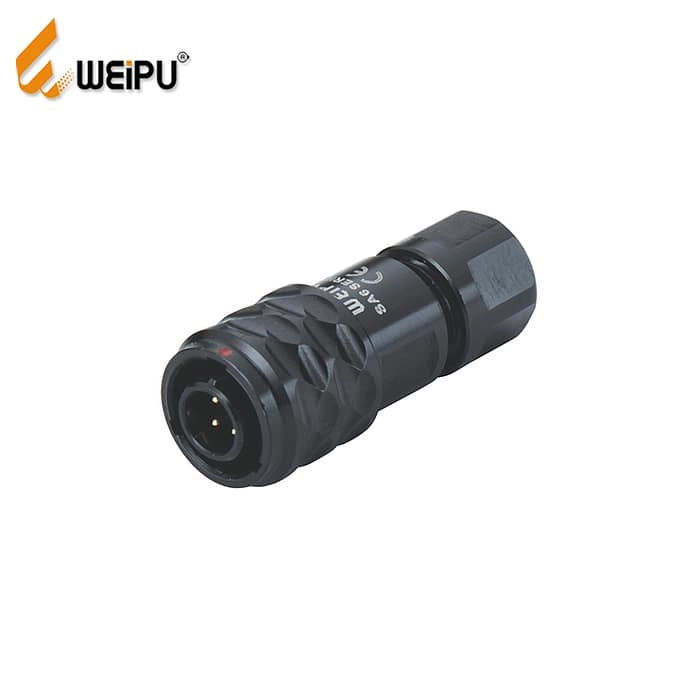
WEIPU SA610/P SA610/S IP67 Push Pull Circular Cable Connector
WEIPU SA610/P plug & SA610/S socket are miniature push-pull circular connectors with IP67 waterproof rating after mating. Built with anodized aluminum shell and gold-plated solder contacts, this SA series supports 2-5 pins, rated 3A 30V, certified CE & RoHS. Ideal for medical diagnostic devices, lab automation and precision sensors, fully compatible with SA611, SA612 and SA615 panel receptacles. WEIPU holds IATF16949 certification and supplies industrial connectors to 130+ countries.

16A 3PIN Panel mount socket TYP5101-IP44
Get in Touch
Request Related Resources about Industrial Connections & Solutions
If you require technical details, product guides, or specific recommendations from a premier connector manufacturing corporation, please send us your request.
We provide expert support for custom electrical connectors, offering OEM/ODM customization and dedicated distributor cooperation assistance.
Weipu Building, No. 111, Baihua Road, Liwan District, Guangzhou, Guangdong China
© 2026 WEIPU. All Rights Reserved.
Whatsapp: +8618102298073
WEIPU
WEIPU
WEIPU
WEIPU