IP Ratings Compared: Which Waterproof Connector Fits Your Application?
- How to interpret ingress protection for connector selection
- What the two digits tell a project team
- Define the exposure before choosing the code
- IP67, IP68, and IP69K compared
- Common ratings and their practical differences
- Why the highest number is not always the right answer
- Specify the complete connector system for the application
- Check mating, sealing, and installation conditions
- Match connector format and materials to the duty cycle
- Build a verification plan into procurement
- Applying connector choices to industrial projects
- How our product categories support specification discussions
- Make total cost and serviceability part of the decision
- Frequently Asked Questions
IP ratings help buyers compare how an electrical connector enclosure protects against solid objects and water, but the code is only meaningful when its test conditions match the application. For most projects, IP67 suits dust exposure and defined temporary immersion, IP68 suits immersion under conditions agreed with the manufacturer, and IP69K suits demanding high-pressure, high-temperature washdown when the product is tested to the relevant standard. Selection should also account for mating state, cable diameter, seals, installation, temperature, chemicals, and service life. A customized waterproof connector should therefore be specified as a complete connection system—not selected by the IP number alone.
How to interpret ingress protection for connector selection
What the two digits tell a project team
The IP code is defined in IEC 60529, the international standard for degrees of protection provided by enclosures. The first numeral indicates protection against access to hazardous parts and ingress of solid foreign objects; the second numeral indicates protection against water. A higher numeral represents a different or more demanding test category, not a universal guarantee that a product is better in every operating condition. The letter X means that a digit is not specified or assessed in that position, so IPX7, for example, states a water-protection classification without stating a dust-protection level.
For connector procurement, the distinction between an enclosure rating and an assembled connection is essential. A connector may meet a stated rating only when correctly mated, fitted with its specified seal, and installed with a compatible cable. A protective cap may be required when the connector is unmated, and the cap itself must be included in the rating conditions if that state matters. Buyers should request the manufacturer’s test documentation and confirm the precise configuration covered rather than assuming every accessory or cable combination inherits the same rating.
Define the exposure before choosing the code
Start with a written description of the operating environment: airborne dust, rain, incidental splashing, hose cleaning, immersion, or a combination of these. Record whether water exposure is continuous or occasional, whether the equipment is energized during exposure, and whether connectors are connected or disconnected. Include the expected water temperature, pressure, duration, and cleaning frequency where relevant. These details allow engineering and procurement teams to distinguish a light outdoor application from a food-processing line or mobile machine subjected to routine washdown.
IP testing does not automatically establish resistance to salt spray, oils, detergents, solvents, UV radiation, vibration, impact, or corrosion. Those requirements need separate material, environmental, and mechanical evidence. For example, a well-sealed polymer housing can still be unsuitable for a particular chemical, while a metal shell can require a compatible finish and galvanic-corrosion assessment. The enclosure code is one part of a broader reliability specification, not a substitute for application testing.
IP67, IP68, and IP69K compared
Common ratings and their practical differences
The table provides a procurement-level comparison of commonly considered water-protection classes. It is not a substitute for the applicable standard or the product’s test report. In particular, immersion depth, duration, pressure, and washdown parameters must be checked against the specific product documentation.
| Rating | Water exposure represented | Typical application fit | Buyer verification point |
|---|---|---|---|
| IP54 | Limited dust ingress protection and splashing water from any direction | Protected industrial equipment with occasional splashes | Confirm that the dust limitation and splash exposure match the site conditions |
| IP65 | Dust-tight enclosure and water jets | Outdoor equipment exposed to rain or routine hose jets that are within the test conditions | Do not assume jet testing is equivalent to immersion or high-pressure washdown |
| IP67 | Dust-tight enclosure and temporary immersion under the defined test conditions, commonly stated as up to 1 m for 30 minutes | Portable equipment or outdoor connections where temporary immersion is a credible risk | Confirm the rating applies to the mated connector and the full cable assembly |
| IP68 | Dust-tight enclosure and immersion under conditions specified by the manufacturer and agreed for the application | Equipment expected to remain submerged or face immersion conditions beyond the IP67 test | Obtain the tested depth, duration, pressure, and installation details; IP68 conditions are not a single universal test |
| IP69K | Protection against specified high-pressure, high-temperature water jets under the applicable road-vehicle test standard | Equipment exposed to intensive washdown, including relevant vehicle or machinery environments | Check the exact standard, test parameters, connector state, and whether immersion protection is also required |
The IPX7 immersion test commonly cited for IEC 60529 involves temporary immersion at a specified depth and duration; IPX8 conditions are established for the product and are more severe than the IPX7 conditions as agreed. Neither label should be interpreted as an all-purpose statement about pressure washing. IP69K is a designation widely associated with the high-pressure, high-temperature water tests in ISO 20653 for road vehicles. Buyers should verify which edition and test method the supplier claims, since product documents may use different terminology or standards.
Why the highest number is not always the right answer
A connector selected for an unnecessarily severe test may add cost, size, or mating complexity without improving the actual system outcome. Conversely, choosing IP67 for a connection that receives repeated hot detergent washdown may leave a critical gap, even though the enclosure is dust-tight and immersion-rated. A useful specification ties the rating to the exposure scenario and adds separate requirements for chemical compatibility, operating temperature, mating cycles, vibration, and ingress risk during maintenance.
IP ratings also should not be treated as a simple ladder in which one code covers every lower code’s test. Water-jet and immersion tests represent different exposure mechanisms. A connector marked IP68 should not automatically be assumed to pass IP69K testing, nor should a washdown-rated connector automatically be assumed suitable for prolonged submersion. Where both conditions are plausible, request evidence for both or obtain written confirmation of the tested performance in the intended assembly.
Specify the complete connector system for the application
Check mating, sealing, and installation conditions
Sealing performance depends on the details around the connector interface. Buyers should confirm whether the rating applies when mated, whether a cap is needed when unmated, and whether the seal is part of the supplied assembly. Cable outer diameter, cable jacket material, backshell design, strain relief, panel cutout, mounting gasket, and installation torque can all affect ingress protection. A connector tested with one cable size or mounting arrangement may not retain the same performance when substituted parts are used in production.
Operational handling matters as well. Cross-threading, damaged O-rings, trapped debris, incomplete coupling, excessive bending at the cable entry, and field repairs can compromise a seal. A practical procurement package should define inspection criteria and installation instructions, and should identify replacement seal availability. For critical equipment, validation on a representative production assembly is preferable to relying only on a component-level data sheet.
Match connector format and materials to the duty cycle
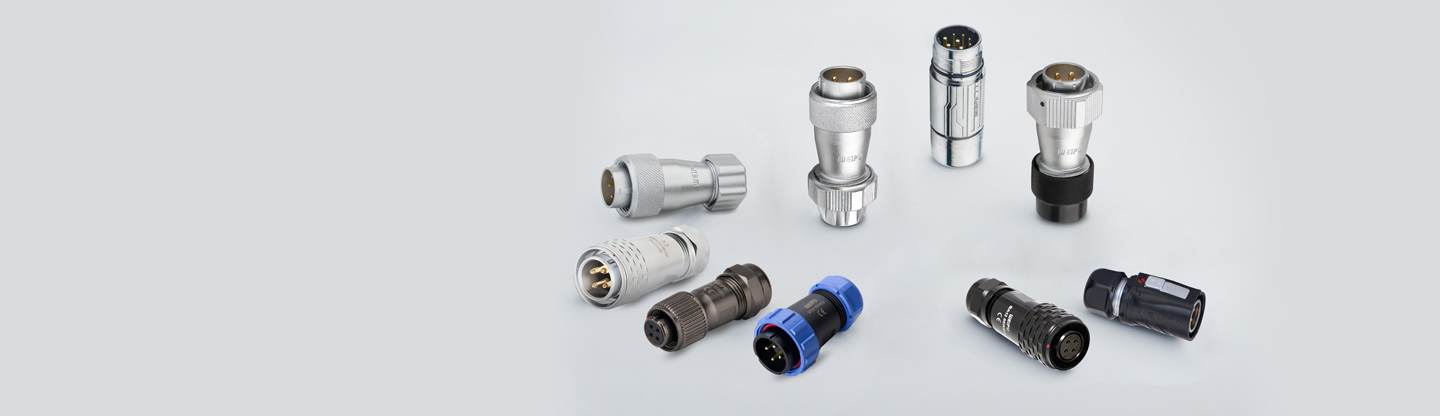
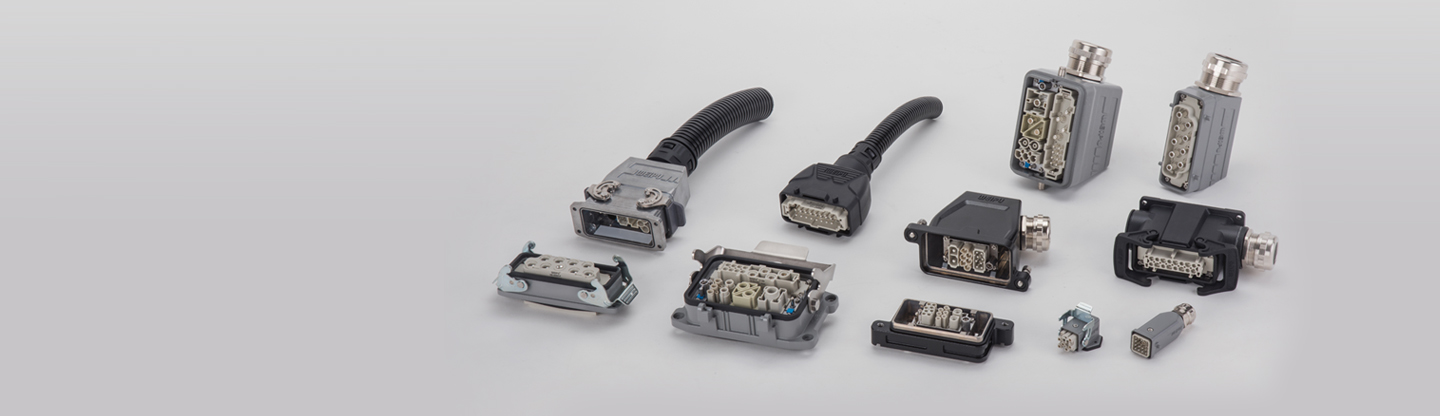
A circular connector can be appropriate where a compact, keyed interface and repeatable coupling are priorities. Industrial connector configurations support a broad range of machinery and automation needs, while a Heavy Duty Connector may be relevant where robust housings and demanding equipment connections are required. These product families should be compared by contact arrangement, current and voltage requirements, coding, locking method, enclosure material, cable entry, and maintainability—not solely by the IP label.
Material selection should reflect the real environment. Outdoor installations may need UV-resistant cable and housing materials; marine or coastal locations may require careful corrosion evaluation; food and beverage facilities may need compatibility with cleaning agents and hygienic cleaning procedures. For mobile equipment, shock, vibration, and cable pull can be as consequential as water ingress. A full application specification reduces late-stage substitutions and helps suppliers recommend a connector configuration that is both protective and serviceable.
Build a verification plan into procurement
Before approving a supplier, request the standard and edition used for testing, the exact IP marking, the configuration tested, and the test report or declaration available for the product. Verify whether the sample included the mating connector, seals, cable, mounting interface, and protective cap. For a customized assembly, document any changes to cable length, overmolding, contacts, backshells, or materials and establish whether those changes affect the evidence for the original rating.
Procurement teams can reduce field risk by adding acceptance checks for correct coupling, seal condition, cable entry, and installation torque where specified. If failure would stop a production line or create a safety concern, consider qualification testing under representative conditions and a clear change-control process for future revisions. This approach creates traceability from the environmental requirement to the tested product configuration and helps avoid relying on a marketing label without supporting detail.
Applying connector choices to industrial projects
How our product categories support specification discussions
Our product discussions can begin with the actual exposure and connection requirements, then map those needs to circular connector, industrial connector, and Heavy Duty Connector options. Rather than treating “waterproof” as a single feature, we encourage buyers to align the mating interface, cable entry, materials, mounting method, and documented test conditions with the equipment design. This makes it easier for project owners and distributors to compare alternatives using consistent criteria and identify where a standard configuration may be sufficient or a tailored assembly needs review.
When a project calls for a customized waterproof connector, the specification should make the customization boundaries explicit. Relevant variables may include pole count, contact type, cable length, cable diameter, keying, shell or housing material, sealing components, and the required test state. Each change should be reviewed against electrical ratings, mechanical fit, and ingress-protection evidence. Buyers can then evaluate a proposed circular connector or heavy-duty interface on its documented configuration rather than assuming that a modified product retains every claim associated with a standard model.
Make total cost and serviceability part of the decision
Lowest initial unit price does not always mean lowest lifecycle cost. A connector that is difficult to mate in gloves, requires specialized tools, or has seals that are hard to replace may increase maintenance time. An overly complex design can also create unnecessary inventory and training burdens. Compare the purchase price with expected mating cycles, replacement-part availability, installation labor, downtime exposure, and the cost of validating the assembly. The right industrial connection balances protection with accessibility and service requirements.
For a supplier comparison, request a consistent response covering the IP test basis, the rated connector state, compatible cable range, temperature limits, material options, and any exclusions. Our team can use these requirements as the starting point for a product discussion and help buyers assess which connection family merits further technical review. Clear inputs at quotation stage reduce ambiguity, support fair comparison, and make design approvals easier to document across engineering, purchasing, and operations.
Contact our team to discuss your application requirements or view our circular connector, industrial connector, and Heavy Duty Connector products.
Frequently Asked Questions
What is the difference between IP67 and IP68 connectors?
Both ratings indicate dust-tight protection when the first digit is 6, but their immersion conditions differ. IP67 covers temporary immersion under defined test conditions, commonly stated as up to 1 m for 30 minutes. IP68 covers immersion conditions specified by the manufacturer and agreed for the application, so buyers should confirm the tested depth, duration, and pressure.
Does an IP68 connector also pass IP69K testing?
Not automatically. IP68 immersion and IP69K high-pressure, high-temperature water-jet tests represent different exposure mechanisms. Buyers should request evidence for both conditions when both are relevant.
Can an IP67 connector be used for pressure washing?
An IP67 rating alone does not establish suitability for pressure washing. It addresses dust ingress and temporary immersion under defined conditions, not high-pressure washdown. Confirm the connector’s jet-test rating and the actual pressure, temperature, and cleaning conditions.
Does the IP rating apply when a connector is unmated?
Not necessarily. A rating may apply only when the connector is correctly mated, or it may require a protective cap when unmated. Confirm the tested state and whether the cap, seals, cable, and installation arrangement were included.
What details should buyers request from a connector supplier?
Request the standard and edition used, the exact tested configuration and connector state, the applicable test conditions, and supporting test documentation. Also confirm cable diameter, seals, mounting arrangement, materials, temperature limits, and any exclusions.
Do IP ratings cover chemicals, corrosion, or UV exposure?
No. IP ratings address protection against ingress of solids and water under specified tests. Chemical compatibility, corrosion resistance, UV durability, vibration, and other environmental requirements need separate assessment and evidence.
Custom Waterproof Wire Connector Packaging, Logos, and Specifications
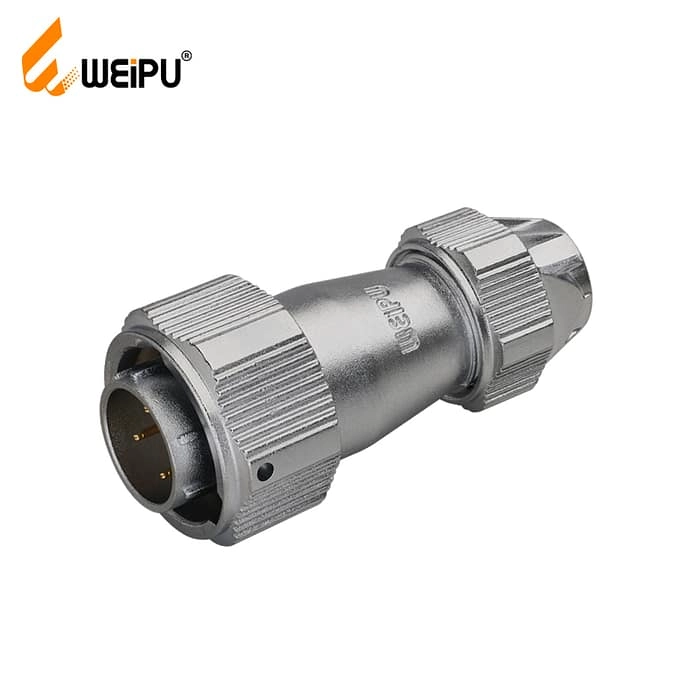
WY-TE Series Waterproof Electrical Plug
Female Panel Connector IP67 vs IP65: Which to Use?
Heavy Duty Wire Connector vs. Standard Connector: Cost and Risk
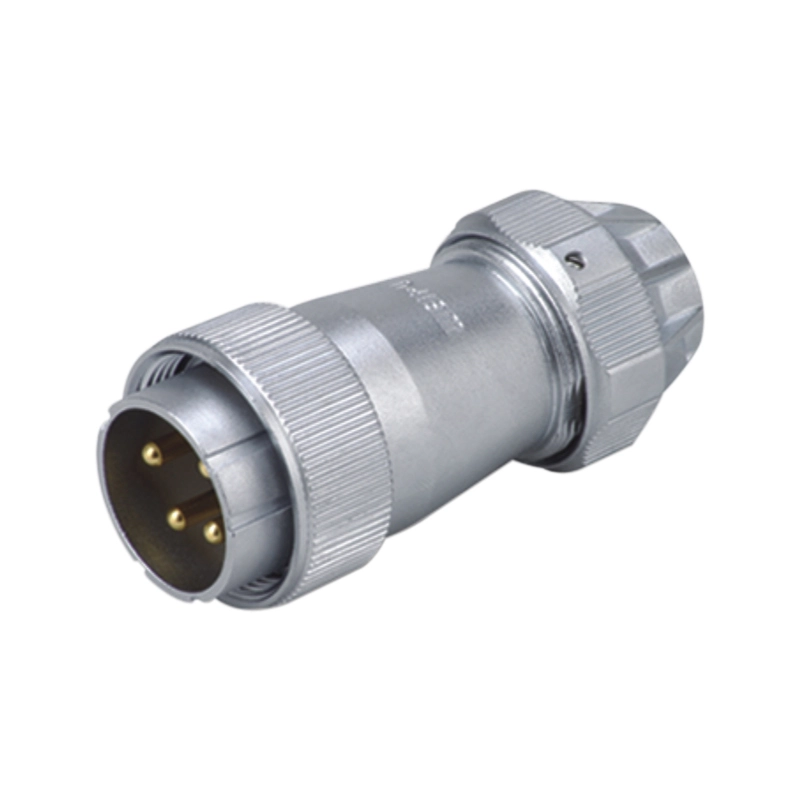
Weipu WF Series Industrial Threaded Connectors with IP67 Protection
WEIPU WF Series Industrial Threaded Connectors offer robust IP67 protection, ensuring reliable performance in harsh environments. Designed for secure, waterproof connections, these IP67 connectors are ideal for industrial applications requiring durability and stability. Trust WEIPU for quality and safety.
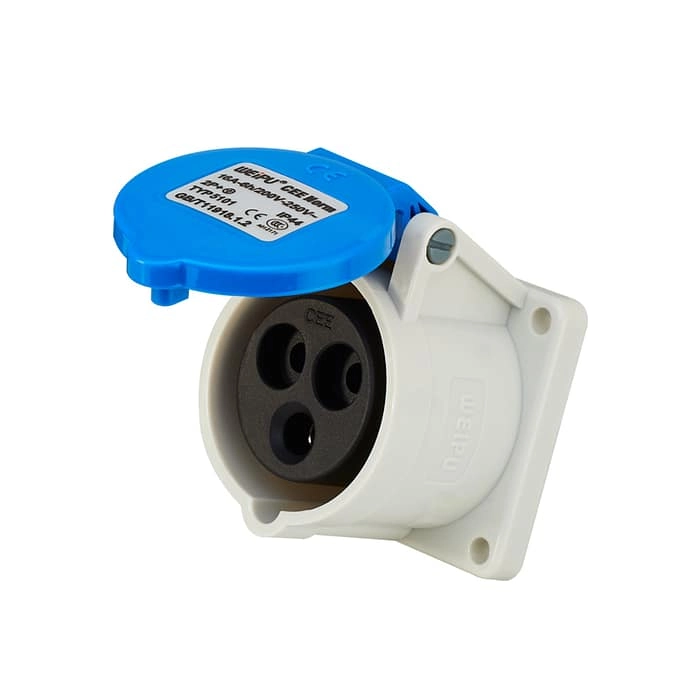
16A 3PIN Panel mount socket TYP5101-IP44
WEIPU WY-TE Series Waterproof Electrical Plug
With metal clamping-nut IP67, Threaded, Zinc alloy with chrome plating, PPS
WEIPU WY-TE IP67 circular connectors are waterproof electrical plugs with metal clamping-nut, which are durable, safe and easy to assemble with your all devices.With the metal clamping-nut and threaded design, these waterproof electrical plugs ensure high security and super stable connection. It’s an ideal waterproof connector for your applications.
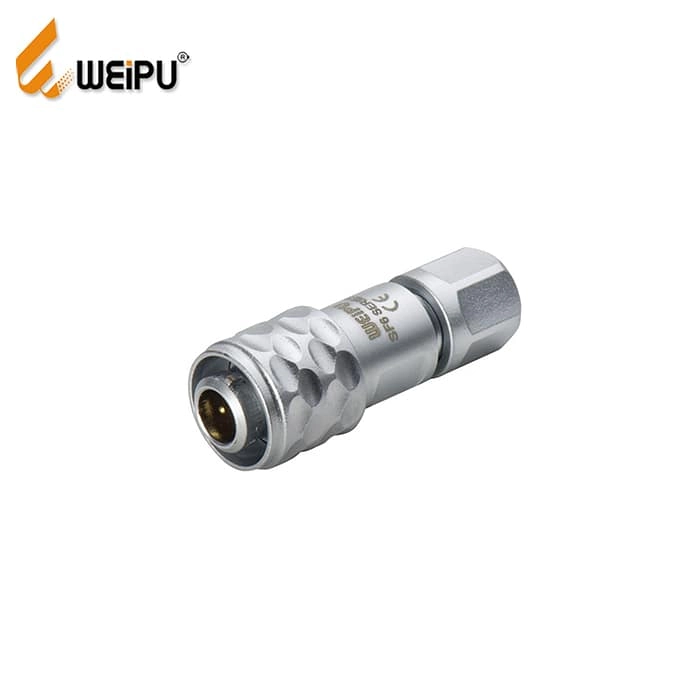
SF610B/P SF610B/S Cable connector IP67
Mate with SF611B, SF612B, SF615B
Get in Touch
Request Related Resources about Industrial Connections & Solutions
If you require technical details, product guides, or specific recommendations from a premier connector manufacturing corporation, please send us your request.
We provide expert support for custom electrical connectors, offering OEM/ODM customization and dedicated distributor cooperation assistance.
Weipu Building, No. 111, Baihua Road, Liwan District, Guangzhou, Guangdong China
© 2026 WEIPU. All Rights Reserved.
Whatsapp: +8618102298073
WEIPU
WEIPU
WEIPU
WEIPU