

OEM Heavy Duty Wire Connectors: Custom Design, Logo, and Packaging
- Engineering Requirements for Customized Industrial Cable Interfaces
- Translate the application into measurable connector specifications
- Specify environmental protection and compliance evidence
- Use prototypes to eliminate interface and assembly risk
- OEM Logo, Private Labeling, and Packaging Strategy
- Build a brand identity without compromising technical markings
- Design packaging for protection, identification, and fulfillment
- Compare conventional sourcing with a controlled OEM program
- Why WEIPU Supports Mission-Critical Connector Programs
- Scale, certification, and product breadth for global buyers
- Integrated manufacturing and application-focused performance
- Fast OEM/ODM execution from prototype to production
- Procurement Checklist for a Reliable OEM Connectivity Partner
- Evaluate technical and quality capability before quotation
- Control total cost across the product lifecycle
- Frequently Asked Questions
OEM heavy-duty connector programs combine electrical engineering, mechanical customization, brand presentation, and supply-chain planning in one procurement decision. A heavy duty wire connector must be selected according to current, voltage, conductor size, mating cycles, vibration, temperature, moisture, chemicals, installation space, and regulatory requirements. For brand owners and equipment manufacturers, custom housing geometry, contact configuration, logo marking, cable preparation, labeling, and packaging can reduce assembly errors while creating a consistent product experience. The most reliable approach is to convert the application into a documented specification, verify the design through samples and testing, and select a supplier with controlled tooling, traceability, inspection, and scalable capacity.
Engineering Requirements for Customized Industrial Cable Interfaces
Translate the application into measurable connector specifications
OEM development should begin with the operating environment rather than with a catalog image. The project team should document rated voltage, continuous and peak current, conductor cross-section, contact resistance, insulation system, allowable temperature rise, cable outer diameter, and required number of positions. Applications involving motors, battery systems, robotics, rail equipment, machine tools, and renewable-energy cabinets may also require coding, shielding, grounding, or high-current contacts.
Mechanical conditions are equally important. The design review should cover available panel space, cable-bend radius, mounting method, locking mechanism, mating direction, service access, and expected mating cycles. A connector that performs well electrically may still fail if the latch is difficult to operate with gloves, if the strain relief does not support the cable, or if the body cannot tolerate repeated vibration. Buyers should request dimensional drawings, interface tolerances, contact layouts, and a clear definition of interchangeability before approving tooling.
Specify environmental protection and compliance evidence
Ingress protection is not a marketing substitute for application testing. Buyers should identify whether the assembly needs protection against dust, temporary immersion, washdown, oil, coolant, salt mist, ultraviolet exposure, or pressure cleaning. The ISO 20653 road-vehicle protection standard is relevant to certain vehicle-related enclosure evaluations, while IEC 60529 is widely used for IP code classification. The final requirement should state the test condition, mating state, cable configuration, and acceptance criteria.
Material selection should address both performance and lifecycle risk. Polyamide, thermoplastic elastomer, metal alloys, elastomers, plating systems, and sealing compounds each respond differently to heat, chemicals, impact, and repeated assembly. For medical equipment, sterilization compatibility can be decisive; for rail applications, fire and smoke requirements may apply; for automotive systems, process discipline and traceability are central. Buyers should ask for material declarations, plating specifications, safety documentation, and test reports that correspond to the actual product configuration rather than to a visually similar family.
Use prototypes to eliminate interface and assembly risk
A professional OEM process separates design verification from mass production. Prototype samples should be assessed for mating force, keying, cable retention, contact crimp quality, sealing, electrical continuity, insulation resistance, and installation ergonomics. Where the connector is part of a larger system, samples should be tested with the intended cable, gland, panel, fasteners, and mating counterpart. This prevents a common failure mode in which a connector passes a standalone test but does not fit the final enclosure or harness.
Testing plans should be risk-based and documented. Depending on the application, validation may include thermal cycling, vibration, mechanical shock, salt spray, humidity, water ingress, dielectric withstand, current-carrying capacity, and durability cycling. The ISO 9001 quality management framework provides a useful basis for controlling design records, nonconformities, corrective action, and continual improvement, although it does not replace product-specific qualification.
OEM Logo, Private Labeling, and Packaging Strategy
Build a brand identity without compromising technical markings
Logo customization may include laser marking, molded-in branding, pad printing, embossing, color coding, label application, or a combination of methods. The correct choice depends on substrate, abrasion exposure, chemical contact, production volume, and required permanence. Technical markings should remain legible after installation and should not be displaced by decorative branding. Part number, contact arrangement, voltage or current information where applicable, batch identification, and orientation symbols can improve field service and reduce connection errors.
Before production, brand owners should approve vector artwork, color references, marking location, minimum line width, character height, and contrast requirements. A marking approval sample should be retained as the visual standard. It is also important to define ownership of tooling, artwork confidentiality, change authorization, and rules for obsolete inventory. These controls protect both brand consistency and long-term product availability.
Design packaging for protection, identification, and fulfillment
Packaging should be engineered around the product’s sensitivity and distribution route. Individual bags or compartments can prevent scratches, contamination, and contact deformation, while separators and protective caps can reduce damage to pins, sockets, threads, and seals. Cartons should include part number, quantity, lot or date code, country of origin where required, handling symbols, and barcode data that match the buyer’s enterprise resource planning system.
For distributors, packaging is also a warehouse productivity tool. Standard carton quantities, scan-ready labels, multilingual instructions, and clear variant differentiation reduce picking mistakes. Export shipments may require moisture barriers, desiccants, reinforced cartons, or pallet optimization. Packaging artwork should be reviewed alongside the product drawing because a mismatch between carton labels and the actual configuration can create costly returns even when the connector itself is technically correct.
Compare conventional sourcing with a controlled OEM program
| Procurement approach | Typical benefit | Common risk | Recommended control |
|---|---|---|---|
| Standard catalog purchase | Fast initial availability and lower development effort | Limited branding, fit, and packaging flexibility | Confirm interface compatibility and lifecycle availability |
| Private-label assembly | Brand visibility with moderate customization | Marking variation or inconsistent documentation | Approve artwork, golden samples, and inspection criteria |
| Full OEM/ODM development | Application-specific performance and optimized installation | Tooling cost, validation time, and engineering coordination | Use a signed specification, stage gates, and change control |
| Low-cost unmanaged sourcing | Potentially low unit price | Unverified materials, unstable quality, and weak traceability | Require audits, test evidence, incoming inspection, and corrective action |
Why WEIPU Supports Mission-Critical Connector Programs
Scale, certification, and product breadth for global buyers
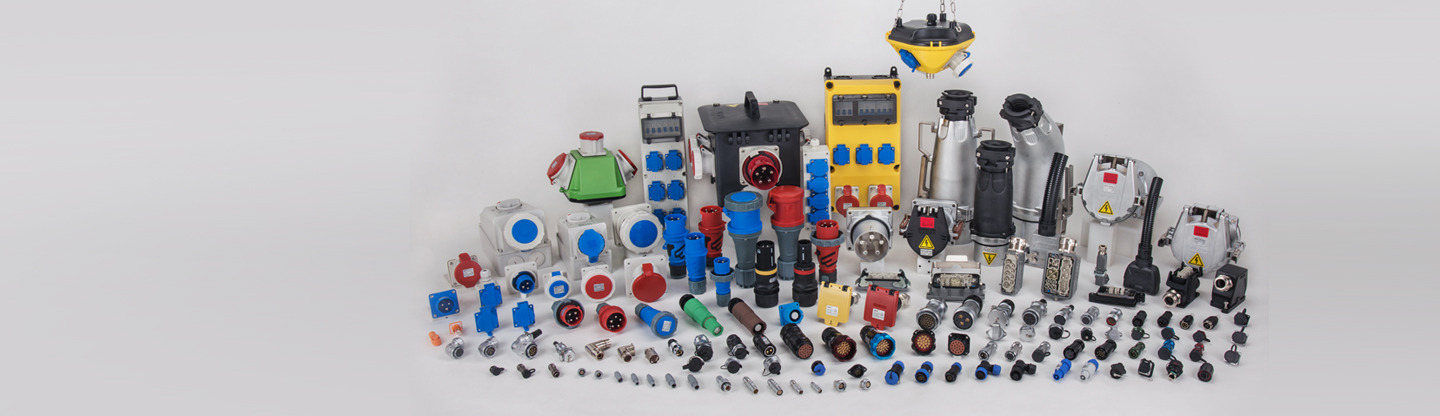
WEIPU has operated since 1996 and has developed a global position in high-reliability industrial connectors. As a principal drafter of the GB/T 11918-2014 national standard, our technical foundation is closely connected with heavy-duty connector requirements. Following our 2025 expansion, our manufacturing facility covers 80,000 m² and supports annual capacity of 55 million units. More than 70,000 specifications cover circular connector families, heavy-duty products, CEE connectors, and related industrial connector solutions for diverse equipment platforms.
Our customer base includes more than 30,000 organizations across 130 countries. This international experience supports procurement teams that require stable documentation, repeatable configurations, export coordination, and consistent product identification across multiple markets. Our IRIS certification for rail transit and IATF 16949 certification for automotive applications demonstrate process capabilities aligned with demanding sector expectations. Certification remains one element of supplier evaluation; buyers should still confirm the scope, validity, and relevance of each certificate to the proposed product and facility.
Integrated manufacturing and application-focused performance
Our independent research and development capability is supported by a vertically integrated production system. This structure helps coordinate tooling, molding, contact production, assembly, inspection, and packaging while reducing handoff risk between external vendors. For demanding environments, our technology portfolio includes solutions reaching IP69K protection and high-current configurations up to 800A, subject to the exact product design, conductor arrangement, and qualification conditions.
WEIPU also develops specialized connectivity for medical equipment, including solutions designed to withstand autoclave conditions up to 134°C when the specified configuration and validation requirements are met. These capabilities are relevant to medical systems, renewable-energy installations, smart manufacturing equipment, rail infrastructure, and other applications in which connection failure can interrupt operations or create safety exposure. Product selection should always be confirmed against the applicable technical datasheet and test evidence.
Fast OEM/ODM execution from prototype to production
Our one-stop OEM/ODM service is designed to shorten the distance between an engineering concept and a production-ready assembly. A 24-hour rapid-response process supports early technical clarification, while prototype delivery can be arranged in approximately 7–15 days depending on complexity, tooling status, materials, and approval requirements. The development workflow can include application review, connector selection, drawing confirmation, logo and color approval, sample production, functional testing, packaging validation, and controlled mass production.
For buyers, the commercial value is not limited to unit price. A correctly engineered interface can reduce harness rework, installation time, unplanned downtime, inventory fragmentation, warranty claims, and field-service confusion. Our circular connector, industrial connector, and Heavy Duty Connector ranges allow project teams to coordinate multiple connection points through one experienced supplier while preserving the option for application-specific customization.
Procurement Checklist for a Reliable OEM Connectivity Partner
Evaluate technical and quality capability before quotation
A quotation should be assessed together with the supplier’s engineering response. Buyers should ask whether the supplier can provide 2D drawings, 3D models, material information, contact and plating details, electrical ratings, environmental test data, and a validation plan. The supplier should explain how design changes are approved, how critical dimensions are measured, how nonconforming material is controlled, and how lot traceability is maintained.
Factory assessment should examine production flow, calibration systems, mold maintenance, crimp or termination controls, automated inspection where applicable, final testing, warehouse conditions, and packaging verification. A supplier with broad product claims but weak process evidence may create more risk than a focused manufacturer with transparent controls. Buyers should also confirm minimum order quantities, tooling ownership, sample charges, lead times, capacity allocation, forecast requirements, and business-continuity arrangements.
Control total cost across the product lifecycle
Total cost includes development, tooling, validation, freight, packaging, incoming inspection, assembly labor, field replacement, and the financial impact of downtime. A lower purchase price can become uneconomic if contact resistance rises, seals leak, housings crack, or variant labeling causes assembly errors. Conversely, an application-appropriate design may justify a higher initial investment by improving service life and reducing operational disruption.
Contract documents should define approved materials, drawings, performance limits, packaging configuration, inspection frequency, change-notification timing, warranty terms, and corrective-action expectations. For regulated or safety-critical sectors, the agreement should also identify records retention, audit rights, product change notification, and the treatment of obsolete components. These measures convert an informal supplier relationship into a controlled manufacturing program.
For product selection, technical consultation, OEM/ODM development, or custom branding and packaging, contact WEIPU at our industrial connector manufacturing website, email salse01@weipu-group.com, or call +86-020-80501102.
Frequently Asked Questions
What information is needed to customize an OEM industrial connector?
Buyers should provide rated voltage, continuous and peak current, conductor cross-section, contact layout, cable diameter, mounting method, environmental conditions, mating cycles, dimensions, marking requirements, and packaging expectations.
Can WEIPU add a customer logo to a connector?
Yes. OEM branding can include laser marking, molded-in branding, pad printing, embossing, color coding, or label application, subject to the housing material, production volume, exposure conditions, and approved artwork.
What environmental protection should be specified for a customized connector?
The requirement should identify exposure to dust, water, immersion, washdown, oil, coolant, salt mist, ultraviolet light, temperature, and pressure cleaning, together with the test condition and acceptance criteria.
How long can WEIPU take to provide OEM prototypes?
WEIPU can deliver prototypes in approximately 7–15 days depending on product complexity, tooling status, materials, and approval requirements.
What certifications and capabilities does WEIPU have?
WEIPU is certified to IRIS for rail transit and IATF 16949 for automotive applications, and provides more than 70,000 specifications across circular, heavy-duty, and CEE connector ranges.
Why is custom packaging important for industrial connector programs?
Custom packaging protects pins, sockets, threads, seals, and housings while improving warehouse identification, barcode scanning, variant control, export handling, and installation accuracy.
Waterproof Connector Sourcing Risks: Leaks, Delays, and Inconsistent Batches
Certifications and Standards for EMI Shielded Circular Connectors
Distribution Box vs Junction Box: Key Differences Explained
Supplier Checklist: Specifying Sensor Circular Connectors

SY1110/P SY1110/S Cable connector IP67
Mate with SP1111,SP1112

WEIPU SP1110P/S Cable Connector IP68
Mate with SP1111, SP1112
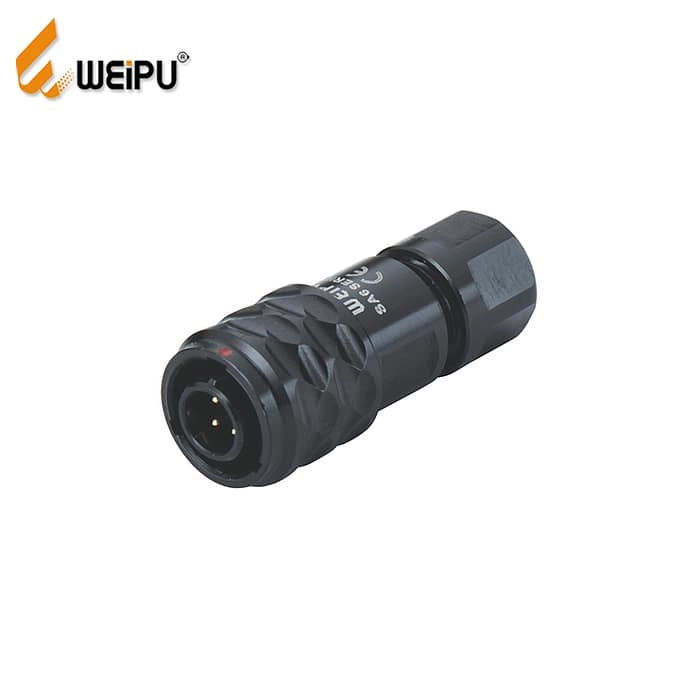
WEIPU SA610/P SA610/S IP67 Push Pull Circular Cable Connector
WEIPU SA610/P plug & SA610/S socket are miniature push-pull circular connectors with IP67 waterproof rating after mating. Built with anodized aluminum shell and gold-plated solder contacts, this SA series supports 2-5 pins, rated 3A 30V, certified CE & RoHS. Ideal for medical diagnostic devices, lab automation and precision sensors, fully compatible with SA611, SA612 and SA615 panel receptacles. WEIPU holds IATF16949 certification and supplies industrial connectors to 130+ countries.

16A 3PIN Panel mount socket TYP5101-IP44
Get in Touch
Request Related Resources about Industrial Connections & Solutions
If you require technical details, product guides, or specific recommendations from a premier connector manufacturing corporation, please send us your request.
We provide expert support for custom electrical connectors, offering OEM/ODM customization and dedicated distributor cooperation assistance.
Weipu Building, No. 111, Baihua Road, Liwan District, Guangzhou, Guangdong China
© 2026 WEIPU. All Rights Reserved.
Whatsapp: +8618102298073
WEIPU
WEIPU
WEIPU
WEIPU