


OEM vs. ODM for Customized Waterproof Connectors: Which Fits?
- Choosing Between Manufacturer-Led Design and Buyer-Owned Specification
- What OEM sourcing means for connector buyers
- What ODM sourcing means for connector buyers
- How ownership, risk, and economics differ
- Technical Criteria for a Reliable Sealed Interconnect
- Ingress protection is a system result
- Electrical and mechanical compatibility
- Materials, standards, and lifecycle validation
- How to Select the Right Customization Route and Supplier
- Use a requirements matrix before requesting quotations
- Evaluate samples, not only certificates
- Why our connector portfolio can support both paths
- Frequently Asked Questions
OEM and ODM are not interchangeable sourcing terms for a customized waterproof connector. OEM generally means that the buyer provides the design or a detailed specification and the manufacturer produces the product accordingly. ODM means that the manufacturer contributes an existing design platform, engineering architecture, or standard product family and adapts it to the buyer’s application. For industrial automation, outdoor electronics, electric vehicles, renewable-energy equipment, robotics, lighting systems, marine devices, and heavy machinery, the correct model affects cost, development risk, certification ownership, tooling, intellectual property, and replacement strategy.
A procurement team should evaluate more than unit price. The decision must consider ingress protection, current and voltage requirements, contact material, mating cycles, cable construction, vibration, temperature, chemical exposure, installation method, field repair, documentation, and production scalability. The IEC 60529 standard provides the internationally recognized framework for IP classifications, while ISO 9001 defines quality-management principles relevant to controlled manufacturing and supplier qualification.
Choosing Between Manufacturer-Led Design and Buyer-Owned Specification
What OEM sourcing means for connector buyers
In an OEM arrangement, the buyer typically controls the product definition. That definition may include a two-dimensional drawing, three-dimensional model, contact layout, shell geometry, keying system, locking mechanism, cable overmold, plating specification, sealing compound, flammability requirement, and test protocol. The manufacturer’s role is to industrialize the design, source materials, build tooling, conduct validation, and manufacture according to approved documentation.
This approach is suitable when the connector is part of a differentiated product or when a system architecture cannot accept a standard interface. A medical instrument, proprietary battery module, railway control unit, or specialized sensor assembly may require a unique envelope, blind-mate feature, custom pin assignment, or unusual cable exit angle. Buyer-owned design control can also protect system-level intellectual property and reduce dependence on a supplier’s catalog platform.
OEM does not mean that the buyer must design every feature without engineering support. A capable manufacturer should review tolerances, draft angles, wall thickness, contact geometry, sealing compression, assembly sequence, and moldability before tooling begins. Design-for-manufacturing analysis is essential because an electrically sound concept can still produce high scrap, difficult assembly, inconsistent sealing, or excessive tooling maintenance.
What ODM sourcing means for connector buyers
ODM sourcing starts with a manufacturer’s existing product architecture. The supplier may already have a family of circular connectors, industrial connectors, or heavy duty connectors with established housings, contacts, seals, locking systems, and production methods. Customization may then cover pin count, cable length, connector orientation, mounting flange, key position, contact plating, wire gauge, label, packaging, or logo.
This model can shorten development because the basic geometry and manufacturing process have already been evaluated. It may also lower nonrecurring engineering costs and reduce technical uncertainty. For a project with a conventional interface and a clear launch schedule, adapting a proven platform can deliver better commercial results than commissioning an entirely new design.
ODM is not automatically a low-quality or generic option. Its value depends on the supplier’s control of drawings, material traceability, validation evidence, change management, and production consistency. Buyers should identify which features are genuinely standardized and which are being modified. A small change to a seal, contact, shell, or cable jacket can affect the final environmental performance and should be included in a documented validation plan.
How ownership, risk, and economics differ
OEM usually requires more engineering coordination, tooling investment, prototype review, and qualification time. In return, it can provide greater design freedom and stronger product differentiation. ODM generally reduces the initial engineering burden and accelerates sampling, but the buyer may have less control over the base architecture and may share similar mechanical features with other customers.
Commercial ownership also requires careful review. The contract should define who owns molds, drawings, test fixtures, software, inspection gauges, and product-specific process parameters. It should specify whether the manufacturer may sell similar designs to other parties, how engineering changes are approved, what happens if the supplier discontinues a component, and whether the buyer can transfer tooling or production to a second source.
| Evaluation factor | OEM model | ODM model | Typical buyer implication |
|---|---|---|---|
| Design control | Buyer-led specification | Supplier-led platform with agreed modifications | OEM offers more differentiation; ODM offers faster adoption |
| Development effort | Higher design and validation workload | Lower initial engineering workload | ODM can be practical for standard interfaces |
| Tooling and NRE | Often higher because geometry may be new | Often lower when existing tooling is usable | Confirm ownership and maintenance responsibility |
| Time to sample | Usually longer due to concept development | Usually shorter when the base product is mature | Schedule-sensitive launches often favor ODM |
| IP differentiation | Strong potential for proprietary design | Depends on platform exclusivity and contract terms | Protect drawings, interfaces, and application-specific changes |
| Validation responsibility | Shared, with buyer-defined requirements | Supplier provides platform evidence plus modification tests | Never assume a catalog test covers every customized version |
Technical Criteria for a Reliable Sealed Interconnect
Ingress protection is a system result
Water resistance is not created by the connector shell alone. Performance depends on the mating interface, gasket compression, cable diameter, rear seal, strain relief, assembly torque, panel interface, and the condition of the installation. The ISO 20653 standard addresses degrees of protection for road vehicles, while IEC 60529 is widely used for enclosure ingress protection. Buyers should confirm which standard applies to the end product and whether the test configuration reflects the actual cable, plug, receptacle, and mounting arrangement.
An IP rating should be linked to a defined test report, sample construction, and installation condition. A connector tested with one cable diameter may not perform identically with another. Similarly, repeated mating, vibration, thermal cycling, chemical contact, and cable flexing can change sealing performance over time. Procurement documents should therefore distinguish between initial laboratory performance and durability under the application’s operating profile.
Electrical and mechanical compatibility
Current capacity depends on contact size, conductor cross-section, contact resistance, temperature rise, ambient temperature, and the number of energized circuits. Voltage performance depends on creepage, clearance, insulation material, pollution conditions, and the applicable safety requirements. A higher pin count in a compact shell can create thermal and insulation constraints that are not visible from the connector’s external dimensions.
Mechanical factors are equally important. Keying prevents incorrect mating, but the key design must match the installation workflow. Threaded, bayonet, push-pull, lever, and screw-lock mechanisms each suit different levels of vibration, maintenance access, and mating frequency. A heavy duty connector used in mobile equipment may require robust strain relief and impact resistance, whereas an automation sensor may prioritize compactness and rapid replacement.
Materials, standards, and lifecycle validation
Material selection should address ultraviolet exposure, oil, coolant, salt spray, cleaning agents, humidity, temperature cycling, and flame behavior. Contact plating should be matched to current level, mating frequency, corrosion risk, and storage conditions. Sealing materials should be checked for compatibility with the cable jacket and operating chemicals rather than selected solely by nominal temperature range.
Validation should include dimensional inspection, contact retention, mating and unmating force, dielectric withstand, insulation resistance, temperature rise, vibration, shock, corrosion, thermal cycling, and ingress testing where applicable. For applications involving machinery safety or electrical equipment, the buyer should map the product requirements to relevant regional regulations and standards rather than relying on a supplier’s general statement of compliance. The ISO 16750 series, for example, is relevant to environmental conditions and testing for electrical and electronic equipment in road vehicles, but it should not be treated as a universal substitute for the requirements of every industry.
How to Select the Right Customization Route and Supplier
Use a requirements matrix before requesting quotations
A structured requirements matrix prevents ambiguous quotations. It should list the number of contacts, rated current and voltage, conductor size, cable outer diameter, shell material, contact material and plating, sealing material, mating mechanism, mounting style, keying, operating temperature, IP target, expected mating cycles, vibration profile, chemical exposure, production quantity, annual forecast, packaging, labeling, and required documentation.
The matrix should also identify which requirements are mandatory and which are negotiable. For example, a fixed panel cutout may be non-negotiable, while the choice between a threaded and bayonet coupling may be open for engineering review. This distinction helps the supplier recommend an existing industrial connector platform where appropriate instead of forcing a fully new design.
Evaluate samples, not only certificates
Certificates and test reports are useful, but they do not replace sample evaluation. Buyers should inspect dimensional conformity, latch operation, contact insertion, cable retention, seal placement, and assembly ergonomics. Samples should be tested with the actual cable and mating hardware. If the connector will be exposed to vibration, water spray, dust, salt, or repeated maintenance, the validation plan should reproduce those conditions as closely as possible.
Quality evidence should include incoming-material controls, in-process inspection, final electrical testing, batch traceability, nonconformance handling, and change notification. A supplier that cannot explain how contacts, seals, molded parts, and finished assemblies are identified may create avoidable field-service risk. The ISO 9001 quality-management framework is a useful reference for evaluating process discipline, but buyers should still audit controls that are specific to the connector application.
Why our connector portfolio can support both paths
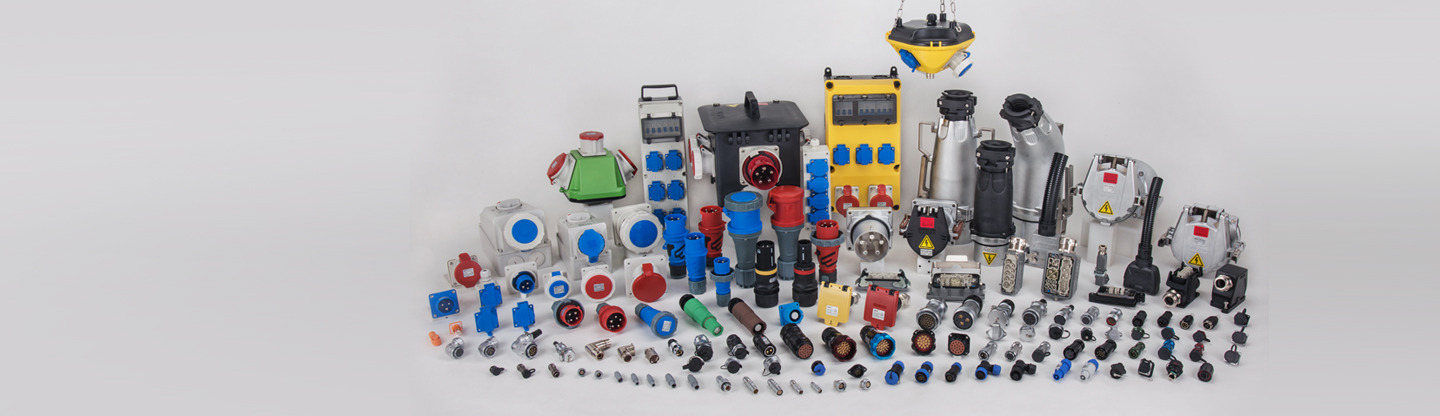
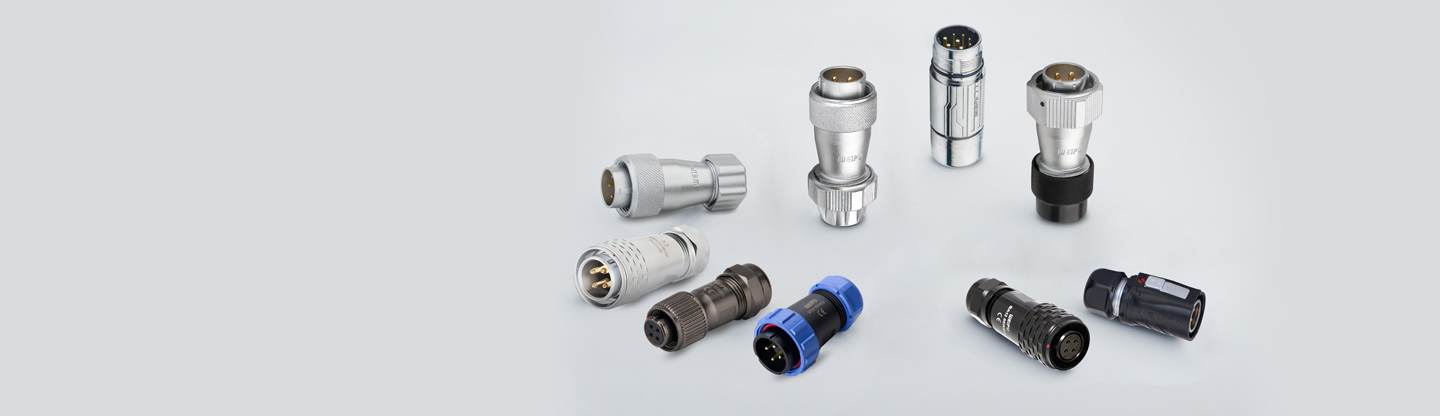
Our product strategy is designed to support buyers who need either a manufacturer-led adaptation or a buyer-owned specification. For projects that require speed and lower development exposure, our circular connector families can provide a practical starting platform for cable assemblies, sensors, control cabinets, lighting equipment, and outdoor electronics. Existing shell formats and mating systems can help engineering teams evaluate fit, routing, service access, and installation requirements before committing to extensive tooling.
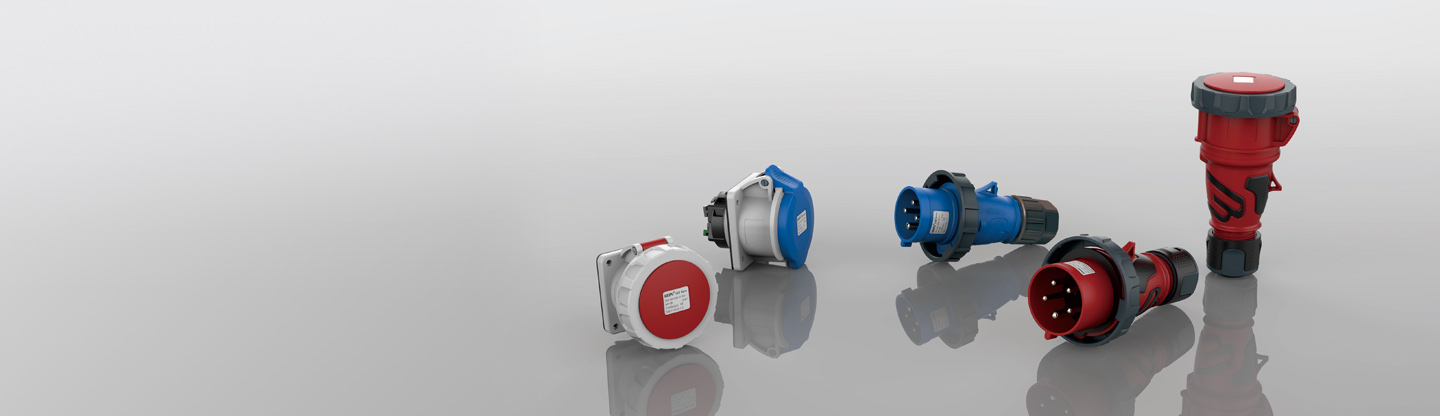
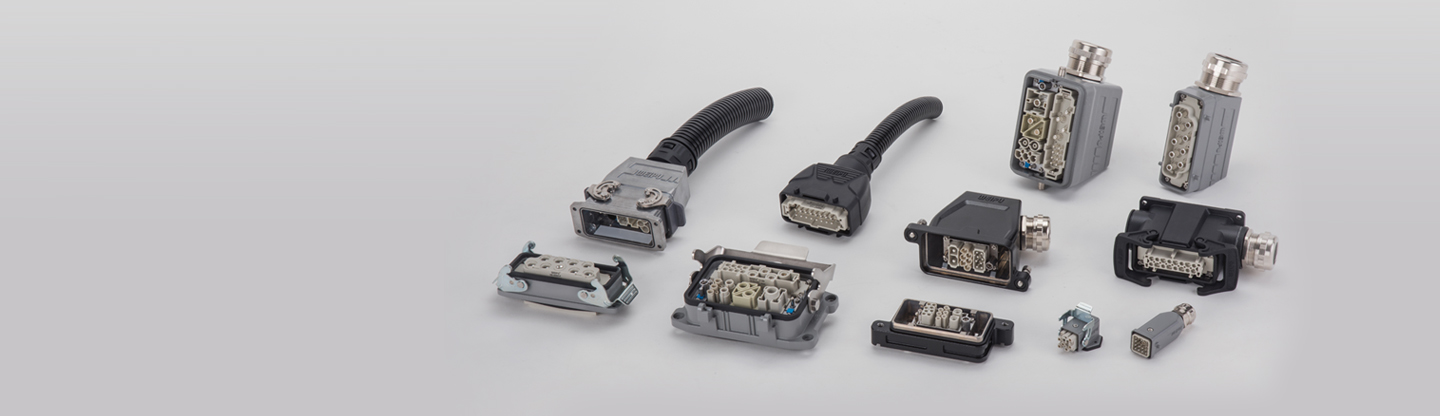
For demanding factory and infrastructure environments, our industrial connector solutions focus on dependable mating, organized contact layouts, mechanical retention, and application-oriented sealing. The selection can be aligned with cable diameter, mounting method, pin configuration, and environmental conditions. Where equipment requires greater mechanical robustness, our Heavy Duty Connector range is intended to support power, signal, and control interfaces used in machinery, transportation equipment, energy systems, and other high-load operating environments.
Our engineering and manufacturing approach should be assessed through the same objective criteria applied to any qualified supplier: drawing control, material consistency, tooling management, inspection capability, validation records, production traceability, and responsiveness to engineering changes. This transparency helps buyers decide whether a catalog-based platform, semi-custom adaptation, or fully proprietary OEM design is the most appropriate route. It also supports lifecycle planning by connecting prototype decisions with repeat production, spare parts, field replacement, and future product revisions.
A practical sourcing sequence is to define the operating environment, classify the electrical and mechanical loads, identify mandatory compliance requirements, compare an adapted platform with a new design, test representative samples, and then finalize commercial ownership terms. This sequence reduces the risk of selecting a connector that appears suitable in a quotation but fails during installation, qualification, or field operation.
Contact our team to compare circular connector, industrial connector, and Heavy Duty Connector options for your application and determine whether an ODM adaptation or OEM development path delivers the stronger lifecycle value.
Frequently Asked Questions
What is the main difference between OEM and ODM waterproof connectors?
OEM usually means the buyer owns or defines the design and the manufacturer produces it, while ODM uses a manufacturer’s existing connector platform that is adapted to the buyer’s requirements.
When should a buyer choose an OEM connector design?
OEM is generally suitable when the project requires a proprietary interface, unusual geometry, strict intellectual-property control, or a connector that cannot be built from an existing product platform.
When is ODM sourcing more efficient?
ODM is often more efficient when the application uses a conventional interface and the buyer wants shorter development time, lower initial engineering effort, and reduced tooling exposure.
Does an IP rating guarantee waterproof performance in every installation?
No. Performance depends on the complete assembly, including the mating interface, cable diameter, rear seal, mounting method, installation torque, and operating conditions; the tested configuration should match the intended application.
What should buyers include in a connector RFQ?
An RFQ should identify contact count, current and voltage, conductor size, cable diameter, materials, plating, sealing, mating mechanism, mounting style, temperature, ingress target, mating cycles, environmental exposure, forecast volume, and required test documentation.
Should customized samples be tested with the actual cable?
Yes. Testing with the actual cable and mating hardware helps verify sealing, cable retention, assembly force, dimensional fit, and environmental performance because these factors can change with cable construction and installation conditions.
Cost Factors: Pricing Panel Mount Circular Connectors
Modular Distribution Boxes for Scalable Installations
Maintenance and Inspection Checklist for Clamping Plates
Cable Assembly Market Trends Industrial Buyers Should Track

SY1110/P SY1110/S Cable connector IP67
Mate with SP1111,SP1112

WEIPU SP1110P/S Cable Connector IP68
Mate with SP1111, SP1112
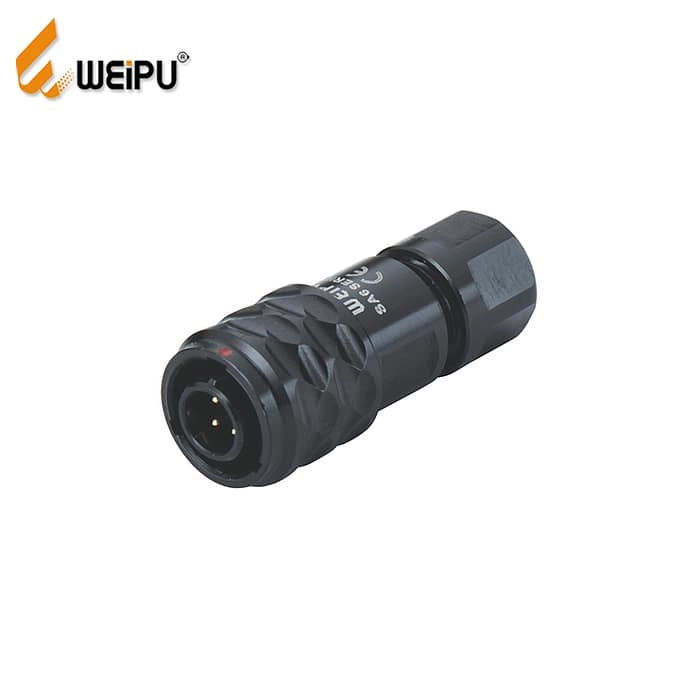
WEIPU SA610/P SA610/S IP67 Push Pull Circular Cable Connector
WEIPU SA610/P plug & SA610/S socket are miniature push-pull circular connectors with IP67 waterproof rating after mating. Built with anodized aluminum shell and gold-plated solder contacts, this SA series supports 2-5 pins, rated 3A 30V, certified CE & RoHS. Ideal for medical diagnostic devices, lab automation and precision sensors, fully compatible with SA611, SA612 and SA615 panel receptacles. WEIPU holds IATF16949 certification and supplies industrial connectors to 130+ countries.

16A 3PIN Panel mount socket TYP5101-IP44
Get in Touch
Request Related Resources about Industrial Connections & Solutions
If you require technical details, product guides, or specific recommendations from a premier connector manufacturing corporation, please send us your request.
We provide expert support for custom electrical connectors, offering OEM/ODM customization and dedicated distributor cooperation assistance.
Weipu Building, No. 111, Baihua Road, Liwan District, Guangzhou, Guangdong China
© 2026 WEIPU. All Rights Reserved.
Whatsapp: +8618102298073
WEIPU
WEIPU
WEIPU
WEIPU