




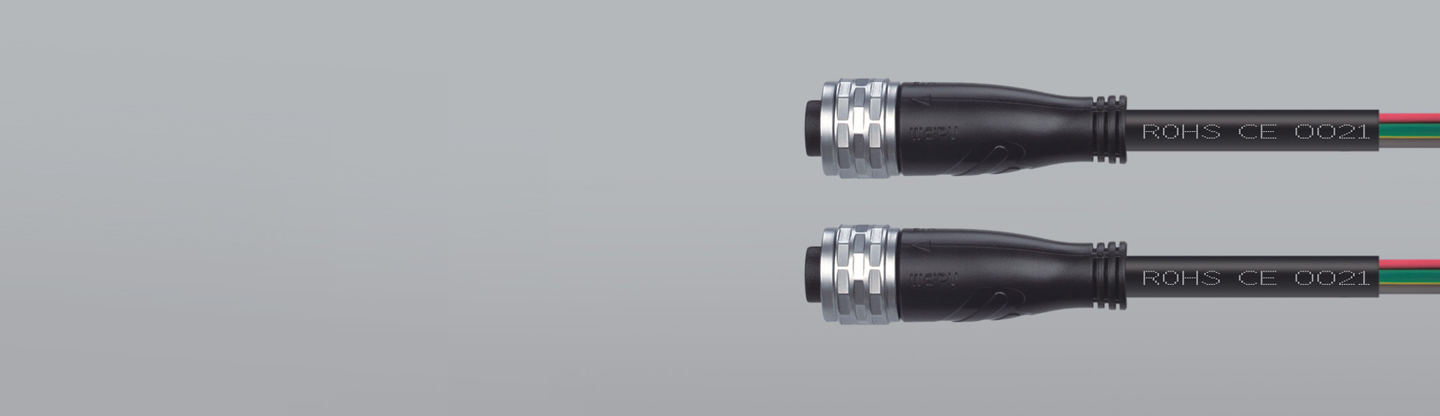


OEM Wire Tap Connectors: Custom Materials, Colors, and Packaging
- How to Specify Custom Wire Splice and Tap Components
- Define electrical and installation requirements first
- Match materials to the service environment
- Color, Identification, and Packaging Choices
- Use color as a controlled identification feature
- Choose packaging for the sales channel and assembly process
- OEM Qualification, Validation, and Production Control
- Build a sample and test approval plan
- Evaluate supplier controls and total landed cost
- Coordinating OEM Programs with Our Connector Portfolio
- Align product selection with the complete system
- Document customization before the first production order
- Frequently Asked Questions
- What information should buyers provide when requesting an OEM wire tap connector?
- Can a custom housing color affect connector performance?
- What packaging is best for OEM electrical connectors?
- Does a supplier’s ISO 9001 certification prove that a connector is suitable?
- How should buyers validate a customized connector before mass production?
- Can wire-branching components and circular or heavy-duty connectors be sourced as one product category?
OEM wire tap connector programs can be customized across conductive and insulating materials, housing colors, identification features, and packaging formats to fit a product’s electrical design, installation environment, brand standards, and supply chain. Buyers should first confirm conductor type and size, insulation compatibility, current and voltage requirements, operating temperature, and applicable regulatory obligations; then specify color, labeling, packaging, and validation criteria. A disciplined supplier review helps prevent mismatched components, confusing field identification, packaging waste, and costly changes after production begins.
How to Specify Custom Wire Splice and Tap Components
Customization should begin with the electrical use case, not with a preferred color or package design. A tap connector joins a branch conductor to an existing wire without requiring the same termination method as a conventional terminal block. Designs vary, so buyers need the supplier to identify the exact conductor combinations and installation method supported by the selected part. Compatibility cannot be assumed from appearance or a product family name.
Define electrical and installation requirements first
Prepare a controlled specification covering conductor material, stranded or solid construction, wire gauge or cross-sectional area, insulation type, operating voltage, expected current, and installation access. Include ambient and conductor temperature conditions, exposure to moisture, chemicals, vibration, or ultraviolet light, and whether the connection will be inside an enclosure. Those details affect contact design, housing selection, tool requirements, and the evidence needed for product approval.
Where a product is used in workplace electrical systems, buyers should verify applicable local codes and installation rules. For U.S. workplaces, OSHA 29 CFR 1910.303 addresses general electrical requirements, including suitability and installation considerations. This regulation does not certify a particular component; the project team must still check the applicable product standards, listing requirements, and authority having jurisdiction.
Match materials to the service environment
The conductive element and insulating body serve different functions and should be specified separately. Contact materials and finishes influence electrical contact behavior, corrosion resistance, and compatibility with the conductors. Housing materials need to suit the intended temperature range, mechanical handling, and exposure conditions. A supplier should disclose material grades or relevant specifications, explain any coating or plating, and identify the evidence available to support material claims.
For projects sold into markets with restricted-substance requirements, request a current declaration and define the exact product scope covered by it. The European Commission’s RoHS Directive overview explains the EU framework restricting certain hazardous substances in electrical and electronic equipment. A general statement from a supplier should not be treated as proof that every custom variant, colorant, or packaging component is covered; documentation should match the bill of materials and destination market.
Color, Identification, and Packaging Choices
Visual customization can support assembly accuracy and product differentiation, but it must not create ambiguity about electrical function. A color specification should identify the color system or approved physical sample, acceptable variation, molded versus printed application, and whether color consistency is required across multiple production sites. Buyers should also clarify who owns the artwork and how revisions are controlled.
Use color as a controlled identification feature
Color can help distinguish product variants, conductor ranges, or customer-specific assortments when the application and relevant codes permit it. It should supplement, rather than replace, clear part numbers, technical documentation, and installation instructions. If colors are assigned to electrical functions, the project team must check the rules that apply in every target market and avoid using a scheme that conflicts with established conventions.
Request a color approval process that includes a master reference, sample sign-off, and a method for assessing production consistency. For molded components, the resin and colorant combination may affect the appearance and could influence material properties; the supplier should confirm that the approved formulation remains suitable for the required application. Printed markings require separate review for legibility, abrasion, and resistance to expected cleaners or environmental exposure.
Choose packaging for the sales channel and assembly process
Bulk bags can suit automated or high-volume assembly where operators receive components in controlled bins. Small retail-ready packs may be more appropriate for distributors or service channels that need clear quantities and consumer-facing identification. Trays, reels, or other presentation formats should be considered only when they are compatible with the part geometry and the customer’s handling equipment. Packaging selection affects labor, storage density, replenishment, traceability, and damage risk—not just appearance.
Specify pack quantity, inner and outer carton dimensions, protective features, barcode format, lot identification, language requirements, and whether mixed variants are allowed in a carton. If packaging claims environmental benefits, define the material and evidence required rather than relying on a broad label. Packaging materials and marks may also be subject to market-specific requirements, so confirm obligations with the importer or compliance team before artwork approval.
| Customization area | Common options | Buyer considerations | Validation to request |
|---|---|---|---|
| Contact material and finish | Specified conductive alloy and compatible surface finish | Conductor compatibility, electrical use, corrosion exposure, and documented material identity | Material declaration, design documentation, and applicable electrical test evidence |
| Insulating housing | Supplier-qualified polymer and application-specific color | Temperature, chemical exposure, mechanical handling, and target-market requirements | Material identification and relevant thermal, mechanical, or environmental test records |
| Color and marking | Approved color reference, molded color, print, or label | Function coding rules, brand consistency, readability, and revision control | Pre-production sample approval and marking durability review where relevant |
| Packaging | Bulk, counted bags, cartons, trays, or channel-specific packs | Line-side handling, distribution channel, traceability, storage, and pack quantity | Packaging sample, barcode verification, and shipment identification check |
The table is a planning framework, not a substitute for product-specific qualification. Test methods and acceptance limits should be agreed based on the design, application, applicable standards, and customer requirements. Where a quality-management system is part of supplier qualification, buyers can review the scope and current status of the supplier’s certification against the relevant requirements; ISO 9001:2015 describes requirements for quality management systems, but certification alone does not establish that a particular connector is suitable for a specific installation.
OEM Qualification, Validation, and Production Control
Custom tooling, color matching, and packaging artwork can create long-term value, but they also introduce change-control and supply continuity risks. Before purchase approval, buyers should distinguish standard catalog features from true custom changes. A new housing color may involve a material formulation change; a printed identifier can affect inspection and traceability; a revised pack format can alter line feeding or shipping efficiency. Each change should have an owner, approval record, and effective date.
Build a sample and test approval plan
Request production-representative samples rather than relying solely on renderings or hand-finished prototypes. The approval plan should define inspection dimensions, conductor combinations, assembly tools, installation steps, and the performance tests needed for the end use. Depending on the design and application, evaluation may include retention, contact resistance, temperature behavior, dielectric performance, environmental exposure, and visual inspection. The supplier and buyer should agree on methods and limits before testing begins.
Confirm whether testing covers the exact combination of wire types, sizes, materials, and housing variants being purchased. A result from one configuration does not automatically validate a different conductor or material combination. Maintain approved drawings, bills of material, test reports, packaging specifications, and sample references in a document-control system so that receiving inspection and future reorders use the same baseline.
Evaluate supplier controls and total landed cost
Supplier review should cover production capacity, process controls, incoming material checks, lot traceability, nonconformance handling, and notification of changes to materials or manufacturing location. Buyers should ask how the supplier controls color variation, marking accuracy, and packaging counts, and how defective lots are contained. For an OEM project, responsiveness to engineering questions and clarity of documentation can be as important as unit price.
Compare total landed cost rather than comparing piece prices alone. Customization can affect tooling charges, minimum order quantities, setup costs, inspection effort, shipping volume, and inventory exposure. A standard component in a custom package may meet the need with lower qualification risk than a fully redesigned part. Conversely, a carefully controlled custom variant may reduce picking errors or simplify a branded product offering. The preferred option depends on measurable operational savings and project risk.
Coordinating OEM Programs with Our Connector Portfolio
For buyers managing multiple electrical interfaces, supplier coordination can simplify product documentation, sourcing reviews, and planning across a broader equipment platform. Our product portfolio includes circular connector, industrial connector, and Heavy Duty Connector categories alongside OEM-focused connection solutions. These product families serve different interface needs; selection should be based on application specifications rather than assuming that one connector type can replace another.
Align product selection with the complete system
Our team can use the buyer’s application requirements as the starting point for product discussions: connection function, conductor details, installation conditions, market destination, identification needs, and packaging workflow. For a wire-branching component, the specification should define supported conductors and the intended installation method. For circular or heavy-duty interfaces, the engineering review should address the relevant mating, environmental, and mechanical requirements. Keeping those evaluations distinct helps prevent category confusion while supporting a coordinated sourcing plan.
Document customization before the first production order
Our OEM discussions should establish which attributes are configurable, which remain controlled design features, and what evidence will accompany approval. Buyers can request a written specification covering the selected material, color reference, marking, packaging, inspection plan, and change-notification process. Clear records make it easier for procurement, engineering, quality, and distribution teams to approve the same product definition and reduce avoidable deviations during repeat orders.
Because no single material, color, or pack format is right for every project, recommendations should remain tied to the customer’s documented use case and market requirements. A transparent review can help compare standard and customized alternatives, identify missing validation information, and plan a practical approval sequence. Buyers should verify all technical claims and compliance documents against the exact configuration being quoted.
Frequently Asked Questions
What information should buyers provide when requesting an OEM wire tap connector?
Provide conductor material and construction, wire size, insulation type, electrical requirements, installation conditions, environmental exposure, target markets, and any relevant drawings or samples. Include desired color, marking, packaging, forecast volume, and required compliance documentation so the supplier can assess the complete configuration.
Can a custom housing color affect connector performance?
It can, depending on the housing material and colorant formulation. Buyers should require confirmation that the approved formulation remains suitable for the application and request representative samples and relevant validation evidence. Color should also be checked against applicable identification rules.
What packaging is best for OEM electrical connectors?
The best format depends on the handling process and sales channel. Bulk packaging may suit controlled high-volume assembly, while counted packs or channel-specific packaging can support distribution and service operations. Specify quantities, identification, traceability, protection, and barcode needs before approval.
Does a supplier’s ISO 9001 certification prove that a connector is suitable?
No. ISO 9001 addresses a quality-management system; it does not by itself certify a particular product for a specific electrical application. Buyers should separately review applicable product approvals, technical documentation, test evidence, and the scope of the supplied configuration.
How should buyers validate a customized connector before mass production?
Approve production-representative samples against a written specification. Define the exact conductor combinations, installation method, inspections, applicable performance tests, acceptance criteria, packaging details, and document revisions. Confirm that test evidence covers the exact materials and variants being ordered.
Can wire-branching components and circular or heavy-duty connectors be sourced as one product category?
No. They serve different connection functions and should be selected against separate application requirements. A broader portfolio may support coordinated sourcing, but technical suitability must be established for each interface independently.
Contact our team to discuss your OEM requirements or explore our circular connector, industrial connector, and Heavy Duty Connector products.
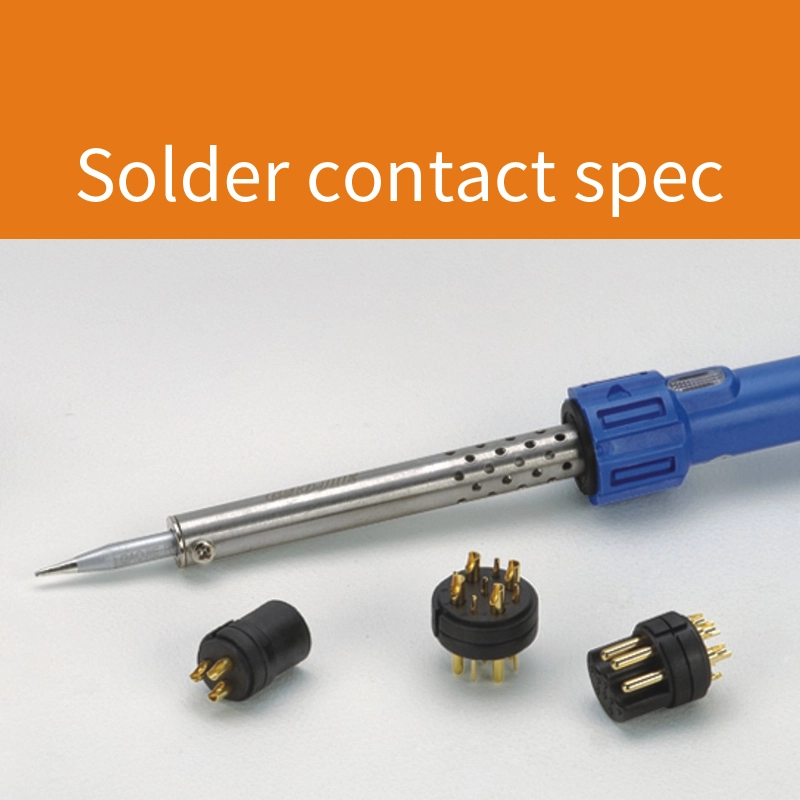
WEIPU WP20 Bayonet Connectors: Dual-Shell Options for Demanding Industrial Applications
Top Features Buyers Look for in Industrial Distribution Boxes
Explosion-Proof Distribution Boxes for Hazardous Areas
Supplier Selection Checklist for Medical Circular Connectors

SY1110/P SY1110/S Cable connector IP67
Mate with SP1111,SP1112

WEIPU SP1110P/S Cable Connector IP68
Mate with SP1111, SP1112
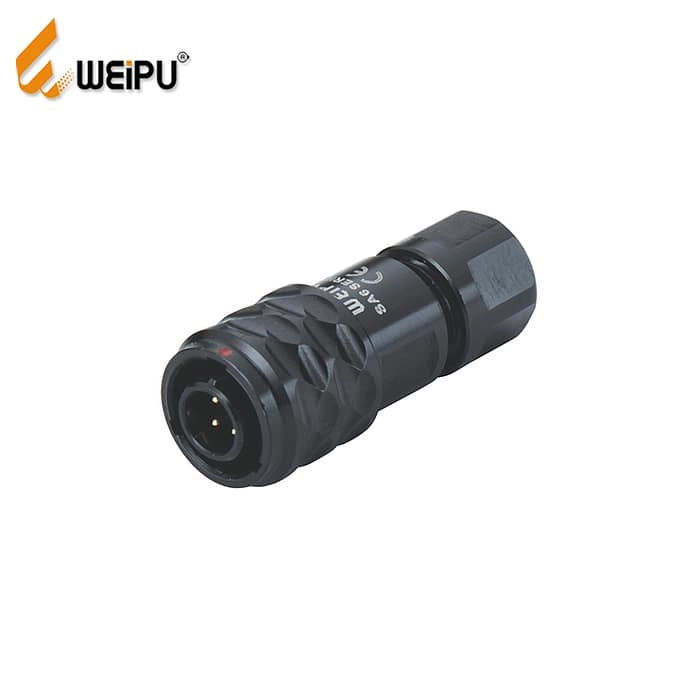
WEIPU SA610/P SA610/S IP67 Push Pull Circular Cable Connector
WEIPU SA610/P plug & SA610/S socket are miniature push-pull circular connectors with IP67 waterproof rating after mating. Built with anodized aluminum shell and gold-plated solder contacts, this SA series supports 2-5 pins, rated 3A 30V, certified CE & RoHS. Ideal for medical diagnostic devices, lab automation and precision sensors, fully compatible with SA611, SA612 and SA615 panel receptacles. WEIPU holds IATF16949 certification and supplies industrial connectors to 130+ countries.

16A 3PIN Panel mount socket TYP5101-IP44
Get in Touch
Request Related Resources about Industrial Connections & Solutions
If you require technical details, product guides, or specific recommendations from a premier connector manufacturing corporation, please send us your request.
We provide expert support for custom electrical connectors, offering OEM/ODM customization and dedicated distributor cooperation assistance.
Weipu Building, No. 111, Baihua Road, Liwan District, Guangzhou, Guangdong China
© 2026 WEIPU. All Rights Reserved.
Whatsapp: +8618102298073
WEIPU
WEIPU
WEIPU
WEIPU