Reducing Failure Risk in Customized Waterproof Connector Projects
- How to Engineer a Reliable Sealed Electrical Connection
- Start with the real installation environment
- Translate protection needs into testable requirements
- Control the Design Variables That Commonly Cause Leakage
- Match seals, materials, and geometry to the application
- Validate the assembled connection, not just the loose component
- Strengthen Procurement, Qualification, and Production Control
- Assess supplier evidence and change control
- Compare project cost by lifecycle risk, not unit price alone
- Apply an Engineering-Led Supplier Partnership
- Connect the application brief to a manufacturable design
- Build repeatability into samples, production, and after-sales support
- Frequently Asked Questions
Reducing failure risk in customized waterproof connector projects depends on treating the connection as a complete system rather than selecting a sealed component in isolation. Project owners should define exposure to water, dust, chemicals, temperature, vibration, pressure, and mating cycles; specify the required ingress-protection level and operating conditions; and verify the connector, cable, panel interface, seals, and installation process together. A reliable procurement process also checks material compatibility, test evidence, production controls, and change management. These steps help prevent leakage, corrosion, intermittent electrical performance, avoidable rework, and field-service costs.
How to Engineer a Reliable Sealed Electrical Connection
Start with the real installation environment
Early design discussions often describe an application simply as “outdoor,” “washdown,” or “waterproof.” Those labels are not sufficiently precise for engineering or sourcing. A machine exposed to occasional rain has different demands from equipment subject to directed washdown, temporary immersion, salt spray, cleaning chemicals, or pressure changes. Buyers should document the actual exposure, including whether the connection is mated or uncoupled during exposure, how often it is handled, and whether water can collect around the panel interface.
Build an environment profile covering minimum and maximum operating temperatures, expected thermal cycling, humidity, ultraviolet exposure, vibration, shock, fluid contact, and service life. Include installation details such as cable orientation, bend radius, available clearance, mounting thickness, and access for tightening. A cable entry pointing upward or a panel opening with poor drainage can create a failure path even when the connector body itself is appropriately sealed. Requirements should describe the installed use case, not just the nominal product category.
Translate protection needs into testable requirements
Ingress protection is commonly expressed using an IP code. The International Electrotechnical Commission overview of IP ratings explains the code’s relationship to protection against solid objects and water. The applicable classification and test conditions should be agreed before design approval; a general claim of “waterproof” does not identify the test method, assembly state, or permitted exposure.
For electrical equipment, IEC 60529 specifies the degrees of protection provided by enclosures, commonly described through IP classifications. Buyers should confirm which edition, product configuration, and test conditions apply to the project rather than assuming that a rating on a related product transfers automatically to a customized assembly. If the application is road-vehicle equipment or another regulated sector, determine whether additional sector-specific standards apply.
Write requirements in measurable terms: the protection level required when mated, whether protective caps are required when uncoupled, the operating temperature range, the cable diameter range, and any exposure duration or cleaning procedure relevant to validation. Clear acceptance criteria help engineering teams select a sealing concept and help procurement compare supplier proposals on an equivalent basis.
Control the Design Variables That Commonly Cause Leakage
Match seals, materials, and geometry to the application
Sealing performance is influenced by the interface between parts, not only by the seal material. O-ring dimensions, gland geometry, compression, surface finish, tolerances, and assembly alignment all affect whether a seal can perform consistently. A seal that is under-compressed may allow a leakage path; excessive compression can accelerate deformation or make assembly difficult. The design should account for production tolerances and foreseeable service conditions rather than relying on a best-case prototype fit.
Material selection requires the same application-specific discipline. Housing polymers and metals, elastomers, plating, contacts, cable jackets, and potting compounds may respond differently to heat, oils, cleaning agents, salt, ultraviolet exposure, or repeated flexing. A material described as chemically resistant in one context may not be suitable for the project’s exact concentration, temperature, or contact duration. Request compatibility evidence for the actual fluid and operating conditions, and assess galvanic-corrosion risk where dissimilar metals are used in a conductive or wet environment.
Customization can also alter the sealing stack. A new cable diameter, panel thickness, contact layout, keying feature, or mounting arrangement may affect compression or create a new path for water ingress. Treat every change that touches a sealing interface as an engineering change requiring documented review. Do not assume that an existing test report covers a modified configuration unless the supplier can demonstrate that the tested construction and the proposed construction are equivalent for the relevant failure modes.
Validate the assembled connection, not just the loose component
A connector can meet a component-level requirement and still fail after installation if the cable gland is mismatched, the panel cutout is incorrect, the coupling is not fully engaged, or the assembly is damaged during termination. Validation should therefore use representative cables, accessories, mounting panels, torque procedures, and assembly instructions. Where multiple configurations are planned, identify the worst-case combinations and establish a defensible sampling and approval plan.
Testing should reflect the intended service conditions and applicable standards. Depending on the application, a plan may include ingress testing, electrical continuity and insulation checks, temperature cycling, vibration, mechanical retention, corrosion exposure, and repeated mating. The test sequence matters: environmental exposure followed by electrical checks can reveal problems that an initial visual inspection would miss. Define pass/fail criteria in advance, retain test records, and document deviations and corrective actions.
The following comparison distinguishes several verification activities that buyers can include in a qualification plan. These checks answer different questions and should not be treated as interchangeable.
| Verification activity | What it evaluates | Typical project decision supported |
|---|---|---|
| Ingress-protection testing | Resistance to specified access by solids and water under the defined test conditions | Whether the tested enclosure configuration meets the agreed IP requirement |
| Electrical testing before and after exposure | Continuity, insulation behavior, and other specified electrical characteristics | Whether environmental exposure affected electrical function |
| Mechanical and mating-cycle checks | Coupling, retention, wear, and operation after defined handling or mating cycles | Whether the connection remains usable through the expected service routine |
| Material compatibility review | Suitability of seals, housings, plating, and cable materials for stated exposure | Whether proposed materials fit the project’s chemicals, temperature, and environment |
| Production inspection and traceability | Conformity of manufactured parts and documented lot or process records | Whether approved design intent is carried into repeat production |
Strengthen Procurement, Qualification, and Production Control
Assess supplier evidence and change control
Supplier qualification should examine more than a catalog rating. Request controlled drawings, material specifications, test reports tied to the relevant configuration, inspection criteria, and a clear statement of what is included in the approved assembly. Ask how the manufacturer controls critical dimensions, seal installation, contact termination, and cable preparation. A supplier should also explain how nonconforming product is contained and how corrective actions are verified.
Quality-system certification can provide useful information about an organization’s management processes, but it is not proof that a particular connector will meet a particular application requirement. The ISO overview of ISO 9001 describes a quality management system standard focused on consistent processes and customer requirements. Buyers should evaluate certification scope alongside product-specific engineering evidence, process controls, and project test results.
Define engineering-change notification rules before placing production orders. Changes to resin, elastomer compound, plating, tooling, seal dimensions, cable supplier, assembly location, or test method can affect performance even when the product name remains unchanged. Require prior notification and risk review for changes affecting form, fit, function, compliance, or qualification status. For critical applications, specify when revalidation or customer approval is required.
Compare project cost by lifecycle risk, not unit price alone
A lower connector price can be outweighed by field failures, production stoppages, inspection burden, replacement labor, warranty exposure, and redesign costs. Procurement teams should compare total cost across the expected service life and include the cost of qualification, tooling, spare parts, maintenance access, and supply continuity. A documented requirement set also reduces quotation ambiguity and helps prevent late-stage substitutions that undermine validation.
Lead-time planning deserves similar scrutiny. Custom tooling, sample iterations, specialized materials, and qualification testing can extend a project schedule. Establish design-freeze dates, sample approval gates, and production-release criteria early. If a project requires an alternate source, qualify the alternative against the same drawings, materials, and acceptance criteria instead of assuming that a visually similar part is interchangeable.
Apply an Engineering-Led Supplier Partnership
Connect the application brief to a manufacturable design
In our project approach, the first priority is to clarify the application and convert it into a controlled technical brief. That means resolving the exposure conditions, electrical needs, cable and panel constraints, mating requirements, and relevant compliance expectations before a design is finalized. Early alignment gives engineering and manufacturing teams a shared basis for evaluating the sealing concept, contact arrangement, materials, and assembly method. It also gives buyers a more useful basis for reviewing samples and approving changes.
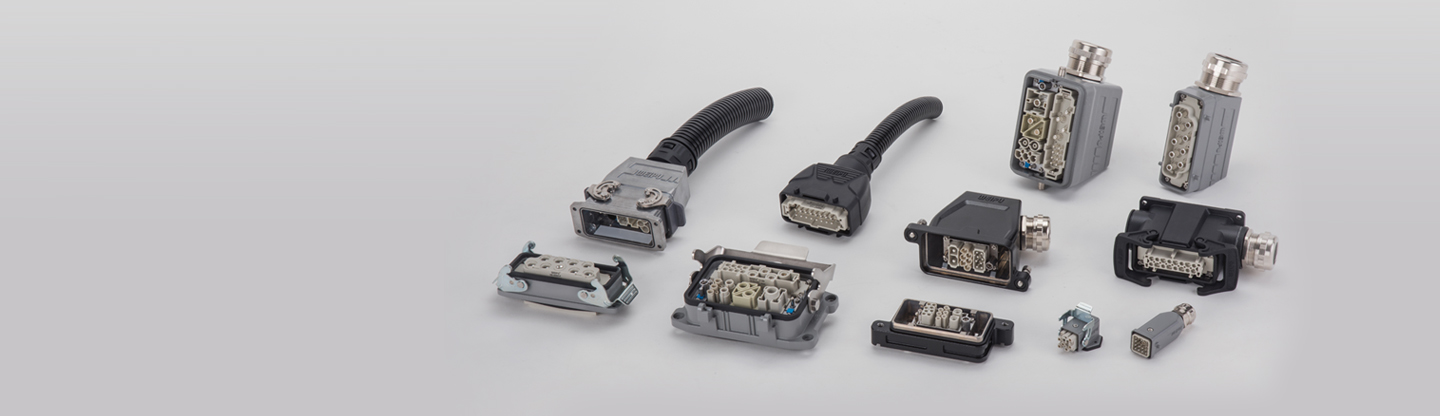
Our product focus includes circular connector, industrial connector, and Heavy Duty Connector solutions. Each category can serve different connection and installation needs, but the correct choice depends on the required electrical configuration, environmental exposure, mechanical interface, and maintenance practice. A buyer should compare connector families by their actual application fit and documented performance, not by category name alone. Custom features should be assessed for their effect on sealing, assembly repeatability, and qualification scope.
Build repeatability into samples, production, and after-sales support
A capable supplier should connect prototype approval to production controls. That includes maintaining approved drawings and specifications, identifying critical-to-quality features, confirming inspection methods, and ensuring that manufacturing teams follow the validated assembly process. When a project includes custom cable lengths, contact layouts, keying, or mounting features, these details should be recorded in the released documentation so that repeat orders match the approved configuration.
Our role is to support clear technical communication across selection, customization, and production planning, while project owners retain control of application requirements and acceptance criteria. Before launch, align on sample status, qualification evidence, packaging, order traceability, and the process for reporting field issues. This disciplined collaboration helps reduce interpretation gaps and makes it easier to investigate any performance concern using consistent product and test records.
Contact our team to discuss your application requirements and evaluate circular connector, industrial connector, or Heavy Duty Connector options for your project.
Frequently Asked Questions
What information should buyers provide when requesting a customized waterproof connector?
Provide the actual exposure conditions, including water and dust exposure, chemicals, temperature range, vibration, and service life. Include cable diameter, panel thickness, installation orientation, mating frequency, electrical requirements, and the required ingress-protection level and test conditions.
Does an IP rating guarantee that a connector will remain waterproof in every installation?
No. An IP classification relates to specified test conditions and the tested configuration. Cable entry, panel interface, assembly, mating state, installation damage, and changes to the design can affect protection, so the complete installed assembly should be assessed.
How should a project team validate a customized sealed connector?
Use representative cables, accessories, mounting panels, and assembly procedures. Define pass/fail criteria in advance and select applicable tests, such as ingress protection, electrical checks before and after exposure, temperature cycling, vibration, mechanical retention, or mating-cycle checks.
Which design changes can affect sealing performance?
Changes to cable diameter, seal material or dimensions, gland geometry, panel thickness, mounting arrangement, housing material, or assembly method can affect sealing. Changes involving a sealing interface should receive documented engineering review and, when necessary, revalidation.
Is ISO 9001 certification sufficient to qualify a connector supplier?
No. ISO 9001 certification concerns a quality management system and does not prove that a particular connector meets a specific application requirement. Buyers should also review product-specific drawings, material specifications, test evidence, inspection controls, and change-management practices.
How can procurement teams compare connector proposals fairly?
Use a shared technical brief that specifies application conditions, cable and panel interfaces, ingress requirements, electrical needs, qualification tests, and acceptance criteria. Compare lifecycle costs, qualification effort, lead time, serviceability, and production controls as well as unit price.
OEM Wire Tap Connectors: Custom Materials, Colors, and Packaging
Durability and Mating Cycles of Medical Circular Connectors
Installation & Maintenance Tips for EMI Shielded Circular Connectors
Custom power automate connectors Manufacturers and Suppliers

SY1110/P SY1110/S Cable connector IP67
Mate with SP1111,SP1112

WEIPU SP1110P/S Cable Connector IP68
Mate with SP1111, SP1112
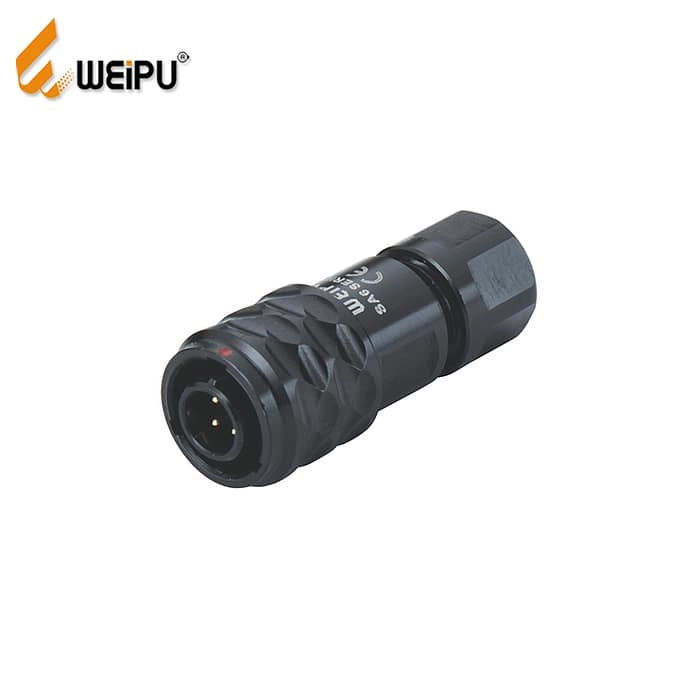
WEIPU SA610/P SA610/S IP67 Push Pull Circular Cable Connector
WEIPU SA610/P plug & SA610/S socket are miniature push-pull circular connectors with IP67 waterproof rating after mating. Built with anodized aluminum shell and gold-plated solder contacts, this SA series supports 2-5 pins, rated 3A 30V, certified CE & RoHS. Ideal for medical diagnostic devices, lab automation and precision sensors, fully compatible with SA611, SA612 and SA615 panel receptacles. WEIPU holds IATF16949 certification and supplies industrial connectors to 130+ countries.

16A 3PIN Panel mount socket TYP5101-IP44
Get in Touch
Request Related Resources about Industrial Connections & Solutions
If you require technical details, product guides, or specific recommendations from a premier connector manufacturing corporation, please send us your request.
We provide expert support for custom electrical connectors, offering OEM/ODM customization and dedicated distributor cooperation assistance.
Weipu Building, No. 111, Baihua Road, Liwan District, Guangzhou, Guangdong China
© 2026 WEIPU. All Rights Reserved.
Whatsapp: +8618102298073
WEIPU
WEIPU
WEIPU
WEIPU