Waterproof Connector Quality Checks: IP Ratings, Tests, and QC
- How to Interpret Ingress Protection for Electrical Connectors
- Read both digits—and the test scope
- Match the water test to the actual exposure
- Use the complete connector configuration
- Waterproof Connector Tests and Evidence Buyers Should Request
- Separate design qualification from routine inspection
- Compare test methods by what they reveal
- Build a risk-based verification plan
- Production QC, Supplier Review, and Product Selection
- Inspect the details that create the seal
- Evaluate suppliers on evidence, not rating labels alone
- Connect product choice to operating and lifecycle needs
- Frequently Asked Questions
Waterproof connector quality depends on more than an IP number: buyers must verify the applicable standard, test conditions, connector configuration, cable and seal combination, and production controls. Under IEC 60529, the first IP digit classifies protection against access to hazardous parts and solid foreign objects, while the second classifies protection against water. A rating applies to a tested configuration, not automatically to every cable, accessory, mating state, or installation. Procurement teams should request traceable test evidence, inspect sealing features, and confirm that routine quality checks match the risks and conditions of the final application.
How to Interpret Ingress Protection for Electrical Connectors
Read both digits—and the test scope
The IP Code, defined in IEC 60529, communicates specific enclosure protection levels through two principal digits. The first digit addresses access to hazardous parts and the ingress of solid foreign objects, including dust. The second digit addresses water exposure. An “X” in either position means that the corresponding digit is not specified, not that the product has passed every possible test in that category. For example, IPX7 states a water-ingress classification without making a claim about dust protection.
Buyers should check the certificate or test report for the exact product identification, sample construction, cable diameter, sealing arrangement, and whether the connector was tested mated or unmated. A rating shown on a housing may not cover a field-installed cable gland, backshell, blanking cap, or alternate contact insert. The qualification evidence should make clear which parts were assembled and how the sample was installed.
Match the water test to the actual exposure
Different water classifications represent different exposure conditions. IPX5 and IPX6 address water jets at different test severities; IPX7 addresses temporary immersion under defined conditions; and IPX8 covers immersion conditions agreed between the manufacturer and user, beyond the IPX7 conditions. IPX9 addresses high-pressure, high-temperature water jets. These classifications are not a simple ladder in which every higher numeral automatically includes every lower test. If an application involves both immersion and directed jets, specify and verify both relevant exposures.
For road-vehicle electrical equipment, ISO 20653 provides protection-degree designations and tests for vehicles, including water exposure conditions tailored to that sector. Buyers should not assume that a result under one standard transfers without qualification to another standard or end-use environment. Salt spray, detergent, oils, vibration, pressure washing, and temperature cycling can introduce stresses beyond the basic IP classification.
Use the complete connector configuration
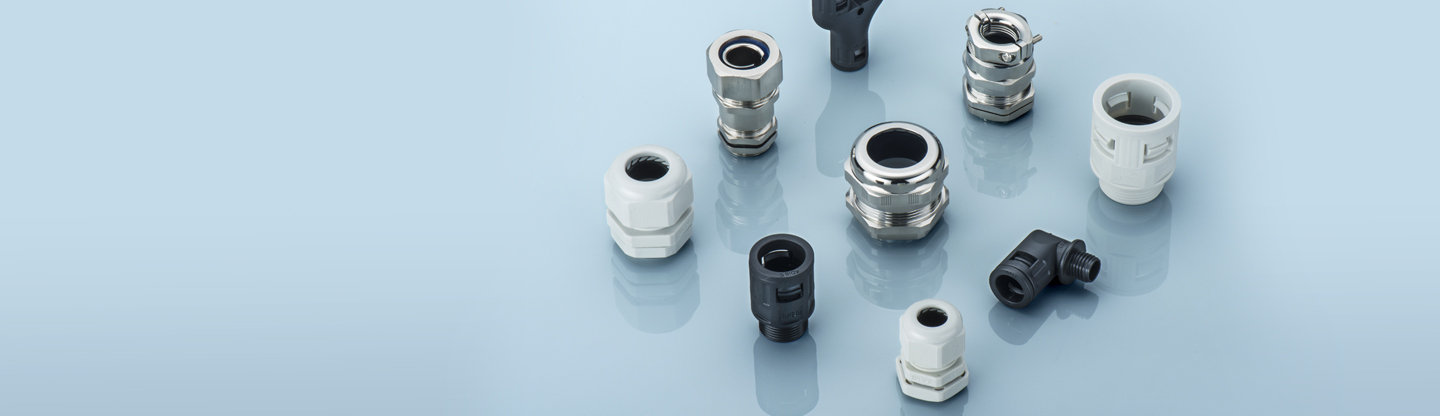
A sealing system can include the interface gasket, individual wire seals, cable gland, rear seal, coupling mechanism, and protective cap. Any change in cable outer diameter, jacket material, contact layout, or assembly torque can affect compression and the ingress path. A customized waterproof connector therefore needs qualification in the configuration intended for production, including the mating half and the cable or conduit specified on the drawing.
Installation is part of performance. An otherwise suitable circular connector can leak when a coupling nut is under-tightened, a seal is twisted, a cable is pulled at an acute angle, or a mating interface is contaminated. Procurement specifications should define mating status during exposure, assembly instructions, torque where applicable, cable preparation, and the use of dust caps when disconnected.
Waterproof Connector Tests and Evidence Buyers Should Request
Separate design qualification from routine inspection
Design qualification demonstrates that a defined construction can meet specified requirements under stated test conditions. Production quality control checks whether manufactured units continue to conform. A supplier should be able to explain which tests are type tests, which are performed on a sample or lot, and which checks are applied to every unit. A single successful prototype test is useful evidence, but it does not by itself establish consistent production control or prove every later design variation.
Ask for reports that identify the laboratory, standard and edition, test method, sample quantity, conditioning, acceptance criteria, deviations, and tested configuration. Verify that the report refers to the same product family and revision offered for purchase. Where a report covers a representative model, the supplier should document why the tested construction represents the ordered version and what changes would require requalification.
Compare test methods by what they reveal
Water-ingress testing is only one part of reliability evaluation. Electrical continuity, insulation resistance, dielectric withstand, contact resistance, mechanical retention, and mating durability can reveal failure modes that are not visible during a short water exposure. For connectors used in vibration or outdoor service, buyers may also need thermal cycling, mechanical shock, corrosion resistance, or cable-pull testing. Each method should map to a defined application risk rather than being added as a generic checklist.
| Check or evidence | What it helps establish | Buyer review point |
|---|---|---|
| IP5X or IP6X dust test | Protection against specified solid-particle ingress; IP6X represents a dust-tight classification under IEC 60529. | Confirm the tested enclosure, cable entry, cap, and mating state. |
| IPX5 or IPX6 water-jet test | Resistance to water jets under the applicable test conditions. | Match jet exposure to washdown direction, duration, and installation orientation. |
| IPX7 immersion test | Protection during temporary immersion under defined conditions, including the specified depth and duration. | Check the report’s immersion conditions and whether the connector was mated. |
| IPX8 immersion agreement | Protection under immersion conditions beyond IPX7, defined by agreement between manufacturer and user. | Record depth, duration, temperature, and acceptance criteria in the specification. |
| Electrical and mechanical checks | Electrical integrity and mechanical performance before or after environmental exposure. | Set limits for continuity, insulation, retention, and mating-cycle requirements. |
The table summarizes common classification concepts; it is not a substitute for the applicable standard or a product-specific test report. Test conditions and acceptance criteria must be taken from the governing standard and the project specification. IEC 60529 defines enclosure protection classifications, while connector-specific electrical and mechanical test requirements may be addressed through other standards and purchaser requirements.
Build a risk-based verification plan
Before release, define the exposure profile: continuous submersion, occasional splash, high-pressure cleaning, outdoor rain, condensation, or chemical washdown. Then identify the states in which exposure can occur: fully mated, disconnected with a cap, or during maintenance. A connector exposed only to rain may not need the same qualification strategy as one installed below a tank or routinely pressure-washed. This distinction helps avoid both under-specification and unnecessary test cost.
For ongoing orders, establish a control plan that identifies incoming-material checks, seal and dimension inspection, assembly verification, electrical tests, lot sampling, nonconformance handling, and change notification. Test frequency should reflect product risk, process capability, order volume, and customer requirements. Changes to elastomer compound, tooling, plating, cable range, or assembly process should trigger documented review rather than being treated as inconsequential substitutions.
Production QC, Supplier Review, and Product Selection
Inspect the details that create the seal
Incoming inspection can detect defects such as damaged threads, burrs, chipped insulators, contaminated sealing surfaces, missing gaskets, and out-of-tolerance seal dimensions. During assembly, controls should prevent pinched or rolled seals, incomplete insertion, incorrect contact orientation, and inconsistent coupling engagement. Visual checks are valuable, but they cannot replace functional or environmental testing where the application requires it.
Traceability makes test results actionable. A useful quality record connects lot or date codes to material batches, inspection results, assembly records, and any environmental test samples. Buyers should also clarify how a supplier handles nonconforming lots, corrective actions, rework, and changes to approved components. These controls support faster root-cause analysis if water ingress or intermittent electrical performance appears in service.
Evaluate suppliers on evidence, not rating labels alone
Supplier assessment should cover technical documentation, configuration control, manufacturing process controls, test capability, and responsiveness to application-specific questions. Ask whether the offered IP rating applies to the mated assembly and whether the test report reflects the specified cable and accessories. Confirm that drawings, material specifications, inspection criteria, and revision levels are aligned across the purchase order and supplier records.
Buyers should also distinguish IP classifications from enclosure ratings under other systems. For example, NEMA enclosure standards use a separate framework. An IP code and a NEMA type designation are not automatically interchangeable; selection should follow the requirements of the target market, installation, and governing specification.
Connect product choice to operating and lifecycle needs
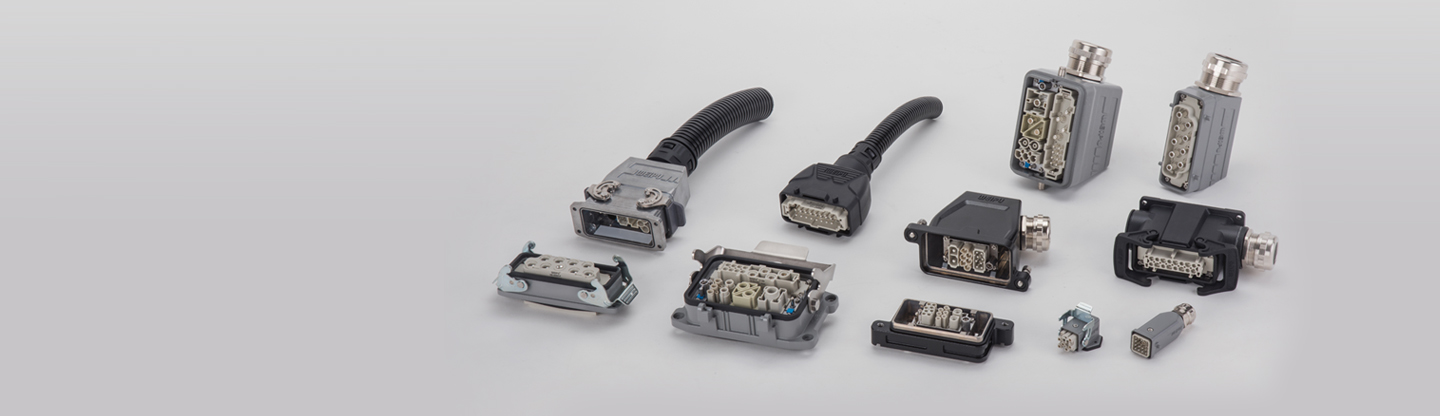
Our product portfolio includes circular connector, industrial connector, and Heavy Duty Connector categories for buyers comparing connection formats across equipment and operating environments. Selection should begin with current, voltage, contact count, cable range, mating frequency, mounting space, vibration exposure, and required ingress protection. The final specification should name the tested assembly and accessories rather than relying on a broad product-family description.
For a customized waterproof connector, the value of customization is strongest when mechanical dimensions, contact arrangement, cable entry, materials, and environmental requirements are defined together. Our team can use those requirements as the basis for product review and configuration discussions; buyers should request drawings, applicable test documentation, and confirmation of qualification scope before design freeze. Clear requirements at quotation stage reduce late redesign, avoid mismatched accessories, and support consistent production inspection.
A disciplined verification process balances protection, electrical performance, maintainability, and cost. The most useful procurement decision is not simply to choose the highest IP numeral, but to select evidence and controls that represent the real service environment. With a defined configuration, risk-based tests, traceable lots, and installation guidance, project teams can reduce the likelihood of moisture-related downtime and unplanned replacement.
Contact our team to review application requirements or explore our circular connector, industrial connector, and Heavy Duty Connector options for your project.
Frequently Asked Questions
What does an IP rating mean for a waterproof connector?
An IP rating classifies protection under specified test conditions. The first digit addresses access to hazardous parts and solid foreign objects, while the second digit addresses water exposure. It applies to the tested configuration and does not automatically cover every cable, accessory, or mating state.
Is IP67 always better than IP66 for a connector?
Not for every application. IP66 addresses powerful water jets, while IP67 addresses temporary immersion under defined conditions. The classifications are not a simple ladder, so buyers exposed to both conditions should specify and verify both relevant tests.
Does an IPX7 rating prove that a connector is dust-tight?
No. The X means that a dust-protection digit is not specified. Buyers who need dust protection should verify a relevant first-digit classification, such as IP6X, for the actual connector assembly.
Should a waterproof connector be tested while mated or unmated?
The test state should reflect the installation and the supplier’s documented rating scope. Buyers should verify whether the report tested the connector mated, unmated, capped, or in another defined configuration, and specify the state in which water exposure can occur.
What should buyers request in a waterproof connector test report?
Request the product identification and revision, applicable standard and edition, test method and conditions, sample quantity, tested cable and accessories, mating state, acceptance criteria, deviations, and laboratory information. Confirm that the report represents the ordered configuration.
How often should waterproof connectors be tested during production?
There is no single frequency suitable for every product. The control plan should set checks based on application risk, process capability, volume, and customer requirements, and define which inspections are performed on every unit, by lot, or during design qualification.
Harness Cable Assemblies for Distributors: Stock and Packaging
M12 vs M8 vs Mini Circular Connectors: Which Fits Your Needs
Explosion-Proof Distribution Boxes for Hazardous Areas
Installation, Maintenance and Troubleshooting Circular Connectors

SY1110/P SY1110/S Cable connector IP67
Mate with SP1111,SP1112

WEIPU SP1110P/S Cable Connector IP68
Mate with SP1111, SP1112
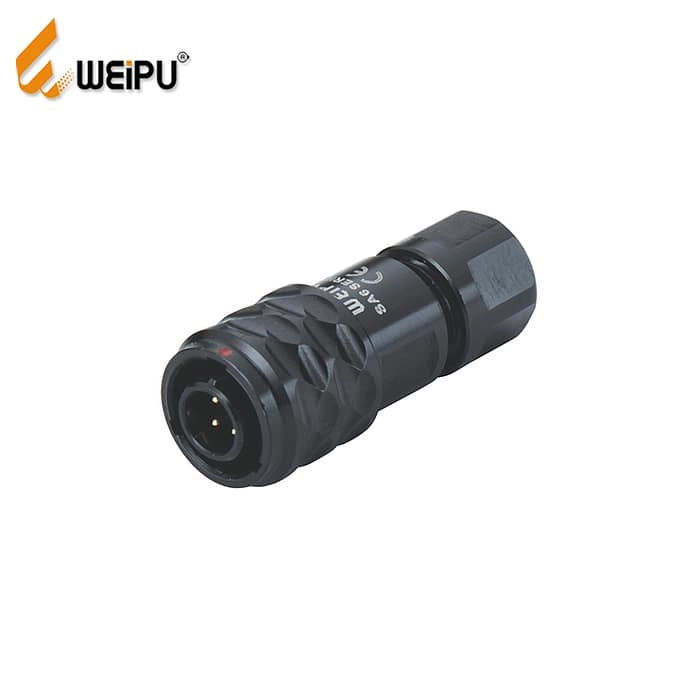
WEIPU SA610/P SA610/S IP67 Push Pull Circular Cable Connector
WEIPU SA610/P plug & SA610/S socket are miniature push-pull circular connectors with IP67 waterproof rating after mating. Built with anodized aluminum shell and gold-plated solder contacts, this SA series supports 2-5 pins, rated 3A 30V, certified CE & RoHS. Ideal for medical diagnostic devices, lab automation and precision sensors, fully compatible with SA611, SA612 and SA615 panel receptacles. WEIPU holds IATF16949 certification and supplies industrial connectors to 130+ countries.

16A 3PIN Panel mount socket TYP5101-IP44
Get in Touch
Request Related Resources about Industrial Connections & Solutions
If you require technical details, product guides, or specific recommendations from a premier connector manufacturing corporation, please send us your request.
We provide expert support for custom electrical connectors, offering OEM/ODM customization and dedicated distributor cooperation assistance.
Weipu Building, No. 111, Baihua Road, Liwan District, Guangzhou, Guangdong China
© 2026 WEIPU. All Rights Reserved.
Whatsapp: +8618102298073
WEIPU
WEIPU
WEIPU
WEIPU