




Industrial Connector Types: Power, Signal, Data and Hybrid Connectors Explained
Learn the main types of industrial connectors based on their function: power, signal, data and hybrid. Discover how to choose the right industrial connector for automation, robotics and smart manufacturing.
Follow us now:
- 1. Industrial Connectors Should Be Classified by What They Transmit
- 2. Power Connectors: When Electrical Load Is the Priority
- What matters when selecting an industrial power connector?
- Current rating
- Voltage rating
- Contact resistance
- Thermal performance
- Environmental protection
- 3. Signal Connectors: Protecting Control and Sensor Signals
- What should engineers consider for signal connectors?
- Pin count
- Contact reliability
- Shielding and EMI
- Vibration resistance
- Environmental protection
- 4. Data Connectors: Connecting Industrial Networks and Smart Machines
- What matters for industrial data connectors?
- Signal integrity
- Shielding
- Transmission performance
- Environmental protection
- Mechanical reliability
- 5. Why Industrial Ethernet Requires More Than a Standard Data Connector
- 6. Hybrid Connectors: When One Connection Carries Multiple Functions
- 7. Why Use a Hybrid Industrial Connector?
- Reduced installation space
- Simplified cabling
- Faster installation and maintenance
- Better system integration
- 8. Power vs. Signal vs. Data vs. Hybrid Connectors
- 9. How Power, Signal and Data Connectors Work Together in Automation
- Example:
- 10. How to Choose the Right Industrial Connector
- Step 1: Determine what needs to be transmitted
- Step 2: Define the electrical requirements
- Step 3: Evaluate the operating environment
- 11. Don't Choose an Industrial Connector by Size Alone
- 12. Functional Connector Types vs. Physical Connector Types
- 13. Why Connector Selection Is Becoming More Important in Smart Manufacturing
- 14. How WEIPU Approaches Industrial Connectivity
- Conclusion: Start With the Function, Then Choose the Connector
- FAQ
Industrial equipment does not rely on a single type of connection.
A modern automation system may need to distribute electrical power, transmit sensor signals, exchange industrial data, and connect multiple functions within a limited installation space.
That is why choosing an industrial connector should begin with a simple question:
What does the connection need to transmit?
Depending on the application, industrial connectors can generally be considered in four functional categories:
- Power connectors for electrical power transmission
- Signal connectors for sensors, controls and low-level signals
- Data connectors for industrial communication and data transmission
- Hybrid connectors for combining multiple functions within one connection
This functional approach is also reflected in the industrial connectivity portfolios of major connector manufacturers.
For engineers and purchasing teams, understanding these differences provides a better starting point than selecting a connector only by its shape or size.
1. Industrial Connectors Should Be Classified by What They Transmit
An industrial connector is more than a mechanical interface between two cables or devices.
Its electrical design, contact configuration, insulation, shielding, locking mechanism and environmental protection all need to match the function of the connection.
A useful starting point is:
| Connector Type | Primary Function | Typical Applications | Key Selection Factors |
|---|---|---|---|
| Power Connector | Electrical power | Motors, machines, power supplies, energy systems | Voltage, current, temperature, contact resistance |
| Signal Connector | Control and sensor signals | Sensors, PLC I/O, actuators | Signal integrity, pin count, shielding |
| Data Connector | Digital communication | Industrial Ethernet, machine vision, switches | Transmission performance, shielding, bandwidth |
| Hybrid Connector | Multiple functions | Robotics, automation, compact machines | Power + signal/data integration, space, system architecture |
The important point is that these categories describe function, not necessarily connector shape.
For example, a circular connector may be designed for power, signal or data transmission depending on its contact configuration and electrical characteristics.
Likewise, a single connector family may offer different pin counts, termination methods and configurations for different applications.
2. Power Connectors: When Electrical Load Is the Priority
Power connectors are designed to deliver electrical energy from a power source to equipment, machinery or another electrical subsystem.
Typical applications include:
- Industrial machinery
- Motors and drives
- Power supplies
- Automation equipment
- Battery and energy storage systems
- Renewable energy equipment
- Distribution systems
The primary engineering considerations are usually different from those of a signal or data connector.
What matters when selecting an industrial power connector?
Current rating
The connector must be capable of carrying the required current without excessive temperature rise or contact degradation.
For higher-current applications, contact design, conductor size, thermal performance and housing construction become increasingly important.
Voltage rating
The connector must be suitable for the system's operating voltage and applicable safety requirements.
Contact resistance
Low and stable contact resistance helps reduce electrical losses and unwanted heat generation.
Thermal performance
Power transmission generates heat. Connector selection therefore needs to consider:
- Current
- Ambient temperature
- Cable size
- Installation conditions
- Housing material
- Duty cycle
Environmental protection
Industrial power connectors may operate in environments exposed to:
- Dust
- Water
- Oil
- Vibration
- Temperature variation
- Mechanical impact
For outdoor or harsh industrial applications, the appropriate IP protection and mechanical design can be just as important as the electrical rating.
3. Signal Connectors: Protecting Control and Sensor Signals
Not every industrial connection carries significant electrical power.
Many connections carry relatively low-level signals that are essential to machine operation.
Examples include:
- Sensors
- Encoders
- Switches
- Actuators
- PLC I/O
- Control circuits
- Measurement equipment
- Feedback systems
In these applications, signal integrity and contact reliability become major considerations.
A poor connection may not necessarily cause a visible mechanical failure. Instead, it can result in:
- Intermittent signals
- Measurement errors
- False sensor readings
- Communication interruptions
- Unexpected machine behavior
This makes connector selection especially important in automated systems.
What should engineers consider for signal connectors?
Pin count
The connector needs to accommodate the required number of electrical circuits while maintaining appropriate spacing and insulation.
Contact reliability
Stable electrical contact is essential for sensors and control systems operating continuously over long periods.
Shielding and EMI
Industrial environments can contain motors, drives, switching equipment and other sources of electromagnetic interference.
Connector and cable design therefore need to be considered together when protecting sensitive signals.
Vibration resistance
Robots, machinery and mobile equipment can subject connectors to continuous mechanical movement.
A reliable connector needs to maintain contact under the actual vibration and mechanical conditions of the application.
Environmental protection
Sensors and control devices may be installed directly on machinery or close to production processes.
Depending on the application, protection against water, dust, oil and other contaminants may be required.
4. Data Connectors: Connecting Industrial Networks and Smart Machines
As factories become increasingly connected, industrial equipment must exchange more data between sensors, controllers, machines and higher-level systems.
This creates a different connectivity requirement.
Data connectors are designed to support reliable communication between industrial devices.
Typical applications include:
- Industrial Ethernet
- PLC communication
- Remote I/O
- Industrial switches
- Machine vision
- Robotics
- Edge computing
- Smart manufacturing systems
-
- Industrial data connectivity may use different physical interfaces and transmission technologies.
The important distinction is:
- An industrial data connector is not simply a connector that carries electricity.It must support the electrical and mechanical requirements of the communication system.
What matters for industrial data connectors?
Signal integrity
The connector must maintain the electrical characteristics required by the communication link.
Shielding
Industrial environments may contain significant electromagnetic interference.
Proper shielding and grounding strategies can help protect data transmission from interference.
Transmission performance
The connector, cable and interface need to be considered as a complete transmission system.
Environmental protection
Unlike office networking equipment, industrial communication hardware may be installed directly on machinery or production lines.
Therefore, protection against:
- Dust
- Water
- Vibration
- Oil
- Temperature changes
can become critical.
Mechanical reliability
A communication link is only as reliable as its physical connection.
A connector that becomes loose under vibration can interrupt communication even when the network architecture itself is functioning correctly.
5. Why Industrial Ethernet Requires More Than a Standard Data Connector
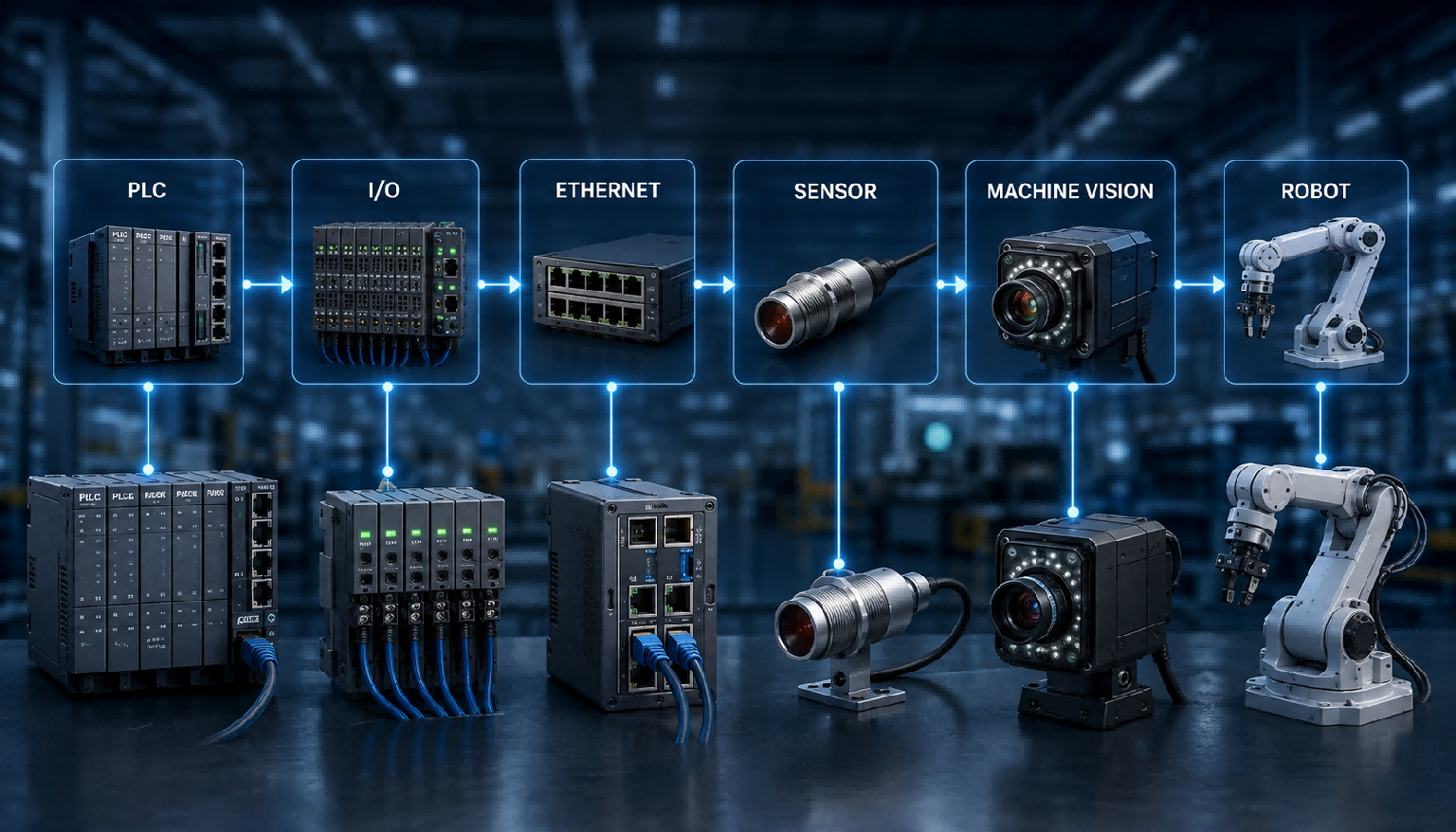
Industrial Ethernet deserves particular attention because modern automation systems increasingly depend on continuous machine-to-machine communication.
A typical architecture may connect:
PLC → I/O → Industrial Ethernet → Sensors → Machine Vision → Robot
The connector sits at the physical layer of this architecture.
That means the reliability of the communication system depends not only on protocols and network equipment, but also on:
- Connectors
- Cables
- Shielding
- Mechanical locking
- Environmental protection
- Installation quality
For this reason, industrial Ethernet connectivity should be evaluated as a physical connectivity system, rather than only as a networking protocol.
WEIPU's industrial connector portfolio includes circular connector solutions used for signal and power connectivity, while its product range also includes dedicated data-oriented interfaces and industrial connectivity solutions.
6. Hybrid Connectors: When One Connection Carries Multiple Functions
Industrial equipment is becoming smaller, more integrated and more connected.
A conventional machine may require separate interfaces for:
- Power
- Signal
- Data
But in compact automation systems, robotics and decentralized equipment, using multiple connectors can increase:
- Installation space
- Cable complexity
- Assembly time
- Maintenance requirements
- Potential connection points
This is where hybrid connectors become useful.
A hybrid connector combines multiple transmission functions into one connection system.
Depending on the design, this may include:
- Power + signal
- Power + data
- Power + signal + data
7. Why Use a Hybrid Industrial Connector?
The main advantage is not simply reducing the number of connectors.
The bigger benefit is system integration.
Reduced installation space
Combining multiple functions can reduce the physical footprint of the connection system.
This is particularly useful for:
- Robotics
- Compact automation equipment
- Modular machines
- Smart sensors
- Decentralized I/O
- Servo systems
Simplified cabling
Instead of managing several independent interfaces, an integrated connection can simplify the overall cable architecture.
Faster installation and maintenance
Fewer individual connections can potentially reduce installation steps and simplify maintenance.
Better system integration
Power and communication can be designed as part of a single connection architecture.
However, hybrid connectors should not automatically be considered better than separate connectors.
The correct choice depends on:
- Required current
- Signal type
- Data transmission requirements
- Available space
- Environmental conditions
- Service requirements
- Connector compatibility
8. Power vs. Signal vs. Data vs. Hybrid Connectors
The following comparison provides a practical starting point for connector selection.
Requirement Power Signal Data Hybrid Main purpose Power transmission Control and sensor signals Digital communication Multiple functions Typical load Medium to high Low Low Depends on design Typical devices Motors, machines Sensors, PLC I/O Ethernet devices, switches Robots, smart machines Key concern Current and heat Signal integrity Transmission performance Integration Shielding importance Application dependent Often important Often critical Depends on circuits Environmental protection Often important Often important Often important Often important Space efficiency Moderate Moderate Moderate High Typical application Power distribution Automation control Industrial networks Integrated automation The table also highlights an important engineering principle:
Connector function should be defined before connector form factor.
9. How Power, Signal and Data Connectors Work Together in Automation
A modern industrial machine rarely uses only one type of connector.
Consider a robotic production line.
The system may contain:
Power
→ supplies motors, drives and equipment
Signal
→ connects sensors, switches and control devices
Data
→ connects PLCs, industrial switches, machine vision systems and robots
Hybrid
→ combines multiple functions where space and integration are priorities
The result is not a choice between four mutually exclusive connector types.
Instead, they form a connectivity architecture.
Example:
PLC
│
┌──────┴──────┐
│ │
I/O Industrial Ethernet
│ │
Sensors Switch
│ │
└──────┬──────┘
│
Robot
┌──────┴──────┐
│ │
Power Signal/Data-
This is why connector selection should always be evaluated in the context of the complete machine.
10. How to Choose the Right Industrial Connector
Once the required transmission function is understood, the selection process can move to the next level.
Step 1: Determine what needs to be transmitted
Start with:
- Power?
- Signal?
- Data?
- Power + signal?
- Power + data?
- Multiple functions?
This is the first decision point.
Step 2: Define the electrical requirements
For power applications, evaluate:
- Voltage
- Current
- Cable size
- Temperature rise
- Contact resistance
For signal applications, consider:
- Signal type
- Pin count
- Shielding
- Contact stability
For data applications, evaluate:
- Transmission requirements
- Interface
- Shielding
- Cable characteristics
- Environmental conditions
Step 3: Evaluate the operating environment
The connector must be matched to the actual installation environment.
Consider:
- IP rating
- Dust
- Water
- Oil
- Vibration
- Shock
- Temperature
- Chemical exposure
- Outdoor installation
- Washdown conditions
For example, WEIPU's SA Series uses an anodized aluminum housing and IP67 protection, with push-pull coupling and multiple contact configurations for industrial applications.
For applications requiring higher environmental protection, WEIPU also offers SP Series solutions with threaded coupling and IP68-rated options.
11. Don't Choose an Industrial Connector by Size Alone
One of the most common mistakes in connector selection is starting with a physical dimension:
“I need an M12 connector.”
or:
“I need a circular connector.”
Those specifications may be useful later, but they should not necessarily be the starting point.
A better selection process is:
-
Application requirement
↓
Power / Signal / Data / Hybrid
↓
Electrical requirements
↓
Environmental requirements
↓
Mechanical requirements
↓
Connector family
↓
Specific connector model
This approach reduces the risk of selecting a connector that fits mechanically but does not meet the actual electrical or environmental requirements of the system.
12. Functional Connector Types vs. Physical Connector Types
It is also important to distinguish between what a connector does and what it looks like.
For example, circular connectors are a physical connector format.
Power, signal and data describe the connector's functional role.
Therefore:
-
- A circular connector can be used for power, signal or data depending on its electrical design and configuration.
The same principle applies to other connector formats.
This distinction is particularly useful when comparing industrial connector products because it prevents engineers from narrowing the selection too early.
Instead of asking:
- “Which connector shape should I buy?”
Start with:
“What must this connection transmit, and what conditions must it survive?”
13. Why Connector Selection Is Becoming More Important in Smart Manufacturing
Industrial systems are moving toward:
- More sensors
- More distributed I/O
- More machine vision
- More robotics
- More industrial networking
- More edge devices
- More compact machine architectures
As a result, the connector is no longer simply a passive component at the end of a cable.
It becomes part of the machine's overall reliability architecture.
A failure in a power connection can stop a machine.
A signal connection failure can produce incorrect sensor information.
A data connection failure can interrupt communication between machines.
And in a compact robotic system, an inappropriate connector architecture can make installation and maintenance unnecessarily complicated.
This is why industrial connector selection should consider electrical performance, signal integrity, mechanical reliability and environmental protection together.
14. How WEIPU Approaches Industrial Connectivity
WEIPU develops industrial connector solutions for applications requiring reliable power, signal and equipment connectivity.
Its portfolio covers circular connectors, industrial connectors, heavy-duty rectangular connectors, cable assemblies and other connection products. The company's product portfolio includes SA, SF, SP, SY, M23 and other connector series for different industrial requirements.
For example, the WEIPU SA Series is a push-pull circular connector family designed for industrial applications, with IP67 protection, multiple pin configurations and different termination options.
The SP Series provides threaded circular connector solutions with IP68-rated options for applications requiring enhanced environmental protection.
For complex industrial systems, WEIPU also offers heavy-duty connector solutions where different functional modules can be integrated within one connector architecture, including power, signal and network-related modules.
This allows connector selection to be based on the actual requirements of the machine rather than a one-size-fits-all approach.
Conclusion: Start With the Function, Then Choose the Connector
Industrial connector selection should not begin with a connector's shape alone.
The more useful starting point is:
What does the connection need to transmit?
From there, the selection process becomes much clearer:
Power → evaluate current, voltage and thermal performance
Signal → evaluate signal integrity, contacts and shielding
Data → evaluate transmission performance, shielding and environmental reliability
Hybrid → evaluate how multiple functions can be integrated into one connection
This functional approach also provides a practical framework for designing connectivity in modern automation, robotics, machine vision and smart manufacturing systems.
As industrial systems become more connected and more compact, the connector must do more than simply establish an electrical path. It needs to provide a reliable interface between the electrical, mechanical and environmental requirements of the machine.
The right connector is therefore not simply the one that fits. It is the one that fits the function, the environment and the system.
FAQ
What are the main types of industrial connectors?
From a functional perspective, industrial connectors can be classified into power, signal, data and hybrid connectors. The classification describes what the connector is designed to transmit rather than its physical shape.
What is an industrial power connector?
An industrial power connector is designed primarily to transmit electrical power to equipment such as motors, machines, power supplies and energy systems. Current, voltage, thermal performance and environmental protection are key selection factors.
What is an industrial signal connector?
An industrial signal connector is used to transmit control or sensor signals between devices such as sensors, PLC I/O modules, actuators and control systems. Signal integrity, contact reliability, shielding and environmental protection are important considerations.
What is a hybrid industrial connector?
A hybrid connector combines multiple functions, such as power and signal or power and data, within one connection system. It can help reduce installation space and simplify cabling in compact industrial equipment.
What is an industrial data connector?
An industrial data connector provides a physical interface for digital communication between industrial devices. Applications include Industrial Ethernet, machine vision, remote I/O and industrial networking.
Are circular connectors only used for power?
No. Circular connectors can be designed for power, signal or data applications depending on their contact configuration, electrical characteristics, shielding and other design features.
How do I choose the right industrial connector?
Start by identifying what needs to be transmitted—power, signal, data or multiple functions. Then evaluate electrical requirements, environmental conditions, mechanical constraints, locking method, cable requirements and maintenance needs before selecting a specific connector family.

IP67 vs IP68 Industrial Connector: Which Waterproof Connector Do You Really Need?

Weipu Connector Innovations: Pioneering Solutions for Modern Communication

Reliability of industrial rj45 connector in High-Speed Automation Networks
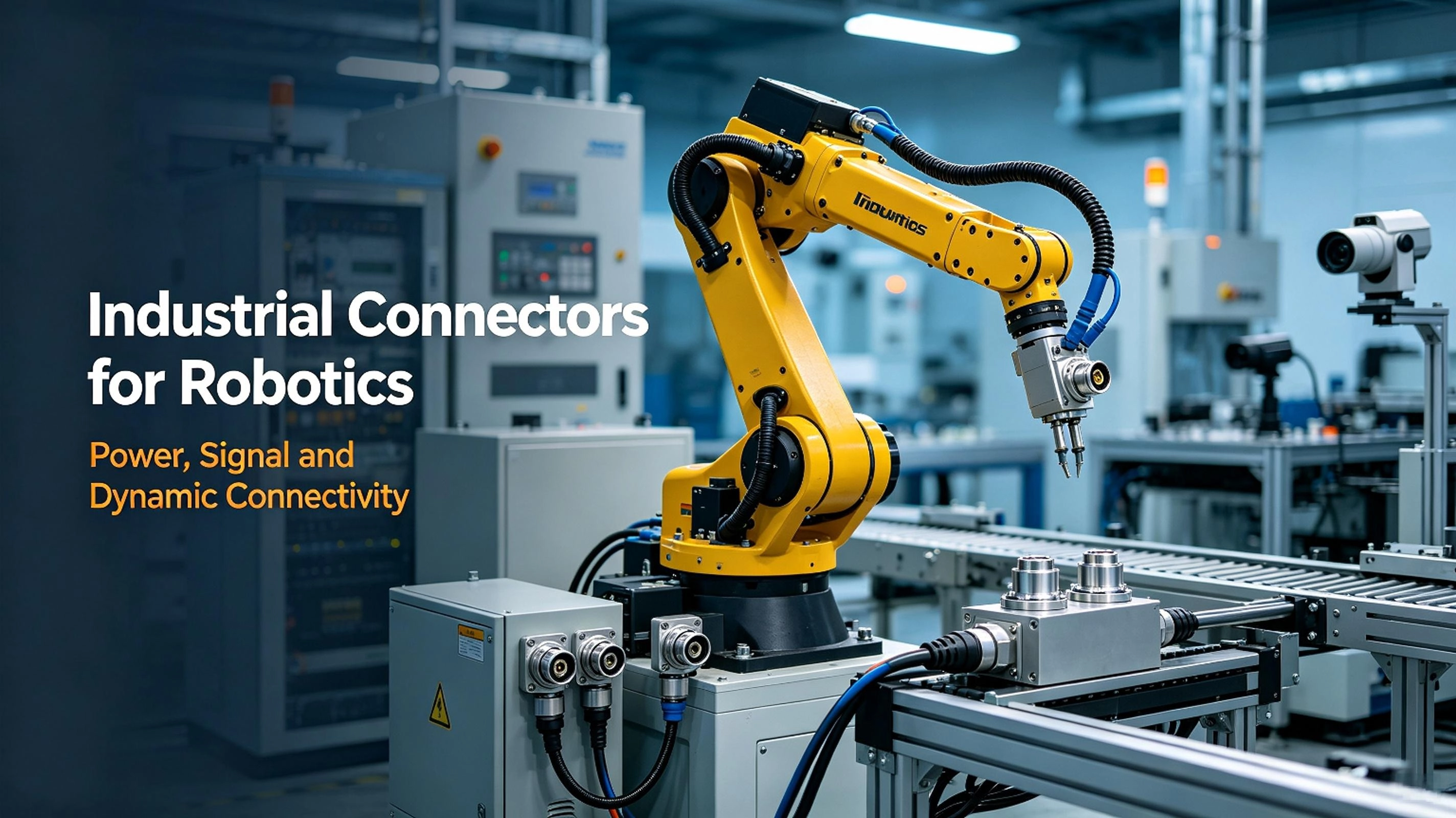
Industrial Connectors for Robotics: Power, Signal and Dynamic Connectivity
Contacts
Sofia
WhatsApp/Phone

SY1110/P SY1110/S Cable connector IP67
Mate with SP1111,SP1112

WEIPU SP1110P/S Cable Connector IP68
Mate with SP1111, SP1112
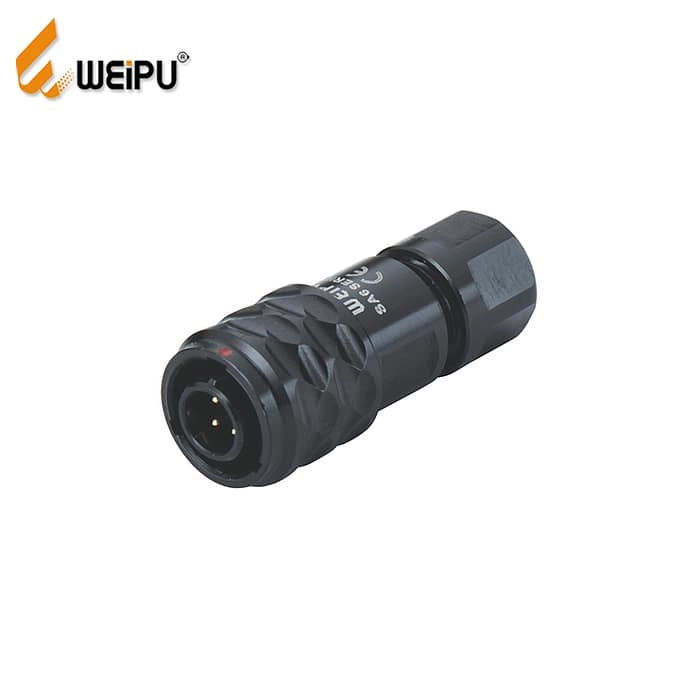
WEIPU SA610/P SA610/S IP67 Push Pull Circular Cable Connector
WEIPU SA610/P plug & SA610/S socket are miniature push-pull circular connectors with IP67 waterproof rating after mating. Built with anodized aluminum shell and gold-plated solder contacts, this SA series supports 2-5 pins, rated 3A 30V, certified CE & RoHS. Ideal for medical diagnostic devices, lab automation and precision sensors, fully compatible with SA611, SA612 and SA615 panel receptacles. WEIPU holds IATF16949 certification and supplies industrial connectors to 130+ countries.

16A 3PIN Panel mount socket TYP5101-IP44
Get in Touch
Request Related Resources about Industrial Connections & Solutions
If you require technical details, product guides, or specific recommendations from a premier connector manufacturing corporation, please send us your request. We provide expert support for custom electrical connectors, offering OEM/ODM customization and dedicated distributor cooperation assistance.
Weipu Building, No. 111, Baihua Road, Liwan District, Guangzhou, Guangdong China
© 2026 WEIPU. All Rights Reserved.
Whatsapp: +8618102298073
WEIPU
WEIPU
WEIPU
WEIPU