
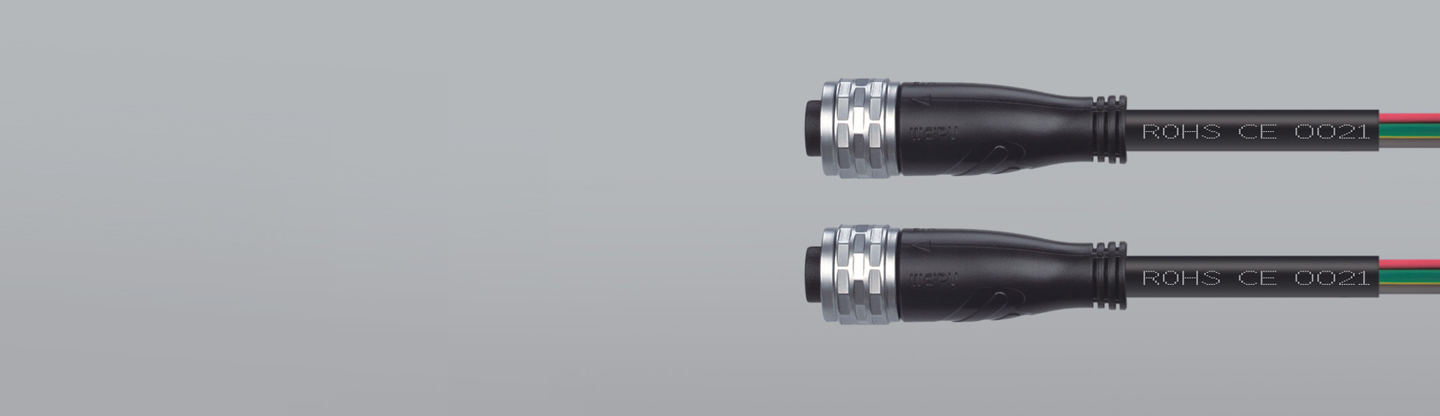


Chemical Resistant Connectors: Matching Housing Polymer to Detergent
Follow us now:
- Quick Answer
- What Do Detergents Actually Do to a Connector Housing?
- Alkaline Cleaners and Hydrolysis
- Chlorinated and Oxidising Sanitizers
- Solvents and Hydrocarbon Degreasers
- Which Housing Materials Are Used in Chemical Resistant Connectors?
- Polyamide PA66 and Glass-Filled Grades
- PBT and Thermoplastic Polyester
- Fluoropolymers and High-End Compounds
- Elastomers and Sealing Compounds
- How Do Temperature, Concentration and Contact Time Change the Result?
- Matching Housing Material to the Cleaning Regime
- What About Seals, Contacts and Cable Entry?
- Seals and Gaskets
- Contact Plating and Unmated Time
- Cable Glands and Rear Entry
- A Selection Checklist for Washdown and Cleaning Zones
- Where WEIPU Fits In
- Conclusion
- Frequently Asked Questions
Quick Answer
Chemical resistant connectors are specified by housing polymer first and by IP rating second. Detergents attack a housing in three ways: hot alkaline cleaners hydrolyse polyamide, chlorinated sanitizers oxidise many thermoplastics, and solvents soften stressed areas until they crack. A polyamide (PA66) housing suits oily and mechanically loaded duty; PBT and fluoropolymer housings tolerate caustic and oxidising chemistry far better. Match the polymer to the detergent class, the temperature and the contact time, then confirm the exact rating on the datasheet.
- Alkaline foam and CIP cleaners at 60 to 80 °C are the hardest duty for PA66 housings.
- PBT and glass-filled polyester keep their strength through repeated caustic washdown.
- Seals usually fail before the shell; EPDM and fluorosilicone cover most cleaning regimes.
- An IP68 rating proves water tightness, not detergent compatibility.
- Ask for immersion test data, such as ASTM D543, before releasing a part for washdown duty.
What Do Detergents Actually Do to a Connector Housing?
A detergent is a formulation designed to lift soil from a surface, and every formulation carries a chemistry that can react with the plastics around it. Housing damage rarely looks dramatic at first: the shell may swell, lose gloss, chalk or craze around a stressed boss. Months later the part cracks at the sealing face and water reaches the contacts. These degradation paths are among the common connector failure causes in harsh environments, and understanding them is the basis for choosing chemical resistant connectors on evidence instead of appearance.
Alkaline Cleaners and Hydrolysis
Most food, beverage and pharmaceutical washdown uses alkaline foam or clean-in-place chemistry at pH 10 to 13 and 60 to 80 °C. In these conditions hydrolysis is a reaction in which water and hydroxide ions cut the amide bonds of polyamide. The result is chain scission, embrittlement and a housing that cracks under the clamp load of a rear nut. Unfilled PA66 loses strength fastest, while glass-filled grades slow the loss but do not stop it.
Chlorinated and Oxidising Sanitizers
Sanitizers are the chemicals that follow cleaning: sodium hypochlorite at 100 to 200 ppm, peracetic acid and chlorine dioxide are the common choices. Oxidisers attack the surface of many polymers and cause chalking and micro-cracks that grow with every cycle. Natural rubber degrades quickly in hypochlorite, while EPDM holds up far better. A single sanitizer bath is mild, but 500 or more cleaning cycles per year make surface degradation a real failure mode.
Solvents and Hydrocarbon Degreasers
Isopropanol wipes, degreasers and cutting fluids work differently: they diffuse into the polymer, extract additives and soften the surface. Amorphous thermoplastics such as ABS and polycarbonate are prone to environmental stress cracking when a solvent meets a moulded-in stress. A connector that mates happily on the bench can crack inside a panel after a month of solvent wipe-downs, especially around press-fit cable entries.
Which Housing Materials Are Used in Chemical Resistant Connectors?
Connector housings come from a short list of polymers, and each one sits at a different point on the resistance, cost and mechanical strength curve. This material decision is the same one that drives how housing material choice affects long-term reliability in every industry. The matrix later in this article turns the list below into a first-pass selection tool for washdown and cleaning duty.
Polyamide PA66 and Glass-Filled Grades
Polyamide is the workhorse of industrial connectors because it is tough, clips and threads mould cleanly, and costs little. Glass fibre at 25 to 30 % raises stiffness and heat deflection, which matters for threaded couplings. Its weakness is hydrolysis in hot alkaline fluids, so PA66 suits oily, dry or ambient-temperature duty better than daily caustic foam cleaning at 70 °C.
PBT and Thermoplastic Polyester
PBT is a saturated polyester, and its ester backbone is far less sensitive to alkaline hydrolysis than an amide bond is. PBT housings keep their gloss and clamp strength through repeated caustic washdowns, which is why many IP68 washdown products are moulded in PBT or blended polyester. Strong acids are its weaker side; persistent acid exposure calls for a fluoropolymer housing instead.
Fluoropolymers and High-End Compounds
PVDF and PTFE resist almost everything a plant can spray, from peracetic acid to steam condensate at 121 °C. The trade-off is cost and lower mechanical strength, so they appear as full housings only where chemistry leaves no alternative. More often they serve as liners, films or overmoulds on a cheaper structural substrate.
Elastomers and Sealing Compounds
Seals are the parts that touch the detergent film first. A housing that is chemical resistant on paper can still leak once the seal swells or takes compression set, so seal and housing must be specified as a pair:
- EPDM is the default against hypochlorite, peracetic acid and steam.
- Silicone spans roughly -40 to +200 °C and suits hot rinse zones.
- FKM and fluorosilicone resist oils, fuels and many solvents.
- Natural rubber should stay away from oxidising chemistry entirely.
How Do Temperature, Concentration and Contact Time Change the Result?
Chemical resistance is not a yes-or-no property; it depends on temperature, concentration and time together. As a rule of thumb, a 10 °C rise roughly doubles the reaction speed, so an alkaline cleaner that PA66 survives at 40 °C can embrittle it at 80 °C. A 200 ppm sanitizer rinse for 10 min is a different duty from the same chemical recirculating for 30 min at 60 °C.
Datasheet tables are measured under defined conditions, usually by immersion per ASTM D543, so check the test temperature before comparing two materials. When your cleaning cycle runs hotter or longer than the table, treat the published rating as unproven and request data at your actual conditions. This is also why two brands of chemical resistant connectors with the same polymer can behave differently in the same plant.
Matching Housing Material to the Cleaning Regime
The matrix below compresses the sections above into a screening tool. It assumes mated connectors, sealed rear entries and daily cleaning. Every final choice should be confirmed against the datasheet of the specific part number before release.
| Cleaning regime | Typical chemistry | Housing and seal guidance |
|---|---|---|
| Light duty, dry or oily | Mineral oils, mild detergent | PA66, die-cast zinc or aluminium; nitrile seals |
| Daily food washdown | Alkaline foam pH 10 to 12 at 60 to 70 °C, EHEDG-aligned hygiene plans | PBT or fluoropolymer shell; EPDM seals |
| Chlorinated sanitizer zones | Hypochlorite 100 to 200 ppm, peracetic acid | PBT or PVDF shell; EPDM, no natural rubber |
| Solvent wipe-down areas | Isopropanol, hydrocarbon degreasers | PBT shell; FKM or fluorosilicone seals; avoid ABS near stress |
| Outdoor chemical mist | Salt fog, fertiliser and agrochemical spray | Salt-spray tested thermoplastic at IP68; stainless hardware |
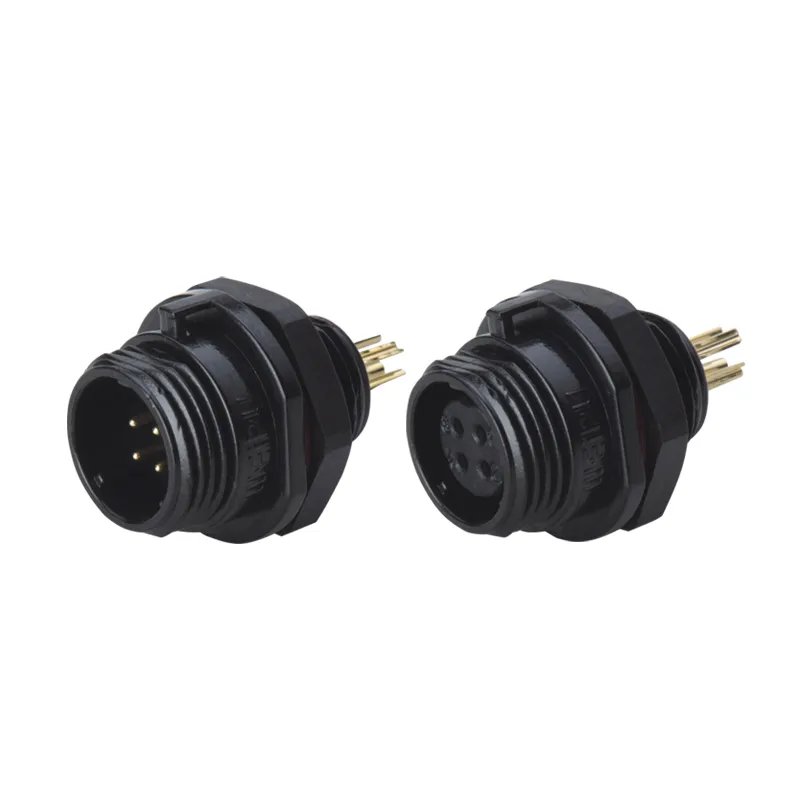
Where high-pressure spray is part of the regime, the sealing question extends beyond the shell, and ratings up to IP69K enter the picture. The logic of how IP67, IP68 and IP69K affect application selection applies directly here, and food plants often end up specifying IP69K washdown connectors for food and beverage processing once spray pressure and detergent both reach their upper limits.
What About Seals, Contacts and Cable Entry?
The housing is only one barrier in the chain. Washdown failures often start at the seal, the contact plating or the rear cable entry rather than the shell, so review the whole assembly before approving a part.
Seals and Gaskets
Check the seal compound against the same chemistry as the housing. EPDM suits oxidising chemistry and steam, silicone covers the widest temperature span, and FKM resists oils and many solvents. Compression set matters as much as the compound itself, because a flattened O-ring stops sealing long before the housing fails.
Contact Plating and Unmated Time
Mated contacts are protected by the sealed interface, but service windows expose them. Gold plating keeps a stable contact resistance through humid, chemically laden air, while tin surfaces need enough normal force and may need re-mating after long idle periods. Specifying crimp, screw or cage-clamp inserts also matters here, because a terminated contact that works loose under thermal cycling invites corrosion.
Specify dust caps for every unused port so that sanitizer mist cannot sit in an open receptacle.
Cable Glands and Rear Entry
The rear entry is where detergent actually reaches a housing cavity. A gland matched to the cable outer diameter, with the right seal compound, protects the inside as effectively as the shell does, and a drip loop below the entry stops cleaner running along the cable into the joint. For most washdown duties, silicone and chloroprene rubber cable glands cover the seal compounds in the matrix above.
A Selection Checklist for Washdown and Cleaning Zones
Use the list below during specification review. It takes minutes and removes most of the guessing that leads to premature housing failures.
- Write down the detergent class, concentration, temperature and contact time of every cleaning step.
- Classify the housing polymer (PA66, PBT, fluoropolymer, metal) and check it against the matrix above.
- Confirm the seal compound separately; never accept "rubber seal" as a specification.
- Check the rating of both the mated pair and the unmated receptacle with caps fitted, in IEC 60529 terms.
- Verify the rear cable gland matches the cable outer diameter within the stated tolerance.
- Ask for immersion or spray test data at your temperature, for example per ASTM D543.
- For outdoor duty, add salt spray exposure to the review; 500 h is a common screening level.
- Plan inspection: look for chalking, swelling or crazing at every maintenance shutdown.
The same protection logic applies to the housing class itself. If you are comparing sealing levels, evaluating IP65 to IP69K housing protection gives the framework, and the circular connector product families page shows how the ratings map onto real series.
Where WEIPU Fits In
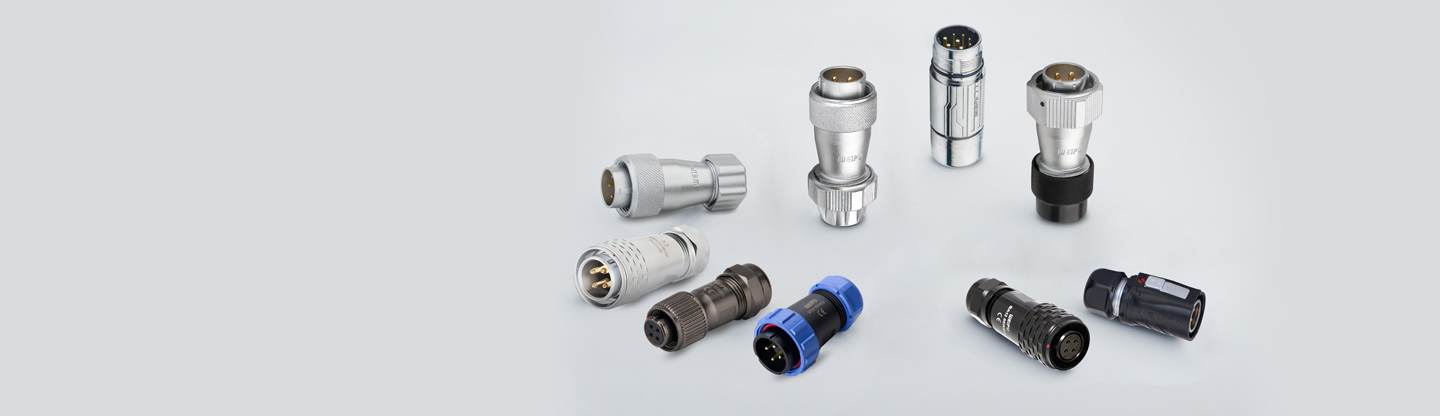
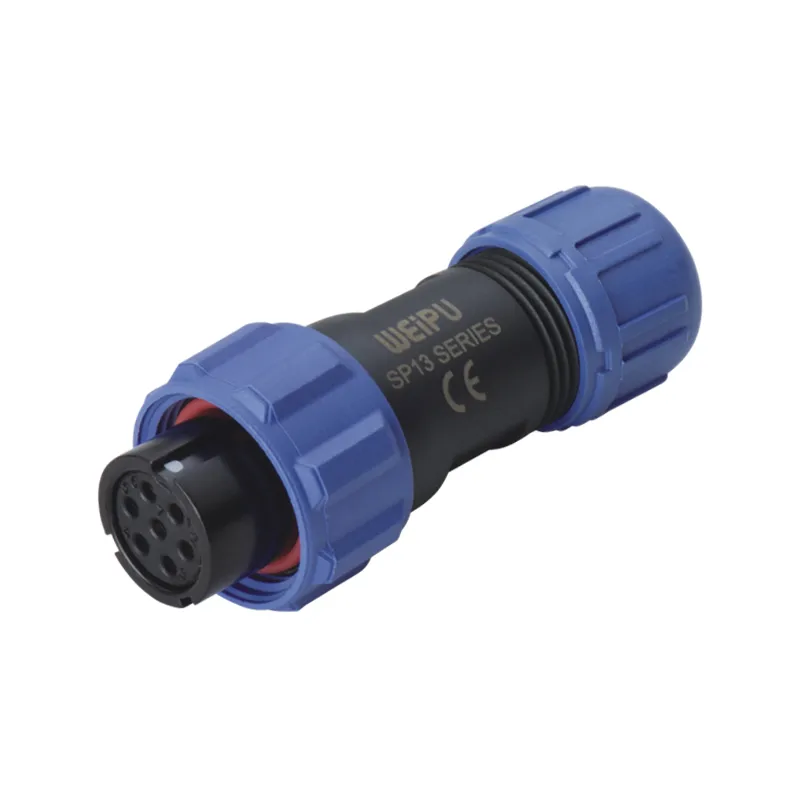
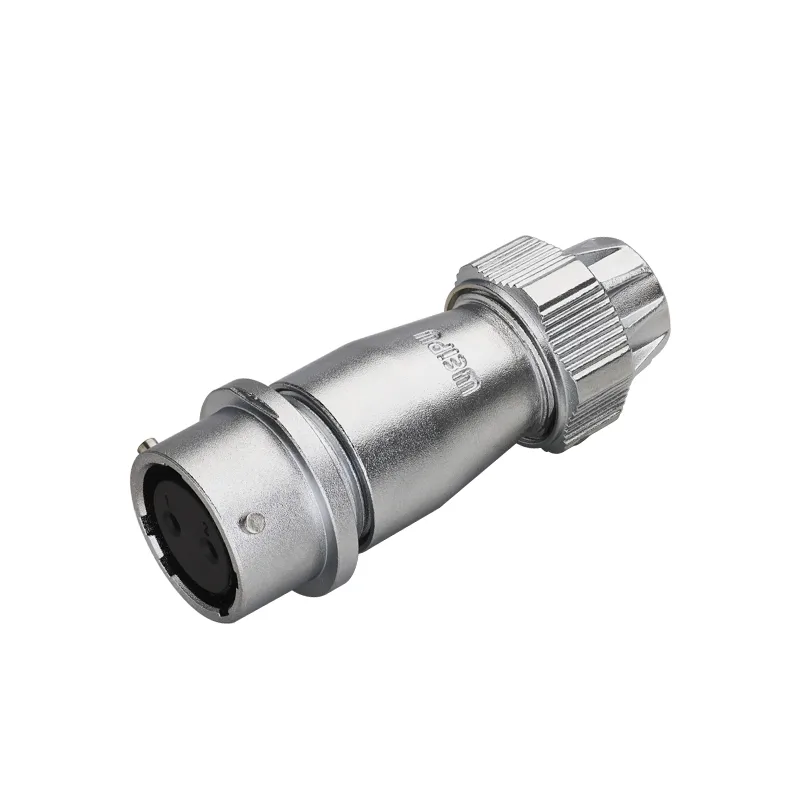
WEIPU is a circular and industrial connector manufacturer founded in 1996, and several of its families address detergent-heavy duty. The SP series uses thermoplastic housings with threaded coupling, salt-spray testing and IP68 sealing, with an operating span of -40 to +85 °C and toughness better than ordinary PA grades. The WY series adds die-cast metal couplings for wet, chemically laden locations such as drainage and treatment installations.
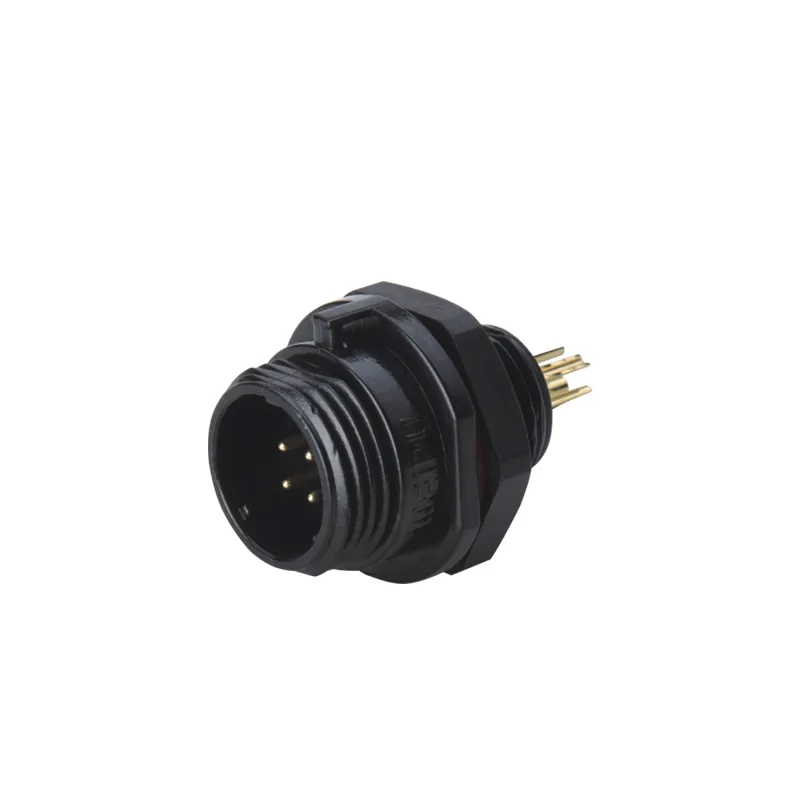
These families may be suitable for evaluation in washdown and cleaning zones; verify the exact part number, housing compound and test report in the datasheet before release, since polymer grades vary inside a series. A starting point is the SP11 rear-nut mount IP68 receptacle, whose panel sealing layout matches the rear-entry rules above.
Conclusion
Choosing chemical resistant connectors is a materials exercise, not a ratings exercise. Three questions decide the outcome:
- What is the detergent class, and how hot and how long does it stay on the part?
- Which housing polymer and seal compound survive that combination?
- What does the datasheet prove, and what still needs a test report?
Answer them in order and the rest of the selection narrows quickly. A short review at specification time costs far less than a housing that cracks in its first cleaning season.
Frequently Asked Questions
Which connector housing polymer resists alkaline detergents best?
For hot alkaline cleaning, PBT and fluoropolymers such as PVDF outperform PA66, because polyamide amide bonds hydrolyse in hot caustic chemistry while polyester and fluoropolymer backbones do not. Glass-filled PA66 slows the loss but still embrittles over months of 60 to 80 °C foam cleaning. Treat the choice as a duty-based one and confirm the grade in the datasheet of the part you plan to buy.
Does an IP68 rating mean the housing is chemical resistant?
No. IP68, defined in IEC 60529, proves the housing excludes water under defined immersion conditions, but it says nothing about swelling, hydrolysis or stress cracking caused by detergents. A connector can pass immersion testing and still craze after weeks of hypochlorite exposure. Use the IP rating for the sealing question and a separate chemical compatibility review for the housing and seal materials.
Can I clean connectors with alcohol or solvent wipes?
Occasional isopropanol wipes are common practice and generally harmless to most connector housings, provided the parts are not under high moulded-in stress. Daily solvent wipe-downs are a different duty: solvents can extract additives and trigger environmental stress cracking, especially around press-fit entries. Keep exposure short, avoid soaking, and confirm the compound against the manufacturer's chemical resistance table.
Why did a PA66 connector housing crack after months of washdown?
The most likely cause is alkaline hydrolysis. Hot caustic cleaners cut polyamide chain bonds, the housing embrittles, and it finally cracks at a stressed point such as a rear nut or mounting boss. Chlorinated sanitizer exposure and overtightened clamp loads can add to the damage. Replace with a PBT or fluoropolymer housing for that duty and inspect seals at the same time.
How is chemical resistance of connector housings tested?
The standard screening method is immersion testing, for example per ASTM D543, where weighed and conditioned specimens soak in a reagent at a defined temperature and are re-measured for mass, dimensions and mechanical strength. Spray and wipe exposure tests simulate washdown more closely. Ask the supplier which test was used, at which temperature and concentration, because published ratings are only valid under those conditions.
What should I confirm with the manufacturer before specifying?
Ask for four things: the exact housing polymer and glass content of the part number, the seal compound of every O-ring and gland, test data for your detergent class at your cleaning temperature, and the IEC 60529 rating for both the mated pair and the capped receptacle. Series pages are a starting point, but polymer grades and seal options vary inside a family, so verify on the datasheet.
Connector Mating Cycles: Wear, Degradation and End-of-Life Signs

Shedding Light on Plastic UV Resistance: The Science Behind Sunproof Plastics
Industrial Connectors for Renewable Energy and Energy Storage Systems

Solving Complex Challenges with custom industrial connectors for Large Equipment
Contacts
Sofia
WhatsApp/Phone

Weipu WF Series Industrial Threaded Connectors with IP67 Protection
WEIPU WF Series Industrial Threaded Connectors offer robust IP67 protection, ensuring reliable performance in harsh environments. Designed for secure, waterproof connections, these IP67 connectors are ideal for industrial applications requiring durability and stability. Trust WEIPU for quality and safety.

16A 3PIN Panel mount socket TYP5101-IP44

WEIPU WY-TE Series Waterproof Electrical Plug
With metal clamping-nut IP67, Threaded, Zinc alloy with chrome plating, PPS
WEIPU WY-TE IP67 circular connectors are waterproof electrical plugs with metal clamping-nut, which are durable, safe and easy to assemble with your all devices.With the metal clamping-nut and threaded design, these waterproof electrical plugs ensure high security and super stable connection. It’s an ideal waterproof connector for your applications.

SF610B/P SF610B/S Cable connector IP67
Mate with SF611B, SF612B, SF615B
Get in Touch
Request Related Resources about Industrial Connections & Solutions
If you require technical details, product guides, or specific recommendations from a premier connector manufacturing corporation, please send us your request. We provide expert support for custom electrical connectors, offering OEM/ODM customization and dedicated distributor cooperation assistance.
Weipu Building, No. 111, Baihua Road, Liwan District, Guangzhou, Guangdong China
© 2026 WEIPU. All Rights Reserved.
Whatsapp: +8618102298073
WEIPU
WEIPU
WEIPU
WEIPU