





A Connector PPAP File: What Should Actually Be Inside
Follow us now:
- Quick Answer
- What Is PPAP and Why Does It Apply to Connectors?
- When Should a Buyer Ask for PPAP?
- What Are the 18 PPAP Elements in Connector Terms?
- Design and Process Documentation
- Measurement Results and Capability
- Approval Records and Samples
- What Do the PPAP Submission Levels Mean?
- Which Elements Carry the Most Weight for Connectors?
- Plating and Material Certificates
- Crimp and Electrical Test Evidence
- Capability on the Characteristics That Fail
- How Should a Buyer Review the Package?
- What Are the Common Weaknesses in Supplier PPAP Files?
- Change Management After Approval
- Where Does WEIPU Stand on Approval Documentation?
- Conclusion
- Frequently Asked Questions
Quick Answer
A connector PPAP file is the evidence package that shows a supplier can manufacture a specific part to the approved drawing, in serial production, at the stated rate. It is built from 18 defined elements — design records, process documentation, measurement results, capability studies and the Part Submission Warrant — and it is approved in five submission levels. For connectors and cable assemblies, the elements that decide whether the file is credible are the dimensional results, the material and plating certificates, the crimp and electrical test data, and the capability figures on the characteristics that actually fail in service.
This guide translates each element into connector-specific evidence, explains what the submission levels mean for delivery, and lists the weaknesses that most often appear in real packages.
What Is PPAP and Why Does It Apply to Connectors?
PPAP stands for Production Part Approval Process. It was defined by the Automotive Industry Action Group (AIAG) and is referenced by quality management frameworks such as IATF 16949. The core idea is that a sample part proves very little on its own; what matters is evidence that the process behind the part is stable, measured and controlled. A connector that measures fine on the golden sample tells a buyer nothing about the ten-thousandth unit. In short, a connector PPAP is the bridge between an approved sample and a controlled production process.
The logic applies directly to connectors and cable assemblies. These products carry safety-relevant functions in many machines, they combine purchased contacts, housings, seals and processed cable, and their failure modes — high contact resistance, poor crimps, damaged seals — are process failures rather than design failures. A PPAP is the document set that demonstrates the process is under control.
When Should a Buyer Ask for PPAP?
The trigger is usually one of the following:
- The end customer is in an automotive or tiered supply chain and demands PPAP for every component.
- The part is custom: a special insert arrangement, a private-labelled housing, or a bespoke cable assembly.
- The application is safety-relevant, and the buyer wants evidence beyond a datasheet.
- The sourcing decision involves a new sub-tier supplier, and the buyer wants process visibility.
A fully custom cable assembly justifies the full file. A catalogue connector bought from stock rarely does, because the process evidence belongs to the standard part, not to the purchase order. In that case the realistic request is a reduced package: dimensional report, material declarations and test evidence tied to the part number.
What Are the 18 PPAP Elements in Connector Terms?
The AIAG list has 18 elements. Not all of them carry equal weight for a connector, but a reviewer should know what each one contains and where the connector-specific evidence lives.
Design and Process Documentation
The first group covers what is being made and how. Design records are the drawing and specifications, including tolerance tables for critical dimensions such as shell geometry, contact retention and seal compression. Engineering change documents show that only approved revisions are in the file. The process flow diagram, PFMEA and control plan form a trio: the flow states the steps, the PFMEA ranks what can go wrong in each step, and the control plan states which measurement contains each risk.
For a crimped termination, this trio should show crimp height and pull force as control characteristics. For a moulded seal, it should show material batch control and dimensional checks on the seal groove. If the control plan lists only final inspection, the process thinking is shallow, and the rest of the file deserves closer scrutiny.
Measurement Results and Capability
Measurement System Analysis (MSA) proves the gauges are adequate — typically expressed through gauge R&R studies on the characteristics that matter, with results below roughly 10% of tolerance regarded as acceptable and values between 10% and 30% treated as conditional. Dimensional results are the full measured layout against the drawing, taken from production tooling and production conditions, not from a hand-finished sample. Material and performance test results cover plating thickness, seal compound identification, and the electrical tests the part specification calls out.
Initial process studies are where the numbers become quantitative. Common automotive practice expects an initial Ppk of at least 1.67 on key characteristics, with a Cpk of 1.33 for ongoing production, though individual customers publish their own thresholds. A file with no capability study on the characteristics that fail in service — contact resistance, crimp height, seal dimensions — is decoration, not evidence.
A note on plating evidence: contact finishes are thin by design. Gold-flashed signal contacts are commonly quoted at fractions of a micrometre, while hard gold wear coatings sit nearer 0.4–1.0 µm over a nickel barrier in typical industry practice, and tin finishes are commonly specified in the range of 2–5 µm. A certificate that reports thickness must state where on the contact it was measured, because selective plating gives different values at the mating area and at the grip.
Approval Records and Samples
The remaining elements are the approval record and the physical references. The Part Submission Warrant (PSW) is the summary sheet the supplier signs, stating which level was submitted and whether the part is approved. Appearance Approval Report applies where a visible surface is colour- or texture-controlled. Sample production parts come from the production run, and master samples and checking aids define what future batches are judged against. Customer-specific requirements sit on top of the standard list and may add anything from packaging rules to plating thickness callouts.
What Do the PPAP Submission Levels Mean?
The five levels define how much of the file is delivered to the customer and where the rest is retained. The evidence content is identical across levels; only the delivery changes. The table below summarises the common reading:
| Level | Submitted to customer | Typical use |
|---|---|---|
| Level 1 | PSW only | Catalogue parts, low-risk repeats |
| Level 2 | PSW with product samples and limited supporting data | Standard parts with some customisation |
| Level 3 | PSW, samples and complete supporting evidence | The default for new custom parts |
| Level 4 | PSW and customer-defined elements | Customer-specified scope |
| Level 5 | PSW with evidence retained at the supplier for on-site review | Strategic parts where the buyer audits the file in place |
Most connector and cable assembly programs land on Level 3. Level 5 is the strongest claim in the list, because the supplier commits to a full review at its own site, but it is only as good as the follow-up: a Level 5 file that is never visited has the same assurance value as a Level 1 stamp.
Which Elements Carry the Most Weight for Connectors?
Review effort is finite, and a connector PPAP rewards a focused reading. Four areas predict field reliability better than the rest of the file combined:
- Plating and material certificates, tied to the exact contact and housing part numbers.
- Crimp and electrical test evidence, recorded per circuit rather than as summaries.
- Capability studies on the characteristics the PFMEA ranks highest.
- A written change-notification commitment that survives serial production.
The sections below take each area in turn.
Plating and Material Certificates
Contact plating is the characteristic buyers see least and feel first in service. The evidence should state plating type, thickness and the method used to measure it, tied to the specific contact part number. Thickness measurements are commonly taken by X-ray fluorescence methods, and porosity or corrosion tests may be referenced where the environment demands them.
Corrosion testing deserves specific numbers. Salt mist exposure, where applicable, follows standardised conditions such as those in IEC 60068-2-11, with 96 h among the durations most frequently specified for industrial hardware, and 240 h or 480 h appearing in more demanding specifications. The report should state the duration and acceptance criteria rather than a bare pass. Where gold finishes are used over copper alloys, a nickel barrier layer is the usual companion, and the certificate should report its thickness separately from the top coat.
Corrosion behaviour of the chosen finish also depends on the base material, which the article on common causes of connector failure in harsh environments places in context.
Housing and seal materials should be identified by compound, not by colour. A declaration that names the elastomer family and confirms compliance with applicable substance restrictions such as RoHS and REACH allows the buyer to check chemical compatibility against the application's detergent or oil list; the interaction between housing material and environment is covered in more depth in the guide to how material choice affects connector reliability. Material certificates without compound identification are a known weakness in supplier packages.
Crimp and Electrical Test Evidence
For terminated parts, the crimp is the highest-risk process step in the whole file. The evidence to look for is a defined crimp height window, pull-force results against the wire gauge used, and cross-section photographs where the supplier performs them. Production gauges commonly hold crimp height to within about 0.05 mm and strip length to within 0.5 mm, though the exact tolerances belong on the drawing.
Pull-force minimums should trace to an agreed standard or drawing callout, for example the requirements commonly referenced from IEC 60352-2 for solderless crimped connections, rather than to an undocumented internal number. Where a choice of termination exists at the design stage, the trade-offs are compared in the guide to screw versus crimp versus cage-clamp inserts.
Electrical test results should cover continuity and contact resistance on every circuit, dielectric withstand at the specified test voltage and duration, and, for data-rated assemblies, the transmission parameters the specification calls out. A hipot test is typically held for a fixed period — 60 s is the conventional duration unless a production-line reduced test is agreed — and at a voltage the specification defines, commonly several hundred volts for signal-level connectors. The report should show the actual voltage, the ramp conditions and the pass criterion. Results recorded as a single "OK" line are not results. The buyer should expect per-circuit readings with the test instrument identified and its calibration traceable.
Capability on the Characteristics That Fail
The strongest signal in a PPAP is that the supplier's capability studies focus on the same characteristics the PFMEA ranks highest. For a sealed circular connector those are typically seal compression, shell concentricity and contact retention. For a cable assembly they are crimp height, strip length and bend radius at the backshell, where planning practice commonly keeps the radius above 30 mm for larger cords. A study that measures twenty easy dimensions and skips the two process-critical ones has answered a different question from the one the buyer asked.
How Should a Buyer Review the Package?
A structured review checklist takes an hour and catches most weak files. The sequence below works whether the part is a heavy-duty connector set or a moulded cordset:
- Check the PSW level matches what the purchase order requested, and that the part number and revision match the drawing.
- Verify the dimensional report references the current drawing revision, with production tooling stated.
- Trace each PFMEA high-risk item to a control plan line and then to a measured result.
- Confirm capability figures exist for key characteristics, and read the reaction plan where Ppk falls below the agreed threshold.
- Open the plating and material certificates and check part numbers, compound names and lot traceability.
- Read the crimp pull-force and electrical results circuit by circuit, not as summaries.
- Note which results come from an accredited laboratory and which are internal; both are acceptable, but the distinction tells you where to direct a follow-up audit.
Electrical ratings deserve the same restraint in review: where a connector will carry significant load, the current figures in the PPAP should be cross-checked against the thermal assumptions in the machine design, a topic covered in the guide to current rating, heat and reliability in high-current connectors, and the companion article on how to select the right current rating explains how datasheet values relate to real enclosures.
The same traceability mindset applies upstream of PPAP, during supplier selection; the article on matching connector design to application requirements covers the selection stage that precedes approval.
What Are the Common Weaknesses in Supplier PPAP Files?
Several patterns recur across supplier packages, and each has a practical meaning:
- Sample parts not from production tooling. If the dimensional report was taken on parts made outside serial conditions, every number in the file is provisional.
- Control plan as a copy of a template. Generic inspection points that do not mention the part's actual risk characteristics indicate the FMEA was not used to build it.
- Missing MSA on critical gauges. A capability study made with an unverified gauge is not evidence of anything.
- Summarised electrical results. Pass/fail stamps without readings prevent trend comparison at the next approval.
- Undated or unversioned documents. A file without revision control collapses the first time a drawing changes.
None of these is automatically a rejection. Each is a question, and the supplier's answer quality is itself data about how the relationship will work in serial production.
Change Management After Approval
Approval is a snapshot. Plating bath chemistry changes, contact sub-suppliers change, crimp tooling wears and gets replaced. A credible file states the change-notification commitment in writing: which changes require the customer to be informed, which require re-submission of affected elements, and how long records are retained. Buyers who skip this paragraph discover the gap when a field failure has to be traced across a silent process change.
Two further parameters are worth fixing in the change-notice clause. Mating-cycle ratings, often in the region of a few hundred cycles for serviceable industrial interfaces, should be reconfirmed if the plating supplier changes. Temperature ratings, commonly spanning from −40 °C up to 85 °C across industrial connector series, depend on housing compound and seal material, so a compound substitution invalidates the original claim until retested. Both figures remain datasheet properties of the exact part and are quoted here as typical industry ranges only.
Where Does WEIPU Stand on Approval Documentation?
WEIPU is a circular and industrial connector manufacturer founded in 1996, and its range spans circular connector series, heavy-duty rectangular housings and inserts, and cable assemblies, including custom configurations for projects in renewable energy and other industries. For programmes that require approval evidence, the practical route is to agree the submission level, the key characteristics list and the acceptance thresholds with the supplier's quality team before tooling starts, so the file is built for the characteristics that matter to the application.
WEIPU products may be suitable for evaluation where an approval package must cover sealed circular connectors, heavy-duty inserts or custom cable assemblies, but buyers should verify the specific documentation scope for the exact part number and confirm that certification claims, test reports and capability data are current before placing serial orders. The custom connection solution page for PV and energy storage illustrates the kind of project-level configuration that warrants a defined approval scope, and the SF series single-ended cordsets show the product type for which crimp and electrical evidence is most relevant.
Conclusion
A connector PPAP file is not paperwork; it is the process story of a part told in measurable evidence. The 18 elements give the structure, the submission level defines the delivery, and the reviewer's job is to check that the measured characteristics match the risks the process actually carries. Plating thickness, crimp quality, seal dimensions and capability on key characteristics tell a buyer almost everything; a signed PSW alone tells almost nothing.
Ask for the file early, review it against the drawing rather than against the summary sheet, and treat every weakness found as a question rather than a verdict. The suppliers who answer those questions well are the ones whose tenth-thousandth unit will behave like the first.
Frequently Asked Questions
What does PPAP stand for in connector sourcing?
PPAP stands for Production Part Approval Process. It is a structured evidence package, defined by AIAG in the automotive industry and adopted more widely, that shows a supplier can produce a part to the approved drawing consistently in serial production. For a connector or cable assembly, it links the drawing, the process and the measured results into one reviewable file.
Do industrial buyers outside automotive need a connector PPAP?
Not always, but the discipline transfers well. A buyer shipping equipment into vehicle supply chains will be required to provide PPAP regardless of the component category. For general industrial equipment, a reduced package covering dimensional results, material certificates and capability data for key characteristics gives most of the assurance at a fraction of the effort.
What is the difference between PPAP Level 3 and Level 5?
The levels define what is submitted and what is retained. Level 3 submits the Part Submission Warrant, sample parts and the supporting evidence to the customer. Level 5 keeps the full evidence file at the supplier and makes it available for on-site review. The evidence content is the same; the delivery and location differ.
Which PPAP element matters most for a cable assembly?
For a cable assembly, dimensional results and the electrical test evidence carry the most weight, because the product is largely defined by wire processing. Continuity, hipot and, where specified, pull-force records on crimped terminations demonstrate that the process, not just the sample, is under control. Material certificates for the cable and contacts close the loop.
What Cpk value should a connector PPAP show?
Commonly accepted automotive practice expects an initial Ppk of at least 1.67 on key characteristics, or a Cpk of 1.33 for ongoing production, though some customers state different thresholds. Values below these levels do not automatically reject a part; they trigger a defined reaction plan, and the buyer should ask what containment and improvement actions the supplier has committed to.
How long is a PPAP valid for a connector part?
An approved PPAP remains valid while the product, process, sourcing and drawing stay unchanged. Any change to contact plating, housing material, crimp tooling, sub-tier suppliers or the drawing itself requires the supplier to notify the customer and typically to re-run the affected elements. A PPAP should never be treated as a one-time certificate that outlives the process it describes.
How to Properly Install a Front Nut Mount Receptacle

Application of Heavy-Duty Connectors in Wind Power

Mining Connectors: Surviving Abrasion, Impact and Washdown

Connector Supplier Alternatives: Qualifying a Second Source
Contacts
Sofia
WhatsApp/Phone
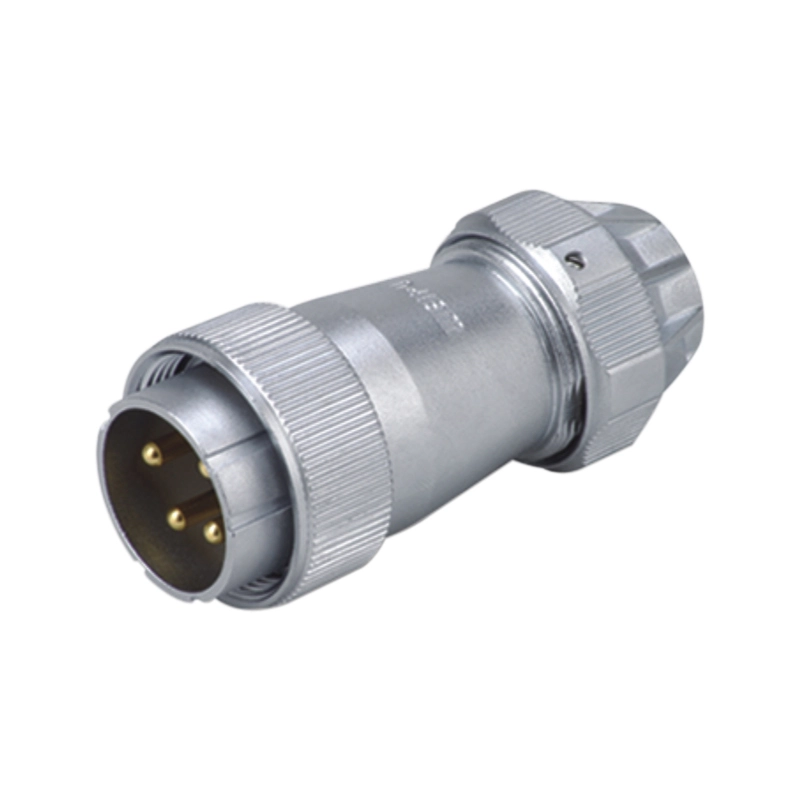
Weipu WF Series Industrial Threaded Connectors with IP67 Protection
WEIPU WF Series Industrial Threaded Connectors offer robust IP67 protection, ensuring reliable performance in harsh environments. Designed for secure, waterproof connections, these IP67 connectors are ideal for industrial applications requiring durability and stability. Trust WEIPU for quality and safety.
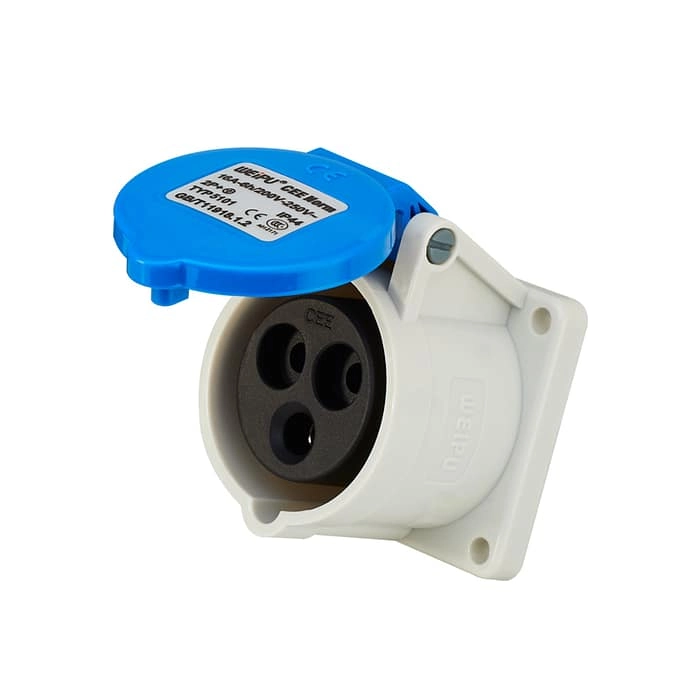
16A 3PIN Panel mount socket TYP5101-IP44
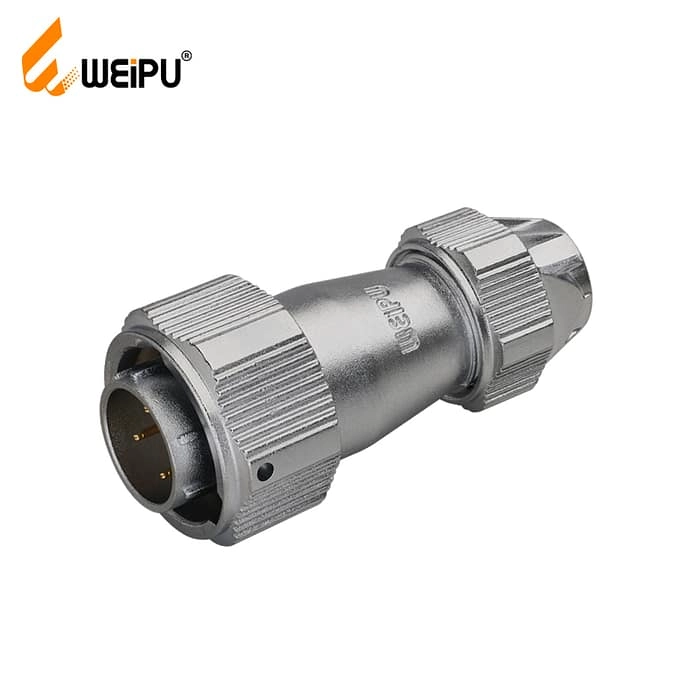
WEIPU WY-TE Series Waterproof Electrical Plug
With metal clamping-nut IP67, Threaded, Zinc alloy with chrome plating, PPS
WEIPU WY-TE IP67 circular connectors are waterproof electrical plugs with metal clamping-nut, which are durable, safe and easy to assemble with your all devices.With the metal clamping-nut and threaded design, these waterproof electrical plugs ensure high security and super stable connection. It’s an ideal waterproof connector for your applications.
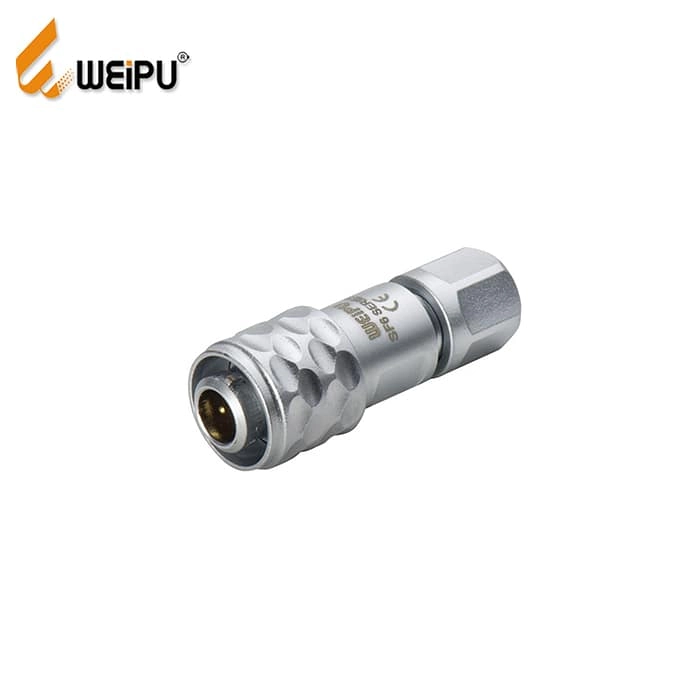
SF610B/P SF610B/S Cable connector IP67
Mate with SF611B, SF612B, SF615B
Get in Touch
Request Related Resources about Industrial Connections & Solutions
If you require technical details, product guides, or specific recommendations from a premier connector manufacturing corporation, please send us your request. We provide expert support for custom electrical connectors, offering OEM/ODM customization and dedicated distributor cooperation assistance.
Weipu Building, No. 111, Baihua Road, Liwan District, Guangzhou, Guangdong China
© 2026 WEIPU. All Rights Reserved.
Whatsapp: +8618102298073
WEIPU
WEIPU
WEIPU
WEIPU