
Connector Supplier Alternatives: Qualifying a Second Source
Follow us now:
- Quick Answer
- What a Second Source Means on a Drawing
- Alternate Supplier and Alternate Part Are Not the Same
- Why Brand-Specified Drawings Block Substitution
- Where "or Equal" Language Still Needs Evidence
- The Form, Fit and Function Screen
- Test Evidence That Cannot Be Waived
- How Is Ingress Protection Re-Tested?
- What Do Crimp and Contact Resistance Records Show?
- Documents a Second Source Must Supply
- Why the Scope Text Matters More Than the Logo
- Two Substitution Cases: Power Inlet and Servo Interface
- What Changes Between a CEE Inlet and an M23 Interface
- How Long Does Qualification Take?
- The Costs Nobody Budgets For
- When Is a Second Source the Wrong Answer?
- A Second-Source Checklist for Buyers
- How WEIPU Fits an Evaluation
- Conclusion
- Frequently Asked Questions
Quick Answer
Choosing between connector supplier alternatives starts with form, fit and function: same interface dimensions, same keying and coupling, same panel cutout. Then the candidate has to be proven with a dimensional report, an IP test to IEC 60529, crimp pull-out data to IEC 60352-2 and a first article inspection against the drawing.
Plan 8 to 12 weeks for a clean substitution, and keep the original part approved until the new one has run through a pilot build.
What a Second Source Means on a Drawing
A second source is a supplier that can deliver a part to the same drawing, not a part that looks similar in a catalogue. Buying teams use the phrase for two different situations, and the qualification work differs sharply between them.
In the first, the drawing names a manufacturer and a part number, and the buyer wants an interchangeable part from another factory. In the second, the drawing describes the interface and the performance, and any qualified supplier may quote. That second route follows the same logic as matching connector design to application requirements, which is why it costs less to run: the requirement is written down and can be measured.
Alternate Supplier and Alternate Part Are Not the Same
An alternate supplier builds the same part number to the same drawing and process. An alternate part is a different design that claims to fit the same socket.
Alternate suppliers are easier to approve, because the drawing does not change and the panel, harness and test fixture stay valid. Alternate parts need an engineering review: a different coupling nut, contact geometry or seal compound can change insertion force, mating depth and IP performance even when the catalogue interface looks identical.
Why Brand-Specified Drawings Block Substitution
Many OEM drawings list a brand and a part number as the only acceptable item. That clause is usually added after a field failure, so it carries history that a new supplier cannot see.
Under such a clause, a substitute needs written agreement from the drawing owner, not only a purchasing decision. Buyers who skip that step can see the part rejected at goods-in even when it works, because the inspector checks against the drawing rather than against the machine.
Where "or Equal" Language Still Needs Evidence
"Or equal" moves the judgement to the buyer, and auditors expect that judgement to be recorded. A one-line email approving a substitute is thin evidence if the part fails a year later.
A defensible file holds the comparison table, the test reports, the sample approval record and the name of the engineer who signed. Where the same interface appears on several drawings, approve it once and cite the approval number on each drawing instead of rebuilding the file.
The same applies when a drawing names a large brand such as TE Connectivity as the reference part. The brand sets the reference for the interface, not a licence to skip measurement, and the qualification evidence has to be produced by whichever supplier is proposed. Brand names belong to their owners and are used here only to describe a sourcing situation.
The Form, Fit and Function Screen
Screen connector supplier alternatives on three gates before spending money in a laboratory. Most rejections happen here, and each early rejection frees a test slot for a part that deserves one.
- Form: body diameter, flange footprint, panel cutout, thread pitch, keyway position and depth behind the panel.
- Fit: coupling thread or bayonet, insertion and withdrawal force, contact count and contact size, cable gland entry.
- Function: rated current and voltage, IP class, temperature range, plating, seal elastomer and shielding continuity.
Measure the sample, not the catalogue drawing. A 0.2 mm difference in cutout diameter is enough to cut a seal ring or leave a gap under a flange gasket, and housing and seal material choice decides how that joint behaves after two years outdoors.
| Check | What to compare | Typical drawing value | Failure if missed |
|---|---|---|---|
| Panel cutout | Hole diameter and position | ±0.2 mm | Seal ring cut, or gap under gasket |
| Coupling thread | Thread callout and lead-in | Per drawing | Plug does not reach full lock |
| Contact arrangement | Count, size and spacing | Per drawing | Crimp tooling mismatch |
| Keyway | Key position and width | Per drawing | Wrong circuit energised |
| Rear depth | Length behind the panel | Per drawing | Interference with DIN rail |
Test Evidence That Cannot Be Waived
Three test families carry most of the transfer risk: ingress protection, termination quality and electrical margin, which is where current rating and heat enter the qualification file.
How Is Ingress Protection Re-Tested?
IP ratings are type tests, not batch tests, so a result from one production line does not transfer automatically to another. IEC 60529 defines the methods: IPX7 means 30 minutes at 1 m depth, and IPX9K adds water at 80 °C and 80 to 100 bar from four angles, for 30 s at each angle. The practical difference between IP67, IP68 and IP69K for application selection decides which of those tests the application actually needs.
Ask which samples were tested, how many, and whether the test ran in the assembled state with the gland fitted. A receptacle tested bare can pass while the field assembly leaks.
What Do Crimp and Contact Resistance Records Show?
IEC 60352-2 sets the crimp requirements, including a minimum tensile pull-out value for each conductor cross-section and a resistance limit measured against a reference length of wire. A 0.5 mm² conductor needs a different crimp height from a 2.5 mm² conductor, and one applicator cannot serve both without a die change.
Ask for pull-out records per cross-section and a contact resistance sample against the incumbent. Signal contacts commonly sit in the low mΩ range; a value several times higher points to plating thickness or crimp height errors.
The same question applies to screw, crimp and cage clamp inserts, because the termination method fixes the tooling, the inspection record and the rework path. A supplier change that also changes the termination is a larger approval than a like-for-like swap.
Qualification does not end at the first approved delivery. Every subsequent batch should pass the goods-in screening routine for counterfeit connectors, so the second source keeps proving itself after the paperwork is signed.
Documents a Second Source Must Supply
The document set is the part of a substitution that survives staff changes. Request it before the sample, because a supplier who cannot produce it now will not produce it after the order either.
- Drawing with revision letter and the exact part number quoted.
- First article inspection report with balloon numbers against every drawing characteristic, laid out to AS9102 where the customer follows aerospace practice.
- Material declarations for RoHS and REACH SVHC, including housing polymer and seal elastomer grades.
- IP, temperature and salt spray reports naming the laboratory, the sample size and the test standard.
- Quality certificate with the scope text, not only a logo.
- A written change notification commitment, with a notice period and a named contact.
Why the Scope Text Matters More Than the Logo
An ISO 9001 certificate covers the activities named in its scope, so check whether the scope lists the product family and the site that will ship. A certificate issued to a trading office says nothing about the plant behind it.
For automotive programmes, IATF 16949 applies to the manufacturing site and PPAP submissions follow the AIAG manual. Put the submission level in the purchase order so both sides know whether a full dimensional, material and performance package is expected.
Two Substitution Cases: Power Inlet and Servo Interface
The same method produces different work depending on the interface. Two cases cover most of what buyers meet in industrial equipment.
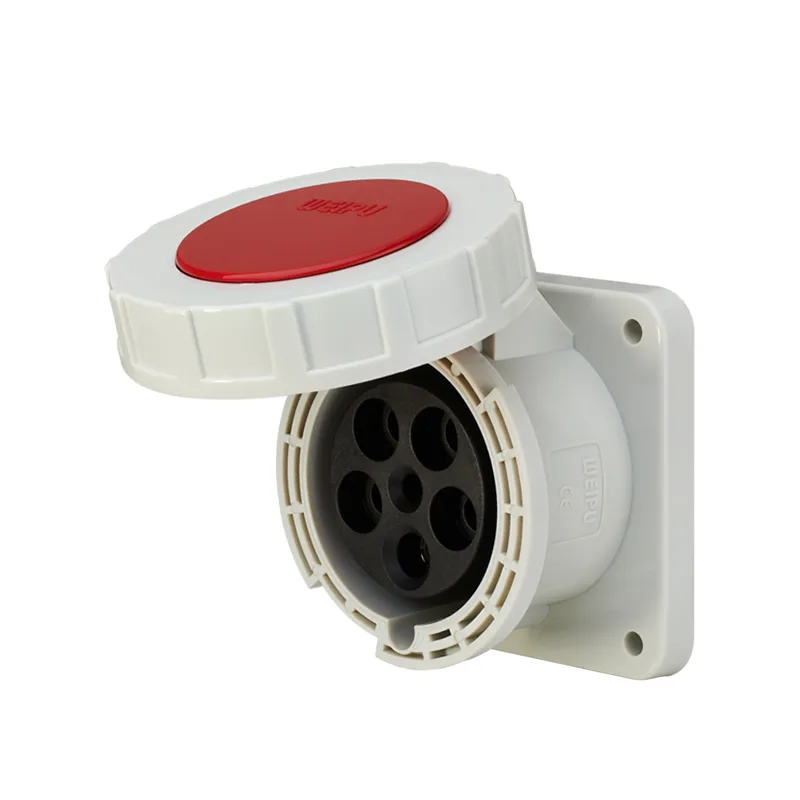
A CEE power inlet to IEC 60309 is a large, standards-defined body with fixed pin positions and a colour code tied to voltage. The standard covers ratings from 16 A to 125 A, so substitution is mostly a question of flange footprint, lid geometry and terminal access, because the interface itself is fixed.
What Changes Between a CEE Inlet and an M23 Interface
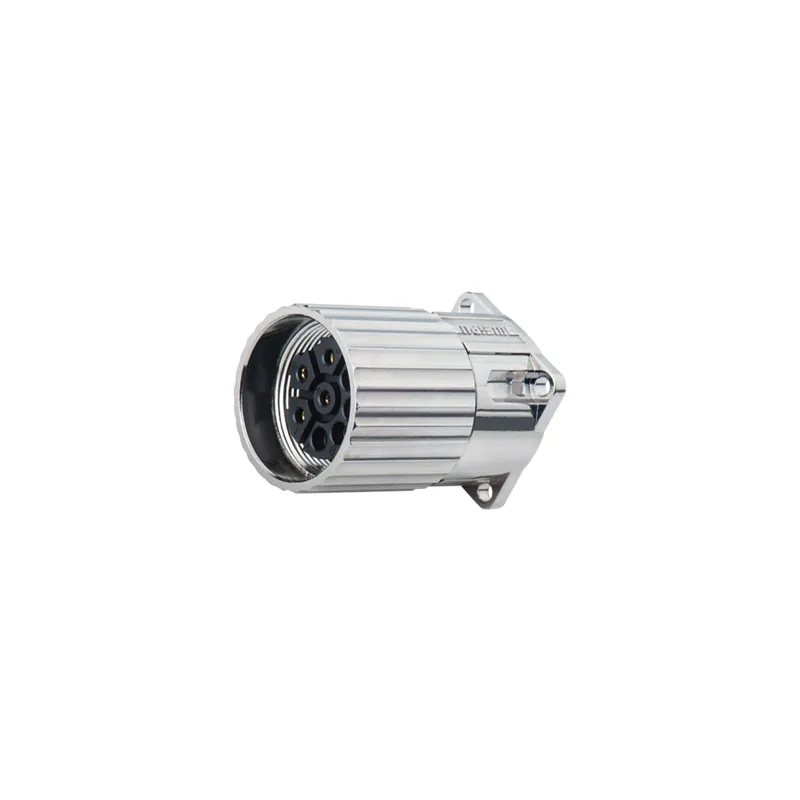
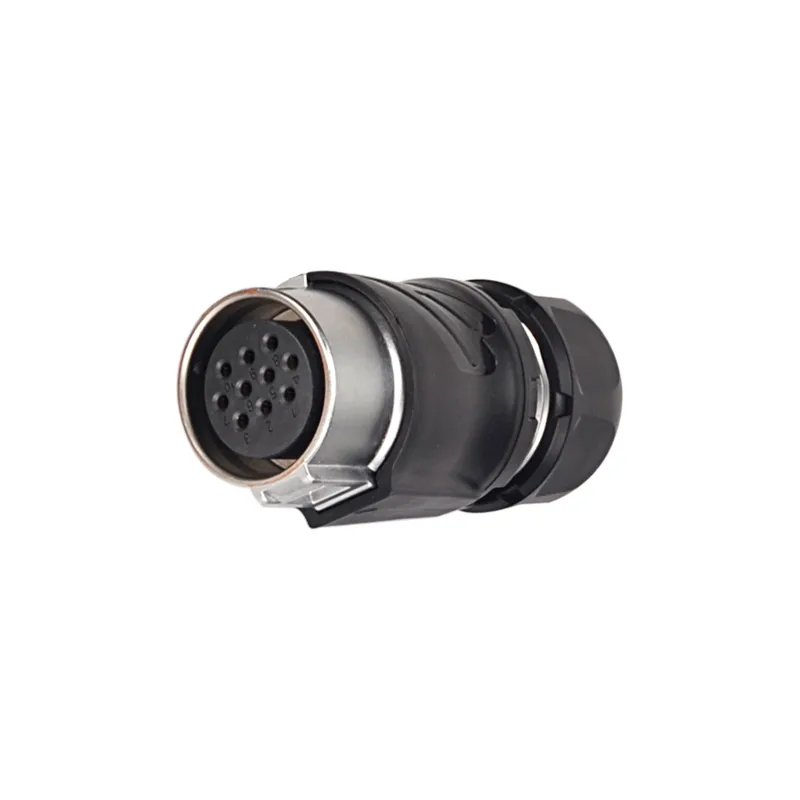
An M23 servo interface carries more variation. IEC 61076-2-106 describes the family, but contact arrangement, shielding and keying still differ between suppliers, so the comparison is made contact by contact and shield termination by shield termination. A square-flange M23 power receptacle with the right pin count is only the start, because the coupling and locking mechanism has to hold the same vibration and the same torque ripple.
On the power inlet, a dimensional check and an IP test usually settle the case. On the servo interface, add shielding effectiveness and a vibration check, because a loose shield or a coupling that backs off under torque ripple fails in the field rather than in the laboratory.
How Long Does Qualification Take?
A clean substitution of an existing interface usually runs 8 to 12 weeks. Sample lead time, laboratory queue and the customer's internal approval route drive the schedule more than the connector does.
| Phase | Duration | Output |
|---|---|---|
| Drawing comparison | 1 to 2 weeks | Difference list signed by design |
| Sample build | 2 to 4 weeks | 10 to 30 pieces from production tooling |
| Dimensional and FAI | 1 to 2 weeks | Ballooned inspection report |
| Environmental and electrical tests | 3 to 6 weeks | IP, thermal cycling and salt spray records |
| Pilot build | 2 to 4 weeks | Yield data and field feedback |
Salt spray is often the long pole. A 480 h neutral salt spray run to ISO 9227 consumes 20 working days of chamber time before the report is written, which is why test slots are booked before the samples arrive.
The Costs Nobody Budgets For
Piece price is the smallest line in a substitution budget. The larger costs sit in tooling, re-approval and the stock bridge between two supply chains.
- New crimp tooling and die sets, sometimes a second applicator for the harness house.
- Panel rework when the flange footprint or cutout moves by even 1 mm.
- Agency re-listing when the connector carries an approval used by the end product.
- Dual inventory during the overlap, which ties up cash for 4 to 8 weeks.
- Engineering time for FAI review, pilot support and operator retraining.
A substitution that saves 10 % on piece price can lose that saving in one quarter if the panel has to be re-punched. Run the calculation with rework included, then compare it with the cost of negotiating with the incumbent.
When Is a Second Source the Wrong Answer?
Some parts should stay single-sourced. Very low annual volume rarely justifies the qualification cost, and a safety-critical interface inside an approved agency file is a poor candidate for an unproven substitute.
Negotiate a supply agreement instead: a stock buffer, a change notification clause and a documented second production site inside the same supplier. That delivers most of the continuity benefit without touching the approval file.
A second source also fails when the requirement is not written down. If the drawing names only a brand, the first task is to describe the interface and the performance, then qualify against that description.
A Second-Source Checklist for Buyers
Use this checklist before the first sample order. Every line is evidence, not an intention.
- Drawing revision and part number confirmed in writing.
- Form, fit and function comparison table signed by design.
- Cutout, thread and keyway measured on the sample.
- IP report covering the assembled state with gland and mating plug.
- Crimp pull-out records per cross-section, with the tooling list.
- Contact resistance sample measured against the incumbent part.
- FAI report with balloon numbers and material certificates.
- Approval route agreed: who signs, on what evidence, by which date.
Keep the checklist with the drawing pack. The next engineer to inherit the part will need it more than the purchase order.
How WEIPU Fits an Evaluation
WEIPU has built circular and industrial connectors since 1996. The series most often evaluated as a second source are the M23 range for servo and drive interfaces, the WK push-pull range for IP67 and IP68 equipment connections, and the TYP range for IEC 60309 power inlets.
A useful evaluation starts from the drawing and the operating conditions, not from a catalogue page. Our engineers can compare an existing interface with the closest series and flag differences in flange footprint, contact arrangement and seal compound. A proposed part may be suitable for evaluation, but the specific part number, its approvals and its test records should be verified against the datasheet before release to production.
Conclusion
Connector supplier alternatives pay off only when they are documented substitutions, not cheaper lines on a purchase order. The work is a comparison table, a test set and a signature, and on a clean interface it takes 8 to 12 weeks.
Start from the drawing, screen form, fit and function before any laboratory time, and keep the incumbent part approved until the pilot build closes. Buyers who follow that order gain supply resilience without inheriting a field failure.
Frequently Asked Questions
What counts as a second-source connector?
A second source is a supplier able to build the same part number to the same drawing, with interchangeable form, fit and function. A different design that merely claims to fit the same socket is an alternate part, not an alternate source, and it needs an engineering review before any purchasing decision. The distinction decides how much testing and documentation the change requires.
Do I need to repeat the IP test for a new supplier?
Yes, in most cases. An IP rating is a type test tied to a design, a seal material and a production process, so a report from another plant does not transfer automatically. Re-test at least a small sample in the assembled state, with the cable gland fitted and the mating plug coupled, because that is the condition the equipment sees in service.
How many samples should be ordered for qualification?
Ten to thirty pieces from production tooling is a practical starting point. That allows dimensional inspection, destructive crimp pull-out tests, environmental testing and a pilot build without stripping the line. Samples from a pre-production or hand-built batch prove very little, so state in the order that the parts must come from the same process that will supply series production.
Can a connector with the same pinout be a drop-in replacement?
A matching pinout is only the first screen. Mating depth, keyway position, coupling thread, contact size, seal compound and rear clearance can all differ between two parts with the same circuit count. Measure the sample against the drawing, then check insertion force and IP performance, because a part that plugs in can still leak or overheat.
Which documents prove a connector supplier is qualified?
Ask for the drawing with its revision letter, a first article inspection report with balloon numbers, IP and temperature test reports, crimp pull-out records, material declarations for RoHS and REACH, and a quality certificate whose scope names the product family and the shipping site. A written change notification commitment closes the set.
How long does qualifying an alternative supplier take?
A clean substitution usually runs 8 to 12 weeks, driven by sample lead time, laboratory queues and the internal approval route. Salt spray testing alone can consume 20 working days for a 480 h run. Starting the drawing comparison and the test booking in parallel, rather than in sequence, removes several weeks from that schedule.
Inside Weipu Connector: Engineering Excellence for Seamless Connectivity

Pin Configuration Guide for Rectangular Inserts: From 6 Pin to 216 Pin

Application-Based Industrial Connector Selection: A Practical Decision Matrix
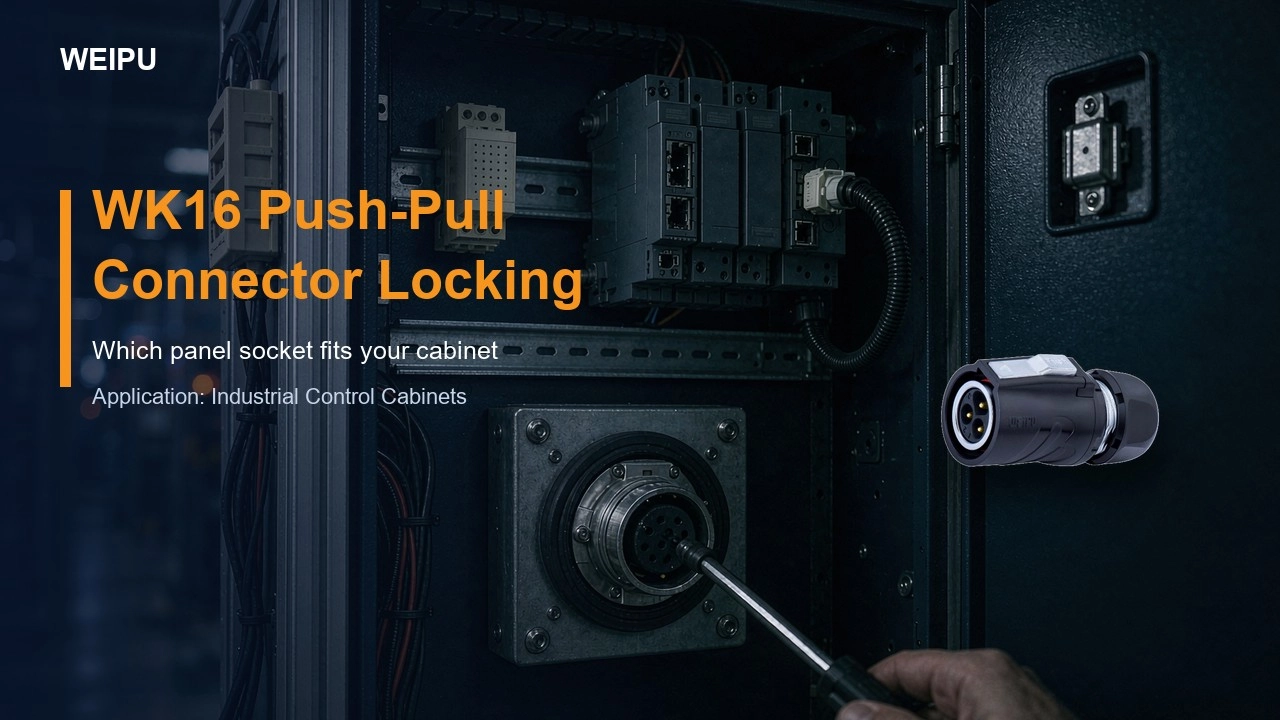
WK16 Connector Locking: Which Panel Socket Fits Your Cabinet?
Contacts
Sofia
WhatsApp/Phone
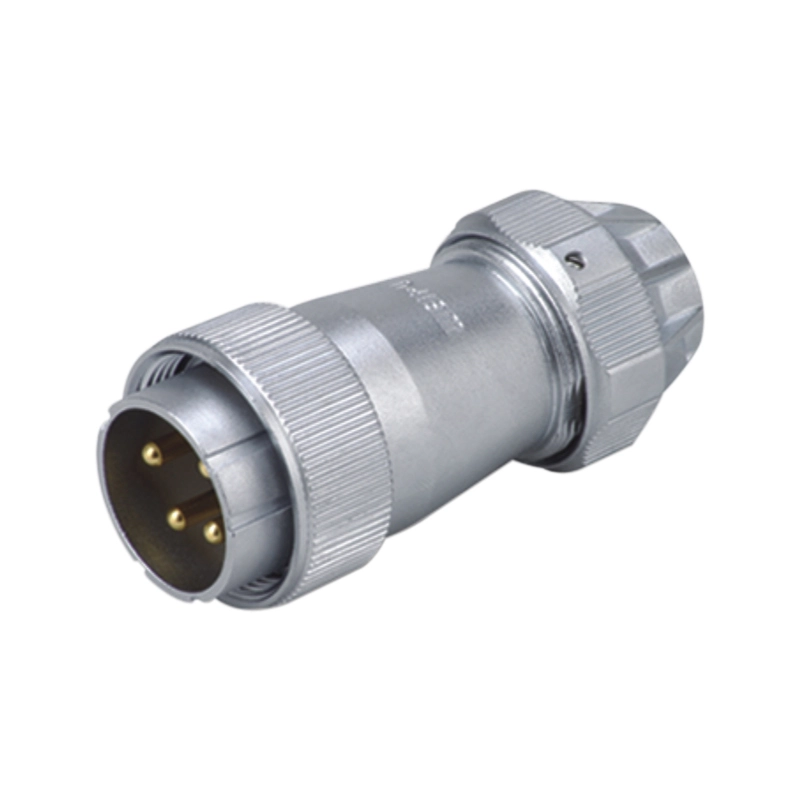
Weipu WF Series Industrial Threaded Connectors with IP67 Protection
WEIPU WF Series Industrial Threaded Connectors offer robust IP67 protection, ensuring reliable performance in harsh environments. Designed for secure, waterproof connections, these IP67 connectors are ideal for industrial applications requiring durability and stability. Trust WEIPU for quality and safety.
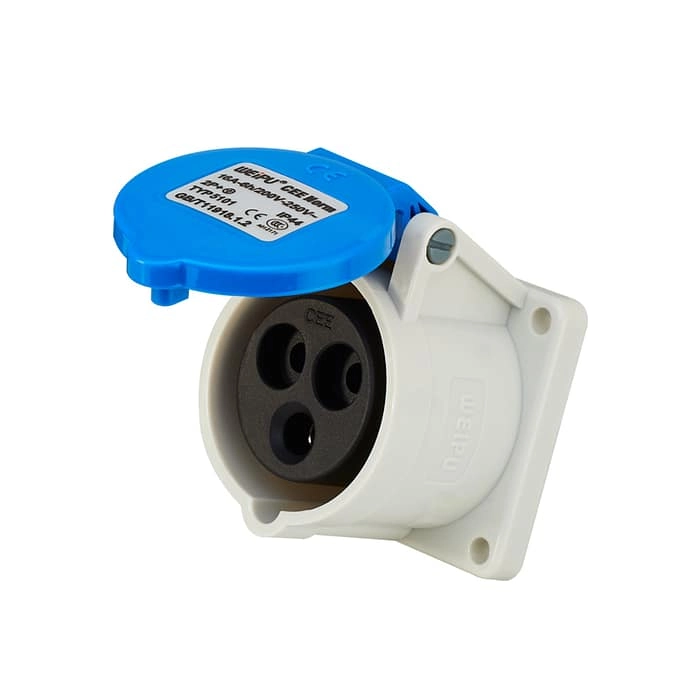
16A 3PIN Panel mount socket TYP5101-IP44
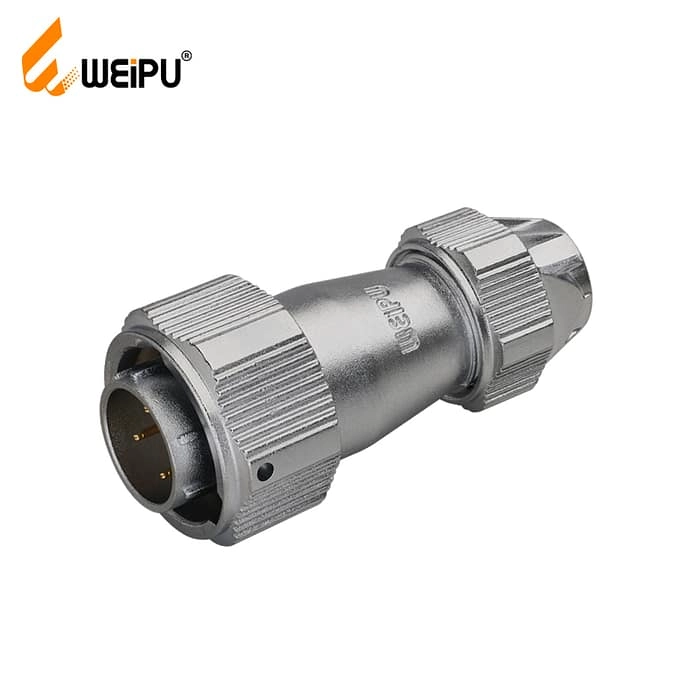
WEIPU WY-TE Series Waterproof Electrical Plug
With metal clamping-nut IP67, Threaded, Zinc alloy with chrome plating, PPS
WEIPU WY-TE IP67 circular connectors are waterproof electrical plugs with metal clamping-nut, which are durable, safe and easy to assemble with your all devices.With the metal clamping-nut and threaded design, these waterproof electrical plugs ensure high security and super stable connection. It’s an ideal waterproof connector for your applications.
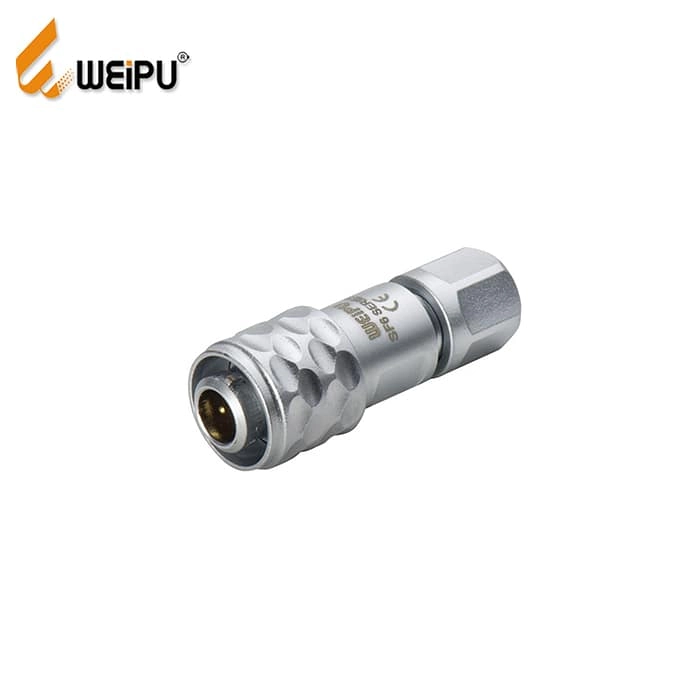
SF610B/P SF610B/S Cable connector IP67
Mate with SF611B, SF612B, SF615B
Get in Touch
Request Related Resources about Industrial Connections & Solutions
If you require technical details, product guides, or specific recommendations from a premier connector manufacturing corporation, please send us your request. We provide expert support for custom electrical connectors, offering OEM/ODM customization and dedicated distributor cooperation assistance.
Weipu Building, No. 111, Baihua Road, Liwan District, Guangzhou, Guangdong China
© 2026 WEIPU. All Rights Reserved.
Whatsapp: +8618102298073
WEIPU
WEIPU
WEIPU
WEIPU