
How Can Buyers Prevent Connector Failures and Supply Delays?
Follow us now:
Quick Answer
Preventing connector failures and supply delays requires early control of environmental ratings, electrical load, mating compatibility, materials, assembly method, and demand forecasts. A heavy duty wire connector should be selected against actual installation conditions rather than a catalog description alone. Weipu can review project requirements, while final solutions depend on application testing, production validation, and site conditions.
How Weipu Supports Projects
Weipu can be approached for project-specific connector discussions involving the intended application, required configuration, mating interface, cable dimensions, operating environment, and purchasing volume. Buyers should request confirmation of applicable product details instead of assuming that a standard configuration fits every installation.
Before commercial approval, confirm the connector series, contact arrangement, rated voltage and current, ingress protection requirement, cable range, locking method, applicable testing scope, packaging, MOQ, lead time, and quotation. Weipu should confirm these items for each project, because production planning and available options may vary by specification and order quantity.
Discuss Your Connector Sourcing Requirements
Send the target application, market, electrical ratings, cable size, connector configuration, environmental exposure, expected annual volume, delivery destination, and required compliance documents. These details support discussion of suitable options, sample procedures, inspection points, and an achievable supply schedule. Visit www.weipu-group.com or email salse01@weipu-group.com to discuss your project requirements.
Frequently Asked Questions
How should buyers match connector ratings to real installation conditions?
Begin with the complete operating profile rather than the nominal current shown in a product listing. Record continuous and peak current, voltage, ambient temperature, duty cycle, vibration, moisture, chemicals, ultraviolet exposure, cable construction, and available installation space. Derating may be necessary when several circuits are grouped, airflow is restricted, or temperature rises above the reference condition. Also distinguish the connector’s electrical rating from the cable’s ampacity and the terminal’s crimp capability. For outdoor or washdown installations, review the complete mated assembly and its sealing method; an IP rating under IEC 60529 applies to defined test conditions and does not remove the need to assess cable exits, mating procedures, or aging. Require a controlled drawing and written rating basis before approving the part.
Which documents reveal whether a connector supplier can meet demand?
Request a controlled datasheet, dimensional drawing, bill of materials or material declaration where available, terminal and crimp specifications, inspection plan, packaging details, and a capacity statement tied to the requested forecast. The useful question is not simply whether a supplier has stock today, but whether tooling, raw materials, assembly steps, inspection resources, and packaging can support repeat orders. Ask which components have extended procurement times and whether substitutions require written approval. A realistic production schedule should separate sample approval, material preparation, manufacturing, inspection, and dispatch. Buyers should also clarify revision control: an unrecorded change to plating, seal material, contact layout, or cable entry can create field incompatibility even when the commercial part number appears unchanged.
What causes intermittent failures after a connector passes initial testing?
Intermittent faults commonly arise from marginal crimp geometry, conductor damage, incomplete insertion, terminal back-out, inadequate strain relief, fretting under vibration, contamination, or moisture entering through an incorrectly prepared cable seal. A continuity check at rest may not reproduce failures caused by movement, thermal cycling, or contact resistance changes. Validation should therefore include representative cable preparation, mating cycles, pull or retention checks where applicable, vibration exposure, temperature conditioning, and post-test visual and electrical inspection. The assembly work instruction matters as much as the component: specify strip length, crimp tooling, conductor insertion, inspection criteria, and allowable rework. Do not treat a passing bench sample as proof that every production assembly will perform identically.
How can samples expose assembly and compatibility problems early?
Sample evaluation should use the intended cable, terminal tooling, backshell or gland arrangement, mounting hardware, and mating counterpart. Test both assembly ergonomics and functional performance. Record insertion force, locking engagement, keying, cable retention, seal compression, contact resistance where applicable, and clearance around the installed part. Repeat the process with operators who will perform production assembly, because a design that works only with unusually careful handling may create avoidable yield loss. Mark approved samples by revision and retain photographs or measurement records. If a mating component comes from another supplier, verify dimensional and electrical compatibility rather than relying on a similar product description. Early samples are most valuable when they represent the final installation, not an idealized laboratory setup.
Which commercial terms create hidden connector supply delays?
Unclear forecasts, unapproved substitutions, incomplete drawings, late artwork or labeling approval, uncertain packaging quantities, and purchase orders that conflict with the quotation frequently extend lead time. MOQ should be reviewed alongside forecast consumption, shelf-life considerations, and the cost of holding excess inventory. Buyers should define whether lead time starts at purchase-order receipt, drawing approval, deposit, or material release. Clarify partial shipment rules, inspection hold points, acceptable delivery variance, and the process for engineering changes. For recurring programs, a rolling forecast with a firm window can help distinguish planning demand from binding demand, but the supplier must confirm how it uses that information. The final purchase order should reference the exact revision, configuration, quantity, delivery point, and agreed inspection requirements.
When should buyers approve an alternate connector design?
Approve an alternate only after a documented equivalence review, not merely because the replacement has the same pin count or a similar appearance. Compare envelope dimensions, contact system, current and voltage ratings, temperature range, sealing architecture, keying, mating force, cable range, retention, materials, plating, tooling, and relevant qualification evidence. Check compatibility with the existing plug, receptacle, panel cutout, harness process, and service tools. A controlled sample build should precede a production release, with customer or engineering sign-off recorded against the affected drawing revision. If the change affects safety, EMC behavior, environmental sealing, or field serviceability, define additional validation before shipment. Maintain a qualified alternate list with trigger conditions, ownership, and reapproval requirements so substitution does not become an emergency decision.

Application-Based Industrial Connector Selection: A Practical Decision Matrix
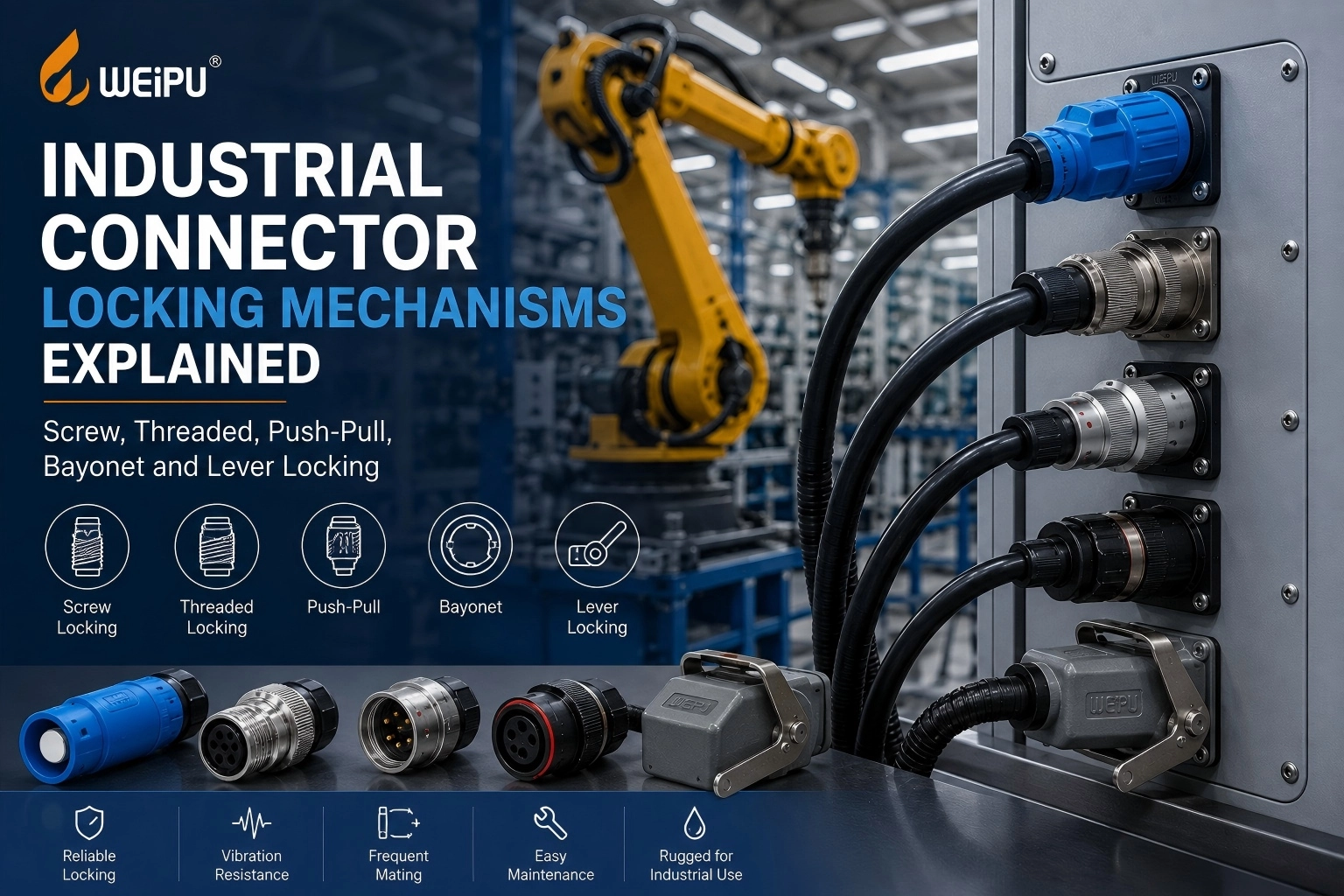
Industrial Connector Locking Mechanisms Explained: Screw, Push-Pull, Bayonet and Lever
Contact Resistance Budget: Socket Connector, Cable and Terminal
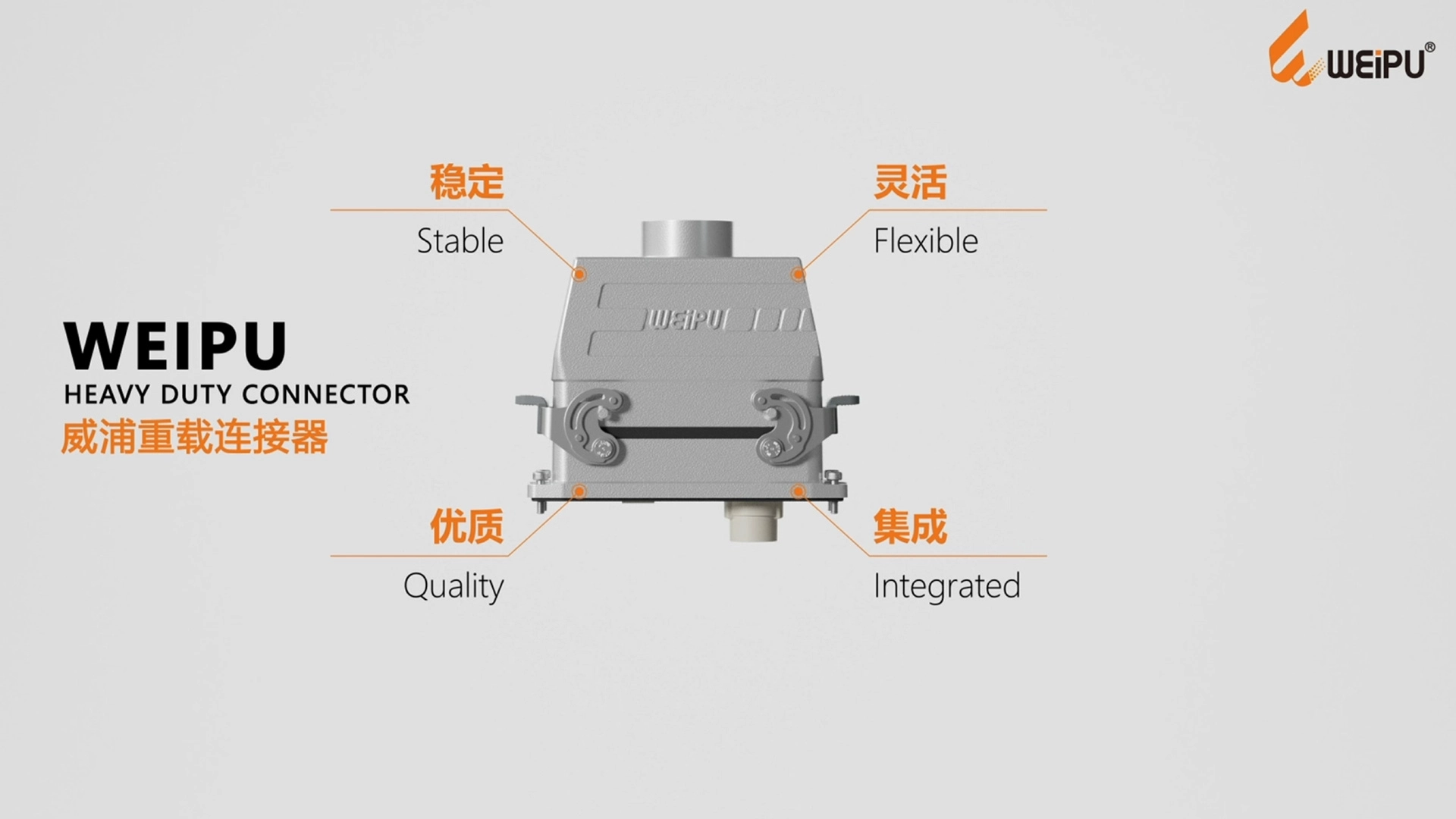
UNDERSTANDING THE KEY DIFFERENCES BETWEEN WEIPU HEAVY-DUTY CONNECTORS AND STANDARD CIRCULAR CONNECTORS
Contacts
Sofia
WhatsApp/Phone

Weipu WF Series Industrial Threaded Connectors with IP67 Protection
WEIPU WF Series Industrial Threaded Connectors offer robust IP67 protection, ensuring reliable performance in harsh environments. Designed for secure, waterproof connections, these IP67 connectors are ideal for industrial applications requiring durability and stability. Trust WEIPU for quality and safety.

16A 3PIN Panel mount socket TYP5101-IP44

WEIPU WY-TE Series Waterproof Electrical Plug
With metal clamping-nut IP67, Threaded, Zinc alloy with chrome plating, PPS
WEIPU WY-TE IP67 circular connectors are waterproof electrical plugs with metal clamping-nut, which are durable, safe and easy to assemble with your all devices.With the metal clamping-nut and threaded design, these waterproof electrical plugs ensure high security and super stable connection. It’s an ideal waterproof connector for your applications.

SF610B/P SF610B/S Cable connector IP67
Mate with SF611B, SF612B, SF615B
Get in Touch
Request Related Resources about Industrial Connections & Solutions
If you require technical details, product guides, or specific recommendations from a premier connector manufacturing corporation, please send us your request. We provide expert support for custom electrical connectors, offering OEM/ODM customization and dedicated distributor cooperation assistance.
Weipu Building, No. 111, Baihua Road, Liwan District, Guangzhou, Guangdong China
© 2026 WEIPU. All Rights Reserved.
Whatsapp: +8618102298073
WEIPU
WEIPU
WEIPU
WEIPU