
Industrial Connector Selection: How Engineers Match Connector Design to Application Requirements
This article explains how to translate application requirements into connector design requirements and how different WEIPU connector families can fit different industrial applications.
Follow us now:
- Industrial Connector Selection: How Engineers Match Connector Design to Application Requirements
- 1. Start With the Application, Not the Connector
- 2. Define What the Connection Needs to Carry
- Power
- Signal
- Data
- Hybrid
- 3. Translate Electrical Requirements Into Connector Requirements
- 4. Evaluate the Operating Environment
- 5. Consider Mechanical Conditions
- 6. Match the Locking Mechanism to the Application
- 7. Consider Installation and Maintenance
- 8. Build a Connector Requirement Profile
- 10. Example: Selecting Connectors for Solar and Outdoor Equipment
- 11. Example: Compact Industrial Automation Equipment
- 12. Example: Automation, Motion and Heavy-Duty Equipment
- 13. A Practical Industrial Connector Selection Workflow
- Step 1 — Define the Application
- Step 2 — Define the Electrical Function
- Step 3 — Define Electrical Requirements
- Step 4 — Define Environmental Conditions
- Step 5 — Define Mechanical Conditions
- Step 6 — Define the Locking Requirement
- Step 7 — Consider Installation and Maintenance
- Step 8 — Identify Suitable Connector Families
- 14. Connector Selection Is a Multi-Requirement Decision
- 15. From Engineering Requirements to WEIPU Connector Families
- 16. Use the Knowledge System Before Choosing the Product
- Conclusion
- FAQ
Industrial Connector Selection: How Engineers Match Connector Design to Application Requirements
Selecting an industrial connector is rarely a matter of choosing the highest current rating, highest IP rating, or most durable housing.
In real industrial applications, several requirements need to work together.
A connector may need to carry power, signal, or data while also operating under vibration, moisture, temperature changes, limited installation space, or frequent maintenance.
This means connector selection should start with the application and its operating conditions, rather than with a product model.
A practical engineering approach is:
Application → Electrical Requirements → Environment → Mechanical Conditions → Installation → Connector Design → Connector Family
This approach also helps engineers avoid a common problem: selecting a connector based on one specification while overlooking the conditions that determine its actual reliability.
This article explains how to translate application requirements into connector design requirements and how different WEIPU connector families can fit different industrial applications.
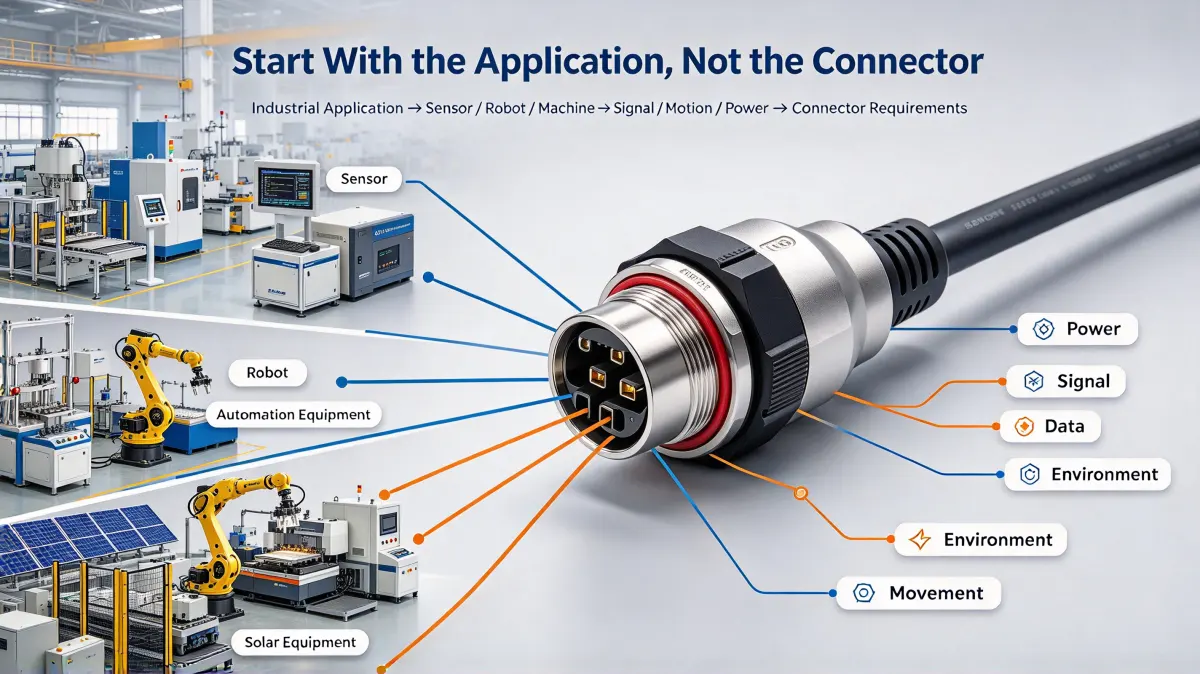
1. Start With the Application, Not the Connector
The first question should not be:
Which connector should I choose?
Instead, start with:
Where will the connector be used, and what role does it perform?
An industrial connector installed inside a control cabinet may have very different requirements from one installed on a moving machine, sensor, solar equipment, or outdoor electrical system.
Begin by identifying:
- What equipment is being connected?
- Where is the connector installed?
- Is the equipment stationary or moving?
- Does the connection carry power, signal, data, or a combination?
- What environmental conditions will it experience?
- How often will the connection be mated or serviced?
For example:
Control cabinet
may prioritize installation density and accessibility.
Industrial machinery
may require mechanical stability and environmental protection.
Sensors
may require compact dimensions, secure mating, and reliable signal transmission.
Solar and outdoor equipment
may require environmental protection, reliable cable connection, and long-term outdoor performance.
The application therefore defines the starting point for the entire selection process.
2. Define What the Connection Needs to Carry
Once the application is understood, determine what the connector actually needs to transmit.
Industrial connections generally fall into several categories:
Power
Power connections require appropriate current and voltage ratings, contact design, conductor size, and thermal performance.
Signal
Signal connections may place greater emphasis on contact quality, electrical stability, shielding, and reliable mating.
Data
Data connections require the appropriate interface and transmission characteristics for the intended communication system.
Hybrid
Some equipment needs more than one function within the same connection.
For example, an industrial machine may require:
Power + Signal
or:
Power + Data + Signal
In these cases, connector architecture becomes more important than simply selecting a connector based on current capacity.
The goal is to translate the application into a clear electrical requirement before considering a connector family.
3. Translate Electrical Requirements Into Connector Requirements
Electrical specifications are among the first technical parameters engineers normally evaluate.
However, the rated value alone does not determine whether a connector is appropriate.
Consider:
- Rated current
- Rated voltage
- Number of contacts
- Contact configuration
- Conductor size
- Signal or data requirements
- Contact material
- Operating temperature
For high-current applications, contact size and construction, conductor compatibility, thermal behavior, and connection quality all become important.
For signal applications, contact stability and electrical consistency may become more important.
For data applications, connector architecture, cable compatibility, shielding, termination, and installation quality need to be considered together.
This is why the engineering question should be:
What electrical conditions must the complete connection support?
rather than simply:
What is the connector's maximum rating?
4. Evaluate the Operating Environment
After defining the electrical requirements, examine where the connector will operate.
Industrial environments can expose connectors to:
- Water
- Dust
- Oil
- Humidity
- Temperature variation
- Chemicals
- Outdoor weather
- Cleaning processes
The connector housing, sealing system, materials, and cable entry all contribute to environmental performance.
For example, a connector installed inside a protected cabinet may face limited exposure to moisture.
A connector installed directly on machinery may experience dust, oil, vibration, and cleaning.
A connector used in solar equipment may operate outdoors for extended periods and therefore require appropriate environmental protection and material selection.
Environmental requirements should therefore be evaluated according to the actual installation conditions.
5. Consider Mechanical Conditions
Electrical compatibility is only one part of connector selection.
The connector also needs to remain mechanically secure under the conditions in which the equipment operates.
Important questions include:
- Is the equipment stationary?
- Is it exposed to vibration?
- Is there mechanical shock?
- Does the cable move?
- Is the connector frequently mated and unmated?
- Is the connector exposed to pulling or bending forces?
For example, a connector mounted on stationary equipment may have different mechanical requirements from one installed on a robot.
Similarly, a connection that is serviced frequently may benefit from a different locking mechanism from a connection intended for long-term installation.
Mechanical requirements may influence:
- Locking mechanism
- Housing structure
- Cable fixation
- Strain relief
- Connector orientation
- Mating method
The correct question is therefore not:
Which locking mechanism is strongest?
but:
Which locking mechanism matches the movement, vibration and maintenance conditions of the application?
6. Match the Locking Mechanism to the Application
Different locking mechanisms solve different engineering problems.
Common designs include:
- Screw locking
- Threaded locking
- Push-pull locking
- Bayonet locking
- Lever locking
A push-pull design can be useful when fast mating and compact installation are important.
A threaded connection may be appropriate where secure mechanical coupling is required for long-term installation.
A lever-locking system can be useful for heavy-duty equipment where a strong mechanical connection and straightforward operation are required.
The selection should consider:
Vibration + Mating Frequency + Installation Space + Maintenance
rather than choosing a locking system in isolation.
This is one reason connector selection cannot be reduced to a single specification.
7. Consider Installation and Maintenance
A connector may meet every electrical and environmental requirement and still be inconvenient to use if its installation method does not fit the equipment.
Engineers should consider:
- Available installation space
- Panel mounting requirements
- Cable routing
- Connector orientation
- Access for mating
- Maintenance frequency
- Replacement requirements
- Field installation conditions
For compact automation equipment, connector size can become an important factor.
For equipment requiring regular service, easy access and mating may be more important.
For permanent installations, mechanical stability and environmental protection may receive greater attention.
This creates an important connection between connector design and lifecycle requirements.
The connector is not only installed once.
It may be handled, serviced, disconnected, reconnected, and exposed to changing operating conditions throughout the equipment's lifecycle.
8. Build a Connector Requirement Profile
Before selecting a product, engineers can summarize the application using a simple requirement profile.
| Engineering Requirement | Key Question | Connector Characteristic |
| Application | Where will it be installed? | Connector type / configuration |
| Electrical | What must it carry? | Current / voltage / contacts |
| Environment | What will it be exposed to? | IP / housing / sealing |
| Mechanical | Will it move or vibrate? | Locking / housing / strain relief |
| Space | How much room is available? | Connector size / orientation |
| Maintenance | How often will it be serviced? | Mating method / accessibility |
| Cable | What cable is required? | Cable size / entry / termination |
| Reliability | What conditions must it survive? | Materials / contacts / mechanical design |
This profile creates a bridge between the application and the connector.
Instead of beginning with:
“Which WEIPU model should I buy?”
the engineer begins with:
“What does this connection actually need to do?”
Only then should the product family be considered.
10. Example: Selecting Connectors for Solar and Outdoor Equipment
Solar and renewable-energy equipment introduces another combination of requirements.
Connections may be exposed to:
- Outdoor environments
- Moisture
- Dust
- Temperature changes
- UV exposure
- Long-term operation
- Cable routing and maintenance requirements
In these applications, environmental protection and connection reliability become important parts of the overall system design.
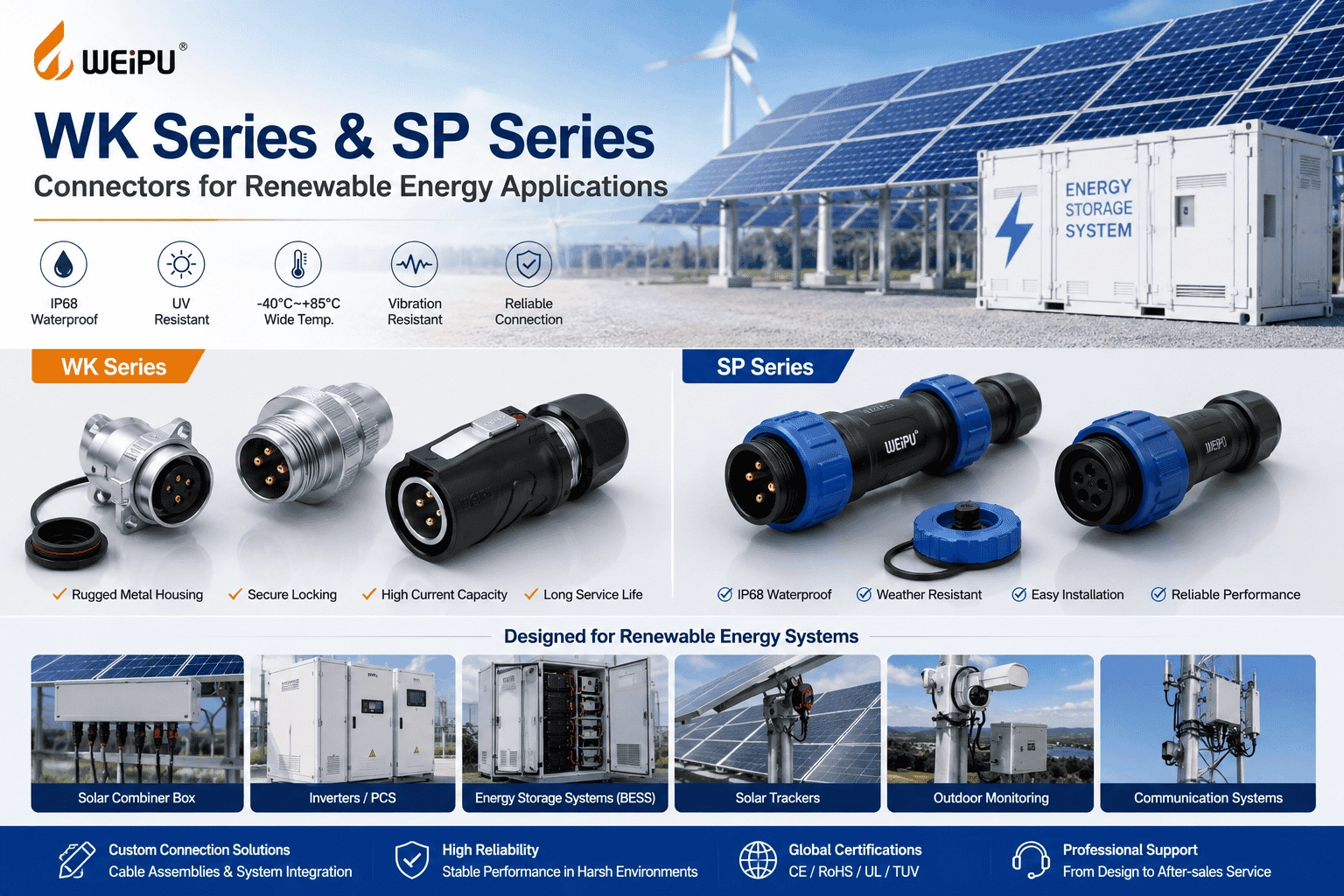
Depending on the electrical configuration and installation conditions, WEIPU WF/WK series solutions can be considered for sensor, solar, and related outdoor connection applications.
However, the connector should be evaluated together with:
- Cable construction
- Sealing
- Housing material
- Installation method
- Environmental exposure
- Electrical requirements
A connector that works well in a protected indoor environment should not automatically be assumed to be suitable for an outdoor solar installation.
The application environment needs to be part of the selection process from the beginning.
11. Example: Compact Industrial Automation Equipment
Compact automation equipment often has limited space for connectors and cable routing.
In this situation, engineers may need to balance:
Compact Size
with:
Secure Mating
and:
Environmental Protection
Push-pull connector designs can be useful where fast mating and limited installation space are important.
WEIPU SA and SF series can be considered for suitable compact industrial automation applications, depending on the required electrical and environmental configuration.
This does not mean that one connector family is universally suitable.
Instead, the selection should be based on the specific application requirements established earlier.
12. Example: Automation, Motion and Heavy-Duty Equipment
Larger industrial machines can introduce different requirements.
The connection may need to deal with:
- Higher power requirements
- Mechanical vibration
- Larger cables
- Frequent maintenance
- Machine movement
- Harsh operating environments
For automation and motion-related applications, M23 connector solutions can be evaluated where the electrical and mechanical requirements match the application.
For heavier industrial equipment, heavy-duty connector families such as HA24B may be considered where a robust connection architecture is required.
Again, the purpose of this mapping is not to identify a universal “best” connector.
It is to connect the engineering requirement to an appropriate connector family for further technical evaluation.
13. A Practical Industrial Connector Selection Workflow
The complete process can be summarized as follows:
Step 1 — Define the Application
Identify the equipment and connection location.
↓
Step 2 — Define the Electrical Function
Determine whether the connector carries:
Power / Signal / Data / Hybrid
↓
Step 3 — Define Electrical Requirements
Check:
Current / Voltage / Contacts / Cable
↓
Step 4 — Define Environmental Conditions
Check:
Water / Dust / Temperature / Chemicals / Outdoor Exposure
↓
Step 5 — Define Mechanical Conditions
Check:
Vibration / Shock / Movement / Cable Stress
↓
Step 6 — Define the Locking Requirement
Consider:
Screw / Threaded / Push-Pull / Bayonet / Lever
↓
Step 7 — Consider Installation and Maintenance
Check:
Space / Access / Mating Frequency / Cable Routing
↓
Step 8 — Identify Suitable Connector Families
Only after these requirements are defined should engineers compare specific connector families and product configurations.
This workflow reduces the risk of selecting a connector based on a single specification.
14. Connector Selection Is a Multi-Requirement Decision
A connector rarely fails because one specification was completely ignored.
More often, the challenge is that several requirements were considered separately rather than as one system.
For example:
A connector may have an appropriate current rating but an unsuitable locking method.
Another connector may have sufficient IP protection but not fit the available installation space.
A connector may provide the required signal connection but be poorly matched to vibration or repeated mating.
This is why industrial connector selection should be viewed as a multi-requirement engineering decision.
The goal is not to maximize every specification.
The goal is to find a connector configuration that provides an appropriate balance for the actual application.
15. From Engineering Requirements to WEIPU Connector Families
Once the application requirements are defined, they can be mapped to potential connector families.
| Application Requirement | Potential WEIPU Family |
|---|---|
| Compact industrial equipment | SA / SF |
| Push-pull industrial connection | SA / SF |
| Sensor and compact equipment applications | WF / WK |
| Solar and related outdoor applications | WF / WK |
| Industrial automation and motion | M23 |
| Power-oriented industrial applications | SP |
| Heavy industrial equipment | HA24B / Heavy Duty |
| Industrial Ethernet / data | Dedicated Ethernet configurations |
This table should be treated as an engineering starting point, not a universal product recommendation.
The final selection still depends on the specific product configuration, electrical requirements, cable, environmental conditions, mechanical conditions, and equipment interface.
For this reason, product pages should be used together with technical drawings, specifications, and application requirements.
16. Use the Knowledge System Before Choosing the Product
One advantage of a structured connector knowledge system is that engineers do not need to evaluate every parameter from scratch.
Different requirements can be explored through dedicated technical topics:
Connector Types
→ Understand Power / Signal / Data / Hybrid
Current
→ Evaluate high-current requirements
Locking
→ Match mechanical connection to application
Materials
→ Understand housing and contact material considerations
IP
→ Evaluate environmental protection
Reliability
→ Consider the complete lifecycle
Signal Integrity
→ Evaluate signal and data connection quality
EMI/EMC
→ Consider electromagnetic performance
Industrial Systems
→ Understand PLC, Machine Vision, Robotics and Industrial Ethernet requirements
The selection process then becomes:
Knowledge → Requirement → Design → Connector Family
rather than:
Product → Specification → Guess
This is the purpose of an engineering-focused connector selection framework.
Conclusion
Industrial connector selection should begin with the application rather than with a product name.
The same connector specification can mean very different things depending on where and how the connector is used.
A practical selection process should consider:
- Application
- Electrical function
- Current and voltage
- Signal or data requirements
- Environmental conditions
- Mechanical conditions
- Locking mechanism
- Installation space
- Cable requirements
- Maintenance frequency
- Lifecycle reliability
Once these requirements are understood, engineers can identify connector characteristics and then evaluate the appropriate connector families.
For different applications, this may lead to different WEIPU solutions, including SA, SF, SP, WF, WK, M23 and heavy-duty connector families.
The key is not to ask:
Which connector is the best?
Instead, ask:
Which connector design best matches the requirements of this application?
That shift—from product-first selection to requirement-based engineering—is the foundation of reliable industrial connectivity.
FAQ
What should engineers consider first when selecting an industrial connector?
Start with the application and installation environment. Identify what equipment is being connected, what the connector needs to carry, where it will be installed, and what environmental and mechanical conditions it will experience.
Should current rating be the first specification to check?
Current is important for power connections, but it should not be considered in isolation. Connector selection should also account for voltage, contact configuration, cable size, temperature, environment, mechanical conditions, and installation requirements.
Which WEIPU connectors can be used for sensor applications?
Depending on the specific electrical and mechanical requirements, WEIPU WF and WK series can be considered for sensor and compact industrial connection applications. The exact model should be selected according to the equipment interface and application conditions.
Can WF/WK connectors be used in solar applications?
WF/WK solutions can be considered for suitable solar and outdoor connection applications, subject to the specific product configuration and environmental, electrical and mechanical requirements of the installation.
Why should connector selection consider maintenance?
A connector may be mated and unmated multiple times during equipment servicing. Installation space, accessibility, locking mechanism and mating method can therefore influence long-term usability and maintenance efficiency.
All About the Greater Bay Area Industrial Expo – DMP
CEE Industrial Plugs and Sockets Explained: IEC 60309 Ratings, Pin Configurations and Applications
Weipu Connector Innovations: Pioneering Solutions for Modern Communication
Industrial Connectors for Renewable Energy and Energy Storage Systems
Contacts
Sofia
WhatsApp/Phone
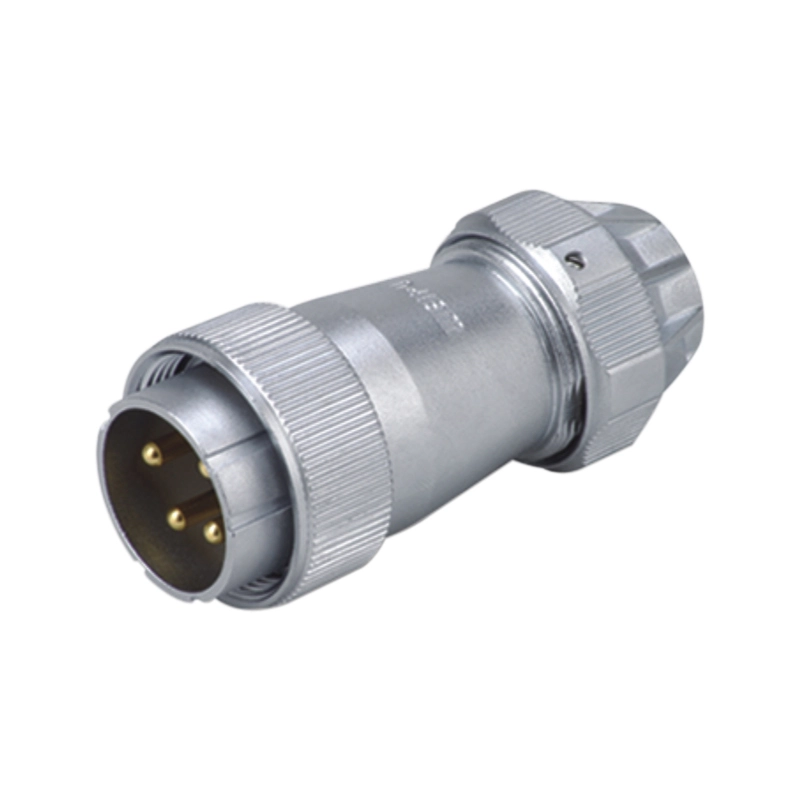
Weipu WF Series Industrial Threaded Connectors with IP67 Protection
WEIPU WF Series Industrial Threaded Connectors offer robust IP67 protection, ensuring reliable performance in harsh environments. Designed for secure, waterproof connections, these IP67 connectors are ideal for industrial applications requiring durability and stability. Trust WEIPU for quality and safety.
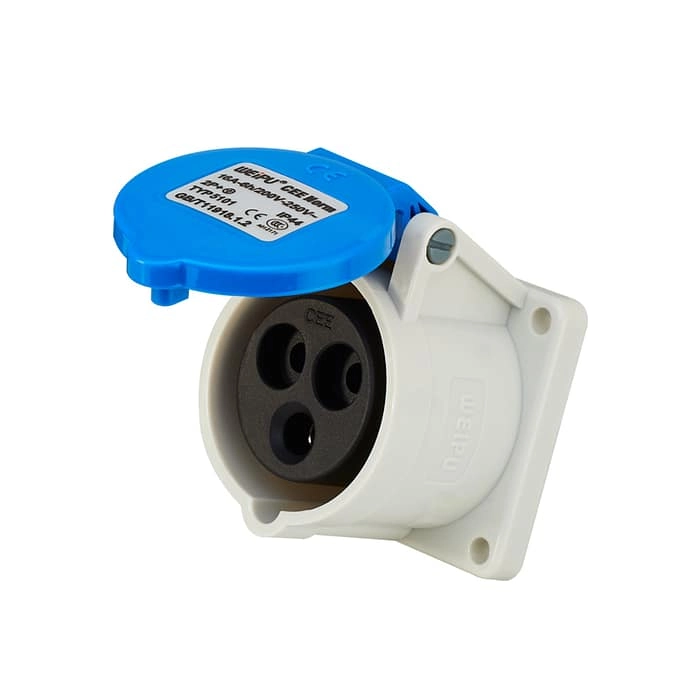
16A 3PIN Panel mount socket TYP5101-IP44
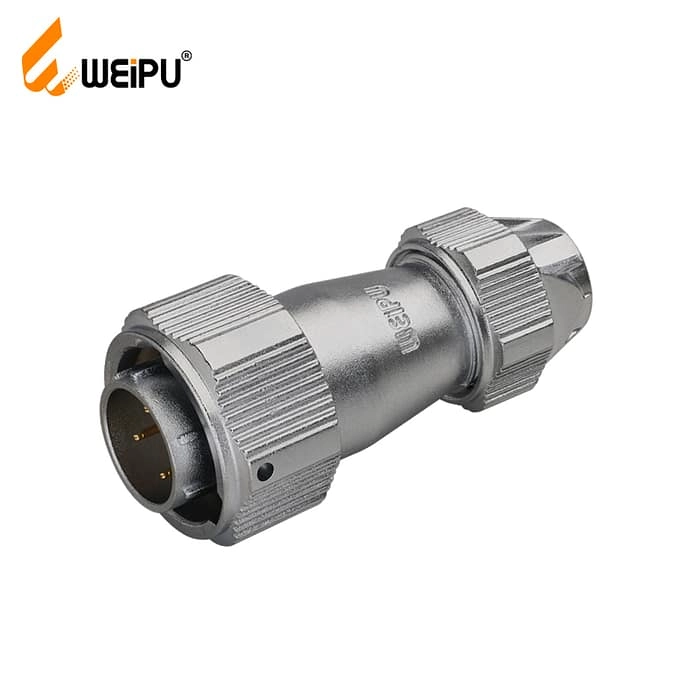
WEIPU WY-TE Series Waterproof Electrical Plug
With metal clamping-nut IP67, Threaded, Zinc alloy with chrome plating, PPS
WEIPU WY-TE IP67 circular connectors are waterproof electrical plugs with metal clamping-nut, which are durable, safe and easy to assemble with your all devices.With the metal clamping-nut and threaded design, these waterproof electrical plugs ensure high security and super stable connection. It’s an ideal waterproof connector for your applications.
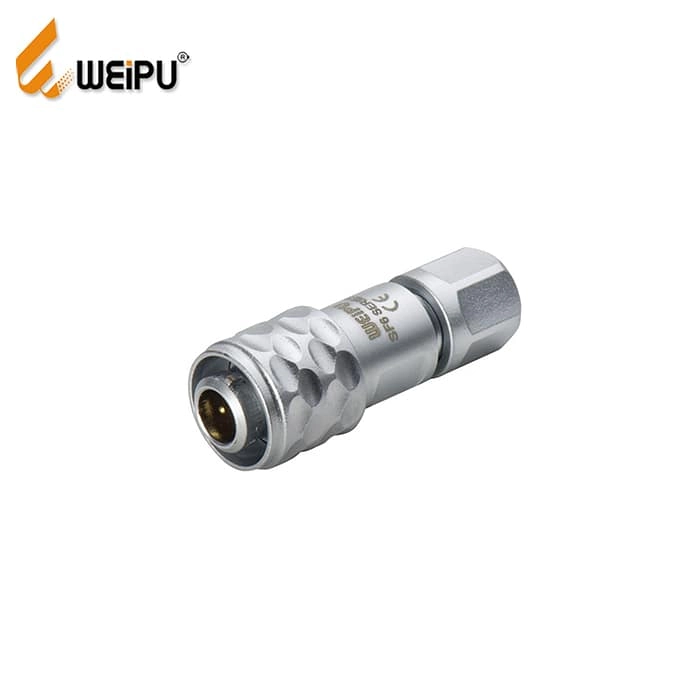
SF610B/P SF610B/S Cable connector IP67
Mate with SF611B, SF612B, SF615B
Get in Touch
Request Related Resources about Industrial Connections & Solutions
If you require technical details, product guides, or specific recommendations from a premier connector manufacturing corporation, please send us your request. We provide expert support for custom electrical connectors, offering OEM/ODM customization and dedicated distributor cooperation assistance.
Weipu Building, No. 111, Baihua Road, Liwan District, Guangzhou, Guangdong China
© 2026 WEIPU. All Rights Reserved.
Whatsapp: +8618102298073
WEIPU
WEIPU
WEIPU
WEIPU