




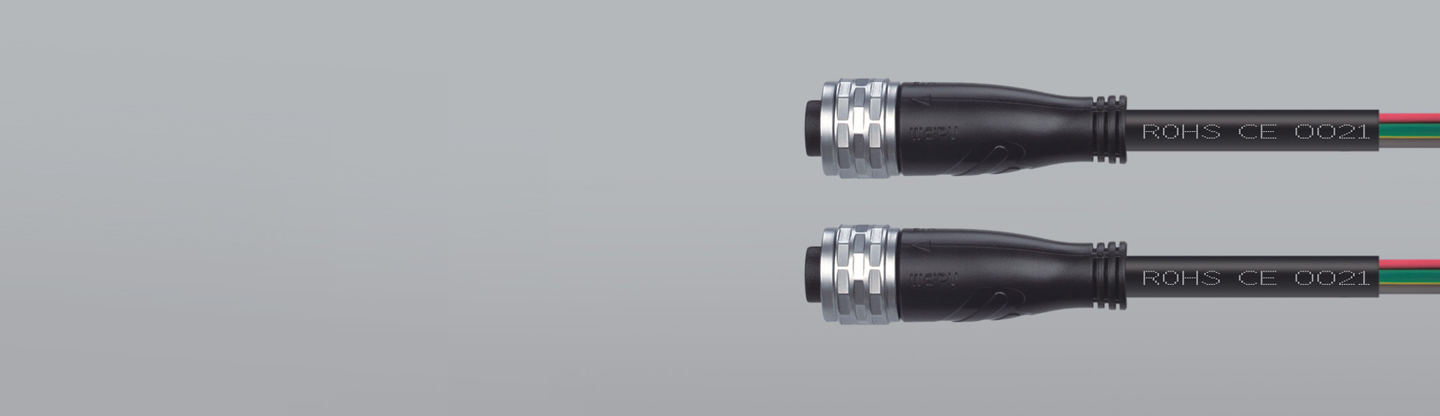


Industrial Connectors for PLC Systems: Power, Signal, Data and Reliability
Learn how industrial connectors support PLC systems through reliable power, signal and data connections. Explore key factors including locking, IP protection, shielding, signal integrity and reliability.
Follow us now:
- Industrial Connectors for PLC Systems: Power, Signal, Data and Reliability
- 1. What Does a Connector Do in a PLC System?
- 2. PLC Power Connections: Stable Power Starts With the Physical Connection
- 3. PLC Signal Connections: Reliability Matters Beyond the PLC Input
- Contact quality
- Contact configuration
- Locking mechanism
- Environmental protection
- Shielding
- 4. PLC Data Connections Are Different From Conventional Signal Connections
- 5. One PLC System Can Need Several Connector Types
- 6. What Connector Characteristics Matter Most in PLC Applications?
- 6.1 Contact Configuration
- 6.2 Locking Mechanism
- 6.3 IP Protection
- 7. Shielding and Grounding Become Important in Electrically Noisy Systems
- 8. Mechanical Reliability Is Part of PLC Connectivity
- 9. Control Cabinet vs. Machine-Level PLC Connections
- Inside the control cabinet
- On the machine
- Decentralized I/O
- 10. How Should Engineers Approach PLC Connector Selection?
- Step 1: Define the connection function
- Step 2: Define electrical requirements
- Step 3: Define the environment
- Step 4: Define mechanical requirements
- Step 5: Evaluate signal and EMC requirements
- Step 6: Consider the complete connection system
- 11. WEIPU Industrial Connector Solutions for PLC Systems
- SA Series — Compact Power and Signal Connections
- SF Series — Compact In-Line Connections
- M23 Series — Industrial Signal and Power Connectivity
- 12. PLC Connector Selection Checklist
- Electrical
- Signal and EMC
- Mechanical
- Environment
- Maintenance
- Conclusion
- FAQ
Industrial Connectors for PLC Systems: Power, Signal, Data and Reliability
A PLC system does much more than execute control logic.
It receives signals from sensors, sends commands to actuators, exchanges data with other automation devices, and depends on stable power and communication connections throughout the machine.
That means the physical connection between a PLC, I/O modules, field devices, and industrial networks is an important part of system reliability.
Industrial connectors for PLC systems are therefore not simply wiring accessories. They are part of the physical infrastructure that connects power, signals, data, and field devices.
Modern automation architectures can place I/O either inside a control cabinet or closer to the machine in decentralized installations. Siemens, for example, describes both centralized control-cabinet installations and decentralized IP65/IP67 automation concepts.
This article looks at PLC connectivity from the connector engineering perspective: what needs to be connected, what the connector needs to provide, and how engineers can evaluate connector requirements without treating every PLC connection as the same.
1. What Does a Connector Do in a PLC System?
A PLC system typically includes several physical connection paths:
PLC → I/O → Sensors / Actuators
PLC → Industrial Network → Other Controllers / Devices
Power Supply → PLC / I/O / Field Equipment
The connector used at each point may have different electrical, mechanical and environmental requirements.
For example:
- A sensor connection may primarily require reliable signal transmission.
- An actuator connection may require both signal and power capability.
- A PLC power connection must support the required electrical load.
- An industrial Ethernet connection must maintain appropriate data transmission performance.
- A connection located outside the control cabinet may require stronger environmental protection than one inside a protected enclosure.
Industrial automation connector portfolios therefore commonly distinguish between power, signal and data connections rather than treating them as one category. Phoenix Contact, for example, groups industrial circular connectors around signal, data and power transmission and offers different connector formats for these functions.
The key point is simple:
The connector should be selected according to the function and environment of the connection, not simply according to the fact that the system contains a PLC.
2. PLC Power Connections: Stable Power Starts With the Physical Connection
Power connections in a PLC system may supply:
- PLC components
- I/O modules
- Sensors
- Actuators
- Distributed I/O
- Auxiliary industrial equipment
The connector must therefore match the electrical requirements of the circuit.
Important parameters include:
- Rated current
- Rated voltage
- Number of contacts
- Contact arrangement
- Wire size
- Termination method
- Temperature conditions
- Environmental protection
A connector with insufficient current capacity can introduce excessive electrical resistance and heat. Conversely, using an unnecessarily large connector may increase installation space and cost.
For this reason, connector selection should begin with the electrical requirements of the circuit rather than the PLC model itself.
For lower-power control and signal connections, compact circular connectors can provide a practical solution. WEIPU's SA Series, for example, includes multiple contact configurations and termination options, with IP67 protection and push-pull coupling.
3. PLC Signal Connections: Reliability Matters Beyond the PLC Input
PLC systems depend on signals from field devices such as:
- Proximity sensors
- Photoelectric sensors
- Pressure sensors
- Temperature sensors
- Encoders
- Limit switches
- Other measurement and detection devices
These signals may be relatively small electrically, but they can be extremely important to machine operation.
A poor physical connection can result in:
- Intermittent signals
- Increased contact resistance
- Signal instability
- Unexpected machine stops
- Difficult-to-diagnose faults
- The connector therefore becomes part of the signal path.
For signal connections, engineers should consider:
Contact quality
Stable contact helps maintain predictable electrical performance over the service life of the equipment.
Contact configuration
The number and arrangement of contacts must match the signal requirements and wiring architecture.
Locking mechanism
The connector should remain securely mated under the expected operating conditions.
Environmental protection
Dust, moisture, vibration and temperature can all affect connection reliability.
Shielding
Where electromagnetic interference is a concern, the connector and cable system may need an appropriate shielding and grounding strategy.
This is particularly important for analog or other EMC-sensitive signals. Siemens documentation, for example, specifies shield contacts for I/O modules handling EMC-critical signals such as analog and technology modules.
[Internal Link: K09 – How Industrial Connectors Affect Signal Integrity and Data Reliability]
4. PLC Data Connections Are Different From Conventional Signal Connections
Modern PLC systems increasingly communicate with:
- HMIs
- Industrial PCs
- Remote I/O
- Servo drives
- Vision systems
- Robots
- Industrial switches
- Edge devices
- Other controllers
These connections introduce another requirement:
data transmission performance.
A connector used for data communication must be considered together with:
- Cable construction
- Connector interface
- Shielding
- Grounding
- Contact quality
- Mechanical stability
- Environmental conditions
This is why data connectivity should not simply be treated as another version of basic I/O wiring.
Industrial automation suppliers offer dedicated data connector solutions alongside power and signal connectors. Phoenix Contact, for example, lists industrial data connectors for applications ranging from control cabinets to industrial environments, including Ethernet-related interfaces.
5. One PLC System Can Need Several Connector Types
One of the most important points for engineers is that a PLC system does not necessarily require one universal connector type.
A machine may contain several connection layers:
PLC System Connection Typical Function Important Connector Considerations PLC power Power supply Current, voltage, contact reliability Digital I/O On/off signals Pin count, contact quality, locking Analog I/O Measurement signals Signal integrity, shielding, grounding Sensors Field signals Compactness, IP rating, vibration Actuators Control + power Current capacity, environmental protection Industrial Ethernet Data communication Data performance, shielding, grounding Remote I/O Distributed control IP rating, mechanical reliability Machine interfaces Mixed functions Power, signal, data, space This is where connector selection becomes a system engineering problem rather than a simple component purchase.
A connector that works well for a sensor does not automatically become the right choice for a motor or industrial Ethernet connection.
6. What Connector Characteristics Matter Most in PLC Applications?
Once the connection function is defined, engineers can evaluate the connector through several common dimensions.
6.1 Contact Configuration
The number of contacts should match the required circuits while leaving sufficient room for the actual wiring architecture.
More contacts are not automatically better.
The goal is to achieve the required electrical function within a practical connector size.
6.2 Locking Mechanism
PLC-connected equipment can experience vibration, movement and repeated maintenance.
The locking mechanism should therefore correspond to the installation environment.
Common mechanisms include:
- Push-pull
- Threaded coupling
- Bayonet
- Lever locking
Different mechanisms provide different installation and service characteristics.
6.3 IP Protection
Connections installed close to machinery may encounter:
- Water
- Dust
- Coolant
- Oil
- Cleaning processes
- Outdoor exposure
The required IP rating should therefore be determined from the actual installation environment.
For example, WEIPU's SA and SF connector families include IP67 configurations, while the SP Series provides IP68 configurations.
The important point is that IP rating should be selected according to the application environment, not simply because the connection belongs to a PLC system.
7. Shielding and Grounding Become Important in Electrically Noisy Systems
Industrial automation equipment can operate close to:
- Servo drives
- Motors
- Frequency converters
- Switching power supplies
- High-current equipment
- Industrial communication networks
These environments can create electromagnetic interference that affects sensitive signals and communication systems.
The connector is only one part of the EMC system, but it can contribute to maintaining shielding continuity and an appropriate grounding path when the connector is designed for that purpose.
For example, WEIPU's M23 signal connector documentation identifies configurations for shielded and unshielded versions, allowing the connector configuration to be considered together with the cable and application.
This is an important distinction:
Do not assume that every metal connector is automatically an EMI-shielded connector.
The shielding design, termination, grounding method, cable construction and complete connection system all need to be considered.
8. Mechanical Reliability Is Part of PLC Connectivity
Electrical specifications alone do not determine connector reliability.
In real industrial equipment, connectors may experience:
- Continuous vibration
- Repeated mating and unmating
- Cable movement
- Mechanical pulling
- Temperature changes
- Dust and moisture
- Maintenance activities
A connection that performs well in a static laboratory environment may face very different conditions inside a production machine.
This is why connector selection should consider both:
Electrical performance + Mechanical performance
For example, WEIPU's SA Series uses push-pull coupling and is specified for 500 mating cycles on the general series page, while the M23 signal series is specified for 1,000 mating cycles.
These specifications should be evaluated against the actual service requirements of the equipment.
9. Control Cabinet vs. Machine-Level PLC Connections
Another important distinction is where the connector is installed.
Inside the control cabinet
The environment is generally more controlled.
Engineers may prioritize:
- Compact installation
- Wiring organization
- Serviceability
- Contact density
- Termination efficiency
On the machine
The connector may be exposed to:
- Vibration
- Dust
- Water
- Oil
- Temperature variation
- Mechanical movement
Environmental protection and mechanical robustness therefore become increasingly important.
Decentralized I/O
When I/O moves closer to the machine, the connection environment can become more demanding.
Modern automation architectures increasingly support decentralized installation outside traditional control cabinets. Siemens, for example, identifies decentralized IP65/IP67 installation as an option for automation systems located closer to the machine.
This changes the connector requirement:
The further the connection moves toward the machine environment, the more important environmental and mechanical considerations can become.
10. How Should Engineers Approach PLC Connector Selection?
Rather than starting with a connector model number, a practical engineering process is:
Step 1: Define the connection function
Is the connector carrying:
- Power?
- Digital signal?
- Analog signal?
- Data?
- A combination of these?
Step 2: Define electrical requirements
Determine:
- Current
- Voltage
- Number of contacts
- Contact arrangement
- Cable specification
Step 3: Define the environment
Consider:
- Indoor or outdoor
- Dry or wet
- Dust
- Oil or chemicals
- Temperature
- Vibration
- Mechanical movement
Step 4: Define mechanical requirements
Evaluate:
- Available installation space
- Mating frequency
- Locking method
- Cable direction
- Panel or cable mounting
- Service accessibility
Step 5: Evaluate signal and EMC requirements
For sensitive signals and industrial data, consider:
- Shielding
- Grounding
- Cable termination
- Connector structure
- Signal integrity
Step 6: Consider the complete connection system
Finally, evaluate the connector together with:
Connector + Cable + Termination + Equipment + Environment
This system-level approach helps avoid selecting a connector based on a single specification such as pin count or IP rating.
11. WEIPU Industrial Connector Solutions for PLC Systems
WEIPU provides several connector families that can be considered for different PLC-related connection requirements.
SA Series — Compact Power and Signal Connections
The WEIPU SA Series uses push-pull coupling and IP67 protection, with multiple contact configurations and solder, crimp and screw termination options depending on the model. Its anodized aluminum housing and compact circular format make it suitable for equipment where installation space and serviceability are important.
SF Series — Compact In-Line Connections
The WEIPU SF Series provides push-pull coupling and IP67 protection in a compact circular connector format. It can be considered for power and signal connections where fast mating and limited installation space are important.
M23 Series — Industrial Signal and Power Connectivity
The WEIPU M23 Series uses threaded coupling and is available for industrial signal and power applications. The M23 signal range includes shielded and unshielded configurations, making it relevant when signal integrity and EMC requirements need to be considered together with mechanical connection requirements.
The appropriate WEIPU connector depends on the electrical requirements, installation environment, mechanical constraints and connection function of the specific PLC system.
12. PLC Connector Selection Checklist
Before selecting an industrial connector for a PLC system, engineers can check:
Electrical
- What is the required current?
- What is the operating voltage?
- How many contacts are required?
- Is the connection carrying power, signal or data?
Signal and EMC
- Is the signal sensitive to electrical interference?
- Is shielding required?
- How will the cable shield be terminated?
- Does the connector configuration support the required EMC strategy?
Mechanical
- Is vibration present?
- How often will the connector be mated?
- Is push-pull, threaded or another locking mechanism appropriate?
- Is installation space limited?
Environment
- What IP rating is required?
- Is the connection exposed to water or dust?
- What temperature range is expected?
- Are oil, chemicals or other contaminants present?
Maintenance
- Does the connector need frequent disconnection?
- Is field replacement required?
- Can technicians access the connector easily?
- Is the cable assembly easy to replace?
Conclusion
A PLC system is only as reliable as the physical connections that support its power, signals and communication.
Industrial connectors therefore play different roles across the automation architecture:
Power → Signal → Data → Field Connection → Machine Connectivity
The right connector depends on more than the PLC itself.
Engineers should consider electrical requirements, signal characteristics, shielding, locking, environmental protection, mechanical conditions and maintenance requirements as a complete system.
This approach also helps prevent a common mistake: selecting a connector based on one specification while overlooking the actual operating environment.
For PLC-based automation, reliable connectivity begins by matching the connector to the function, environment and lifecycle requirements of each connection point.
FAQ
What type of connector is used for PLC systems?
There is no single connector type for all PLC systems. PLC installations can require different connections for power, digital and analog signals, sensors, actuators, remote I/O and industrial communication. The connector should be selected according to the function and environment of each connection.
Can industrial circular connectors be used with PLC systems?
Yes. Circular connectors are commonly used in industrial automation for power, signal and data connections. Their suitability depends on the connector's electrical specifications, contact configuration, locking mechanism and environmental protection.
Are shielded connectors necessary for PLC applications?
Not every PLC connection requires shielding. Shielding becomes particularly relevant for EMC-sensitive signals and data connections in electrically noisy environments. The connector, cable, shield termination and grounding method should be evaluated as a complete system.
What is more important for PLC connectors: power, signal or data performance?
It depends on the connection. Power connections must meet current and voltage requirements, signal connections require stable electrical performance, and data connections may require additional attention to signal integrity, shielding and EMC. A PLC system can require all three types of connectivity.

What is an IP rating?

How to Evaluate a Circular Connector Manufacturer in 2026

The Backbone of Smart Infrastructure: Reliable Industrial Connector Solutions for Data Centers and AI Computing Systems
How to Select Industrial Connectors for Edge Computing Systems
Contacts
Sofia
WhatsApp/Phone

M23DJ_TK Male contact Cable connector
Mate with M23DK_TK,M23DK_Z,M23DK_TL,M23DK_ZL

M23SJ_Z Male contact square flange receptacle IP67
Mate with M23SJ_TK,M23SJ_ZL

SA811/P SA811/S In-line cable connector IP67
Mate with SA810

SF1210/P SF1210/S Cable connector IP67
Mate with SF1211, SF1212, SF1213, SF1215
Get in Touch
Request Related Resources about Industrial Connections & Solutions
If you require technical details, product guides, or specific recommendations from a premier connector manufacturing corporation, please send us your request. We provide expert support for custom electrical connectors, offering OEM/ODM customization and dedicated distributor cooperation assistance.
Weipu Building, No. 111, Baihua Road, Liwan District, Guangzhou, Guangdong China
© 2026 WEIPU. All Rights Reserved.
Whatsapp: +8618102298073
WEIPU
WEIPU
WEIPU
WEIPU