
IP69K Washdown Connectors for Food and Beverage Processing
Follow us now:
- Quick Answer
- Why Do Standard Connectors Fail in Food Plants?
- Cleaning Chemistry and Thermal Cycling
- Hygienic Design Is Not the Same as Waterproofing
- What Does IP69K Actually Test?
- The Four Test Conditions
- How IP69K Compares with IP66, IP67 and IP68
- Where Does IP69K Stop and Hygienic Design Begin?
- Crevices, Threads and Trapped Product
- Surface Finish and Cleanability
- Materials in Contact with Food
- Which Standards Apply to Food and Beverage Equipment?
- Connector Types Used in Washdown Areas
- Threaded and Push-Pull Circular Connectors
- Heavy-Duty Rectangular Housings
- Cable Entry: Glands, Conduit and Sealed Hoods
- Which Protection Level Fits Each Plant Area?
- Installation Details That Decide Service Life
- Cable Entry Orientation and Water Shedding
- Torque, Sealing and Mating Cycles
- What to Do About High-Pressure Jets Directed at a Coupling
- How Should Maintenance Teams Inspect Washdown Connectors?
- Common Failure Modes and What They Indicate
- WEIPU Connectivity Options for Washdown Environments
- Washdown Connector Specification Checklist
- Conclusion
- Frequently Asked Questions
Quick Answer
Washdown connectors for food and beverage plants need more than a high IP number. The connection must survive 80 °C water at 80–100 bar during cleaning, resist caustic and acidic detergents, present no crevices where product can accumulate, and use materials that are acceptable for food-contact zones. IP69K describes the cleaning jet resistance only. Hygienic design, material selection, and installation practice decide whether the connector still works after two years of daily sanitation.
This guide sets out how to specify a connection for a washdown area, where IP69K stops being sufficient, and which details cause most field failures in washdown connectors.
Why Do Standard Connectors Fail in Food Plants?
A general-purpose industrial connector rated IP67 is designed for dust and temporary immersion. A washdown connector in a food plant is asked to do something different: it is sprayed at close range with hot water and alkaline foam every night, then rinsed with acid, then left wet in a room held at 4 °C. The duty cycle is daily, not occasional.
Failures usually begin at the interfaces rather than in the contact system itself. Water enters through the cable entry, past a hardened or compressed seal, or along a thread where detergent has dried into a residue. Once moisture is inside the housing, condensation forms each time the equipment cools, and the failure becomes electrical rather than mechanical.
The pattern is consistent enough to be predictable. In most plants the sequence runs: detergent residue builds up, a seal loses compression, moisture enters, contact resistance rises, and the machine faults during production rather than during cleaning. For a broader treatment of this progression, see common causes of industrial connector failure in harsh environments.
Cleaning Chemistry and Thermal Cycling
Alkaline detergents attack aluminium and zinc-plated surfaces. Chlorinated sanitisers attack 304 stainless steel and leave pitting that becomes a crevice. Acid rinses remove scale but also attack nickel plating on thin-gauge parts. A connector that survives the jet but corrodes over 18 months of chemistry is not a washdown connector in any useful sense.
Thermal cycling adds mechanical load. A coupling at 80 °C during cleaning and 4 °C during storage expands and contracts across a range that hardens elastomer seals and relaxes the compression that keeps them sealing. Seal material selection is therefore a service-life decision, not a documentation detail.
Hygienic Design Is Not the Same as Waterproofing
A hygienic design is one that can be cleaned to a defined standard and does not create a niche for bacterial growth. Waterproofing is about keeping water out of the electrical enclosure. These are related objectives but they are not the same test.
A coupling can be fully sealed against the jet and still be unhygienic, because water and product sit in an exposed thread, in a knurled grip, or in the gap between a housing and a panel. The practical consequence is that two specifications are needed: an ingress protection level for the electrical function, and a cleanability requirement for the physical form.
What Does IP69K Actually Test?
IP69K is defined in IEC 60529 and describes protection against high-pressure, high-temperature water jets. It is the most severe of the water tests in that standard and was written for road vehicles and, by adoption, for equipment cleaned with pressure washers.
The test is deliberately aggressive. A nozzle is held at a fixed distance from the enclosure and directs a jet at four angles. Passing means no water has entered in a harmful quantity — not that the enclosure is hermetically sealed, and not that it will stay sealed after the seals have aged.
The Four Test Conditions
- Water temperature: 80 °C at the nozzle.
- Pressure: 80–100 bar at the nozzle.
- Flow rate: 14–16 L/min.
- Nozzle distance 100–150 mm, four angles at 0°, 30°, 60° and 90°, 30 s per angle.
Two implications follow. First, IP69K is a jet test and says nothing about continuous immersion, which is IP68 territory. Second, the standard permits the manufacturer to state the orientation and distance used, so a certificate should be read for the conditions actually applied rather than the code alone.
How IP69K Compares with IP66, IP67 and IP68
The four ratings answer different questions. Choosing between them is a matter of matching the cleaning method to the number, which is set out in more detail in industrial connector IP ratings and how IP67, IP68 and IP69K affect application selection.
| Rating | Test condition | Typical plant use | Limit to watch |
|---|---|---|---|
| IP65 | Water jets, 6.3 mm nozzle, 12.5 L/min, low pressure | Dry processing, packaging halls | Not suitable for open-hose cleaning of couplings |
| IP66 | Powerful jets, 12.5 mm nozzle, 100 L/min | Hose-down areas at low pressure | No pressure-washer protection |
| IP67 | Immersion 1 m for 30 min | Floor-level boxes, pits | Static seals only, no jet resistance |
| IP68 | Continuous immersion, conditions agreed | Tanks, submerged pumps | Depth and duration must be stated |
| IP69K | 80 °C jet at 80–100 bar | Open-food washdown zones | No immersion rating, no hygiene claim |
A common specification error is to write IP69K where IP69K plus IP67 is needed: clean-in-place equipment is both sprayed and briefly immersed, and the two requirements do not substitute for each other. Where housings are involved, the same logic applies to enclosure selection, which is covered in evaluating heavy-duty housing protection from IP65 to IP69K.
Where Does IP69K Stop and Hygienic Design Begin?
IP69K certifies the electrical function under a jet. It does not certify cleanability, and it does not certify that the materials are acceptable in a food-contact or splash zone. Those requirements come from a separate set of standards and design rules, and they are the ones that most often fail an audit.
Crevices, Threads and Trapped Product
Any gap narrower than a cleaning implement is a potential product trap. Exposed threads on a coupling, an O-ring groove that sits proud of the mating face, a knurled ring, or a joint between a receptacle and a panel all collect residue that a rinse cannot reach.
The practical design response is to specify a coupling in which the seal is compressed face-to-face, the thread is internal or covered by a cap, and the mated assembly presents a continuous outer surface. Where a threaded coupling cannot be avoided, the thread should be on the protected side and the exposed joint should drain.
Surface Finish and Cleanability
Surface roughness drives cleanability. Hygienic design guidance commonly references an achievable roughness of Ra 0.8 µm or better on product-contact surfaces, with no scratches, pits or weld spatter that can hold soil. A die-cast housing with a blasted finish may be perfectly waterproof and still be difficult to clean.
Geometry matters as much as finish. Horizontal ledges, upward-facing recesses, and internal corners with a small radius all retain water. A drainable shape, radiused corners, and a mounting orientation that sheds water do more for hygiene than a smoother coating.
Materials in Contact with Food
Stainless steel 304 is adequate for dry and neutral environments but pits in chloride-rich sanitisers; 316L is the usual choice where chlorinated foam is used. Polymer housings should be selected for chemical compatibility with the actual detergent list, not for generic "chemical resistance".
Elastomers are the weak point. EPDM is a sound default for water, steam and alkaline chemistry but degrades in fats and oils. FKM handles oils and higher temperatures but is attacked by ketones and some esters. Silicone offers a wide temperature range with modest mechanical strength. The seal compound should be specified by name and by the detergent list it must survive.
Which Standards Apply to Food and Beverage Equipment?
No single standard covers a washdown connector. Compliance is assembled from several sources, and the applicable set depends on the market and on whether the surface is a food-contact surface or a splash zone.
- IEC 60529 — the IP code, including the IPX9K jet test.
- NEMA 4X (UL 50E) — washdown plus corrosion resistance, common on North American equipment.
- EHEDG guidelines — hygienic design principles for equipment in open processing areas.
- 3-A Sanitary Standards — widely referenced for dairy and other hygienic processing equipment in the US.
- FDA 21 CFR 177 and EU 1935/2004 — food-contact material requirements, with EU 10/2011 for plastics.
- RoHS and, in some markets, REACH — substance restrictions that affect plating and elastomer choices.
A connector mounted outside the product zone is normally specified to the IP and NEMA requirements plus a cleanability statement. A connector inside the product zone needs the food-contact declarations as well. Buyers should ask which of these the supplier can actually document for the specific part number.
Connector Types Used in Washdown Areas
Three families cover most washdown applications. The right choice follows the number of circuits, the frequency of mating, and whether the connection sits on a machine surface or inside an enclosure.
Threaded and Push-Pull Circular Connectors
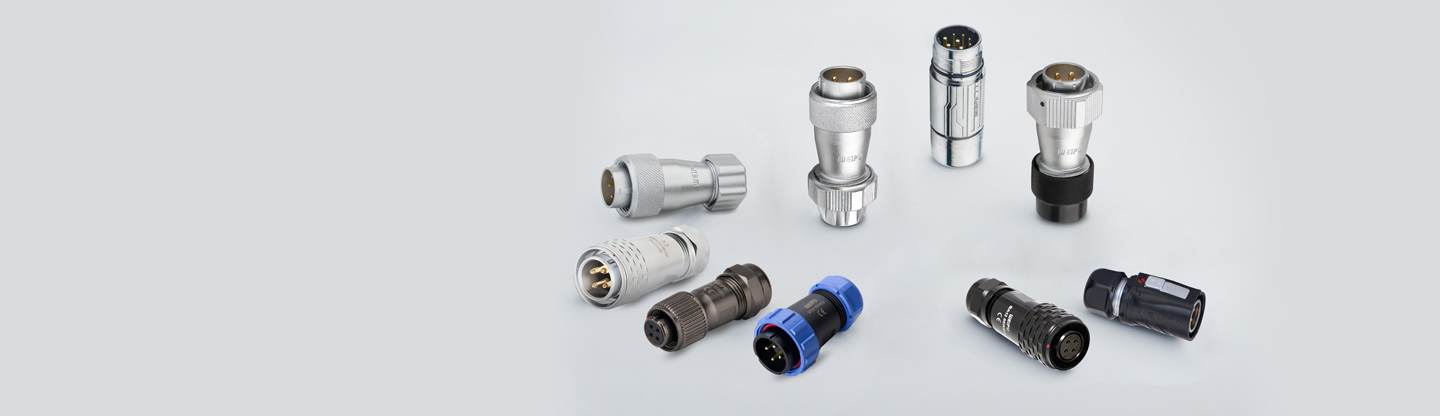
Threaded couplings give high compression on the seal and resist vibration, with the trade-off that they are slow to mate. Push-pull couplings reduce mating time and are useful where operators reconnect equipment several times per shift, but the latch mechanism itself must be cleanable. Both types exist in sealed metal and polymer versions; for example, the SP series rear nut mount connector rated IP68 is the kind of panel-mounted interface used where a sealed bulkhead penetration is required.
Locking style affects both hygiene and service life, and the trade-offs between threaded, push-pull, bayonet and lever systems are compared in industrial connector locking mechanisms explained. In washdown zones, a coupling that cannot be over-tightened by hand is usually preferable, because over-torque flattens seals and creates the gap that starts the failure sequence.
Heavy-Duty Rectangular Housings
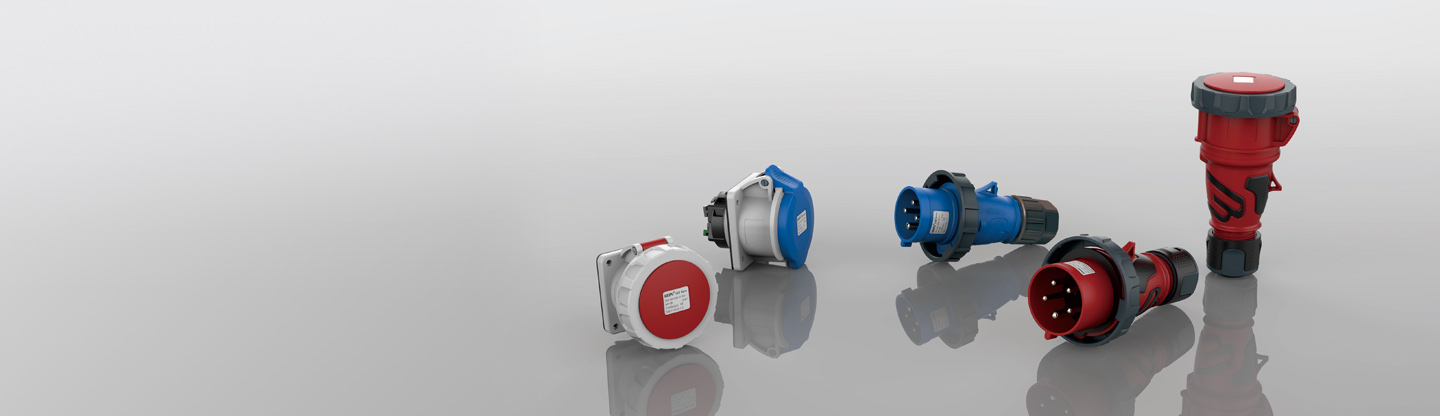
Rectangular housings carry more circuits in a smaller footprint and allow a single connection point for a machine module. Metal hoods and housings in die-cast aluminium with powder coating are common, and stainless or composite versions are chosen where chlorides are present. A representative configuration is the 32B metal hood and housing assembly, which shows how the hood, seal and cable entry combine into one enclosure.
The weakness of rectangular systems in washdown duty is the cable entry and the hood joint. Both need a gasket that is rated for the cleaning temperature, and both need a mounting orientation that does not trap water. The wider selection criteria are covered in the heavy-duty waterproof electrical connectors guide.
Cable Entry: Glands, Conduit and Sealed Hoods
Most water ingress in washdown plants enters at the cable entry, not at the coupling face. A gland must match the cable jacket diameter, compress on the jacket rather than on the conductors, and use a seal material compatible with the detergent.
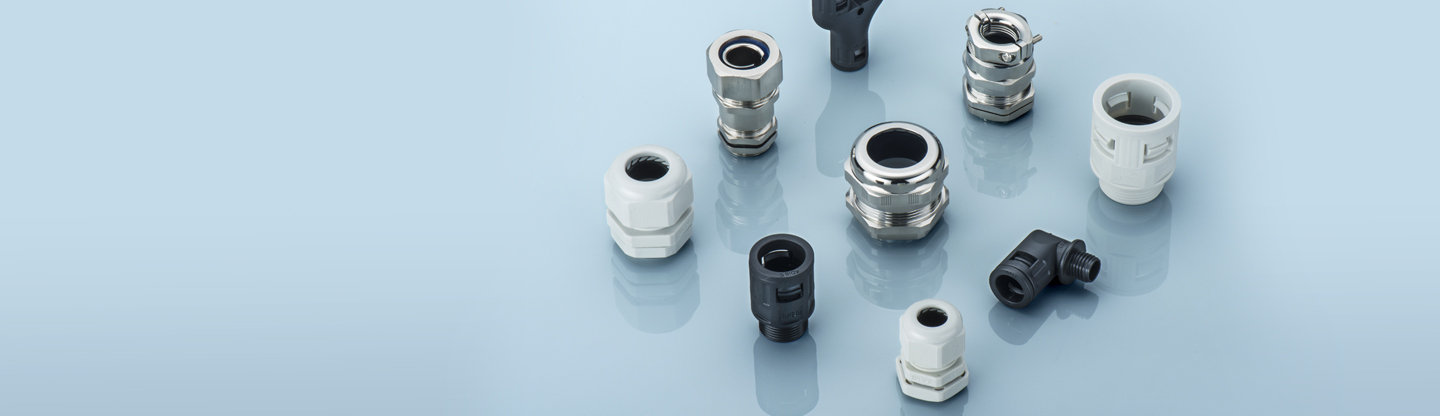
For chloride exposure, nickel-plated and 304 stainless steel cable glands are the usual starting point, with 316L where sanitisers are aggressive. A silicone or chloroprene seal is often specified for wide temperature range and chemical tolerance, as in the silicone and chloroprene rubber cable gland range. The gland is also the part most often installed incorrectly: an oversized entry with a reducing seal, or a gland tightened onto a spiral wrap, will pass a factory test and fail in service.
Which Protection Level Fits Each Plant Area?
Plants are not uniformly wet. Mapping the area to the cleaning regime avoids both under-specification in the worst zone and unnecessary cost in dry zones.
| Plant area | Cleaning regime | Ingress requirement | Housing and seal notes |
|---|---|---|---|
| Dry storage and packaging | Dry wipe, occasional damp cloth | IP65 | Standard polymer housing, EPDM seal |
| Preparation, low-risk | Open hose, low pressure, 40–50 °C | IP66 / NEMA 4 | Sealed hood, drip loop in cable |
| Open food processing | Foam and rinse, 60 °C, 20–40 bar | IP69K plus IP67 | 316L or composite, FKM or EPDM by chemistry |
| High-risk ready-to-eat | Pressure washer, 80 °C, up to 100 bar | IP69K, hygienic form | No exposed thread, radiused corners, drainable |
| Clean-in-place circuits | Caustic and acid circulation, steam | IP69K plus IP68 | Food-contact declarations required |
The middle rows are where most specifications go wrong. A plant that writes IP69K everywhere pays for a capability it does not use in the dry store, and a plant that writes IP66 in an open processing area replaces washdown connectors every year. Area-by-area mapping is one of the lowest-cost reliability improvements available at the specification stage.
Installation Details That Decide Service Life
A correctly specified connector installed badly will fail at the same rate as an under-specified one. Three installation decisions account for most of the difference between a five-year connection and an eighteen-month one.
Cable Entry Orientation and Water Shedding
Water runs downhill. A cable entering a housing from above carries water directly into the gland, and a horizontal entry with a low loop forms a trap. The cable should approach from below where the layout allows, with a drip loop formed below the gland so that water sheds before it reaches the seal.
Where the geometry cannot be changed, a sealed hood or a splash guard is the practical mitigation. What should be avoided is a horizontal entry at the low point of a housing, which is the single most common installation defect found during washdown audits.
Torque, Sealing and Mating Cycles
Seals work within a compression range. Under-tightening leaves a gap; over-tightening permanently deforms the elastomer and removes the resilience that absorbs thermal cycling. Manufacturer-specified torque should be followed with a calibrated tool, and the value belongs on the maintenance procedure, not only in the datasheet.
Mating cycles are a wear item. A coupling rated for several hundred cycles is not a problem in a connection made once per installation, but it is the wrong choice for a connection an operator breaks twice per shift. In that duty the seal and the contact plating are both consumables, and the design should allow them to be replaced rather than requiring the whole assembly to be scrapped.
What to Do About High-Pressure Jets Directed at a Coupling
No IP69K rating makes a coupling an appropriate target. Operators should not direct a nozzle at close range into a mated interface, because the test condition and the real condition differ: the test is 30 s per angle with the nozzle at a fixed distance, while a real washdown may hold a jet on one point for a minute at a shorter distance.
Practical mitigation is layout, not product selection. Position couplings behind guards or on the sheltered side of a frame, specify a cap or blanking cover for unused receptacles, and train cleaning staff to sweep rather than dwell. A cap is inexpensive and removes the most common route for water into an unmated receptacle.
How Should Maintenance Teams Inspect Washdown Connectors?
Washdown connectors fail slowly and then fail suddenly. A short inspection at a fixed interval catches the slow phase, which is the cheap one to correct.
- Check the seal visually for flattening, cracking or a permanent set line at the compression point.
- Wipe the exposed joint with a white cloth and inspect for product residue, which indicates a crevice that cleaning cannot reach.
- Look for pitting or a white bloom on plated parts, which signals chloride attack before it reaches the contact.
- Measure contact resistance on signal circuits at each service interval and trend the result rather than judging a single reading.
- Confirm the cable gland is still tight on the jacket and that the jacket has not cold-flowed out of the seal.
- Record the inspection, because an audit trail is as much a part of hygiene compliance as the hardware.
A resistance trend is more useful than a pass or fail threshold. A rise from a few milliohms to tens of milliohms over three months describes a developing problem, whereas a single reading within tolerance describes nothing.
Common Failure Modes and What They Indicate
Failure analysis is faster when the symptom is read as a design signal rather than a random defect.
- Green or black deposit on copper contacts — moisture has been inside for some time; check the cable entry and the seal compression, not the contact plating.
- Intermittent signal on a machine that vibrates — often fretting corrosion at the contact interface, made worse by a plating that is too thin for the mating cycle count.
- Cracked seal with a hard, glossy surface — chemical incompatibility, usually an EPDM seal in an oil-rich area or an FKM seal exposed to a ketone-based cleaner.
- Water inside the housing with the coupling face dry — the entry path is the gland or the hood joint, not the coupling.
- Pitting on a stainless housing in a chloride zone — 304 specified where 316L is needed.
- Residue line at the housing-to-panel joint — a hygienic design gap, and usually an audit finding rather than an electrical fault.
Material selection drives several of these outcomes, and the trade-offs between plated metals, stainless grades and engineering polymers are set out in how material choice affects connector reliability.
WEIPU Connectivity Options for Washdown Environments
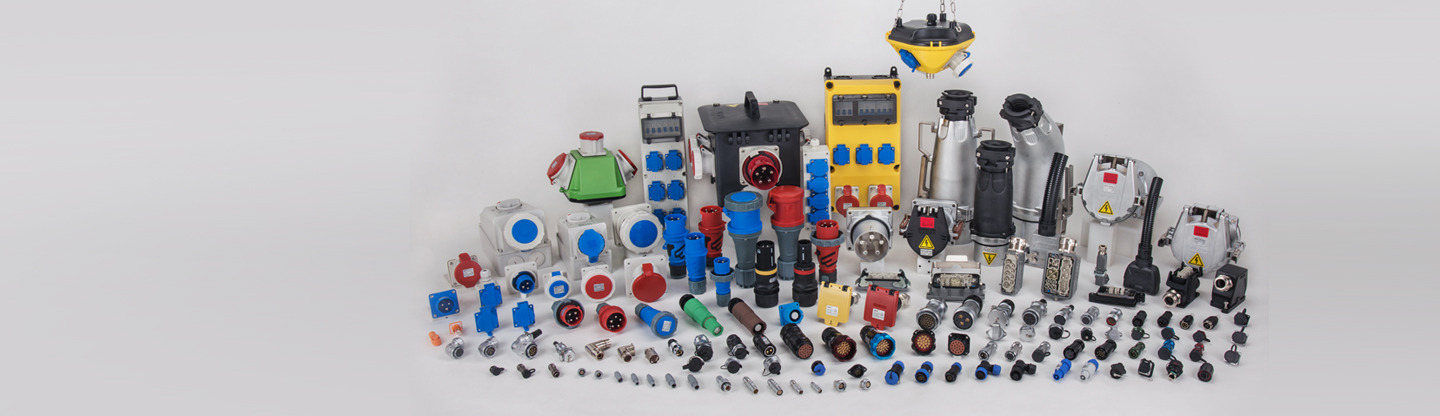
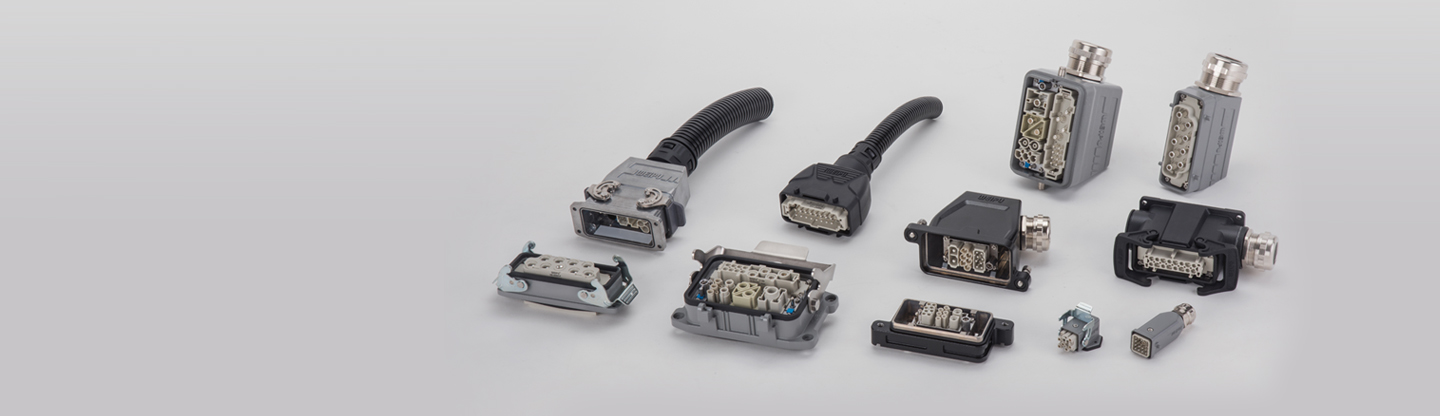
WEIPU manufactures circular connectors, heavy-duty rectangular connectors, cable assemblies and cable glands for industrial equipment, with protection levels from IP44 to IP68 depending on the series and configuration, plus housings that can be evaluated against IP69K washdown requirements. For washdown connectors, the evaluation normally starts with three families.
Sealed circular connectors, including the SP series rated IP68 and the WK series with a push-pull locking system, suit panel interfaces and field connections where a compact, sealed coupling is required. Heavy-duty rectangular hoods and housings suit module connections carrying power and signal in one point, with metal and composite options. Cable glands in nickel-plated brass and stainless steel complete the entry, which is where most ingress begins.
These families are starting points for evaluation rather than fixed recommendations. Seal compound, housing material and protection level must be confirmed for the specific part number against the detergent list and the cleaning regime in the plant, and the applicable datasheet should be treated as the controlling document. Connectors intended for direct food contact require declarations that are part-specific, and those should be requested explicitly during the enquiry, together with a sample for cleaning trials.
Washdown Connector Specification Checklist
- Map each plant area to its cleaning regime before choosing a protection level.
- State both the jet requirement (IP69K) and the immersion requirement (IP67 or IP68) where both apply.
- Name the detergent chemistry and the cleaning temperature in the specification.
- Specify seal compound by name, matched to that chemistry.
- Specify 316L where chlorinated sanitisers are used.
- Require a hygienic form: no exposed thread, radiused corners, drainable geometry.
- State the achievable surface roughness for product-zone surfaces.
- Define the cable entry: gland type, thread, seal material, cable diameter range.
- State the mating cycle expectation and the number of shifts per day.
- Require food-contact declarations where the part sits in the product zone.
- Agree an inspection interval and the resistance trend record at handover.
- Run a cleaning trial with the plant's own detergent before approving the part.
Conclusion
IP69K is a starting condition, not an outcome. The washdown connectors that survive a food plant are the ones specified against the actual cleaning chemistry, housed in a form that can be cleaned, installed so that water sheds away from the seal, and inspected on a schedule that catches seal degradation before it becomes a production stop.
The specification work is front-loaded and inexpensive: map the areas, name the chemistry, choose the seal and the steel grade deliberately, and define the cable entry. Most of the failures described in this guide are decided at that stage, long before the first coupling is installed.
Frequently Asked Questions
What is the difference between IP69K and IP68?
IP69K tests resistance to a high-pressure, high-temperature water jet: 80 °C water at 80–100 bar, 14–16 L/min, delivered at four angles for 30 s each. IP68 tests continuous immersion at a depth and duration agreed between buyer and supplier. A connector can pass one and fail the other, so equipment that is both sprayed and submerged needs both ratings stated separately.
Do I need IP69K connectors in a food plant?
Only in areas where couplings are cleaned with a pressure washer or a high-pressure foam and rinse cycle. Dry storage and packaging areas are normally served by IP65, and low-pressure hose-down areas by IP66. Mapping each area to its actual cleaning regime usually shows that IP69K is needed in a minority of zones, which reduces cost without reducing reliability.
Which seal material suits washdown connectors?
EPDM is the usual default for water, steam and alkaline detergents but degrades in fats and oils. FKM handles oils and higher temperatures but is attacked by ketones and some esters. Silicone offers a wide temperature range with lower mechanical strength. The compound should be chosen against the plant's actual detergent list, not a generic chemical resistance table.
Can IP69K connectors be installed in food contact zones?
Not on the strength of the IP rating alone. IP69K covers the electrical function under a jet and says nothing about cleanability or food-contact material compliance. A part in the product zone also needs hygienic form, an achievable surface roughness, and declarations under FDA 21 CFR 177 or EU 1935/2004 for the specific part number.
What causes water ingress in a washdown connector?
Most ingress enters at the cable gland or the hood joint rather than the coupling face. Typical causes are a gland sized to the wrong jacket diameter, a seal flattened by over-tightening, a horizontal cable entry that traps water, and an elastomer hardened by detergent. A drip loop and a correctly sized gland remove the majority of these paths.
How often should washdown connectors be inspected?
At least at every scheduled sanitation shutdown, and more often in high-risk ready-to-eat areas. The inspection should cover seal compression, residue at exposed joints, pitting on plated parts, gland tightness on the cable jacket, and a contact resistance trend on signal circuits. Trending resistance is more informative than a single pass or fail reading.
Heavy-Duty Connectors for Robot Cell Power and Control Interfaces
Application of Heavy Duty Connectors in Rail Transit

Industrial Ethernet Networks: How Connectors Support Reliable Industrial Communication
Which Circular Connector Family Fits Your Machine? Seven Families Compared
Contacts
Sofia
WhatsApp/Phone
Weipu WF Series Industrial Threaded Connectors with IP67 Protection
WEIPU WF Series Industrial Threaded Connectors offer robust IP67 protection, ensuring reliable performance in harsh environments. Designed for secure, waterproof connections, these IP67 connectors are ideal for industrial applications requiring durability and stability. Trust WEIPU for quality and safety.
16A 3PIN Panel mount socket TYP5101-IP44
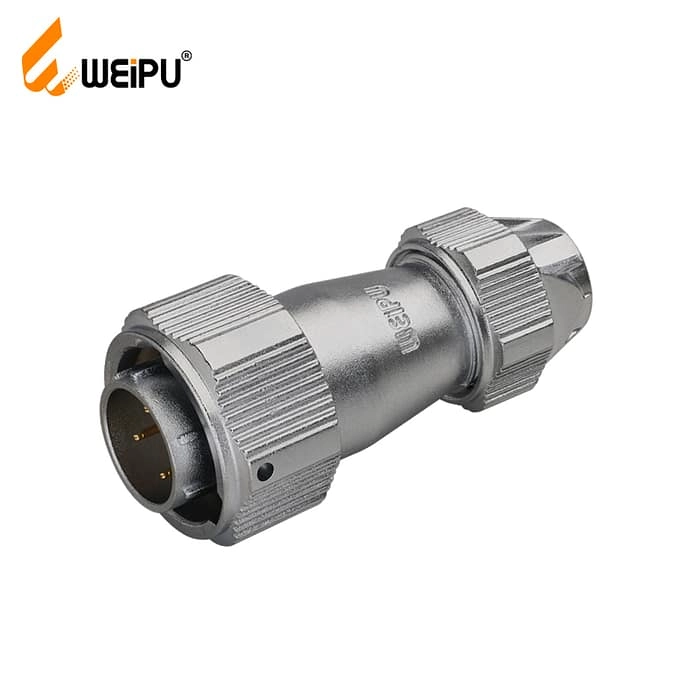
WEIPU WY-TE Series Waterproof Electrical Plug
With metal clamping-nut IP67, Threaded, Zinc alloy with chrome plating, PPS
WEIPU WY-TE IP67 circular connectors are waterproof electrical plugs with metal clamping-nut, which are durable, safe and easy to assemble with your all devices.With the metal clamping-nut and threaded design, these waterproof electrical plugs ensure high security and super stable connection. It’s an ideal waterproof connector for your applications.
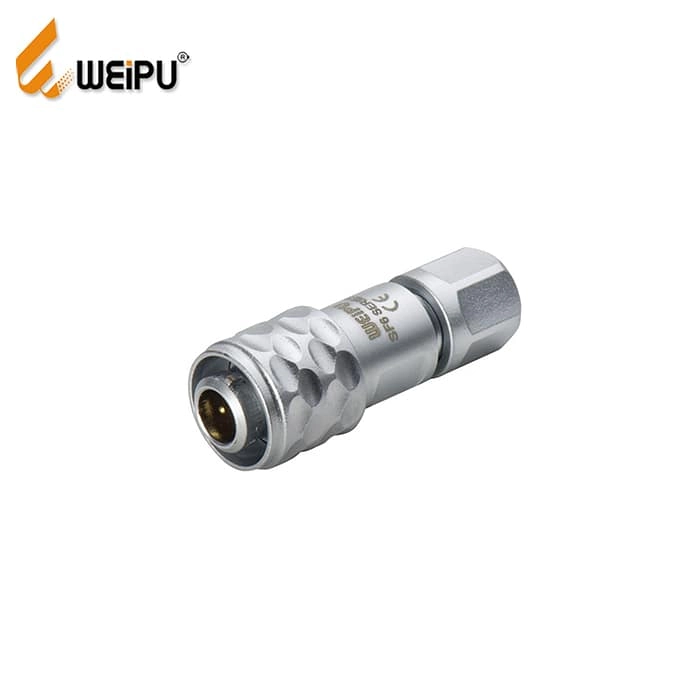
SF610B/P SF610B/S Cable connector IP67
Mate with SF611B, SF612B, SF615B
Get in Touch
Request Related Resources about Industrial Connections & Solutions
If you require technical details, product guides, or specific recommendations from a premier connector manufacturing corporation, please send us your request. We provide expert support for custom electrical connectors, offering OEM/ODM customization and dedicated distributor cooperation assistance.
Weipu Building, No. 111, Baihua Road, Liwan District, Guangzhou, Guangdong China
© 2026 WEIPU. All Rights Reserved.
Whatsapp: +8618102298073
WEIPU
WEIPU
WEIPU
WEIPU