


Steam Cleaning Connectors: What Breweries and Dairies Should Specify
Follow us now:
- Quick Answer
- Why Is Steam Harder on Connectors Than Hose Washdown?
- What Do IP Ratings Actually Prove Under Steam?
- The IPX9K Jet Test
- Why IP68 Matters Alongside IP69K
- Which Materials Survive Caustic, Acid and Steam Together?
- Housing Metals and Polymers
- Seal Compounds
- Contacts and Plating
- Where Do Steam Cleaning Connectors Fail First?
- Cable Entry and Glands
- Coupling Face and Seal Line
- Panel Joints and Mounting
- How Should Connections Be Installed in Wet Process Areas?
- Which Connector Types Fit Brewery and Dairy Equipment?
- IEC 60309 Style Industrial Plugs and Couplers
- Sealed Circular Connectors for Panels and Instruments
- Glands and Heavy-Duty Housings
- WEIPU Options for Steam Cleaning Environments
- Steam Cleaning Connector Checklist
- Conclusion
- Frequently Asked Questions
Quick Answer
Steam cleaning connectors are sealed electrical connections specified for sanitation with saturated steam rather than plain water hoses. A brewery or dairy connection in a wet process area must survive caustic foam at 70–80 °C, acid rinses, daily thermal shock and steam that finds every gap a hose jet cannot reach. IP69K describes jet resistance only; seal chemistry, housing material and cable entry decide whether the connection still seals after a year of nightly sanitation.
This guide explains where steam duty differs from ordinary washdown, which protection levels and materials hold up, how cable entries and coupling faces fail first, and what a buyer should write into the specification.
Why Is Steam Harder on Connectors Than Hose Washdown?
A hose delivers water at a known pressure for a limited time. A steam cleaner delivers vapour at 150–170 °C at the boiler in typical dry-steam units, at around 6–10 bar, and the jet dwells on one spot while the operator works the foam off. Vapour also behaves differently from liquid: it penetrates gaps that liquid surface tension keeps out of, and it condenses inside the housing as soon as the equipment cools.
The thermal cycle is the second difference. A coupling surface can swing from 4 °C in cold storage to above 100 °C under a steam jet within seconds. Elastomer seals respond to that swing by losing compression set after repeated cycles, and a seal that passed its type test on a new part may not pass it after two years of daily steam duty.
The third difference is chemistry. Brewery and dairy cleaning in place normally runs caustic soda at 1–3% at 70–80 °C, followed by an acid stage, commonly nitric at roughly 0.5–1.5% at 60–70 °C. These are typical industry values rather than fixed rules, but the pattern is universal: the connection sees hot alkali, then hot acid, then steam, every night.
What Do IP Ratings Actually Prove Under Steam?
The IP code is defined in IEC 60529 and answers specific test questions, not general ones. Understanding which question each level answers is the basis for a realistic specification for steam cleaning connectors, and the trade-offs between levels are set out in more detail in industrial connector IP ratings for IP67, IP68 and IP69K selection.
- IP65 and IP66 cover jets from a hose at increasing volume, with no pressure-washer protection.
- IP67 covers temporary immersion at 1 m for 30 min, which approximates flooded floors.
- IP68 covers continuous immersion under conditions agreed with the test house.
- IP69K covers the 80 °C high-pressure jet but no immersion and no hygiene claim.
The IPX9K Jet Test
IP69K is the closest analogue to aggressive cleaning. The test directs an 80 °C jet at 80–100 bar and 14–16 L/min from 100–150 mm, at four angles for 30 s each. Passing means no harmful ingress under those conditions. It does not mean the connection tolerates immersion, and it says nothing about hygiene or material compliance.
Why IP68 Matters Alongside IP69K
Steam condenses. A housing that only passes a jet test can breathe in humid air, condense moisture internally overnight and accumulate water without a single jet failure. This is why wet-area specifications normally state IP69K plus IP67 or IP68: the jet rating covers cleaning, the immersion rating covers condensation and temporary flooding of floor-level equipment. The sealing hierarchy is compared in evaluating heavy-duty housing protection from IP65 to IP69K.
| Cleaning regime | Typical condition | Ingress requirement | Limits to watch |
|---|---|---|---|
| Low-pressure hose-down | 40–50 °C water, open hose | IP65 / NEMA 4 | No jet or steam protection |
| Foam and rinse | 60 °C, 20–40 bar | IP66 / IP69K | Static seals only below IP67 |
| High-pressure washdown | 80 °C, 80–100 bar jet | IP69K plus IP67 | No immersion rating in IPX9K |
| Steam sanitation | 150–170 °C vapour, 6–10 bar at boiler | IP69K plus IP68 | Seal compression set under thermal cycling |
| CIP circulation nearby | 1–3% caustic at 70–80 °C | Per location, plus chemical resistance | Attack on aluminium and elastomers |
The last two rows overlap in most plants: equipment steamed nightly also sits near CIP circuits. The specification should name both the ingress levels and the chemical list, because neither alone predicts survival.
Which Materials Survive Caustic, Acid and Steam Together?
Material selection is where steam cleaning connectors are won or lost. The cleaning chemistry attacks housings and seals in different ways, and the failure mode of each material is predictable enough to design against. The broader trade-offs are covered in how material choice affects connector reliability.
- Match the housing material to the sanitizer list: chlorides promote pitting in 304 stainless.
- Match the seal compound to the hottest chemistry in the shift, not the average one.
- Treat seals as consumables and require replaceable inserts in frequently mated couplings.
Housing Metals and Polymers
Stainless steel 316L is the default where chlorinated sanitisers or frequent acid stages are used, because 304 pits in chloride-rich chemistry. Plated aluminium housings are acceptable in splash zones away from the worst chemistry but should be treated as an evaluation item, not a given. Engineering polymers such as PA66 and PPS hold their form in steam duty well, and unpainted, crevice-free polymer bodies are often easier to keep hygienic than coated metal.
Seal Compounds
The seal is the consumable of a steam-duty connection. EPDM is a sound default for hot water, steam and caustic chemistry, but it swells in oils and fats. FKM tolerates oils and higher temperatures yet is attacked by some amines and ketones. Silicone spans roughly −60 °C to 200 °C in typical grades with modest tear strength. The compound should be specified by name against the plant's detergent list, and compression set data at service temperature should be requested rather than assumed.
Contacts and Plating
Contact plating rarely fails from steam directly. It fails from fretting after the housing has allowed micro-motion, or from corrosion products wicking in from a wet cable entry. Gold over nickel remains the reference for signal circuits that must stay stable through years of condensation cycles; tin plating is acceptable in dry panels but is a poor choice for a coupling mated daily in a wet area.
Where Do Steam Cleaning Connectors Fail First?
Field failure analysis in wet plants converges on a short list of entry paths, and the same progression is described in common causes of industrial connector failure in harsh environments. Knowing the order lets inspectors look in the right place first.
- First the cable gland, where a flexible jacket crosses a sealed wall.
- Second the coupling face, where torque control and latch wear decide the seal line.
- Third the panel joint, where mounting geometry traps residue and standing water.
Cable Entry and Glands
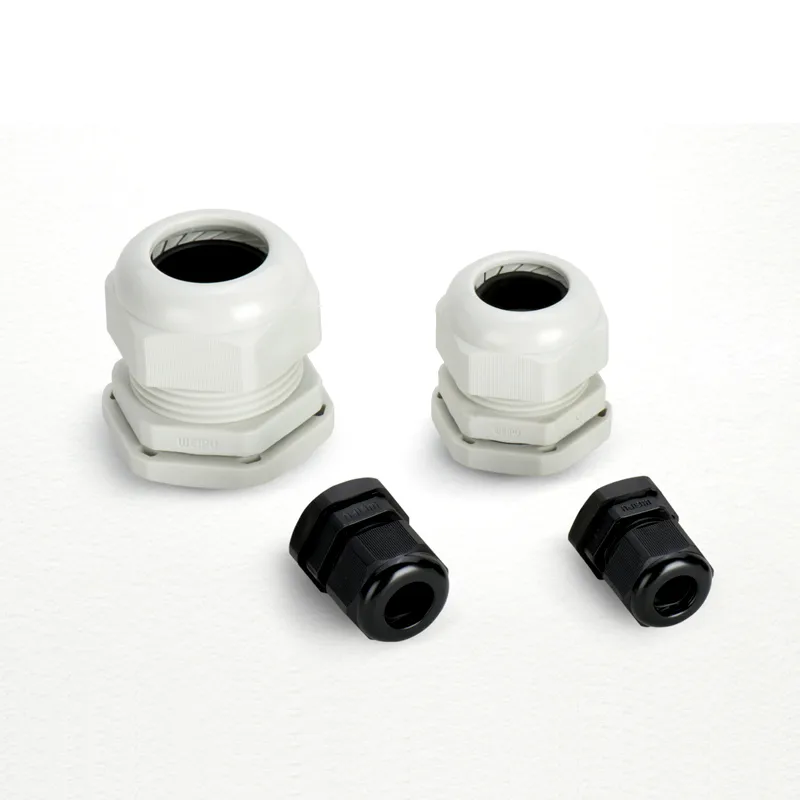
Most water enters at the cable entry, not the coupling face. A gland that matches the jacket diameter and compresses on the jacket, with a seal compound matched to the chemistry, is the single highest-value detail in the whole specification. Silicone and chloroprene seals are commonly chosen for wide temperature range and detergent tolerance, as in the silicone and chloroprene rubber cable gland range; for chloride zones, nickel-plated and 304 stainless steel cable glands are the usual starting point.
Coupling Face and Seal Line
The second path is the mated interface. Over-torque flattens the seal; under-torque leaves a gap; a worn latch lets the faces separate enough to draw vapour in during cooling. Locking style matters here, and the trade-offs are compared in industrial connector locking mechanisms explained. A coupling cleaned daily should seal by controlled face compression rather than by thread friction alone.
Panel Joints and Mounting
The third path is invisible until an audit: the joint between a panel-mount receptacle and the machine surface. Residue lines at that joint are hygiene findings before they are electrical ones. Mounting orientation that sheds water, a gasket rated for the cleaning temperature, and radiused surrounding geometry do more for service life than any upgrade to the connector itself.
How Should Connections Be Installed in Wet Process Areas?
Installation quality decides whether a correct specification survives contact with reality. Three habits separate connections that last five years from those replaced annually.
- Route cables so water sheds away from the gland, with a drip loop formed below the entry.
- Torque gland and coupling nuts to the manufacturer's value with a calibrated tool, and record the value in the maintenance procedure.
- Fit caps to every unused receptacle, because an open port passes no ingress test at all.
- Position couplings on the sheltered side of frames, out of the direct jet path.
- Train cleaning staff to sweep the jet across connections rather than dwell on one point.
- Photograph and log installed assemblies, so seal replacement intervals can be planned from evidence.
Mating frequency is part of installation planning. A connection opened twice per shift wears seals and plating as consumables, and the design should allow the seal or the insert to be replaced without scrapping the housing. A connection opened once a year at shutdown is a different duty and can be optimised for sealing instead of service speed.
Which Connector Types Fit Brewery and Dairy Equipment?
Three families cover most applications in wet process areas. The choice follows the circuit type, the mating frequency and whether the connection sits on a machine surface or inside a control panel.
IEC 60309 Style Industrial Plugs and Couplers
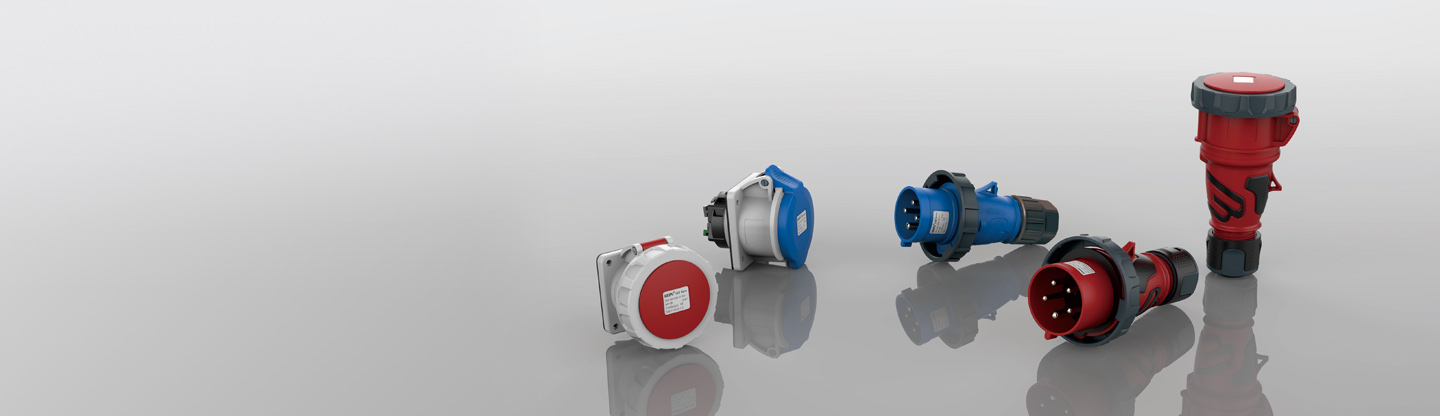
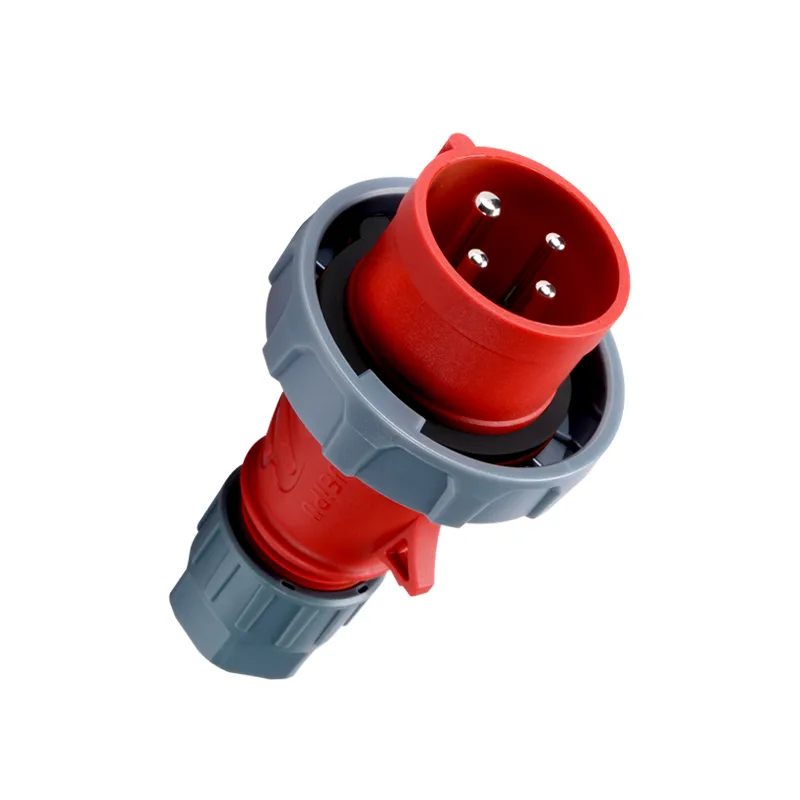
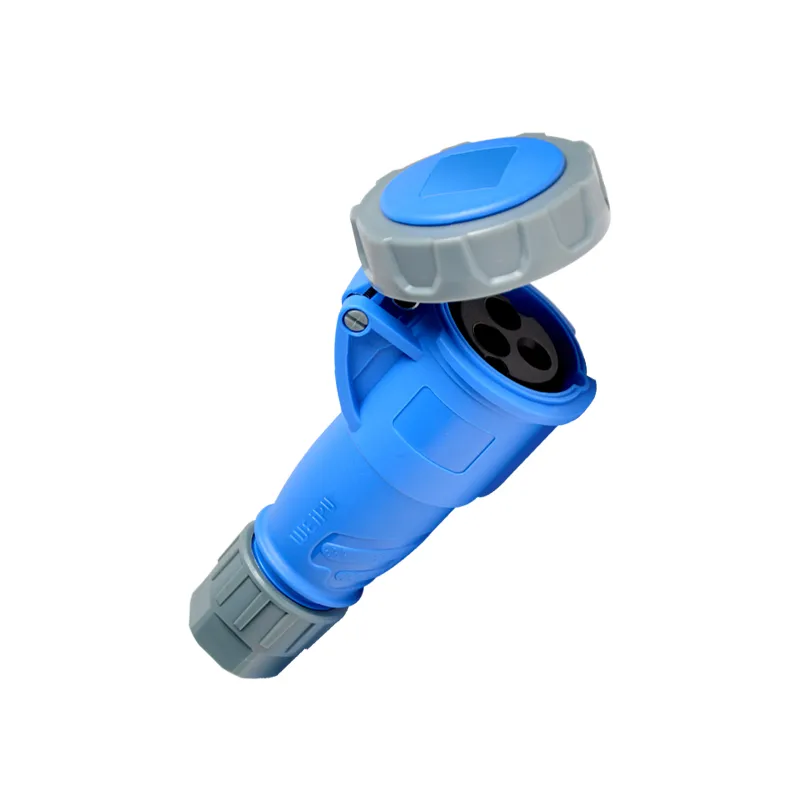
For machine power connections that operators must disconnect for cleaning or changeover, plugs and couplers built to IEC 60309 are the established answer. Typical configurations cover 16 A to 63 A at 3 to 5 pins, with IP44 versions for splash areas and IP67 sealed versions with covers for washdown zones. A red IP67 plug with a threaded gland entry is the classic image of this family, and the covered coupler variant adds a lid that keeps the socket face clean between uses.
Sealed Circular Connectors for Panels and Instruments
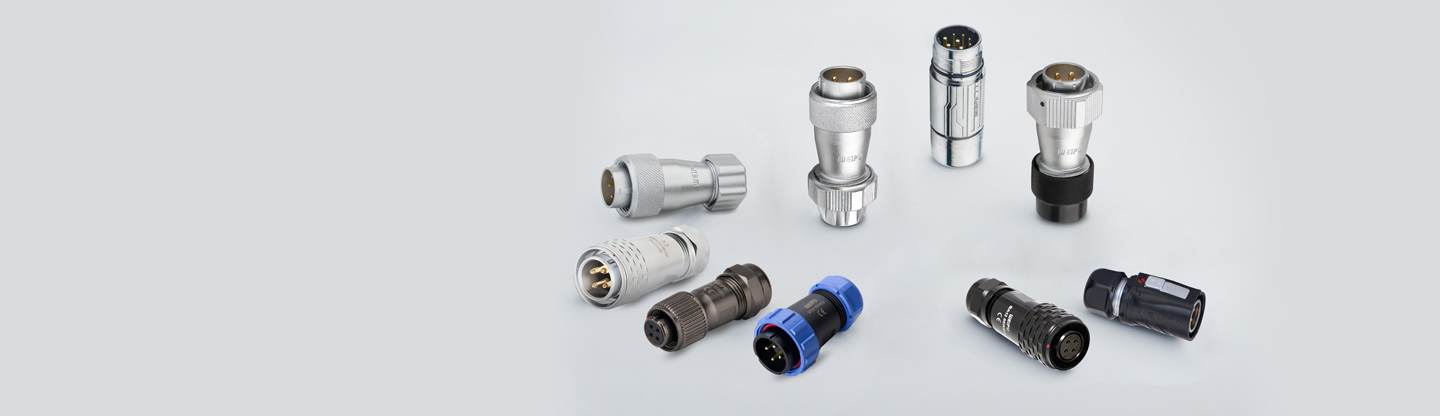
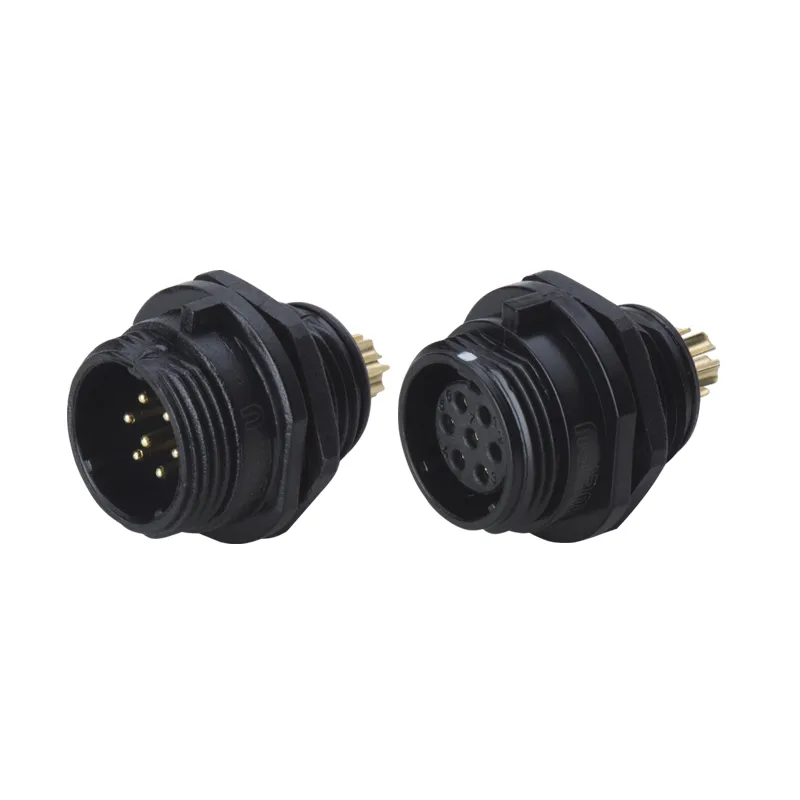
For sensor and control circuits that cross a bulkhead, compact sealed circular connectors with rear-nut mounting are the practical choice. A representative interface is the SP series rear nut mount connector rated IP68, the kind of panel penetration used where instruments and valves connect through a washdown-rated enclosure wall. Screw or push-pull locking is selected by mating frequency, following the logic described earlier.
Glands and Heavy-Duty Housings
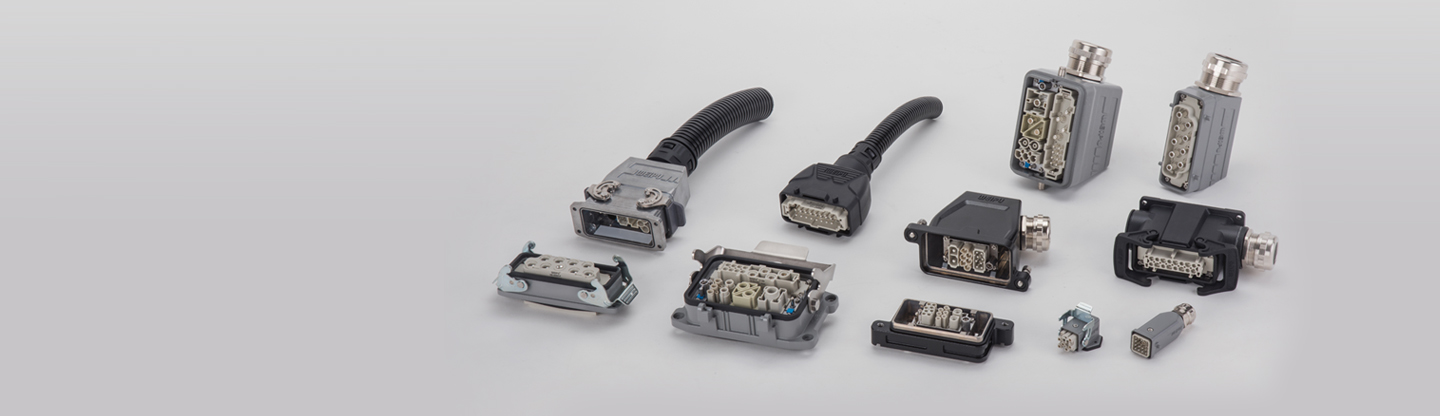
Where a module carries power and signal in one connection point, heavy-duty rectangular housings with matched glands keep the cable entry engineered rather than improvised. In steam areas the hood gasket and the gland become the critical parts, and both belong in the specification with named materials. The wider selection logic is set out in the heavy-duty waterproof electrical connectors guide.
| Application | Connector family | Sealing target | Selection notes |
|---|---|---|---|
| Machine power, mobile equipment | IEC 60309 plug and coupler | IP67 with cover, or IP44 in splash zones | 16–63 A, 3–5 pins, gland matched to cable |
| Sensors and valves | Sealed circular, rear nut mount | IP67–IP68 mated | Gold-plated signal contacts, cap unused ports |
| Module-to-panel bundles | Heavy-duty rectangular | IP65–IP69K per datasheet | Hood gasket and gland named in spec |
| Cable entries everywhere | Cable glands | IP68 on jacket | Seal compound matched to detergent list |
WEIPU Options for Steam Cleaning Environments
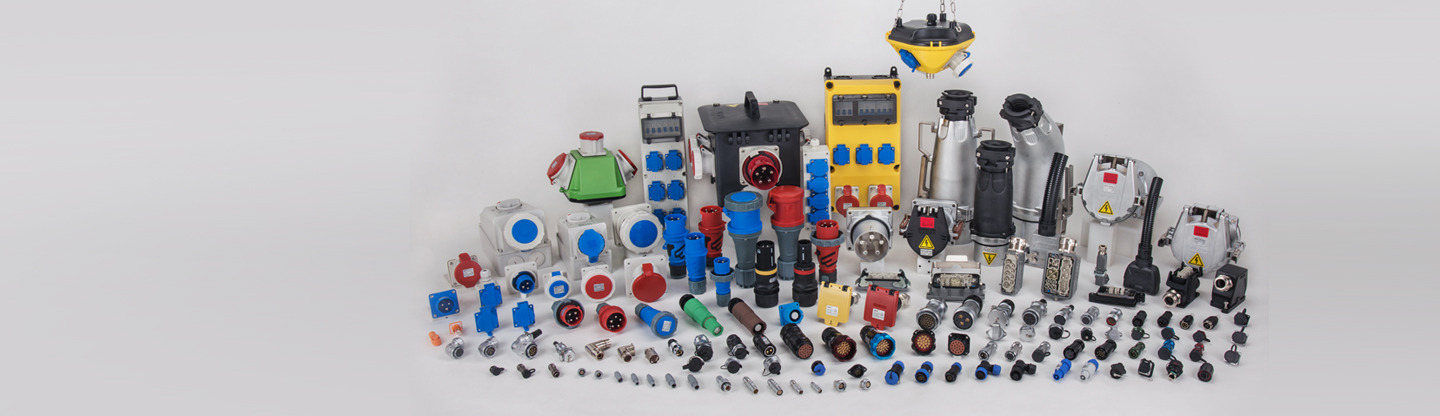
WEIPU is a manufacturer of circular connectors, industrial connectors, heavy-duty rectangular connectors, cable assemblies and cable glands, established in 1996, with protection levels from IP44 to IP68 across its series depending on the specific part number and configuration. For steam-duty specifications in breweries and dairies, the evaluation normally starts with three families.
The TYP series of IEC 60309 style industrial plugs, couplers and panel receptacles covers the machine power interface, with IP44 and IP67 construction options and splash covers for wet zones. The SP series covers panel-mounted signal and control circuits rated to IP68, and the SF series covers in-line cable connections rated to IP67. The cable gland and accessories range completes the cable entry, which is where most ingress begins.
These families may be suitable for evaluation rather than fixed recommendations. Seal compound, housing material and the declared protection level must be confirmed for the specific part number in its datasheet, and the cleaning chemistry and temperature of the plant should be stated in the enquiry so the proposal can be checked against it. For connections intended for food-adjacent zones, request the applicable material declarations explicitly and run a cleaning trial with the plant's own detergents before approval.
Steam Cleaning Connector Checklist
A short checklist keeps the specification auditable from enquiry to handover.
- Map each area to its cleaning regime: hose, foam, high-pressure jet or steam.
- State IP69K plus IP67/IP68 together where both jet and condensation exposure exist.
- Name the detergent chemistry, concentration and temperature in the specification.
- Specify seal compound by name, with compression set data at service temperature.
- Choose 316L or crevice-free polymer where chlorides or daily acid stages apply.
- Define every cable entry: gland thread, seal material, jacket diameter range.
- Require caps for unused receptacles and drip loops below every gland.
- State mating frequency per shift and select the locking style accordingly.
- Request material declarations for parts near product zones, per EN 1672-2 and EHEDG guidance.
- Agree an inspection interval and record seal condition and contact resistance trends.
Conclusion
Steam duty is a materials and installation problem more than an IP-number problem. The connectors that survive brewery and dairy sanitation are specified against the real chemical list, sealed with compounds chosen for hot caustic and thermal cycling, entered through glands that compress on the jacket, and installed so that water and vapour shed away from every joint.
None of this is expensive at the specification stage. Naming the chemistry, doubling the ingress requirement where steam and immersion coincide, and controlling the cable entry are paperwork decisions that remove most of the failure modes described here, years before they can stop a production line.
Frequently Asked Questions
Can IP67 connectors be used in steam cleaning areas?
IP67 covers temporary immersion at 1 m for 30 minutes, not steam jets. In a steam sanitation zone the usual requirement is IP69K for the jet plus IP67 or IP68 for condensation and flooding. An IP67-only coupling may pass the first cleaning cycles, but repeated thermal shock hardens the seal and vapour eventually enters. Confirm both ratings for the specific part number in its datasheet.
What sealing class should a brewery washdown connector have?
For open process areas cleaned with foam and hot water, IP69K plus IP67 is the common baseline. Where steam sanitation or floor flooding is part of the regime, IP69K plus IP68 is the safer specification. The rating applies to the mated pair with a rated cap on every unused port. Exact values must be verified per part number because construction varies within a series.
Which seal material is best for caustic and steam duty?
EPDM is the usual default because it resists hot water, steam and caustic chemistry well, but it swells in fats and oils, so it is a poor fit near gearboxes and food oils. FKM tolerates oils and higher temperature yet is attacked by some amines and ketones. Silicone covers a wide temperature range with modest tear strength. Match the compound to the plant's detergent list, not to a generic datasheet claim.
Why do most washdown connector failures start at the cable gland?
The gland is the only place where a flexible, imperfect cable jacket crosses a sealed wall. If the seal diameter does not match the jacket, or the gland compresses on the conductors instead of the jacket, water wicks straight in. Detergent residue and thermal cycling degrade the seal over months. A correctly sized gland with a compatible seal compound removes the single most common ingress path.
Do IEC 60309 connectors comply with hygiene requirements?
IEC 60309 covers the electrical and mechanical construction of industrial plugs and socket outlets, including ingress protection in sealed versions. Hygiene compliance comes from separate sources such as EN 1672-2 and EHEDG guidance, which concern cleanability and materials near product zones. A connector mounted outside the product zone normally needs the ingress rating plus a cleanable form, and food-contact declarations must be requested separately.
How often should steam-duty connectors be inspected?
A quarterly inspection is a practical starting point in areas cleaned nightly with steam or high-pressure jets. Inspect seals for flattening and compression set, wipe joints with a white cloth to find residue traps, check gland torque and jacket creep, and trend contact resistance on signal circuits rather than judging single readings. After any sanitation chemistry change, bring the inspection forward.

WEIPU Electric August 2025 Global Industry Exhibition Preview

Industrial Connector Installation: How to Prevent Connection Failures
Industrial Plugs for Ports: Salt Fog, UV and Reefer Duty
Discovering Weipu: Among the World’s Largest Connector Manufacturers
Contacts
Sofia
WhatsApp/Phone
Weipu WF Series Industrial Threaded Connectors with IP67 Protection
WEIPU WF Series Industrial Threaded Connectors offer robust IP67 protection, ensuring reliable performance in harsh environments. Designed for secure, waterproof connections, these IP67 connectors are ideal for industrial applications requiring durability and stability. Trust WEIPU for quality and safety.
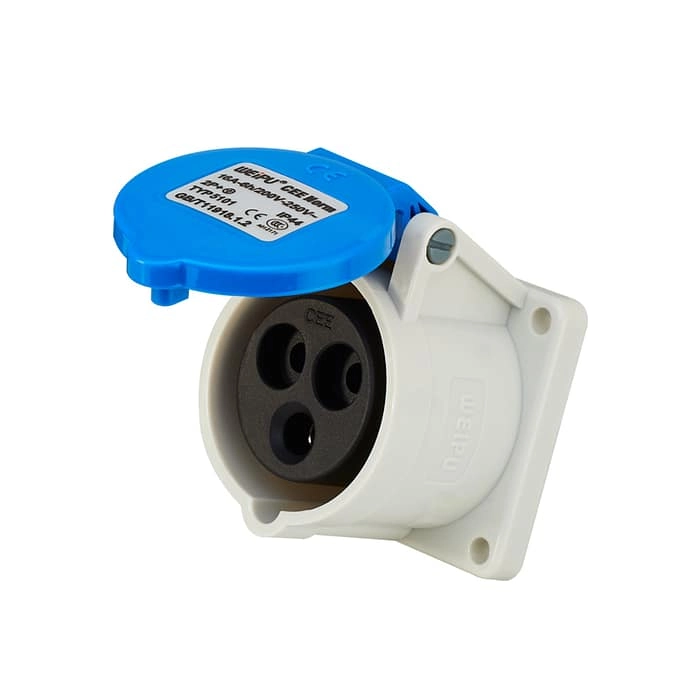
16A 3PIN Panel mount socket TYP5101-IP44
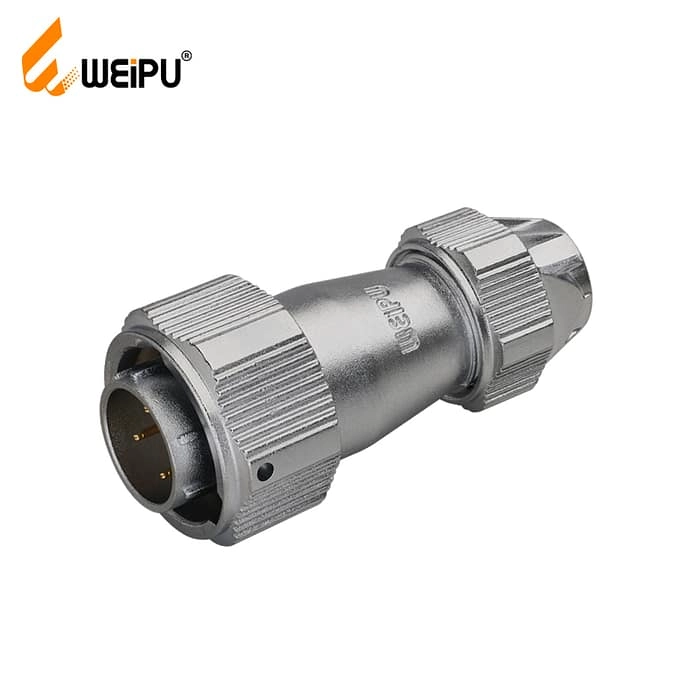
WEIPU WY-TE Series Waterproof Electrical Plug
With metal clamping-nut IP67, Threaded, Zinc alloy with chrome plating, PPS
WEIPU WY-TE IP67 circular connectors are waterproof electrical plugs with metal clamping-nut, which are durable, safe and easy to assemble with your all devices.With the metal clamping-nut and threaded design, these waterproof electrical plugs ensure high security and super stable connection. It’s an ideal waterproof connector for your applications.
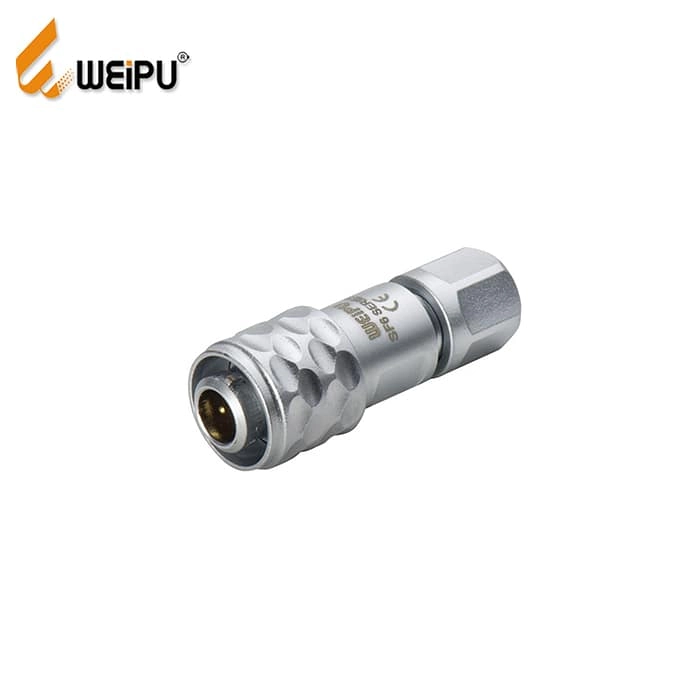
SF610B/P SF610B/S Cable connector IP67
Mate with SF611B, SF612B, SF615B
Get in Touch
Request Related Resources about Industrial Connections & Solutions
If you require technical details, product guides, or specific recommendations from a premier connector manufacturing corporation, please send us your request. We provide expert support for custom electrical connectors, offering OEM/ODM customization and dedicated distributor cooperation assistance.
Weipu Building, No. 111, Baihua Road, Liwan District, Guangzhou, Guangdong China
© 2026 WEIPU. All Rights Reserved.
Whatsapp: +8618102298073
WEIPU
WEIPU
WEIPU
WEIPU