
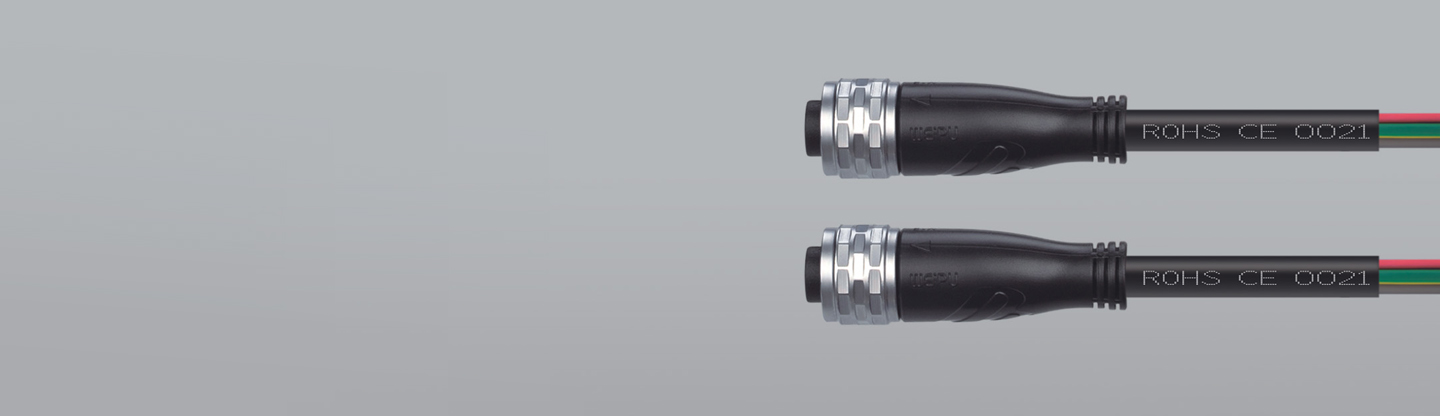


What questions should you ask a circular connector supplier?
Follow us now:
- 1. What exact ingress-protection and environmental test reports do you provide (IEC 60529/IP67 vs IP68), and how do those ratings translate to salt, oil, and continuous-immersion use?
- 2. How many mating cycles will the connector survive in dusty/oily environments, and can you provide contact-resistance vs. cycle test data and the test protocol used?
- 3. How should I size current per contact for my circular connector given my wire gauge, ambient temperature, and bundled cable runs — can you provide ampacity and derating curves?
- 4. For vibration-prone applications, what is the recommended termination style (crimp vs solder vs PCB) and can you supply crimp tooling specification and pull-test data?
- 5. How do you guarantee EMC/shielding continuity and high-speed signal integrity across the connector and assembled cable (e.g., Gigabit Ethernet, 10G), and can you provide S-parameter or channel-certificate data?
- 6. Are your circular connectors intermateable with other manufacturers, and what evidence do you provide to ensure pin-to-pin mapping, mechanical keying, and IP seal when mixed brands are mated?
- Concluding summary: Advantages of asking these questions and choosing a qualified supplier
6 Critical Questions to Ask a Circular Connector Supplier (and Detailed Answers)
When selecting an industrial circular connector for harsh environments, sensor networks, power distribution, or high-speed data, you need more than marketing claims. Ask for standards-based evidence, traceable material data, and application-specific test results. Below are six long-tail, pain-point-focused questions beginners frequently ask — each followed by an in-depth, actionable answer referencing real, industry-standard test methods and what to request from suppliers.
1. What exact ingress-protection and environmental test reports do you provide (IEC 60529/IP67 vs IP68), and how do those ratings translate to salt, oil, and continuous-immersion use?
Why this matters: “IP67” or “IP68” printed on a datasheet is insufficient for industrial procurement. IP codes per IEC 60529 describe protection against solids and liquids, but they don't cover salt-fog, oils, fuels, or the duration/depth specifics for IP68. For reliable selection, you must know the test conditions and complementary environmental tests.
What to ask the supplier to supply:
- IEC 60529 certificate or test report: confirm IP rating, test method, and test conditions (e.g., IP67: immersion to 1 m for 30 minutes; IP68: manufacturer-specified depth/time).
- Salt-fog (corrosion) report per ASTM B117 or equivalent: many outdoor connectors fail due to corrosion even if sealed.
- Chemical and oil compatibility tests: references to ISO 175 or SAE/automotive chemical-resistance data, and the elastomer compound name (e.g., EPDM, FKM/Viton, silicone) with supplier datasheet.
- Sealing material and design details: O-ring elastomer hardness (Shore A), gland design, and connector closure torque to ensure consistent sealing.
- Immersion test specifics for IP68: exact depth and duration the part was tested for, and whether tests included temperature cycling.
Practical tips:
- IP67 is commonly tested as 1 m for 30 min; IP68 is manufacturer-defined — always get the exact depth/time and test report.
- Salt fog (ASTM B117) is critical for coastal or maritime applications; sealing materials that pass IP tests can still corrode contacts or housings.
- If your application involves oil/fuel/contact with hydrocarbons, ask for chemical-compatibility charts for both elastomer and cable jacket (PVC vs PUR vs FKM).
2. How many mating cycles will the connector survive in dusty/oily environments, and can you provide contact-resistance vs. cycle test data and the test protocol used?
Why this matters: Mating cycles in clean-room lab conditions differ greatly from field performance where dust, grit, oil, or salt are present. Contact resistance increase is a leading failure mode as contaminants abrade or corrode contact plating.
What to request from your supplier:
- Mechanical endurance test reports referencing IEC 60512 (connector mechanical endurance): number of cycles, cycle speed, and environment (dust chamber, salt-fog, lubricant presence).
- Electrical contact resistance measurements plotted vs. mating cycles with test voltage/current specified and measurement method (four-wire Kelvin measurement preferred).
- Description of contact plating (gold, silver, nickel underplating) and plating thickness: plating metallurgy materially affects wear and oxidation resistance.
- Acceptance criteria used in the test (e.g., milliohm limit or % increase baseline) and whether tests included ingress after repeated mating.
Practical guidance:
- Typical commercial sensor M12 connectors are rated for tens to hundreds of cycles; specialized push-pull connectors (e.g., LEMO-style) can be rated for thousands. But only test data in intended environment is reliable.
- For field serviceable connectors expect to specify a minimum qualified mating cycles performance — require sample testing under your environment or third-party test reports.
3. How should I size current per contact for my circular connector given my wire gauge, ambient temperature, and bundled cable runs — can you provide ampacity and derating curves?
Why this matters: Connector current ratings on a datasheet are nominal and assume certain conductor sizes, contact temperature rise, and ambient conditions. In bundled harnesses or elevated ambient temperatures, the actual safe current per contact will be lower.
What to require from the supplier:
- Ampacity tables and derating curves that relate current per contact to ambient temperature and number of adjacent loaded contacts (thermal derating).
- Specified wire gauge ranges (AWG or mm²) for each contact and recommended crimp/solder procedure for those conductor sizes.
- Maximum allowed temperature rise (e.g., ΔT = 30°C at rated current) and thermal test method reference (IEC 60512 thermal tests or manufacturer thermal cycling).
- If you need high-current variants, ask for power-contact options and the related cross-section and material data (e.g., copper alloys, silver or gold plating thickness).
Practical guidelines:
- Signal circular connectors often carry low amperage (1–4 A typical for many M12 A-coded sensor connectors). Power versions or larger circular connectors are available for higher currents (8–16 A and above) — request exact manufacturer data.
- Always ask for derating curves rather than relying on a single “max current” number. Request test reports showing continuous current at target ambient temps and in-bundle conditions.
4. For vibration-prone applications, what is the recommended termination style (crimp vs solder vs PCB) and can you supply crimp tooling specification and pull-test data?
Why this matters: Termination type affects long-term reliability under vibration and thermal cycling. Many beginners assume solder is always best—this is not true for high-vibration or field-repairable assemblies.
What to request and check:
- Recommended termination types for your mechanical environment, with rationale. Crimp is often best for vibration if crimp quality is controlled; solder joints can cold-flow under repeated vibration/thermal cycles.
- Crimp tooling part numbers, process parameters (crimp height or crimp force), and acceptable crimp cross-section images.
- Crimp pull strength test reports (e.g., per IEC 60512-2-2 or manufacturer-specific tests): average pull force, minimum acceptable, and sample size.
- Quality controls the supplier uses (e.g., crimp-force monitoring, optical inspection, cross-section verification, IPC-A-620 acceptance where applicable) and whether they provide PPAP or first-article inspection for critical projects.
- For PCB terminations, ask for mechanical strain-relief recommendations, board-support details, and solder reflow profiles if contacts are reflow-compatible.
Practical recommendations:
- For field-replaceable harnesses, crimped contacts with validated tooling and process controls provide best reliability and serviceability.
- Require sample assemblies and run vibration and thermal cycle tests representative of your target environment (IEC 60068 series covers many vibration and shock tests).
5. How do you guarantee EMC/shielding continuity and high-speed signal integrity across the connector and assembled cable (e.g., Gigabit Ethernet, 10G), and can you provide S-parameter or channel-certificate data?
Why this matters: For high-speed data and sensitive sensor signals, shielding and impedance management are critical. Poor shield termination or mismatched impedance at the connector interface causes emissions and signal loss.
What to request:
- Shield termination detail: 360° shell-to-braid continuity, recommended shield braid coverage and grounding method (e.g., soldered braid or 360° clamp).
- S-parameter test reports (insertion loss/return loss) or channel certification indicating compliance with your protocol (e.g., IEEE 802.3 for Ethernet) up to the frequency needed (100 MHz for 100Base-TX, 250/500/1000 MHz for gigabit/10G channels).
- Shield transfer impedance or transfer admittance where available, and EMC emissions test results when installed in typical enclosures.
- Recommendations for shield drain termination, ground spring design, and bonding to panel/chassis to avoid ground loops and to maintain common-mode paths.
Practical points:
- M12 X-coded or other purpose-designed circular connectors are commonly used for Gigabit Ethernet in industrial settings; ask for channel-level test data (connector + cable assembly) rather than connector-only claims.
- For critical installations, request TDR (time-domain reflectometry) or S-parameter files and run an acceptance test on a sample assembly in your system.
6. Are your circular connectors intermateable with other manufacturers, and what evidence do you provide to ensure pin-to-pin mapping, mechanical keying, and IP seal when mixed brands are mated?
Why this matters: Procuring connectors from multiple vendors or replacing only one half of a mated pair is common. However, mechanical tolerances, keying, and sealing features differ and can cause poor contact, accelerated wear, or failed seals.
What to request from suppliers:
- Intermateability statements referencing standards (e.g., IEC 61076 family for M12/M8 for sensor connectors, MIL standards for military circulars) and explicit listing of compatible part numbers and tested partner manufacturers.
- Test reports showing mechanical mating and sealing tests performed with competitor parts (including IP/ingress testing after mating), plus any dimensional-matching drawings.
- Keying and polarisation drawings and clear instructions on correct mating orientation; ask for a physical sample pair if intermateability is a procurement requirement.
- Recommendations for panel-mount vs free-hanging mates, recommended torque values, and whether an O-ring or gasket is vendor-supplied or user-supplied.
Practical guidance:
- Standards-based connector families (e.g., standard M12 A-code) have baseline intermateability, but small tolerances, plating thickness, and sealing detail often vary. For mission-critical use, require a documented intermateability test.
- If your procurement specifies multi-vendor sourcing, include a clause requiring mating validation and shared part-number compatibility documentation.
Concluding summary: Advantages of asking these questions and choosing a qualified supplier
Asking the six targeted questions above forces suppliers to demonstrate technical maturity: certified IP/environmental tests (IEC 60529, ASTM B117), mechanical and electrical endurance data (IEC 60512/60068), documented terminations and tooling, thermal/ampacity derating curves, S-parameter/EMC data for high-speed channels, and intermateability validation. Choosing a supplier that provides traceable material certificates, tooling specifications, and third-party or factory test reports reduces field failures, shortens qualification time, and lowers total cost of ownership.
Weipu Group advantages: Weipu offers industrial circular connector families with full datasheets, material certifications, environmental and endurance test reports, and customization (cable assemblies, overmolds, shield terminations). For application-specific support—including chemical resistance, ampacity derating, vibration-qualified crimping, or EMC channel certification—contact our engineering team.
Contact us for a quote: www.weipu-group.com or email salse01@weipu-group.com.

Connectivity Solutions for Solar Tracking Systems

Application of Connectors in Road Monitoring
What is an IP rating?
All About the Greater Bay Area Industrial Expo – DMP
Resources
How to select different locking mechanisms for standard circular connectors?
Prioritize threaded connection for fixed installation scenarios with frequent vibration; choose snap-in connection for scenarios requiring frequent plugging and high assembly efficiency; push-pull connection is more advantageous for operation in narrow spaces or scenarios requiring quick plugging/unplugging.
How to match WEIPU connectors with the required IP rating?
First, clarify the water exposure conditions of your application (e.g., rain, submersion, high-pressure cleaning) to determine the required IP grade, then select the corresponding WEIPU series (e.g., IP67 for outdoor use, IP69K for heavy industry).
What types of modules are available for WEIPU heavy-duty connectors?
We offer a full range of functional modules, including power modules (5A-200A), signal modules (2-50 pins), network modules (supporting 10Gbps high-speed transmission), and pneumatic modules (compatible with standard air pipe specifications), covering most industrial connection scenarios.
Are WEIPU’s IP-rated connectors compatible with global equipment?
Yes, all WEIPU waterproof connectors comply with international standards (IEC 60529) and are designed to be compatible with global Industry 4.0 equipment, supporting seamless integration.
Contacts
Sofia
WhatsApp/Phone
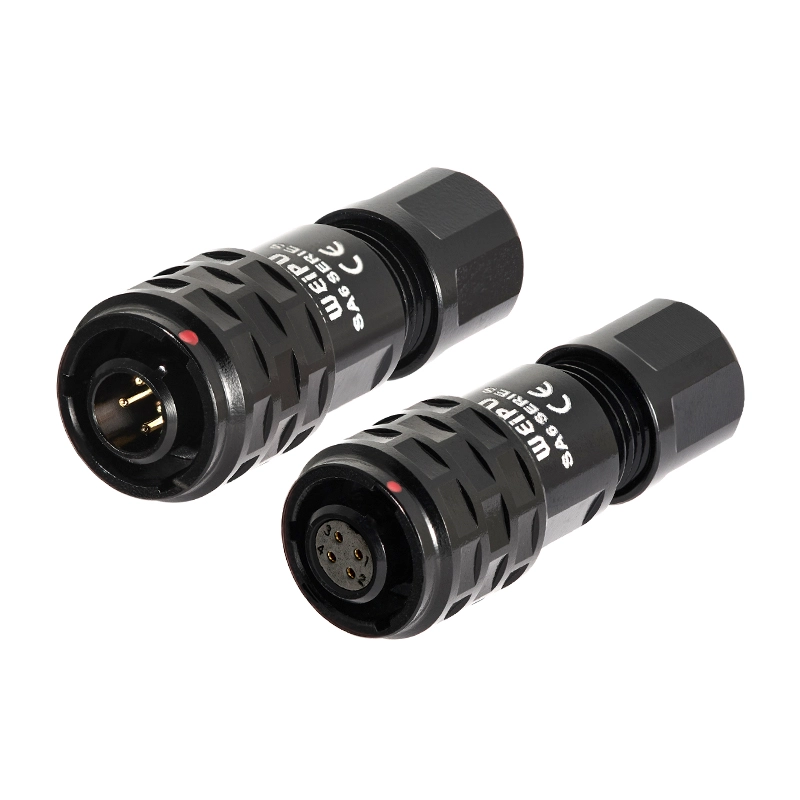
WEIPU SA Series Push-Pull Industrial Connector - IP67 Waterproof Anodized Aluminium Connector
The WEIPU SA Series Push-Pull Industrial Connector offers robust IP67 waterproof protection with durable anodized aluminum housing. This circular connector ensures secure, reliable connections in harsh environments, making it ideal for demanding industrial applications. Trusted quality by WEIPU.
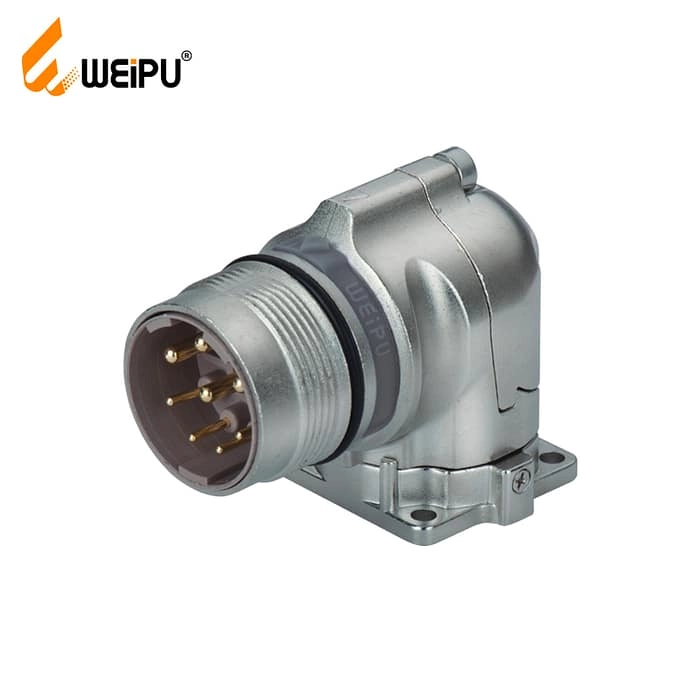
M23DJ-ZL Male contact angled square flange receptacle IP67
Mate with M23DK_TK,M23DK_TL
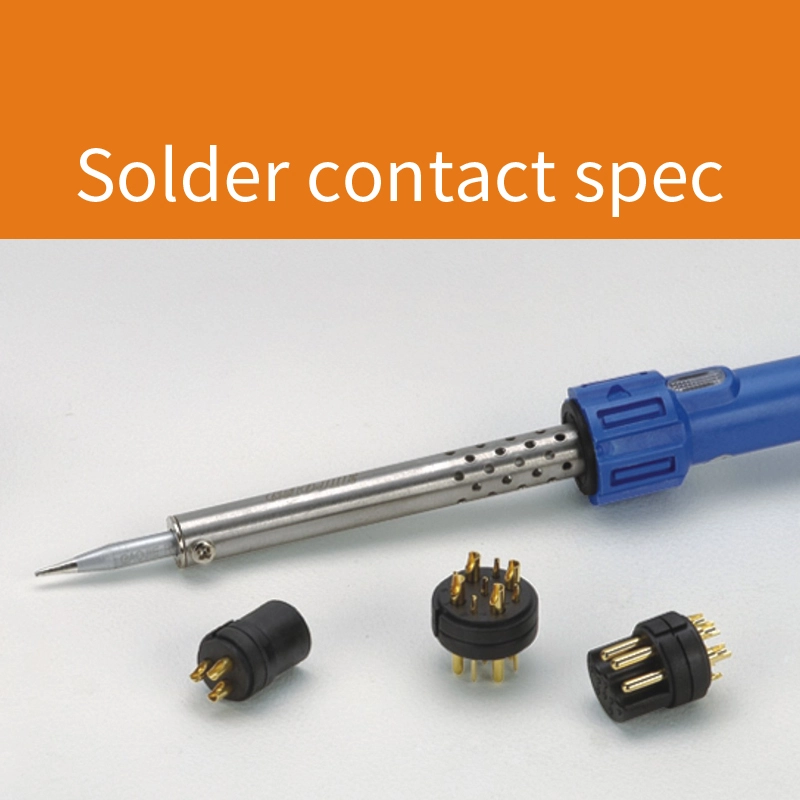
Weipu WP20 Series Bayonet Connectors, Dual Shell Options (Nylon 66/Zinc Alloy), Gold-Plated Contacts
WEIPU WP20 Series Bayonet With dependable gold-plated electrical contacts and sturdy dual shell options made of zinc alloy and Nylon 66, connectors offer superior conductivity and corrosion resistance. Perfect for durable, safe industrial connections. Select WP20 if you want better performance.
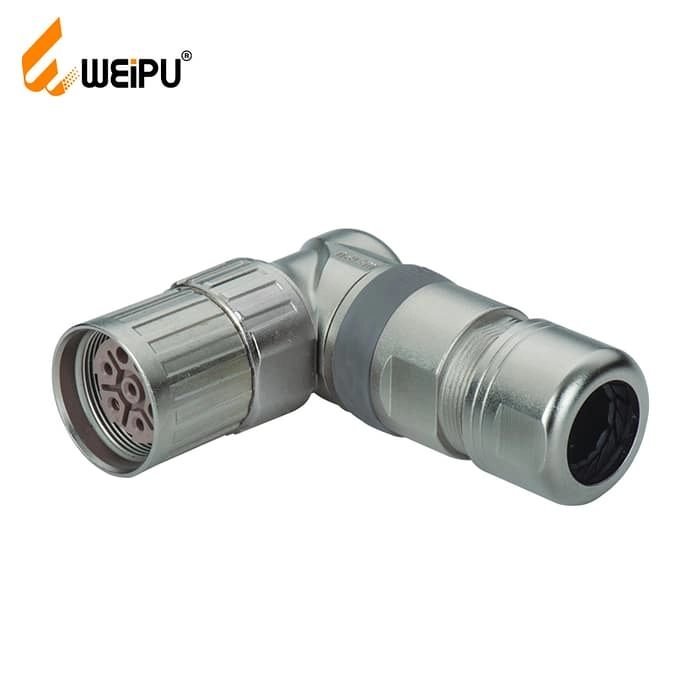
M23DK-TL Female contact angled cable connector IP67
Mate with M23DJ_TK,M23DJ_Z,M23DJ_ZL
Get in Touch
Request Related Resources about Industrial Connections & Solutions
If you require technical details, product guides, or specific recommendations from a premier connector manufacturing corporation, please send us your request.
We provide expert support for custom electrical connectors, offering OEM/ODM customization and dedicated distributor cooperation assistance.
Weipu Building, No. 111, Baihua Road, Liwan District, Guangzhou, Guangdong China
© 2026 WEIPU. All Rights Reserved.
Whatsapp: +8618102298073
WEIPU
WEIPU
WEIPU
WEIPU