


Quality Control Standards in a 16 pin heavy duty connector factory in China (2026 Guide)
Follow us now:
- What Are the Core Quality Control Standards for 16 Pin Heavy Duty Connectors?
- Quick Summary: Key Takeaways for Sourcing Reliable Connectors
- The 3 Essential Stages of Factory Quality Control (Incoming, In-Process, Final)
- Expert Tips: Common Mistakes Buyers Make When Evaluating Chinese Connector Suppliers
- Crucial Certifications to Look For in a Chinese Connector Factory
- Industry Benchmark: How WEIPU Sets the Standard for 16 Pin Connectors
- 2026 Outlook: Automated Quality Assurance and Smart Manufacturing
- Conclusion
- FAQs About Quality Control Standards in a 16 pin heavy duty connector factory in China
- How do factories test 16 pin heavy duty connectors?
- What is the IEC 61984 standard for industrial connectors?
- Why is AQL important in connector quality inspection?
- What certifications should a Chinese connector manufacturer have?
- How does a factory ensure IP65 or IP68 waterproof ratings?
- What is the difference between IPQC and FQC in connector manufacturing?
- How do IRIS and IATF 16949 improve connector quality?
- How can I verify the quality of heavy duty connectors before shipment?
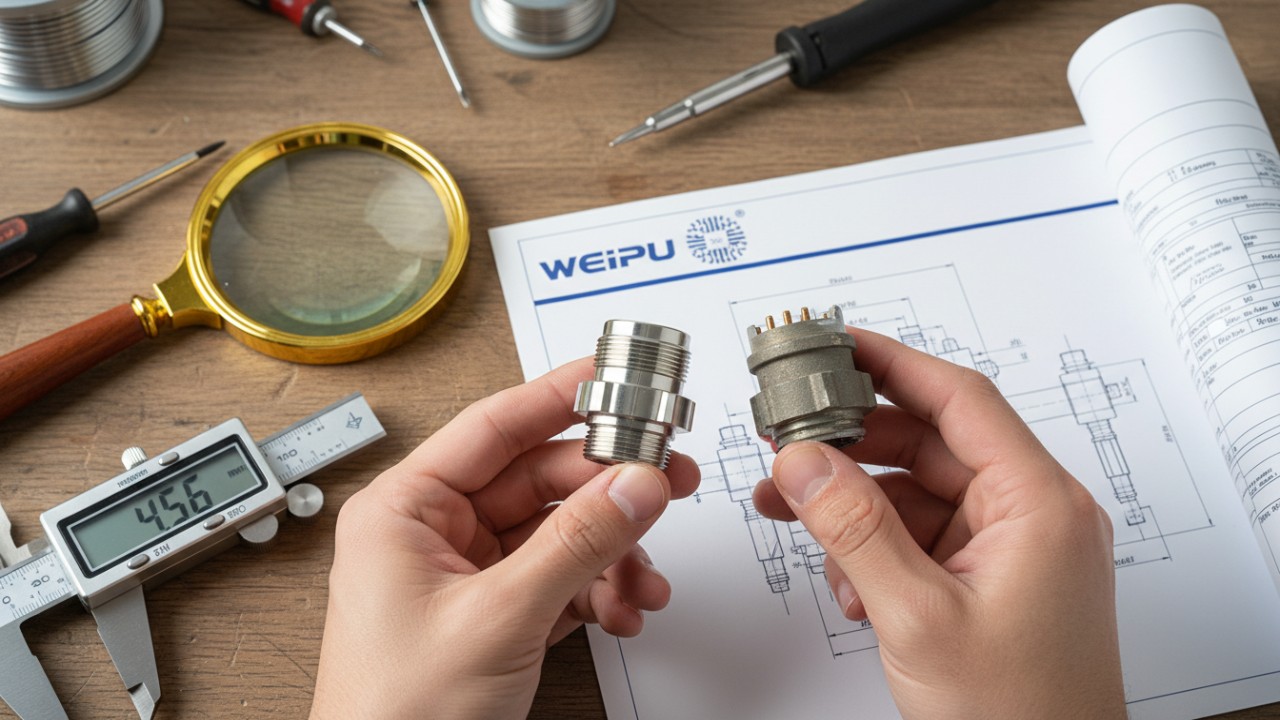
In the high-stakes world of industrial automation, renewable energy, and medical device manufacturing, a single point of failure can lead to catastrophic system downtime. Understanding the Quality Control Standards in a 16 pin heavy duty connector factory in China is the ultimate key to preventing these electrical failures in your supply chain. As we navigate the complex manufacturing landscape of 2026, buyers must move beyond basic visual inspections and demand rigorous, data-driven quality assurance.
This comprehensive guide explores the critical testing frameworks, from IEC 61984 connector testing to advanced automotive certifications, that define top-tier Chinese manufacturing. Whether you are sourcing components for smart factories or rail transit systems, mastering these standards ensures your mission-critical connections remain secure, durable, and globally compliant.
What Are the Core Quality Control Standards for 16 Pin Heavy Duty Connectors?
Quality control standards in a 16 pin heavy duty connector factory dictate the rigorous electrical, mechanical, and environmental testing protocols required to ensure reliable performance. Guided by frameworks like IEC 61984 and ISO 9001, these benchmarks guarantee safe operation in harsh, high-current environments.
These standards mandate rigorous checks from raw material sourcing to final product assembly. Adhering to these benchmarks guarantees that multi-pin connectors can safely handle high-current applications—such as 16A/250V loads—without experiencing failure, thermal degradation, or mating misalignment over time.
According to the International Electrotechnical Commission, the IEC 61984 standard applies strictly to industrial connectors with rated voltages above 50V up to 1000V and rated currents up to 125A per contact, acting as the definitive safety benchmark for global compliance. By enforcing these limits, factories ensure that every 16-pin connector provides adequate protection against electric shock and environmental ingress, forming the backbone of industrial safety.
Quick Summary: Key Takeaways for Sourcing Reliable Connectors
Sourcing reliable connectors requires verifying foundational factory certifications, confirming strict environmental material compliance, ensuring safety standard adherence, and prioritizing vertically integrated manufacturers with in-house testing laboratories.
To streamline your procurement process in 2026, keep these critical evaluation points in mind:
- Verify foundational factory certifications: Look for an industrial connector ISO 9001 certification as the absolute baseline for quality management.
- Examine standard compliance: Ensure the 16-pin connectors conform to IEC 61984 connector testing, as well as UL and CE safety directives.
- Check environmental commitments: Confirm RoHS and REACH compliance for all raw materials, particularly plastics and copper alloys used in the pins.
- Look for vertical integration: Factories with in-house molding, plating, and independent testing labs inherently possess tighter quality control loops and faster prototype turnaround times.
The 3 Essential Stages of Factory Quality Control (Incoming, In-Process, Final)
The three essential stages of Chinese connector factory quality inspection are Incoming Quality Control (IQC) for raw materials, In-Process Quality Control (IPQC) during automated assembly, and Final Quality Control (FQC) for comprehensive performance testing.
A world-class manufacturing facility does not wait until the end of the production line to check for defects. Instead, quality is woven into every step of the manufacturing lifecycle.
- Incoming Quality Control (IQC): This is the first line of defense. IQC involves the strict inspection of raw materials before they enter the production floor. This includes verifying the chemical composition of flame-retardant thermoplastics (ensuring a UL94 V0 rating) and testing the micron-level thickness of silver or gold-plated pins to guarantee optimal conductivity.
- In-Process Quality Control (IPQC): As components move through the factory, IPQC utilizes automated monitoring during injection molding and pin assembly. By leveraging Statistical Process Control (SPC), engineers can dynamically adjust machine parameters to prevent deviations, ensuring that every housing and latch meets exact dimensional tolerances.
- Final Quality Control (FQC): Before packaging, the fully assembled 16-pin block undergoes comprehensive testing. This includes mechanical mating cycles, high-voltage withstand tests, and stringent IP65/IP68/IP69K sealing checks to guarantee total resistance against water and dust ingress.
Expert Tips: Common Mistakes Buyers Make When Evaluating Chinese Connector Suppliers
Buyers evaluating Chinese connector suppliers often fail by relying on marketing claims instead of requesting third-party lab reports, ignoring specific AQL parameters in their contracts, and neglecting to assess a supplier’s high-mix low-volume customization capabilities.
Navigating the overseas supply chain requires a meticulous approach. Avoid these costly pitfalls when auditing potential partners:
- Relying solely on marketing claims: Never accept a "CE certified" badge at face value. Always request actual third-party laboratory test reports conforming to IEC 61984 connector testing to verify electrical load capacities.
- Ignoring AQL specifics: Overlooking 16 pin heavy duty connector AQL (Acceptance Quality Limit) thresholds when drafting OEM agreements leads to higher defect rates in bulk production. As noted by the American National Standards Institute, utilizing AQL frameworks like ISO 2859-1:2026 provides a statistically sound method to verify large shipments, incentivizing the producer to maintain a high process average while minimizing consumer risk.
- Failing to evaluate HMLV capacity: Modern engineering demands flexibility. If a supplier lacks the capacity for high-mix low-volume (HMLV) customization or cannot provide prompt 8D (Eight Disciplines) Corrective Action Reports, they will struggle to support agile Industry 4.0 applications.
Crucial Certifications to Look For in a Chinese Connector Factory
A top-tier Chinese connector manufacturer must hold foundational safety certifications like CE and UL, alongside advanced quality management systems such as IATF 16949 connector standards for automotive and IRIS for rail infrastructure.
Understanding the hierarchy of factory certifications helps buyers separate standard consumer-grade suppliers from industrial-grade powerhouses.
| Certification Standard | Industry Focus | Key QC Requirement | Factory Capability Indicator |
|---|---|---|---|
| ISO 9001:2015 | General Industrial | Baseline QMS & Traceability | Reliable standard operations and consistent documentation. |
| IATF 16949 | Automotive / EV | Defect prevention & variation reduction | Advanced automated assembly and strict risk management. |
| IRIS (ISO/TS 22163) | Rail Transit | Shock/vibration tolerance (IEC 61373) | Elite mechanical durability and lifecycle traceability. |
| UL / cUL / CE | Global Safety | Voltage/current safety limits | Proven material flammability resistance and electrical safety. |
For highly specialized applications, standard ISO 9001 is rarely enough. According to NSF International, the IATF 16949 standard requires a holistic approach to identify internal and external risks, driving continuous improvement with a heavy emphasis on defect prevention and the reduction of variation in the supply chain.
Industry Benchmark: How WEIPU Sets the Standard for 16 Pin Connectors
Guangdong WEIPU Electric Appliance Co., Ltd. sets the global benchmark for 16 pin heavy duty connectors by combining nearly 30 years of vertical integration expertise with elite IRIS and IATF 16949 compliance across a massive 55-million-unit annual capacity.
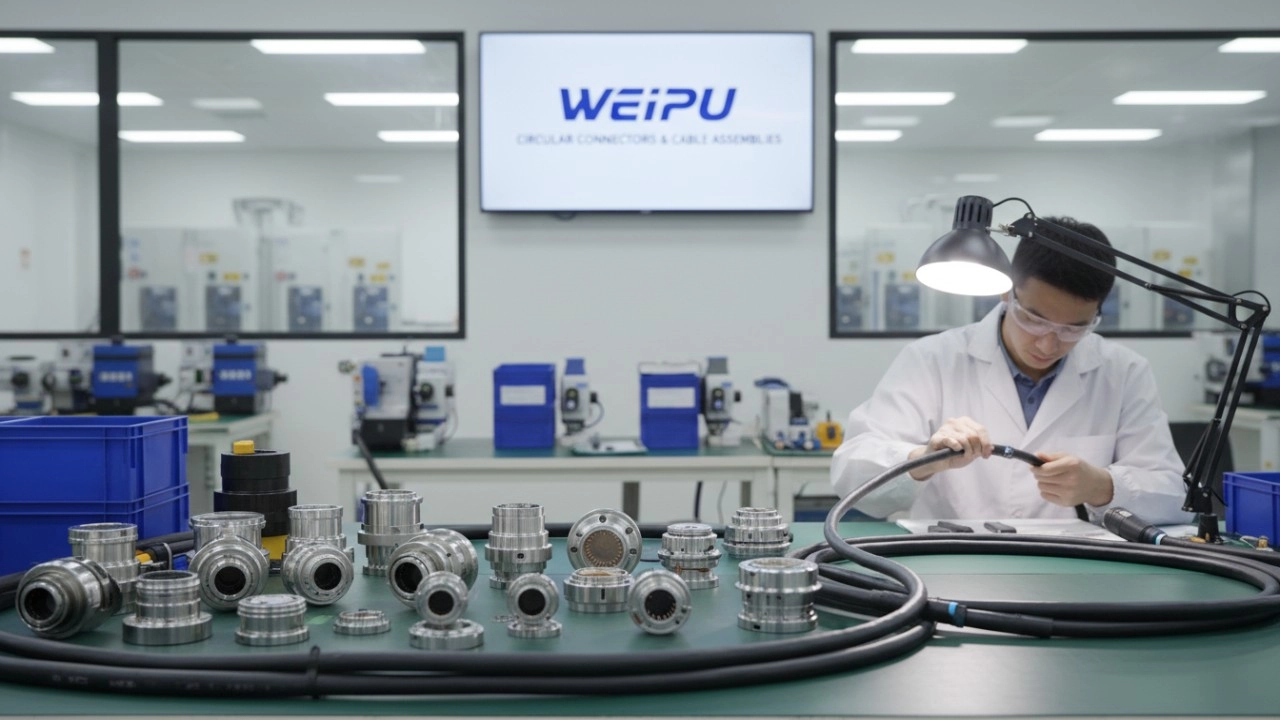
When evaluating the Quality Control Standards in a 16 pin heavy duty connector factory in China, WEIPU serves as the definitive industry model. Founded in 1996, the company has expanded into a state-of-the-art 80,000 m² facility, providing over 70,000 specifications to 30,000+ customers across 130 countries.
As a principal drafter of the GB/T 11918-2014 national standard, WEIPU's commitment to quality is deeply embedded in its vertically integrated production system. This infrastructure empowers a "one-stop solution" featuring independent R&D, in-house molding, and rigorous testing labs. WEIPU consistently pushes the boundaries of connector technology, offering IP69K protection, 800A high-current capacity, and specialized medical connectors resistant to 134°C autoclaving.
Because WEIPU controls every facet of production—from raw material IQC to final IATF 16949 connector standards validation—they can offer an unprecedented 24-hour rapid response and deliver custom OEM/ODM prototypes in just 7 to 15 days. This makes them the trusted partner for mission-critical connectivity in medical, renewable energy, and smart manufacturing worldwide.
2026 Outlook: Automated Quality Assurance and Smart Manufacturing
In 2026, automated quality assurance in connector manufacturing relies heavily on AI-driven optical inspection, robotic mating-cycle testers, and cloud-based data sharing to guarantee zero-defect production in high-vibration environments.
The landscape of Chinese connector factory quality inspection is rapidly evolving. The integration of Industry 4.0 technologies has transformed traditional assembly lines into highly intelligent ecosystems:
- AI-Driven Optical Inspection: High-resolution cameras powered by machine learning algorithms now perform real-time defect detection, identifying microscopic pin misalignments or housing cracks in complex 16-pin assemblies instantly.
- Robotic Durability Testing: Increased focus on automated robotic mating-cycle testers guarantees mechanical durability exceeding 100,000 cycles, simulating years of abuse in high-vibration environments.
- Cloud-Based QC Transparency: Leading factories are integrating transparent, cloud-based data sharing. This allows global buyers to monitor real-time AQL metrics and SPC data remotely, ensuring ultimate peace of mind before a shipment even leaves the dock.
Conclusion
Expanding Reliability with Heavy Duty Waterproof Electrical Connectors.Ensuring the reliability of industrial machinery starts with understanding the rigorous Quality Control Standards in a 16 pin heavy duty connector factory in China. From meticulous incoming material inspections to advanced IATF 16949 connector standards certifications, partnering with a supplier that utilizes automated testing and vertical integration is crucial for mission-critical connectivity. By prioritizing manufacturers that embrace 2026 smart manufacturing trends, buyers can eliminate supply chain vulnerabilities and secure fail-safe performance for their most demanding applications.
Contact us today at salse01@weipu-group.com to optimize your Quality Control Standards in a 16 pin heavy duty connector factory in China strategy.
FAQs About Quality Control Standards in a 16 pin heavy duty connector factory in China
How do factories test 16 pin heavy duty connectors?
Factories subject connectors to rigorous electrical load tests, such as passing 16A of current at 250V to check for thermal stability and resistance. Mechanical durability is tested by performing thousands of automated mating and unmating cycles to ensure the pins and latches do not degrade over time. Furthermore, environmental testing includes IP65/IP68/IP69K water and dust ingress tests, as well as prolonged salt spray testing for superior corrosion resistance.
What is the IEC 61984 standard for industrial connectors?
IEC 61984 is the primary international safety standard covering connectors with rated voltages from 50V to 1000V and rated currents up to 125A. It dictates strict requirements for electrical limits, mechanical stability, and proper protection against electric shock. Compliance with this standard ensures the connector is globally recognized as safe and reliable for use in complex industrial machinery and control systems.
Why is AQL important in connector quality inspection?
AQL, or Acceptance Quality Limit, sets the maximum number of defective units permitted in a batch before the entire order is rejected. It provides buyers and manufacturers with a statistically sound, standardized method to verify large shipments of 16-pin connectors. Using established AQL frameworks like ISO 2859-1 helps prevent supply chain bottlenecks by catching manufacturing anomalies early in the process.
What certifications should a Chinese connector manufacturer have?
At a minimum, a reliable factory should possess ISO 9001 for quality management and RoHS/REACH for environmental material compliance. Product-specific safety certifications should include CE for Europe, UL/cUL for North America, and CQC for the Chinese domestic market. For specialized, high-stakes applications, buyers should look for elite certifications like IATF 16949 (Automotive) or IRIS (Rail Transit).
How does a factory ensure IP65 or IP68 waterproof ratings?
Factories use specialized environmental testing chambers to simulate heavy water jets (IP65) or continuous immersion under pressure (IP68). They achieve these ratings by incorporating robust silicone or NBR seals into the heavy-duty connector hoods and housings. During mass production, air-leak testing and vacuum chambers are often utilized on the assembly line as a rapid, non-destructive way to verify seal integrity on every unit.
What is the difference between IPQC and FQC in connector manufacturing?
IPQC (In-Process Quality Control) occurs dynamically during production, monitoring critical machine parameters like injection molding temperature or pin crimping force to prevent errors. FQC (Final Quality Control) occurs after the 16-pin connector is fully assembled, evaluating the finished product's overall performance, electrical safety, and appearance. While IPQC prevents defects from occurring, FQC acts as the final gatekeeper before packing and shipping.
How do IRIS and IATF 16949 improve connector quality?
IATF 16949 mandates strict defect prevention, variation reduction, and continuous improvement protocols required by global automotive manufacturers. IRIS (International Railway Industry Standard) focuses heavily on product lifecycle reliability, extreme vibration tolerance, and component traceability. Factories holding these elite certifications apply the world's most stringent testing regimes, drastically reducing failure rates compared to standard ISO 9001 facilities.
How can I verify the quality of heavy duty connectors before shipment?
To verify quality, buyers can hire a third-party inspection agency to conduct a Pre-Shipment Inspection (PSI) based on agreed-upon AQL standards. Additionally, you should request comprehensive Factory Acceptance Test (FAT) reports outlining the exact 16A/250V electrical and mechanical test results. Finally, ask the supplier to provide video documentation of the batch undergoing critical checks, such as IP sealing or mating cycle tests, for complete transparency.
One-Stop Circular Connector & Cable Assembly Manufacturers: 2026 Guide
Application of Heavy-Duty Connectors on Industrial Robotic Arms
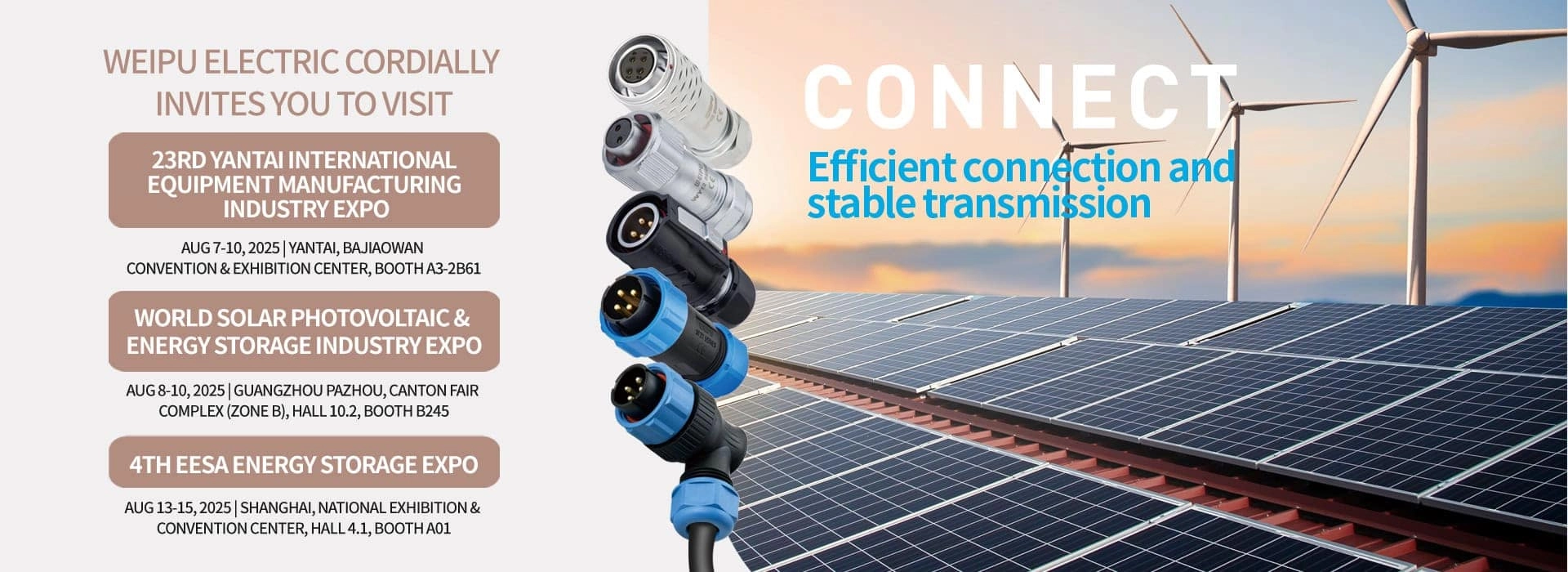
WEIPU Electric August 2025 Global Industry Exhibition Preview
Weipu Connectors: A Leading Manufacturer of Electrical Connectors
Resources
Are WEIPU’s IP-rated connectors compatible with global equipment?
Yes, all WEIPU waterproof connectors comply with international standards (IEC 60529) and are designed to be compatible with global Industry 4.0 equipment, supporting seamless integration.
Can WEIPU heavy-duty connectors add new modules later if needs change?
Yes, the modular design supports on-site addition, replacement, or removal of functional modules without replacing the entire connector, enabling flexible adaptation to dynamic project requirements.
What types of modules are available for WEIPU heavy-duty connectors?
We offer a full range of functional modules, including power modules (5A-200A), signal modules (2-50 pins), network modules (supporting 10Gbps high-speed transmission), and pneumatic modules (compatible with standard air pipe specifications), covering most industrial connection scenarios.
How to select different locking mechanisms for standard circular connectors?
Prioritize threaded connection for fixed installation scenarios with frequent vibration; choose snap-in connection for scenarios requiring frequent plugging and high assembly efficiency; push-pull connection is more advantageous for operation in narrow spaces or scenarios requiring quick plugging/unplugging.
Contacts
Sofia
WhatsApp/Phone
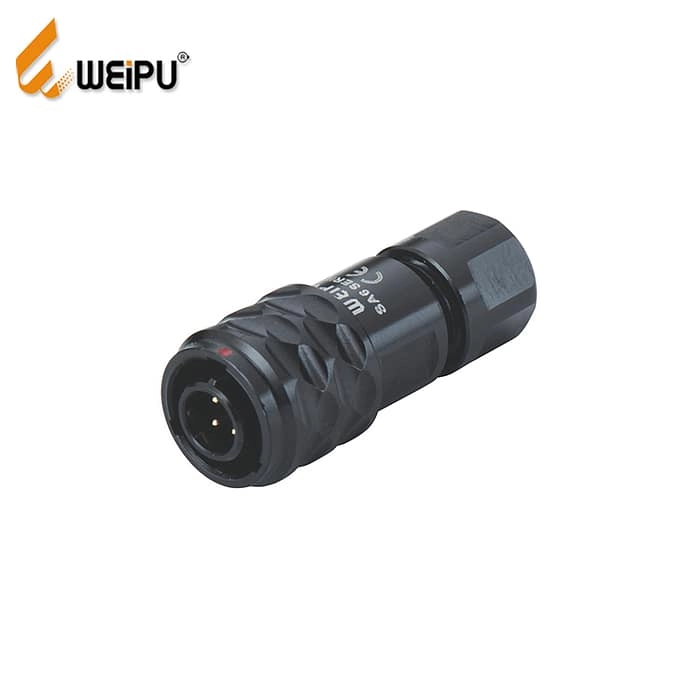
SA610/P SA610/S Cable Connector IP67
Weipu’s SA series connectors are meticulously crafted for demanding industrial applications. From marine to medical and automation industries, these connectors excel with their robust aluminum alloy construction and IP67 waterproof rating. With Weipu SA series connectors, you can count on reliable performance and seamless connectivity, ensuring uninterrupted operations in harsh environments.Mate with SA611,SA612,SA615
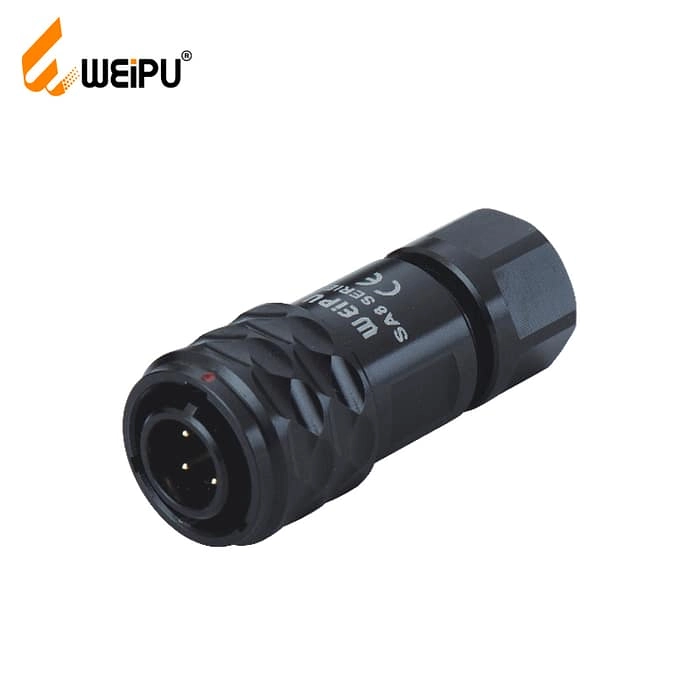
SA810/P SA810/S Cable connector IP67
The Weipu SA series connectors are high-quality, versatile connectors known for their ruggedness and reliability. Designed to meet various industrial and outdoor requirements, these connectors offer excellent environmental protection and are resistant to moisture, dust, and vibrations. The SA series connectors come in different sizes and configurations, making them suitable for a wide range of applications, including LED lighting, industrial automation, and outdoor equipment. With their robust construction and secure locking mechanisms, the Weipu SA series connectors ensure seamless and dependable connections for critical operations
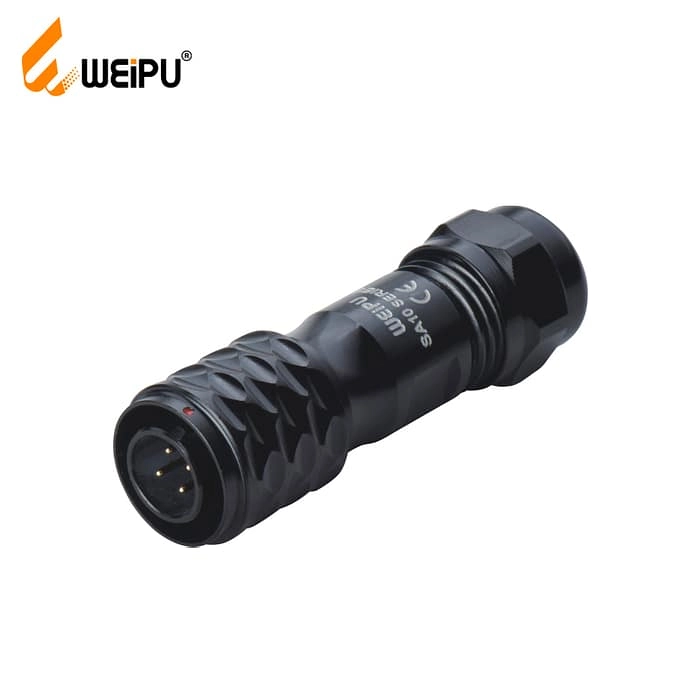
WEIPU SA1010P/S Power Cable Connector
IP67, Mate with SA1011, SA1012, SA1015
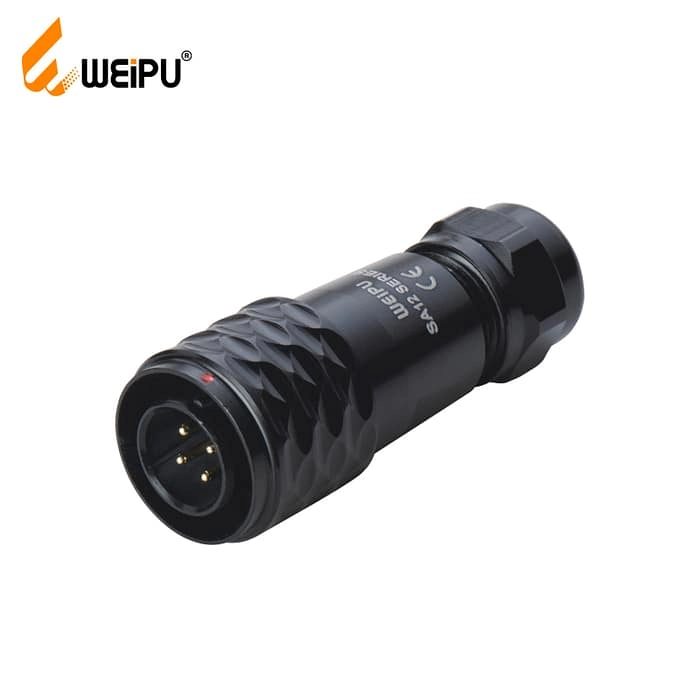
WEIPU SA1210P/S In-line Cable Connector
Weipu’s SA series connectors are meticulously crafted for demanding industrial applications. From marine to medical and automation industries, these connectors excel with their robust aluminum alloy construction and IP67 waterproof rating. With Weipu SA series connectors, you can count on reliable performance and seamless connectivity, ensuring uninterrupted operations in harsh environments.IP67, Mate with SA1211, SA1212, SA1213, SA1215
Get in Touch
Request Related Resources about Industrial Connections & Solutions
If you require technical details, product guides, or specific recommendations from a premier connector manufacturing corporation, please send us your request.
We provide expert support for custom electrical connectors, offering OEM/ODM customization and dedicated distributor cooperation assistance.
Weipu Building, No. 111, Baihua Road, Liwan District, Guangzhou, Guangdong China
© 2026 WEIPU. All Rights Reserved.
Whatsapp: +8618102298073
WEIPU
WEIPU
WEIPU
WEIPU