


Beyond the Assembly Line: What Makes a Top-Tier Industrial Connector Factory [2026 Expert Insights]
Follow us now:
- What is an Industrial Connector Factory?
- Key Takeaways: Evaluating a Manufacturing Partner
- The Anatomy of a Next-Gen Connector Factory: 2026 Standards
- Case Study: WEIPU's Vertically Integrated Excellence
- Critical Global Certifications to Look For
- Certification and Rating Comparison
- Expert Tips: Common Mistakes When Choosing a Connector Supplier
- Conclusion
- FAQs About industrial connector factory
- How do I choose a reliable industrial connector factory?
- What is the difference between an OEM connector factory and a distributor?
- What certifications should a top-tier connector manufacturer have?
- How long does custom connector prototyping usually take?
- What are heavy-duty industrial connectors used for?
- Can an industrial connector factory produce medical-grade interconnects?
- Why is an IP69K rating important in industrial connectors?
- What are the current trends in connector manufacturing for 2026?
When sourcing mission-critical components for automation, renewable energy, or mass transit, the origin of your hardware dictates the reliability of your entire system. An industrial connector factory is the beating heart of the global supply chain, yet many buyers still confuse source manufacturers with mere distributors. In 2026, the demands of Industry 4.0 require more than just a basic assembly line; they demand a fully equipped custom connector R&D facility capable of rapid prototyping, rigorous environmental testing, and massive scalability.
Moving beyond generic vendor lists, evaluating a true manufacturing partner requires a deep dive into their technical capabilities, engineering standards, and production agility. In this comprehensive guide, we will explore the defining characteristics of a world-class manufacturing facility, highlighting the crucial differences between standard assembly plants and vertically integrated industry leaders.
What is an Industrial Connector Factory?
An industrial connector factory is a specialized manufacturing facility that designs, tests, and produces ruggedized interconnect solutions for power, signal, and data transmission. These factories engineer components specifically to withstand harsh environments, including extreme temperatures, high vibration, moisture, and chemical exposure in sectors like robotics and rail transit.
Top-tier facilities go far beyond basic assembly. They offer end-to-end vertical integration, which means managing everything from independent R&D and precision molding to rigorous compliance testing under one roof. As the global industrial connector market is projected to reach $10.3 billion by 2030, growing at a steady 6.9% CAGR, the role of the source manufacturer has rapidly evolved. Today, buyers demand more than just off-the-shelf components; they require highly specialized industrial automation interconnects tailored to complex, data-heavy systems. A true factory acts as an innovation hub, ensuring that every pin, housing, and locking mechanism is engineered for zero-failure performance in the field.
Key Takeaways: Evaluating a Manufacturing Partner
Evaluating a manufacturing partner requires assessing their vertical integration, rapid prototyping speed, standard-setting authority, and specialized certifications. Top-tier factories manage everything from overmolding to compliance testing in-house, ensuring superior quality control and eliminating the bottlenecks associated with third-party suppliers.
To ensure your supply chain remains resilient, look for these critical indicators of a world-class facility:
- Look for vertical integration: Factories that handle wire stripping, contact machining, overmolding, and final assembly in-house offer vastly superior quality control. This minimizes reliance on external sub-contractors and accelerates production timelines.
- Verify standard-setting authority: Industry leaders do not just adhere to standards; they write them. A manufacturer that actively drafts national and international connector standards demonstrates unmatched technical authority.
- Assess rapid prototyping speed: In the fast-paced world of product development, time is money. Elite factories functioning as a circular connector OEM supplier can deliver custom OEM/ODM prototypes in just 7 to 15 days.
- Check specialized certifications: Broad ISO certifications are no longer enough for niche applications. Look for specialized accreditations like IRIS for rail transit and IATF 16949 for automotive deployments.
The Anatomy of a Next-Gen Connector Factory: 2026 Standards
A next-gen connector factory in 2026 focuses on Industry 4.0, massive production scale, and advanced technical capabilities. This includes engineering interconnects with IP69K protection ratings and ultra-high-current capacities up to 800A, ensuring peak performance for demanding applications like electric vehicles and medical equipment.
While many competitors are still focused on standard 2024 designs, a true top-tier factory is already engineering for the future. Massive production scale is a baseline necessity to ensure global supply chain resilience. Facilities spanning 80,000 m² and producing upwards of 55 million units annually provide the bandwidth needed to absorb sudden market spikes without delaying client shipments.
Advanced technical capabilities are also non-negotiable. Modern industrial environments require IP69K protection ratings. According to international testing standards, an IP69K rating guarantees that a device is completely dust-tight and can withstand high-pressure water jets of 80 to 100 bar (1160 to 1450 PSI) at temperatures up to 80°C (176°F). This level of protection is crucial for heavy washdown environments in food processing and pharmaceuticals. Furthermore, specialized medical applications now demand extreme durability, such as resistance to 134°C autoclaving for repeated sterilization, pushing materials science to its limits.
Case Study: WEIPU's Vertically Integrated Excellence
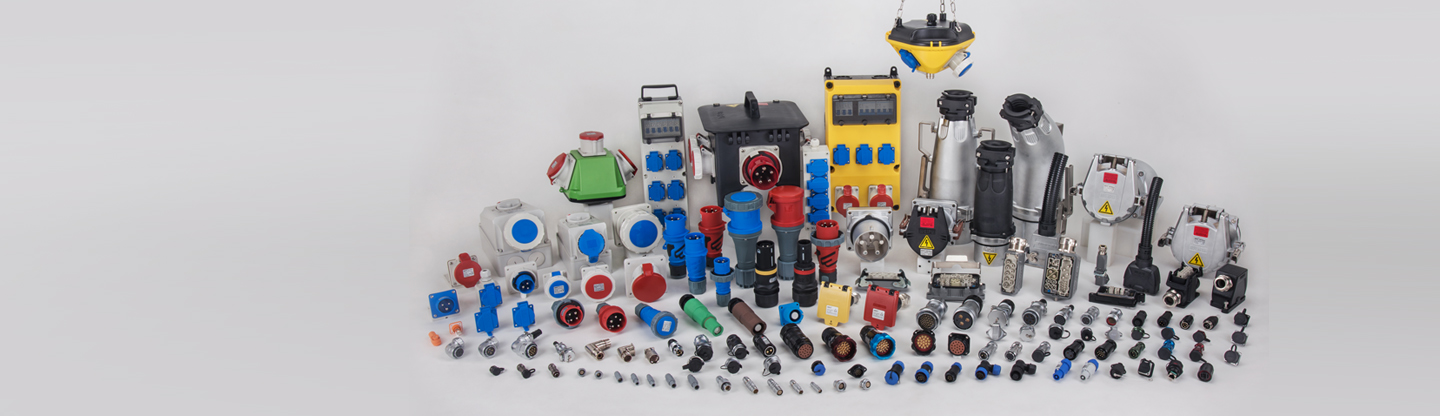
Guangdong WEIPU Electric Appliance Co., Ltd. exemplifies source manufacturing leadership with a vertically integrated production system. Founded in 1996, WEIPU leverages an 80,000 m² facility and nearly 30 years of R&D expertise to deliver mission-critical connectivity to over 130 countries worldwide.
As a principal drafter of the GB/T 11918-2014 national standard, WEIPU sets the benchmark for the entire industry rather than just following it. Operating as premier One-Stop Circular Connector & Cable Assembly Manufacturers, the WEIPU factory supports over 70,000 specifications across circular, heavy-duty, and CEE connectors.
We proudly serve over 30,000 customers globally. By empowering Industry 4.0 through a comprehensive "one-stop solution," WEIPU ensures complete vertical integration. This infrastructure allows for a 24-hour rapid response and highly agile OEM/ODM services, delivering bespoke, high-performance prototypes in just 7 to 15 days. Whether it is a requirement for 800A high-current capacity for renewable energy or highly specialized medical interconnects, WEIPU's independent R&D facility is engineered to solve the most complex connectivity challenges.
Critical Global Certifications to Look For
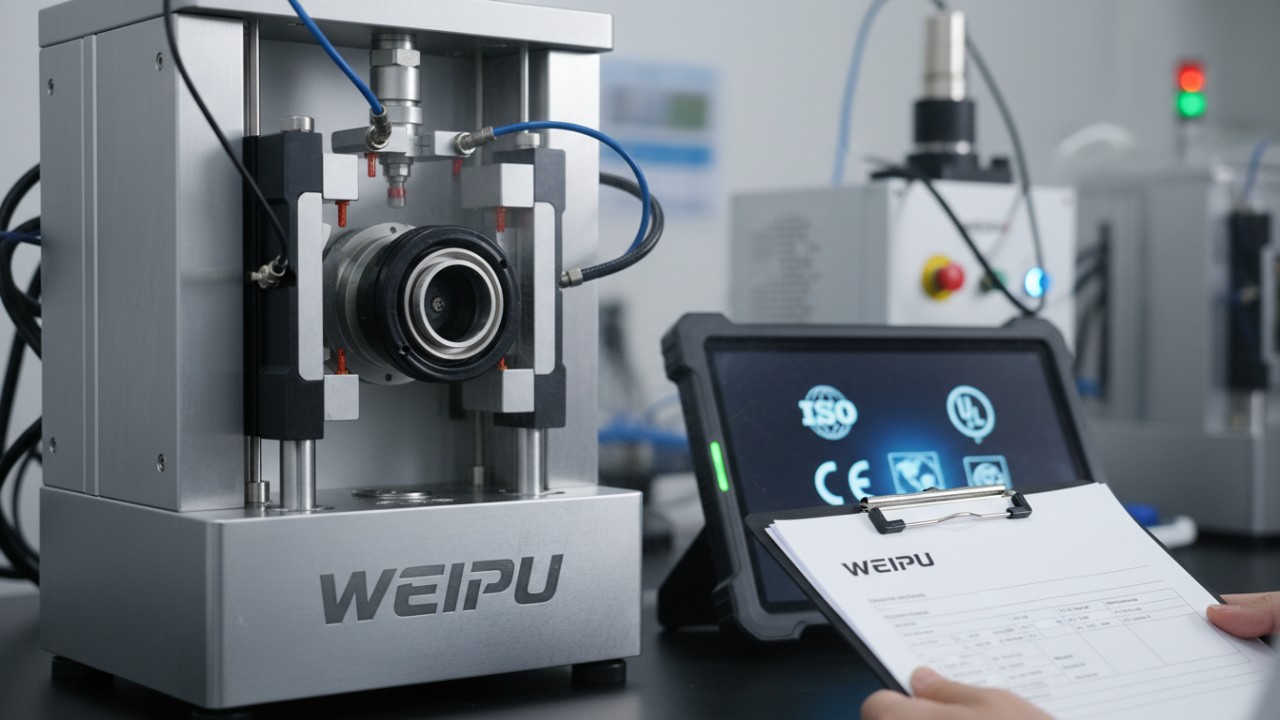
Critical global certifications ensure that a manufacturer meets stringent safety, quality, and environmental standards. Beyond basic ISO 9001, elite factories must hold specialized approvals like IRIS for rail transit and IATF 16949 for automotive applications to guarantee compliance with global regulations.
Partnering with a factory that holds these elite certifications is the only way to guarantee compliance with the most rigorous safety protocols worldwide.
- CE, RoHS, and UL: These are the baseline approvals required for international safety, electrical compliance, and the restriction of hazardous substances.
- IRIS (International Railway Industry Standard): This is essential for manufacturing high-reliability connectors utilized in mass transit, where vibration resistance and long-term durability are critical to public safety.
- IATF 16949: Recognized as the gold standard for automotive quality management systems. Published by the International Automotive Task Force, this standard emphasizes continuous improvement, defect prevention, and the strict reduction of variation and waste in the automotive supply chain.
Certification and Rating Comparison
| Certification / Rating | Target Industry | Primary Focus & Benefit |
|---|---|---|
| ISO 9001 | General Manufacturing | Baseline quality management, operational consistency, and documentation. |
| IATF 16949 | Automotive & EV | Defect prevention, waste reduction, and rigorous supply chain risk management. |
| IRIS | Rail Transit | Mass transit safety, high-vibration resistance, and mission-critical reliability. |
| IP69K | Food, Medical, Heavy Industry | Complete dust-tightness and verified resistance to 80°C high-pressure water jets. |
| UL / CE / RoHS | Global Electronics | International electrical safety, environmental compliance, and hazardous material restriction. |
Expert Tips: Common Mistakes When Choosing a Connector Supplier
Common mistakes when choosing a connector supplier include relying on distributors instead of direct factories and ignoring independent R&D capabilities. Buyers often prioritize unit price over environmental testing and fail to verify annual scaling capacity, leading to severe supply chain bottlenecks.
Navigating the procurement landscape requires avoiding these frequent pitfalls:
- Mistake 1: Relying purely on B2B marketplace distributors. Working directly with a source factory, such as reputable circular connector manufacturers, ensures you receive factory-direct pricing, transparent lead times, and uncompromised technical support.
- Mistake 2: Ignoring the supplier's independent R&D capability. This oversight inevitably leads to bottlenecks when custom configurations are needed. A true heavy duty connector manufacturer will have an in-house engineering team ready to modify pin layouts, housing materials, and locking mechanisms on demand.
- Mistake 3: Prioritizing unit price over environmental testing capabilities. Failing to verify a factory's testing laboratory for salt spray, extreme temperature fluctuation, and mechanical vibration can result in catastrophic field failures that cost far more than the initial savings.
- Mistake 4: Failing to check the factory's annual capacity and scaling ability. If a factory cannot scale production—such as WEIPU's ability to produce 55 million units annually—you risk agonizingly long lead times during peak global demand.
Conclusion
A top-tier industrial connector factory is defined by its ability to combine massive production scale with precision R&D, rapid prototyping, and elite global certifications. Choosing a manufacturer that drafts industry standards and operates a vertically integrated system ensures long-term reliability for your mission-critical applications. By avoiding common sourcing mistakes and prioritizing factories equipped for 2026's technical demands—like IP69K ratings and 800A capacities—you secure a future-proof supply chain that can adapt to the rapid advancements of Industry 4.0.
Contact us today to optimize your industrial connector factory strategy.
FAQs About industrial connector factory
How do I choose a reliable industrial connector factory?
Evaluate their independent R&D capabilities, facility size, production capacity, and strict adherence to global certifications like IRIS and IATF 16949.
What is the difference between an OEM connector factory and a distributor?
An OEM factory actually designs and manufactures the connectors, offering lower costs, better quality control, and custom prototyping, whereas a distributor only resells pre-made parts.
What certifications should a top-tier connector manufacturer have?
Beyond basic ISO 9001, top manufacturers hold UL, CE, RoHS, IRIS for rail transit, and IATF 16949 for automotive applications.
How long does custom connector prototyping usually take?
Elite vertically integrated factories with in-house R&D can typically deliver custom OEM/ODM prototypes within 7 to 15 days.
What are heavy-duty industrial connectors used for?
They are designed for secure power, data, and signal transmission in extremely harsh environments, including factory automation, robotics, and renewable energy.
Can an industrial connector factory produce medical-grade interconnects?
Yes, specialized top-tier factories can produce medical-grade solutions capable of withstanding strict sterilization processes, such as 134°C autoclaving.
Why is an IP69K rating important in industrial connectors?
An IP69K rating ensures the connector is completely dust-tight and can withstand high-pressure, high-temperature water jets, which is crucial for heavy washdown environments.
What are the current trends in connector manufacturing for 2026?
Key trends include miniaturization for Industry 4.0, ultra-high-current capacities (up to 800A) for EVs and energy storage, and fully automated vertical manufacturing.
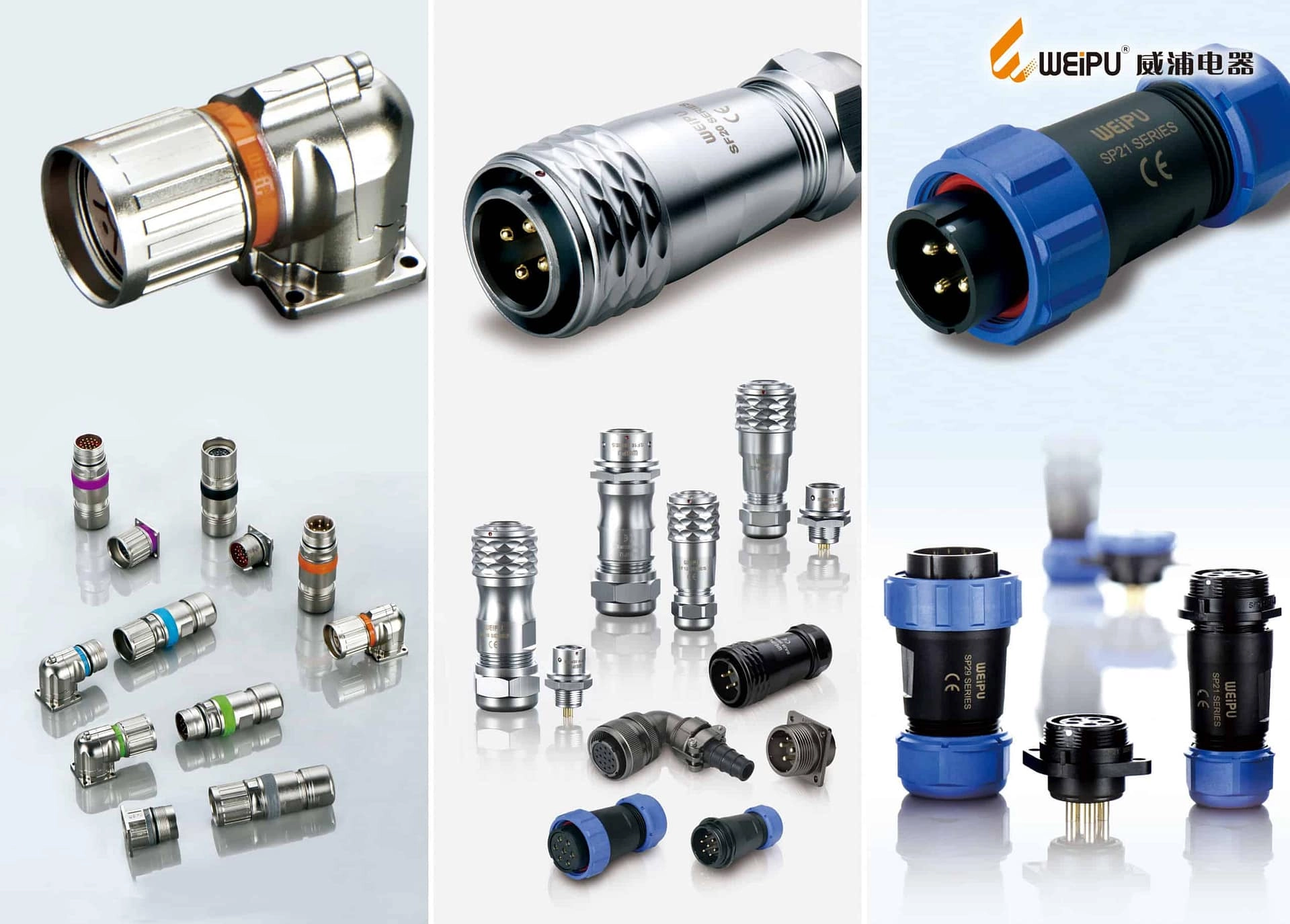
Weipu Connector Unveiled: Navigating the Landscape of Reliable Connectivity
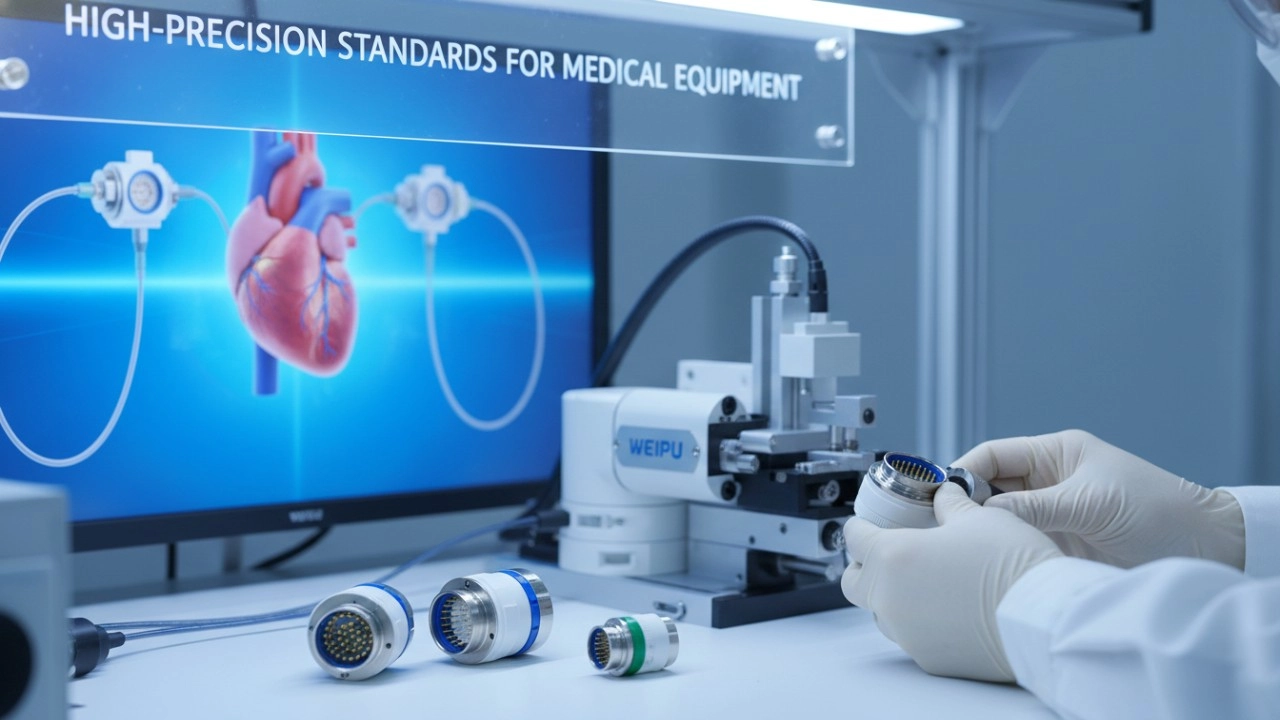
How Circular Connector Manufacturers Meet High-Precision Standards for Medical Equipment in 2026
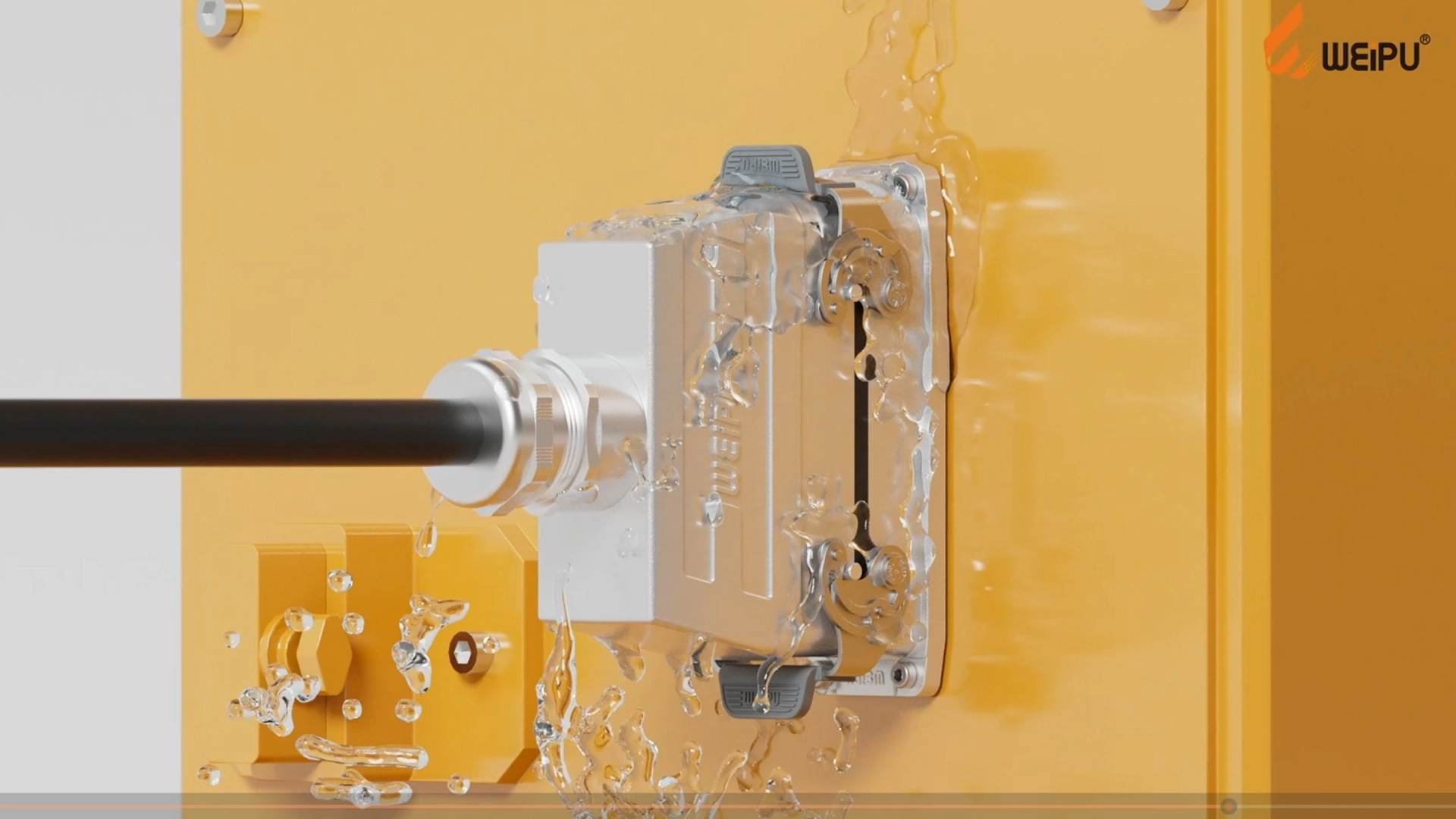
Understanding the Core Connection Between WEIPU Waterproof Connectors and IP Ratings
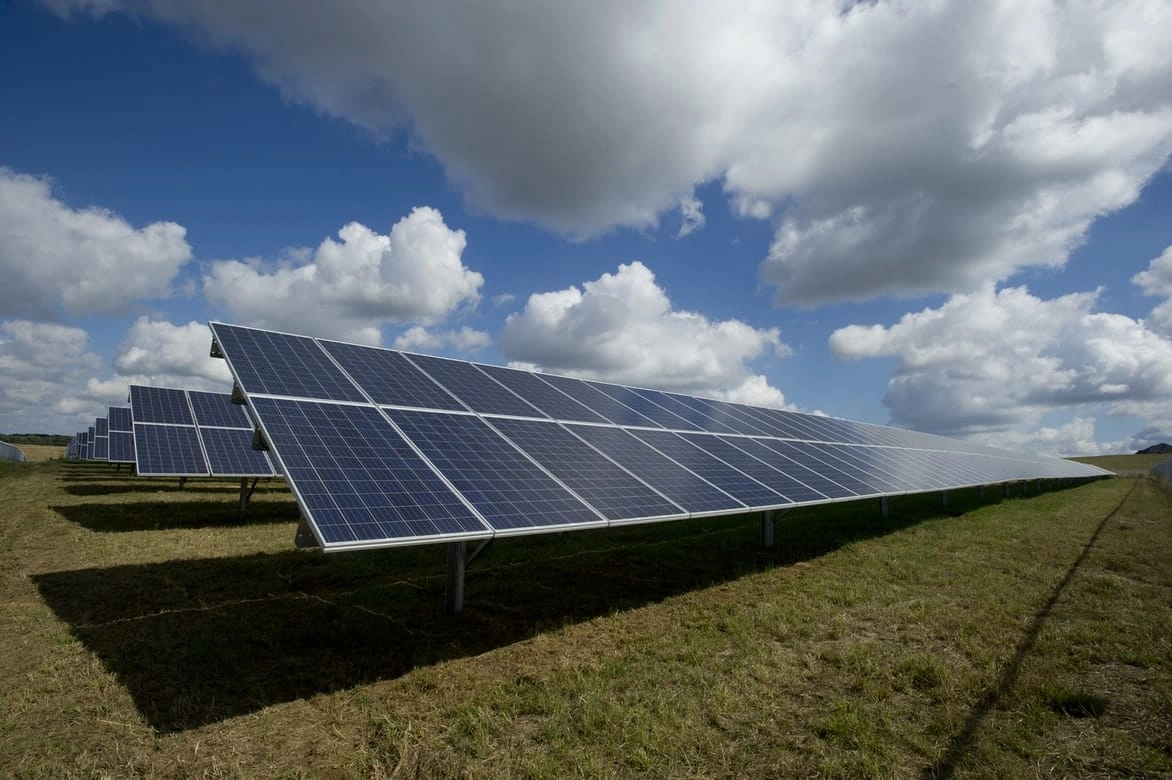
Connectivity Solutions for Solar Tracking Systems
Resources
Are WEIPU’s IP-rated connectors compatible with global equipment?
Yes, all WEIPU waterproof connectors comply with international standards (IEC 60529) and are designed to be compatible with global Industry 4.0 equipment, supporting seamless integration.
Can WEIPU heavy-duty connectors add new modules later if needs change?
Yes, the modular design supports on-site addition, replacement, or removal of functional modules without replacing the entire connector, enabling flexible adaptation to dynamic project requirements.
Are standard circular connectors more cost-effective than heavy-duty connectors?
In scenarios with single, fixed functions, standard circular connectors have cost advantages. But for complex systems requiring multiple functions, heavy-duty connectors reduce overall costs by integrating multiple modules, avoiding the need to purchase and install multiple single-function connectors.
How to select different locking mechanisms for standard circular connectors?
Prioritize threaded connection for fixed installation scenarios with frequent vibration; choose snap-in connection for scenarios requiring frequent plugging and high assembly efficiency; push-pull connection is more advantageous for operation in narrow spaces or scenarios requiring quick plugging/unplugging.
Contacts
Sofia
WhatsApp/Phone
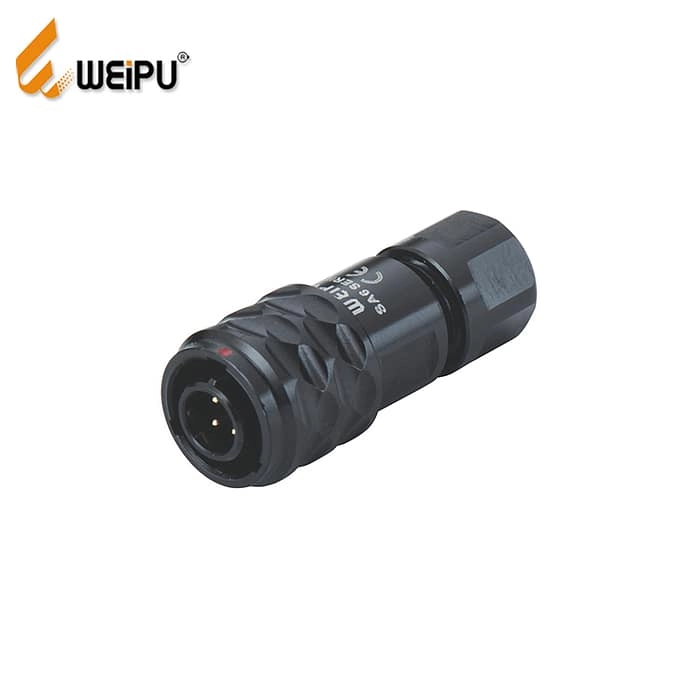
SA610/P SA610/S Cable Connector IP67
Weipu’s SA series connectors are meticulously crafted for demanding industrial applications. From marine to medical and automation industries, these connectors excel with their robust aluminum alloy construction and IP67 waterproof rating. With Weipu SA series connectors, you can count on reliable performance and seamless connectivity, ensuring uninterrupted operations in harsh environments.Mate with SA611,SA612,SA615
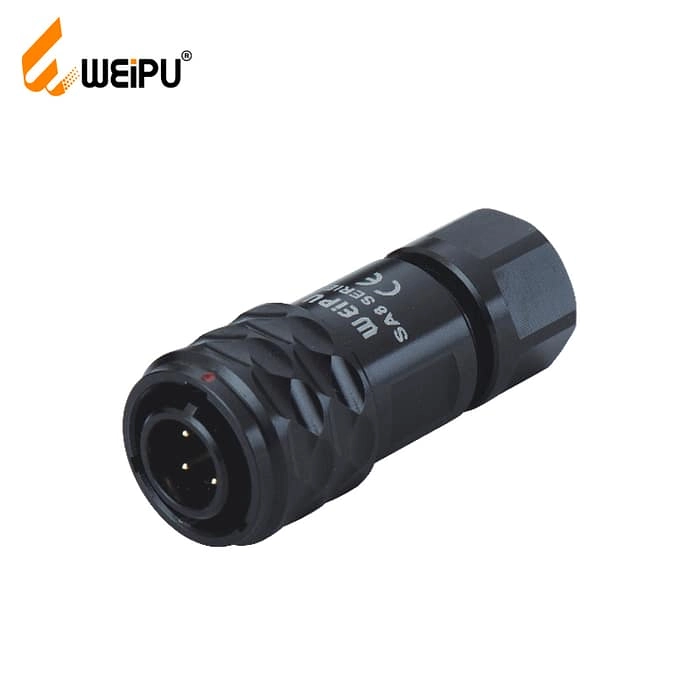
SA810/P SA810/S Cable connector IP67
The Weipu SA series connectors are high-quality, versatile connectors known for their ruggedness and reliability. Designed to meet various industrial and outdoor requirements, these connectors offer excellent environmental protection and are resistant to moisture, dust, and vibrations. The SA series connectors come in different sizes and configurations, making them suitable for a wide range of applications, including LED lighting, industrial automation, and outdoor equipment. With their robust construction and secure locking mechanisms, the Weipu SA series connectors ensure seamless and dependable connections for critical operations
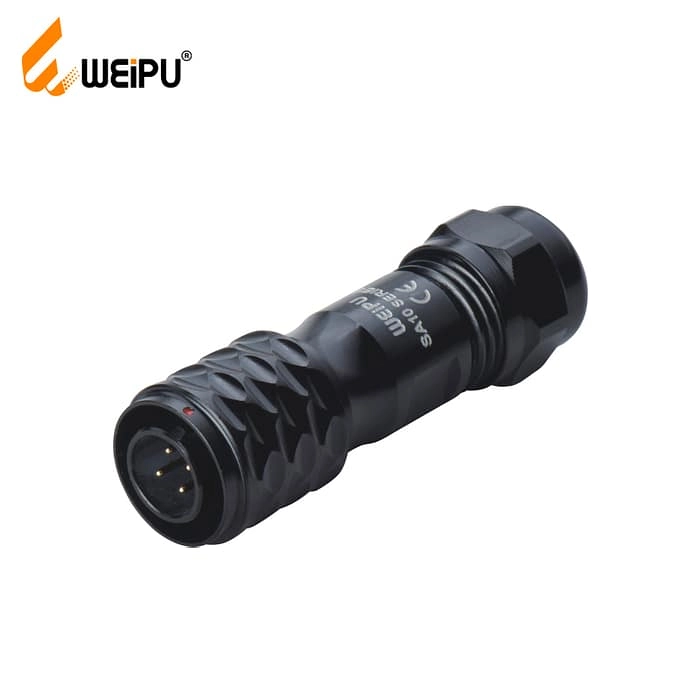
WEIPU SA1010P/S Power Cable Connector
IP67, Mate with SA1011, SA1012, SA1015
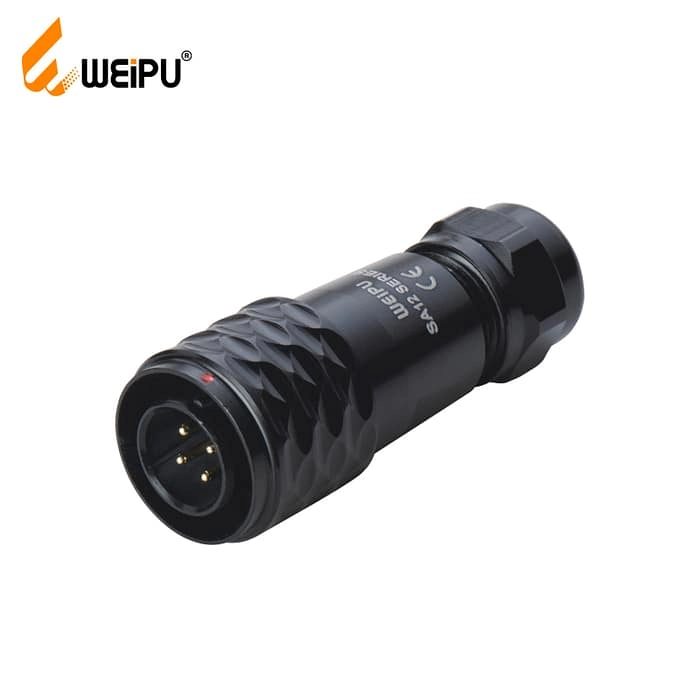
WEIPU SA1210P/S In-line Cable Connector
Weipu’s SA series connectors are meticulously crafted for demanding industrial applications. From marine to medical and automation industries, these connectors excel with their robust aluminum alloy construction and IP67 waterproof rating. With Weipu SA series connectors, you can count on reliable performance and seamless connectivity, ensuring uninterrupted operations in harsh environments.IP67, Mate with SA1211, SA1212, SA1213, SA1215
Get in Touch
Request Related Resources about Industrial Connections & Solutions
If you require technical details, product guides, or specific recommendations from a premier connector manufacturing corporation, please send us your request.
We provide expert support for custom electrical connectors, offering OEM/ODM customization and dedicated distributor cooperation assistance.
Weipu Building, No. 111, Baihua Road, Liwan District, Guangzhou, Guangdong China
© 2026 WEIPU. All Rights Reserved.
Whatsapp: +8618102298073
WEIPU
WEIPU
WEIPU
WEIPU