
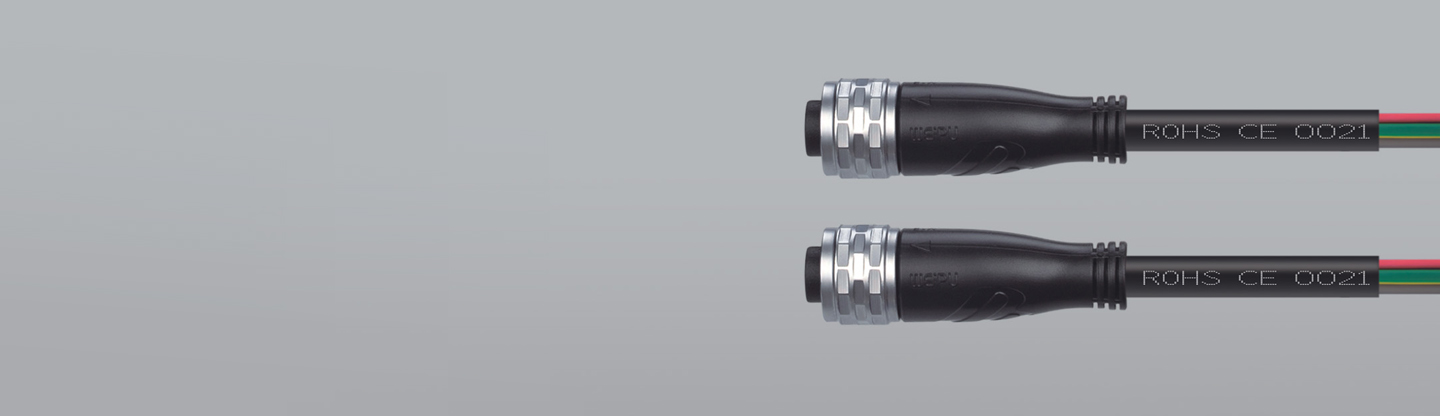


Which circular connector types are best for automation equipment?
Follow us now:
- 1) For a compact robot joint with mixed sensors, power and EtherNet, which circular connector (M12 A/D/X, M8, M23 or 7/8) best balances space, data speed and power?
- 2) How do I size current and conductor cross-section when choosing between M23 and 7/8 circular connectors for servo motor cables to avoid overheating and voltage drop?
- 3) What shielding, grounding and termination practices with circular connectors reliably prevent EMI and ensure Industrial Ethernet signal integrity on long cable runs?
- 4) How to choose connector shell materials, seals and plating for corrosive outdoor automation (salt spray, high-pressure washdowns, chemicals) to avoid premature failure?
- 5) When should I opt for factory pre-assembled circular cable assemblies versus field-terminated connectors to maximize uptime and ease maintenance?
- 6) How do I verify and preserve IP67/IP68/IP69K sealing and connector torque integrity after repeated matings, vibration and conveyor-system stresses?
- Concluding summary: advantages of the right circular connector types for automation equipment
Which circular connector types are best for automation equipment? 6 deep Q&A for buyers
This article answers six industry-focused, long-tail questions automation engineers and maintenance buyers commonly face when selecting circular connectors (M12, M8, M23, 7/8, MIL-style, and industrial panel-mount types). It embeds practical guidance on IP sealing, shielding for Industrial Ethernet, current-sizing, termination choices, corrosion resistance, and maintenance to support purchase decisions.
1) For a compact robot joint with mixed sensors, power and EtherNet, which circular connector (M12 A/D/X, M8, M23 or 7/8) best balances space, data speed and power?
Decision factors: number of conductors (signals vs power), data rate, envelope diameter, and mating cycles. Practical guidance:
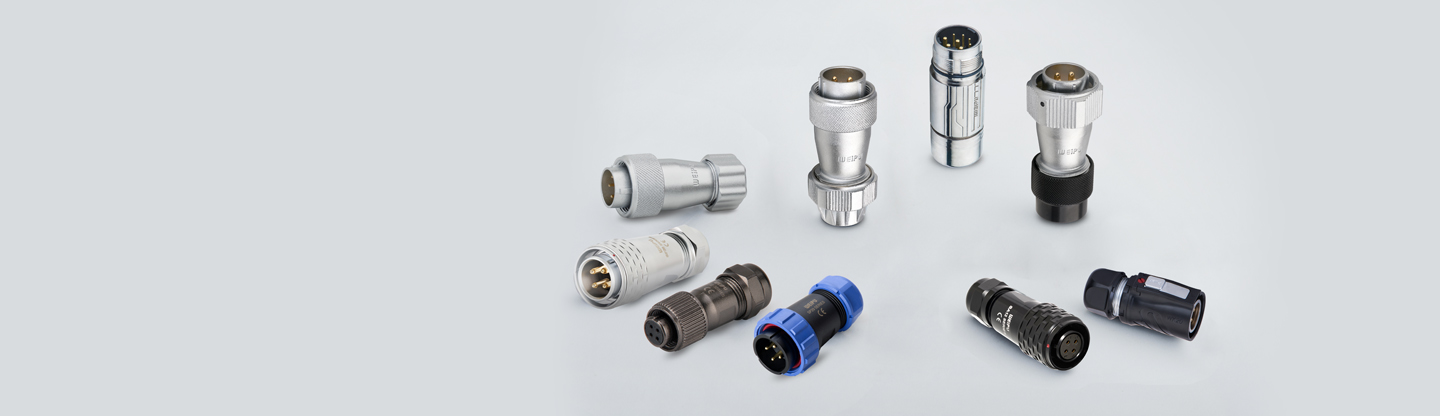
- If primary need is sensor I/O and digital I/O in tight space: choose M12 A-coded (A-coded are the typical four- and eight-pin sensor/actuator types) or M8 for very small sensors. M8 is physically smaller and common for high-density distributed sensors but limited pin counts and lower currents.
- If you need Industrial Ethernet (Profinet/EtherNet/IP): use M12 D-coded for 100 Mbps networks and M12 X-coded for Gigabit-class links; X-coded M12 preserves pair geometry for high-speed differential pairs and is recommended for camera, vision or GigE devices mounted on moving joints.
- For mixed signal + moderate power on the same connector (e.g., encoder + motor brake), M23 power/signal circulars exist — they provide higher power contacts (commonly 12–17 A range on power pins) and multiple signal pins in one compact body. M23 is bulkier than M12 but good when power and multiple signals must share a single feed.
- 7/8 (22 mm) connectors are standard in North American sensor/actuator wiring and are robust for simple I/O and moderate power; they are generally larger than M12 and less suited where miniaturization and high-density Ethernet are essential.
Rule of thumb: For robot joints with limited space and high-speed Ethernet needs, prefer M12 X-coded for Gigabit and M12 A-coded or M8 for ancillary sensors. When servo power must be combined with multiple signals, consider M23 or separate M12/M23 mixes to avoid oversized single connectors.
2) How do I size current and conductor cross-section when choosing between M23 and 7/8 circular connectors for servo motor cables to avoid overheating and voltage drop?
Steps to size correctly:
- Calculate continuous load current and peak inrush for the motor (nameplate and drive datasheets). Continuous current rating is the baseline for connector selection.
- Compare connector contact current ratings from the manufacturer datasheet. Typical industrial guidance: many M23 power contacts are specified in the 12–17 A range per power contact (depending on contact size and pin layout); 7/8 (22 mm) sensor/actuator circulars often range lower per pin but can be configured for higher-power pins. Always use manufacturer datasheet for the exact contact rating.
- Choose conductor cross-section inside the cable to keep I²R losses acceptable. For example, a 12–17 A contact is commonly paired with 1.5–2.5 mm² conductor cross-sections for short runs; higher currents or longer runs require larger conductors—compute voltage drop (Vdrop = I × R) and ensure it meets motor/drive tolerances.
- Account for thermal derating and ambient temperature. Connector current ratings are typically given at 25 °C; in higher ambient temps or in dense harness runs you must derate. Consult manufacturer tables for derating curves.
- Prefer crimp or soldered power contacts over screw terminations for continuous motor currents—crimped contacts give better contact resistance and thermal stability.
Always cross-check drive manufacturer wiring limits and the connector manufacturer’s continuous current and temperature rise specifications. If in doubt, upsize the contact family (e.g., choose a connector series with larger power contacts) rather than running near the rating margin.
3) What shielding, grounding and termination practices with circular connectors reliably prevent EMI and ensure Industrial Ethernet signal integrity on long cable runs?
Best practices for EMI control and high-speed signals:
- Choose connector coding designed for Ethernet: D-coded (100 Mbps) or X-coded (Gigabit). For GigE, use X-coded M12 or standard RJ45 field housings; X-coded preserves pair geometry and impedance.
- Use 360° metal shells or conductive hoods for full shield continuity. A good connector design provides a metal-to-metal path from cable braid to connector shell to panel ground.
- Terminate the cable shield to the connector shield carefully: use a drain wire or shield clamp and avoid leaving the shield floating. For long industrial runs, single-point grounding is preferred for Ethernet shield: typically at one end (usually the equipment chassis) to avoid ground loops; follow your plant’s grounding scheme.
- Minimize pair untwist near the termination (<5–10 mm recommended) to preserve differential pair impedance—this is critical on X-coded M12 to avoid reflections and mode conversion.
- Use factory-assembled shielded cable assemblies for critical high-speed links or where field termination would compromise pair geometry; where field assembly is necessary, use controlled-impedance crimp terminations and qualified tools.
- Verify with certified tests: perform return-loss (S11) and insertion-loss (S21) measurements or a Channel/Link test with an appropriate network certifier when installing Gigabit links over X-coded M12 assemblies.
Following these methods keeps bit error rates low and prevents intermittent faults due to EMI, which commonly manifest as packet loss or dropped I/O on fieldbuses and real-time Ethernet.
4) How to choose connector shell materials, seals and plating for corrosive outdoor automation (salt spray, high-pressure washdowns, chemicals) to avoid premature failure?
Select components based on the exposure profile and consult relevant standards (IP ratings and material corrosion tables):
- Sealing: Use IP67 as a baseline for splash/immersion protection, IP68 when continuous immersion depth matters, and IP69K when high-pressure, high-temperature washdown is required (food, washdown lines). When specifying, confirm the mated and unmated IP ratings from the datasheet.
- Shell material: For aggressive outdoor/corrosive environments choose stainless-steel shells or high-grade nickel-plated brass with specified salt spray test results (e.g., 96 h or 480 h NSS per supplier data). Stainless offers superior long-term corrosion resistance.
- Contact plating: Gold plating on signal contacts reduces contact resistance and corrosion for low-voltage signals; silver or tin plating is used for power contacts but may tarnish—opt for appropriate plating per application and check manufacturer’s recommended contact material for current and environment.
- Seal elastomers: Look for FDA/food-grade or FKM/EPDM/PTFE materials if chemicals or oils are present. Silicone or fluorosilicone can offer wider temperature ranges; PTFE gaskets can resist aggressive chemicals but may be less elastic.
- Mechanical choices: use threaded coupling nuts with locking features and correct torque specifications to preserve sealing; snap-lock designs may be easier but can be less forgiving under vibration unless rated for IP69K.
Always request environmental test reports (salt spray, chemical resistance, temperature cycling) from the connector vendor. For washdown applications, verify IP69K rating when mated and select stainless shells and durable seal materials accordingly.
5) When should I opt for factory pre-assembled circular cable assemblies versus field-terminated connectors to maximize uptime and ease maintenance?
Decision criteria and trade-offs:
- Pre-assembled cable assemblies: pros—consistent impedance and shield continuity (important for Ethernet X-coded M12), factory crimp quality, reduced installation errors, shorter downtime if immediate replacement spares are stocked. Cons—less flexible for last-minute length changes and inventory burden.
- Field-terminated connectors: pros—flexibility to cut-to-length, onsite repairs without special stock. Cons—higher risk of poor termination (especially for Ethernet or mixed-signal connectors) and variability in contact resistance if installers are not trained or tools are not calibrated.
- Recommended approach: use factory-assembled, shielded cable assemblies for critical high-speed links, power feeds to drives, and safety circuits. Use field-terminable connectors for sensor runs and non-critical I/O where speed of change or custom lengths are frequent and termination tools/training are available.
- Spare philosophy: keep a small stock of pre-assembled assemblies for critical nodes to allow rapid swap-out. For long cable runs or where EMC/impedance control matters (GigE or high-speed I/O), factory assemblies greatly reduce troubleshooting time.
In short: factory-assembled for critical uptime and signal integrity; field-terminable for flexibility and cost-effective small runs—back both strategies with a documented replacement and calibration process for termination tools.
6) How do I verify and preserve IP67/IP68/IP69K sealing and connector torque integrity after repeated matings, vibration and conveyor-system stresses?
Practical verification and maintenance steps:
- Follow the torque spec: always tighten threaded couplings to the manufacturer’s recommended torque to compress seals properly. Typical M12 coupling torque is often published around the 0.6–1.2 Nm range depending on series—check the datasheet. Over- or under-torque can compromise sealing.
- Maintenance inspections: schedule periodic visual checks for seal deformation, shell corrosion, cable jacket abrasion and locking mechanism wear. Frequency depends on duty: quarterly for harsh washdown or high-vibration zones, biannually for moderate environments.
- After repeated matings: replace O-rings or gaskets proactively—rubber seals can harden after many cycles or chemical exposure. Keep repair kits and replacement gaskets on hand rather than relying on the original installed seal indefinitely.
- Vibration mitigation: use strain relief, cable clamps and proper routing to avoid cantilever loads on the connector body. Where vibration is severe, choose connectors rated for higher mating cycles and mechanical shock/vibration (check supplier vibration test data).
- Test sealing periodically: perform simple ingress checks such as a pressure/vacuum leak test or use an IP test chamber if available. For site-level checks, visually inspect for condensation or corrosion inside the connector during scheduled maintenance windows.
Document torque values, replacement intervals for seals, and acceptance criteria in your maintenance SOP. This prevents loss of IP protection and reduces intermittent faults from moisture ingress.
Concluding summary: advantages of the right circular connector types for automation equipment
Choosing the correct circular connector family—M12 (A/D/X), M8, M23, 7/8 or heavy-duty panel-mount types—delivers compact, standardized connections, robust IP sealing, and modular coding for mixed I/O and Industrial Ethernet. Benefits include reliable low-contact resistance with gold plating for signals, higher-current power contacts where needed, modular shielding for EMI control on Ethernet links, and standardized form factors for easier spares and replacement. Coupling the right termination method (factory-assembled for critical Ethernet, crimped power contacts for motors, or field-terminable where flexibility is needed) with appropriate material and seal choices yields the best uptime, maintainability and signal integrity for automation systems.
For a tailored recommendation and factory datasheets for M12 (IEC 61076-series), M8, M23 and 7/8 connectors—including IP, current, mating cycles and material test reports—contact us for a quote at salse01@weipu-group.com or visit www.weipu-group.com.
Everything You Need to Know About Cable Connectors
From Power to Precision: The Technology Behind Weipu Connector Solutions

How Waterproof Connectors Play An Important Role In Marine Applications
Customization and Beyond: Tailoring Weipu Connectors to Unique B2B Needs
Resources
Can WEIPU heavy-duty connectors add new modules later if needs change?
Yes, the modular design supports on-site addition, replacement, or removal of functional modules without replacing the entire connector, enabling flexible adaptation to dynamic project requirements.
What types of modules are available for WEIPU heavy-duty connectors?
We offer a full range of functional modules, including power modules (5A-200A), signal modules (2-50 pins), network modules (supporting 10Gbps high-speed transmission), and pneumatic modules (compatible with standard air pipe specifications), covering most industrial connection scenarios.
Are standard circular connectors more cost-effective than heavy-duty connectors?
In scenarios with single, fixed functions, standard circular connectors have cost advantages. But for complex systems requiring multiple functions, heavy-duty connectors reduce overall costs by integrating multiple modules, avoiding the need to purchase and install multiple single-function connectors.
How to select different locking mechanisms for standard circular connectors?
Prioritize threaded connection for fixed installation scenarios with frequent vibration; choose snap-in connection for scenarios requiring frequent plugging and high assembly efficiency; push-pull connection is more advantageous for operation in narrow spaces or scenarios requiring quick plugging/unplugging.
Contacts
Sofia
WhatsApp/Phone
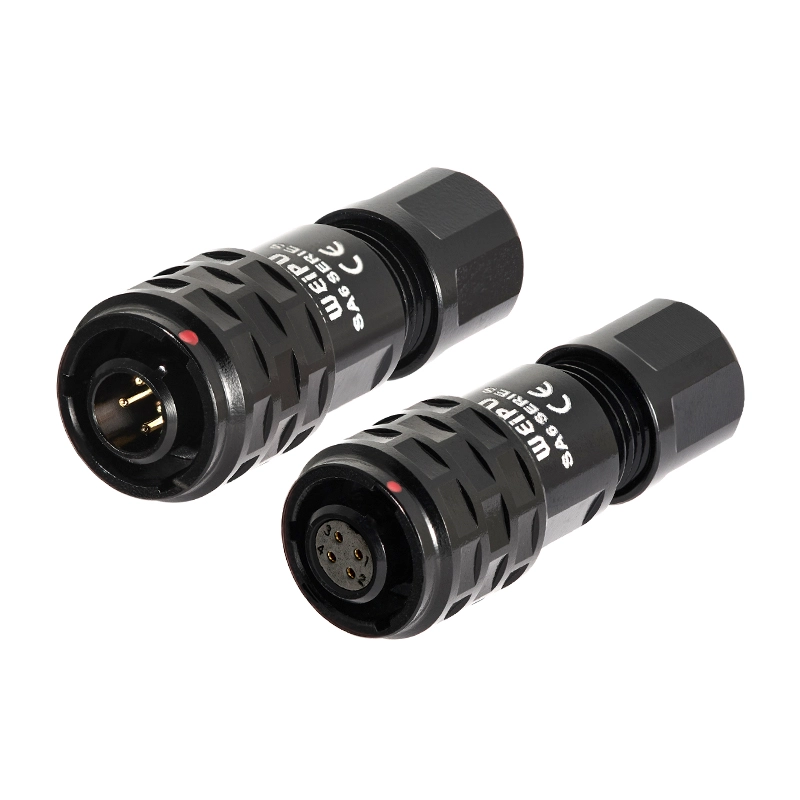
WEIPU SA Series Push-Pull Industrial Connector - IP67 Waterproof Anodized Aluminium Connector
The WEIPU SA Series Push-Pull Industrial Connector offers robust IP67 waterproof protection with durable anodized aluminum housing. This circular connector ensures secure, reliable connections in harsh environments, making it ideal for demanding industrial applications. Trusted quality by WEIPU.
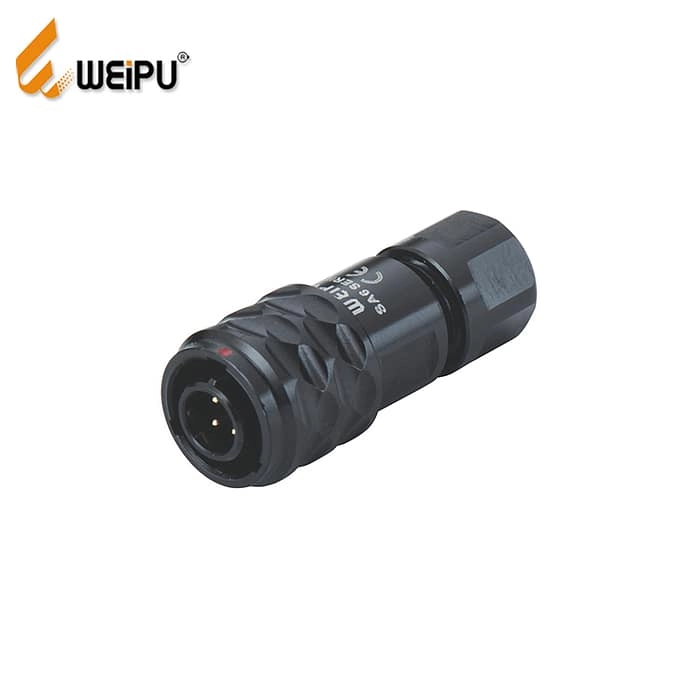
SA610/P SA610/S Cable Connector IP67
Weipu’s SA series connectors are meticulously crafted for demanding industrial applications. From marine to medical and automation industries, these connectors excel with their robust aluminum alloy construction and IP67 waterproof rating. With Weipu SA series connectors, you can count on reliable performance and seamless connectivity, ensuring uninterrupted operations in harsh environments.Mate with SA611,SA612,SA615
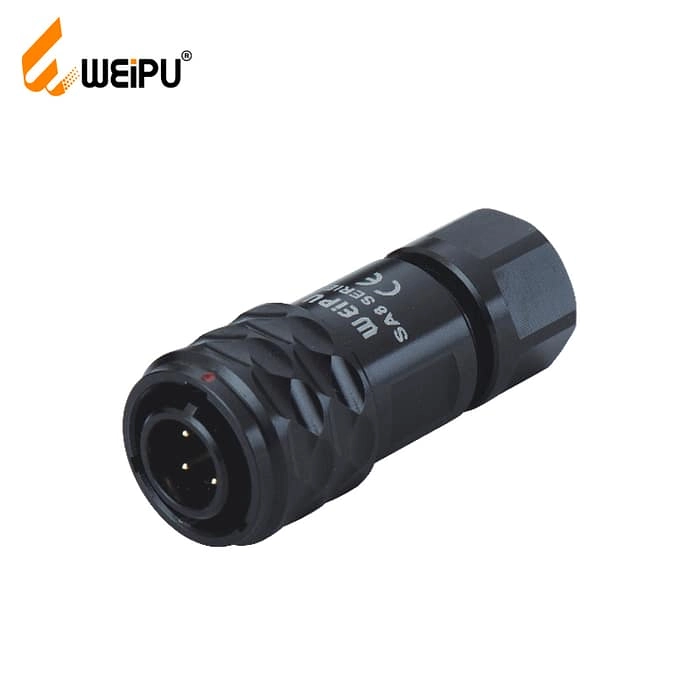
SA810/P SA810/S Cable connector IP67
The Weipu SA series connectors are high-quality, versatile connectors known for their ruggedness and reliability. Designed to meet various industrial and outdoor requirements, these connectors offer excellent environmental protection and are resistant to moisture, dust, and vibrations. The SA series connectors come in different sizes and configurations, making them suitable for a wide range of applications, including LED lighting, industrial automation, and outdoor equipment. With their robust construction and secure locking mechanisms, the Weipu SA series connectors ensure seamless and dependable connections for critical operations
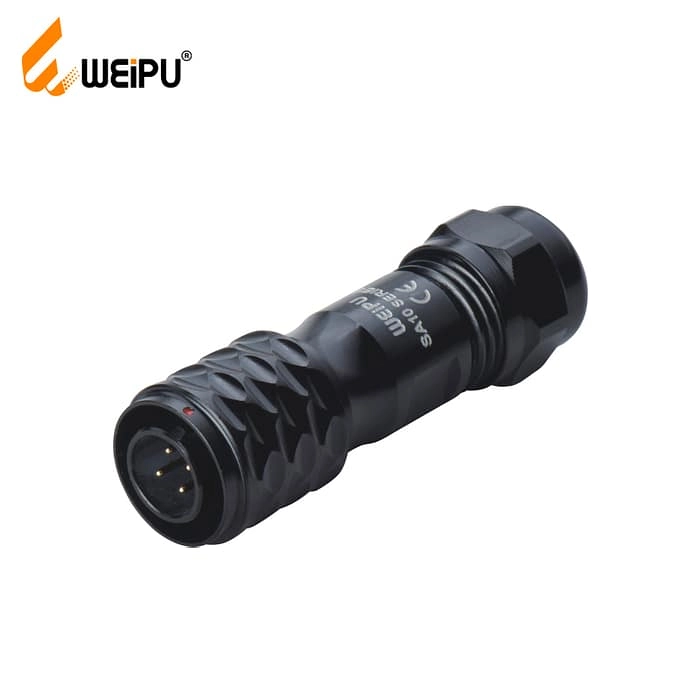
WEIPU SA1010P/S Power Cable Connector
IP67, Mate with SA1011, SA1012, SA1015
Get in Touch
Request Related Resources about Industrial Connections & Solutions
If you require technical details, product guides, or specific recommendations from a premier connector manufacturing corporation, please send us your request.
We provide expert support for custom electrical connectors, offering OEM/ODM customization and dedicated distributor cooperation assistance.
Weipu Building, No. 111, Baihua Road, Liwan District, Guangzhou, Guangdong China
© 2026 WEIPU. All Rights Reserved.
Whatsapp: +8618102298073
WEIPU
WEIPU
WEIPU
WEIPU